

19th Century Marquetry Desk
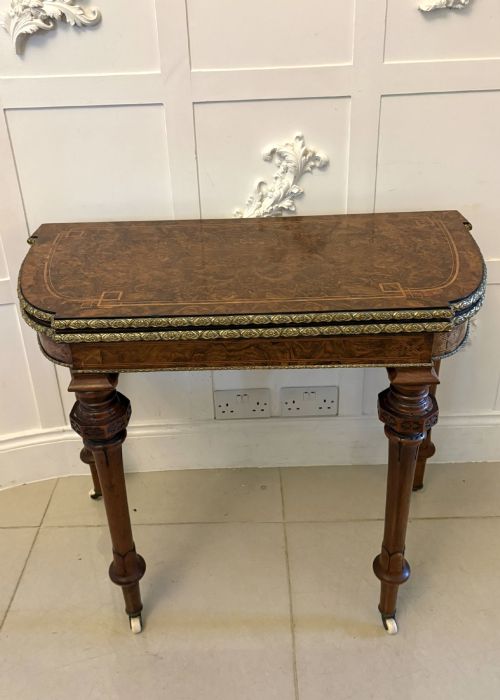
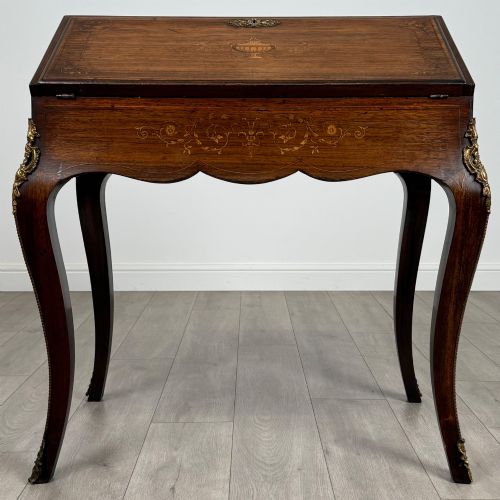
A 19th century marquetry desk brings patterned veneers and floral wood inlay to a room, offering a functional writing surface designed for a Victorian study or French salon.
19th Century Marquetry Desk
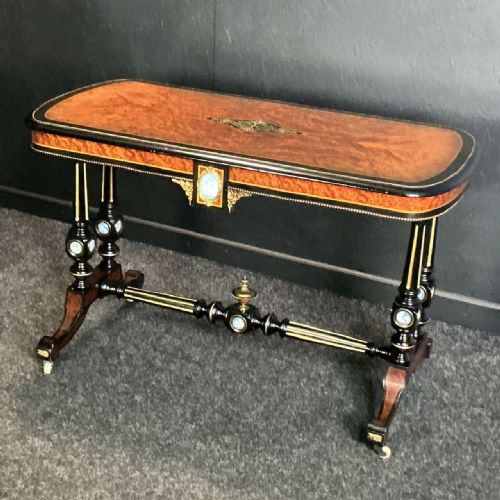
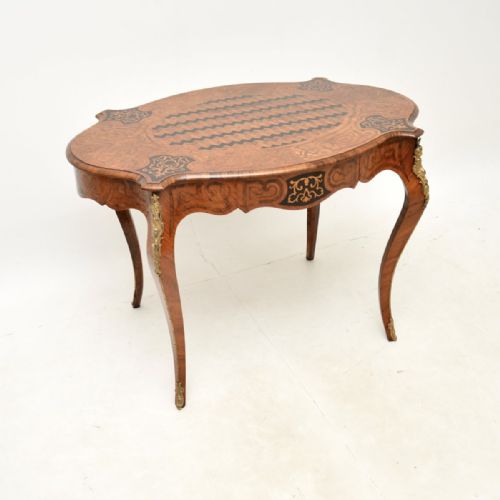
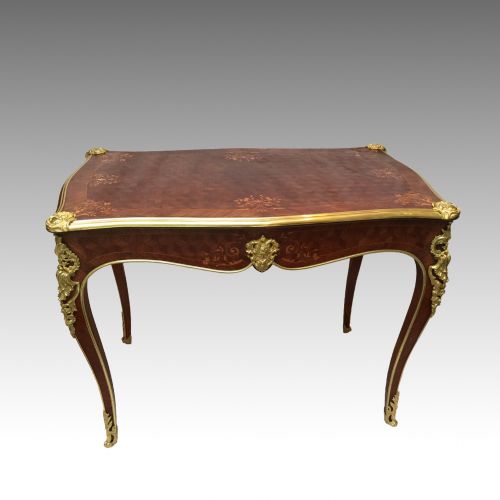
A 19th century marquetry desk is a writing surface decorated with detailed wood veneers arranged to form pictorial or geometric motifs. These pieces span the Victorian and Edwardian eras, drawing heavily on French Louis XV and Louis XVI revival aesthetics.
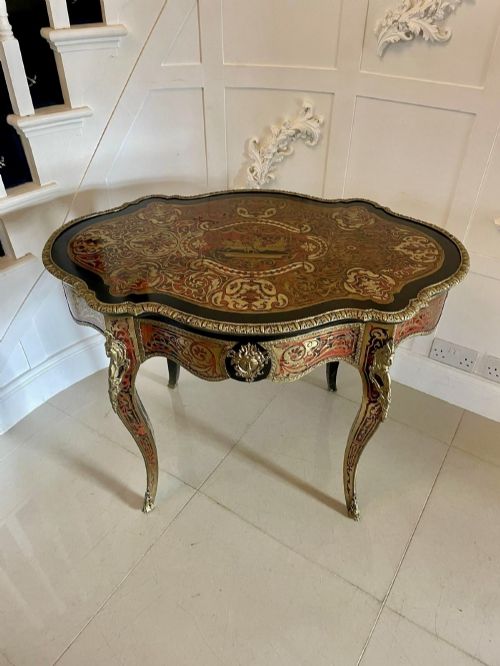
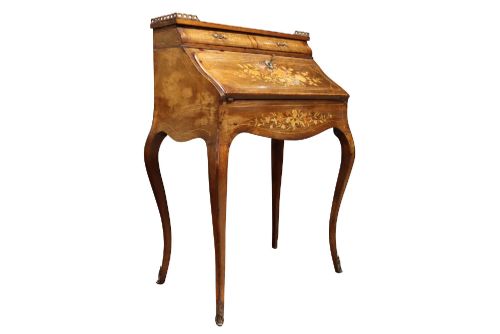
The selection includes bureau de dame forms, kidney-shaped writing tables, and freestanding bureau plat designs. Many pieces originate from French workshops or English makers influenced by continental cabinet-making traditions.
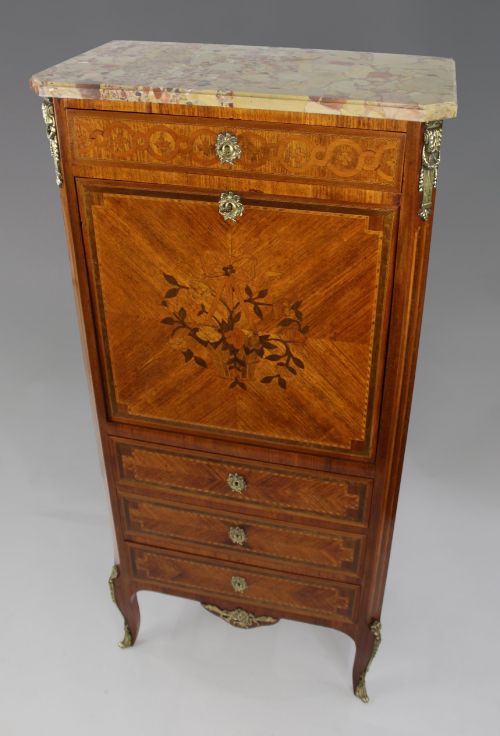
Buyers encounter walnut, kingwood, and rosewood carcases embellished with floral or foliate patterns. Smaller variations like the bonheur-du-jour sit alongside substantial partner tables and escritoires.
Materials and construction
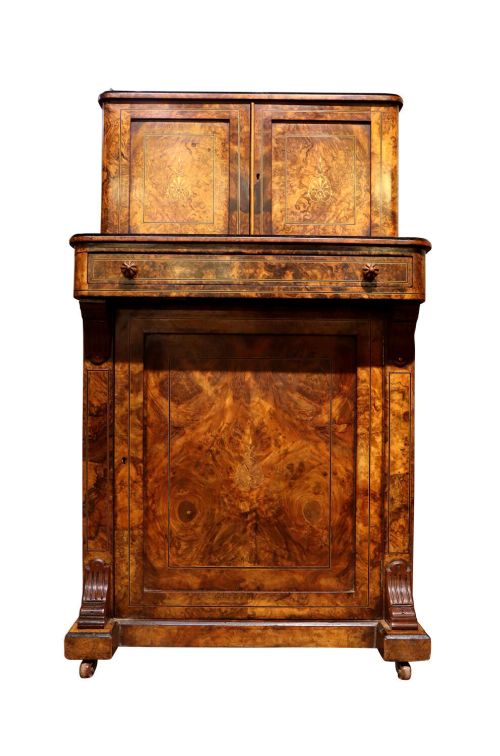
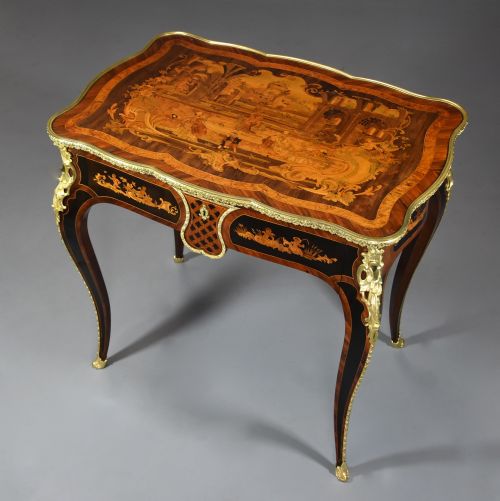
Cabinet-makers applied fine wood veneers such as satinwood, tulipwood, and burr walnut over stable secondary timbers like mahogany or oak. Individual veneer pieces were cut by hand and assembled to create complex floral or geometric patterns across the writing surface and drawer fronts.
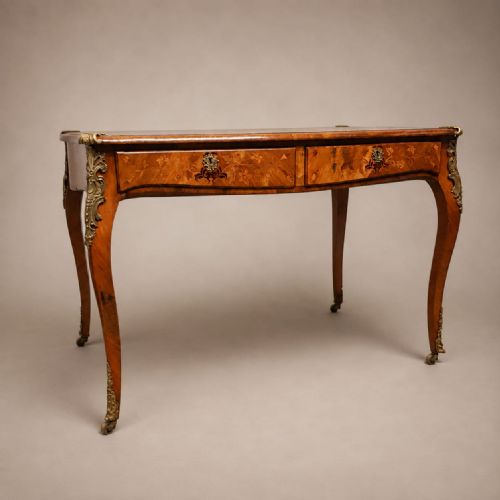
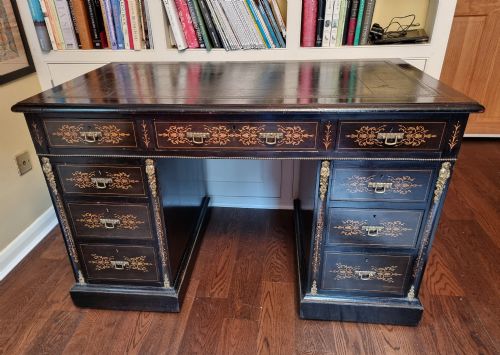
Ormolu mounts, gilt bronze details, and cast brass hardware frame the veneer work on French and English examples. Leather inserts often form the writing surface, surrounded by intricate brass stringing or marquetry borders.
Some nineteenth-century writing boxes conceal secret spring-loaded compartments designed to keep private correspondence safe from wandering eyes.
Assessing craftsmanship and execution
The precision of the veneer cutting and the variety of woods utilised dictate the visual depth of the pattern. Superior examples employ contrasting tones of fruitwood, burr walnut, and kingwood to create three-dimensional shading within floral motifs.
The integration of the cast ormolu mounts and the execution of internal drawer construction signal the standard of the workshop. Pieces bearing documented maker stamps demonstrate higher standards of cabinet-making than unsigned equivalents.
Edwards & Roberts·Maison Krieger·Durand·Millet
The 19th Century Marquetry Desk Glossary
- Marquetry
- The art of applying pieces of veneer to a structure to form decorative patterns and pictorial designs. It differs from parquetry through its use of organic or curved motifs rather than strict geometric grids.
- Ormolu
- Gilt bronze mounts cast and chased to embellish the corners, legs, and aprons of furniture. This technique was widely utilised during the French revival periods.
- Bureau de Dame
- A small lady's writing desk, often featuring a sloping lid or a superstructure with small drawers and pigeonholes. These items were popular in Victorian and French nineteenth-century salons.
- Bureau Plat
- A freestanding double-ended writing table with drawers in the frieze, unencumbered by a superstructure. It stands away from the wall as a centrepiece.
- Escritoire
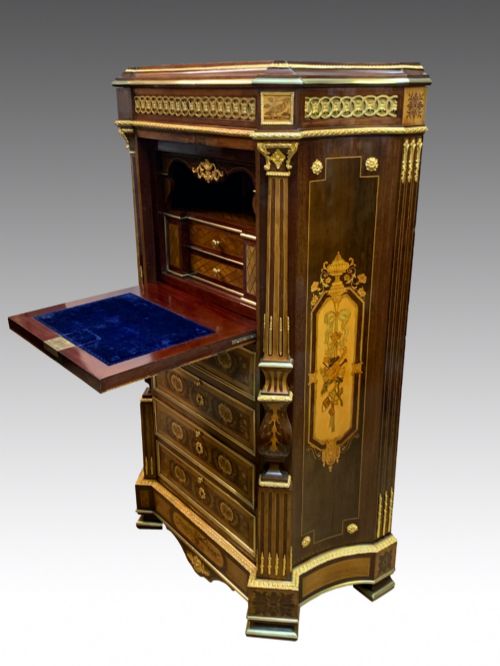
- A tall writing cabinet featuring a fall-front panel that conceals a fitted interior of small drawers and compartments. Marble tops frequently surmount these vertical forms.
19th Century Marquetry Desk: Frequently Asked Questions
Where were these desks placed originally?
These writing surfaces occupied private libraries, drawing rooms, and boudoirs within nineteenth-century homes. Freestanding tables stood centrally in rooms to display intricate veneer work from all angles.
Smaller bureau de dame forms were positioned near windows to capture natural light for correspondence and reading.
How do French and English styles differ?
French pieces frequently exhibit Louis XV or Louis XVI revival characteristics, utilising kingwood, rosewood, and extensive ormolu mounts. The serpentine curves and floral marquetry reflect continental court aesthetics.
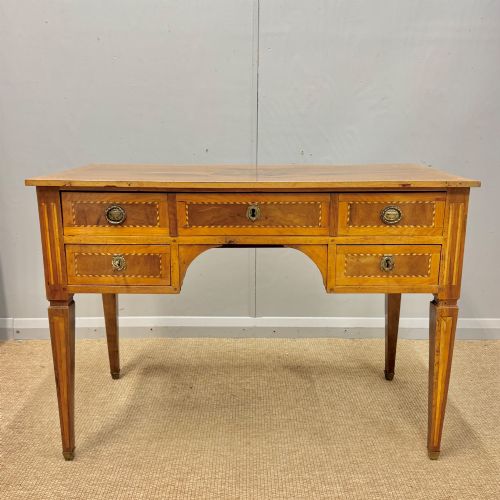
English variants often employ burr walnut or mahogany with subtle brass stringing, aligning with Victorian cabinet-making traditions.
Can I use an antique desk daily?
These pieces serve as functional writing surfaces, though modern use requires care regarding the historic veneer and polished finishes. Leather writing inserts provide a durable surface for writing when treated with mild leather dressings.
Placing items away from direct sunlight and heat sources protects the fragile fruitwood and satinwood inlays from drying out.
How is a bureau plat different from a partner desk?
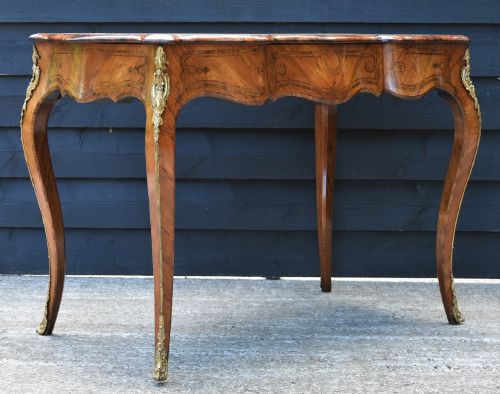
A bureau plat is a single-sided or double-sided freestanding writing table designed for a room centre, featuring a decorative top and frieze drawers. It lacks the heavy pedestal cupboards associated with large library partner desks.
Its slender legs and ornate ormolu sabots emphasise lightness and decorative finish over utilitarian bulk.