



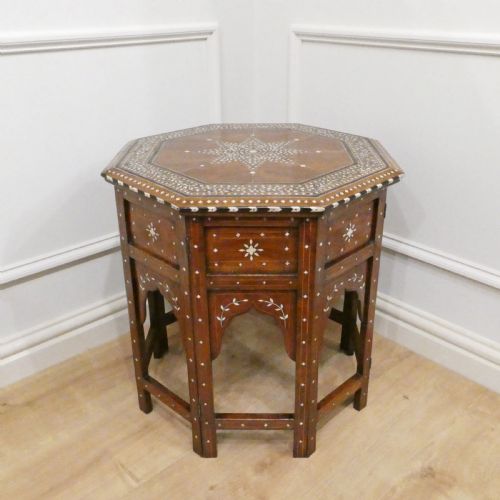
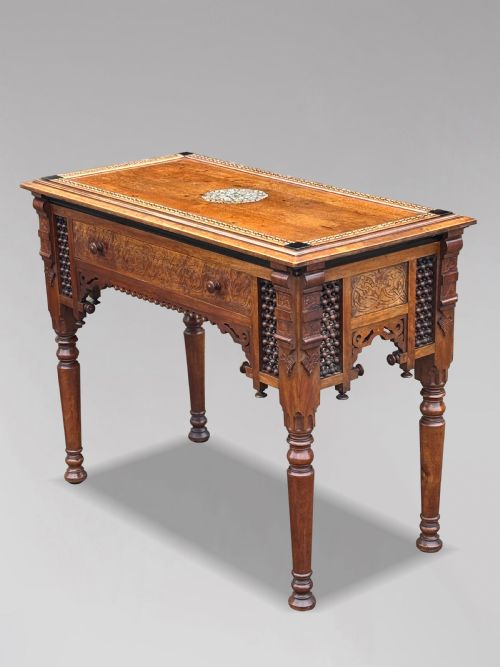
Bone Inlaid Occasional Table
A bone inlaid occasional table brings dense geometric pattern and global craft traditions into a room.
Bone Inlaid Occasional Table
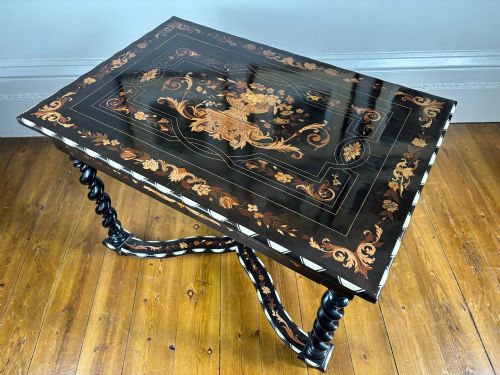
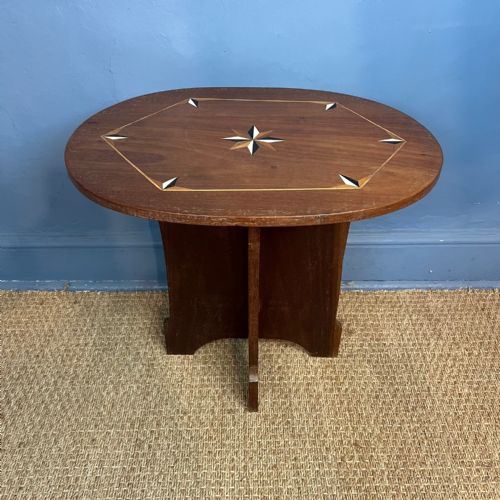
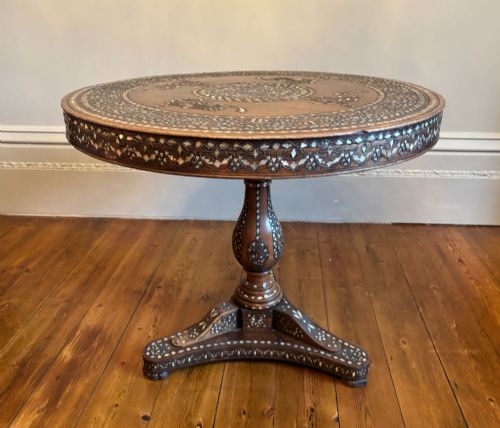
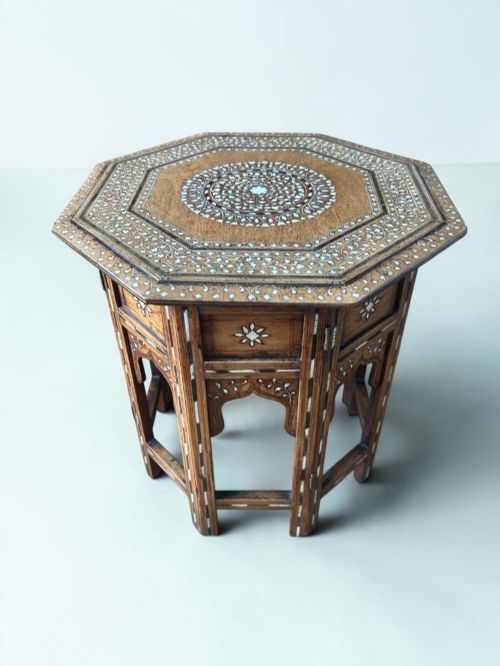
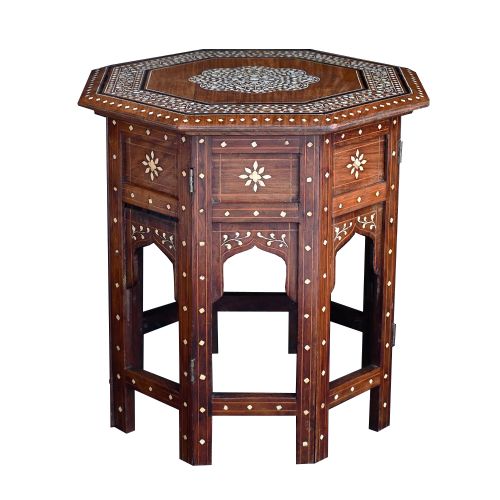
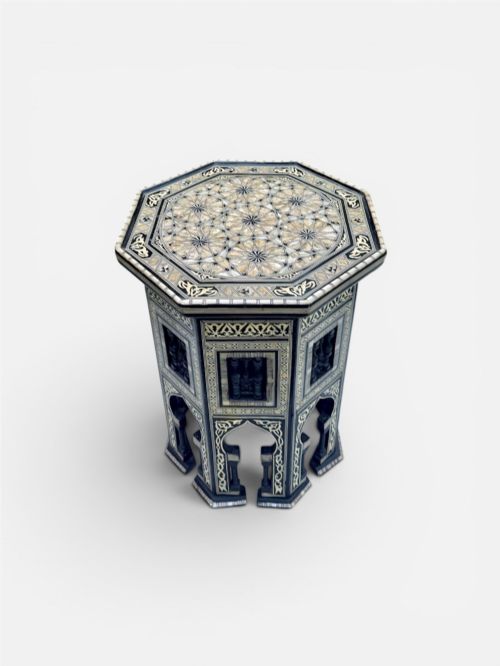
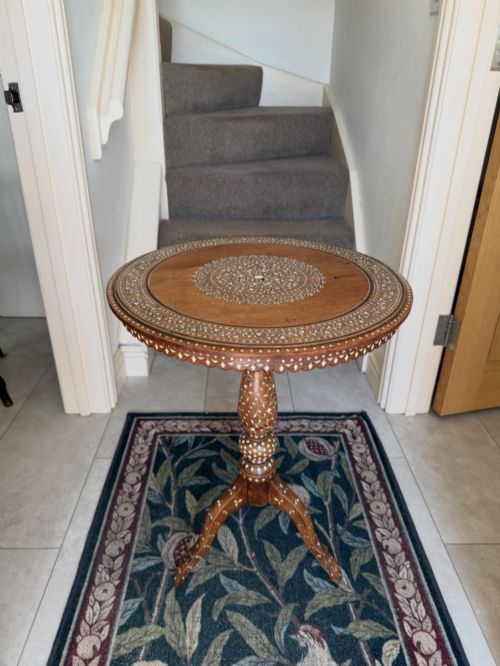
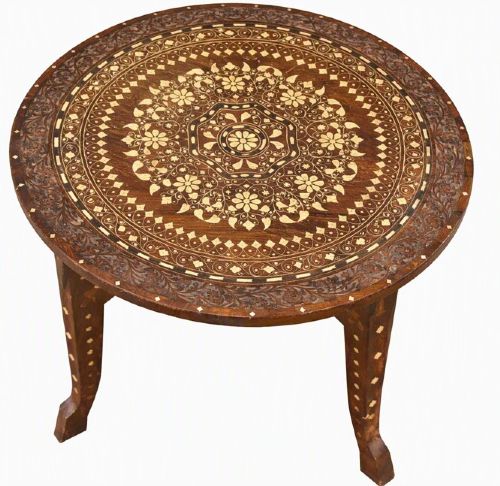
A bone inlaid occasional table brings together diverse regional workshops and revival aesthetics from the nineteenth and early twentieth centuries. When searching for a bone inlaid occasional table, buyers encounter heavily ornamented surfaces shaped as octagonal, round, or square forms intended for side use, lamp placement, or display.
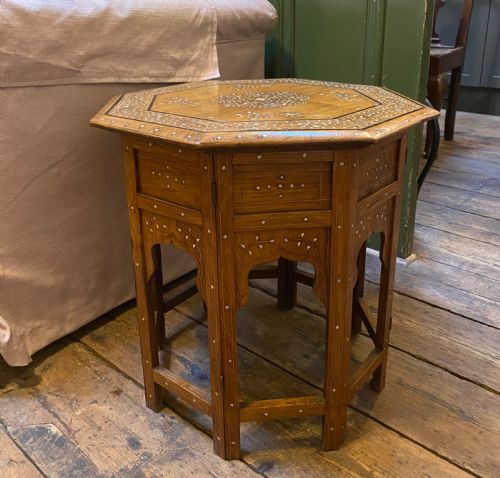
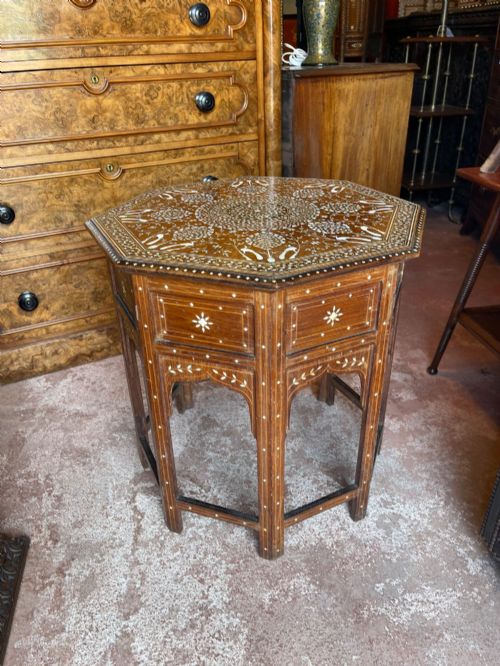
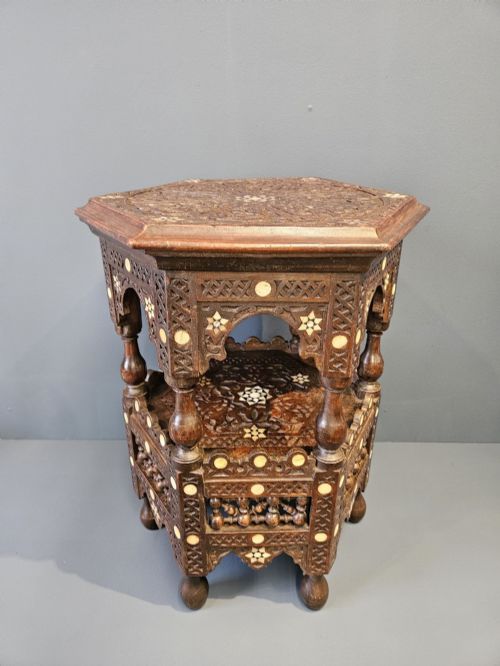
The selections span distinct traditions including Anglo-Indian Hoshiarpur production, Moorish revival, Syrian craft, and European interpretations involving ebonised wood or marquetry. Octagonal folding tables and pedestal forms dominate the selection, often utilising carved hardwood carcasses beneath intricate surface decoration.
Origins stretch from South Asia to the Middle East and Europe, reflecting global trade and aesthetic exchanges during the Victorian period and subsequent decades. Each piece functions as a mobile surface that relies on dense surface enrichment rather than architectural mass for its visual impact.
How they were made
Craftsmen shaped dense timbers such as teak, sheesham, rosewood, padauk, and ebonised hardwood to form the foundational structure of each table. Surfaces were then painstakingly chiselled to receive tiny geometric fragments of bone and mother-of-pearl.
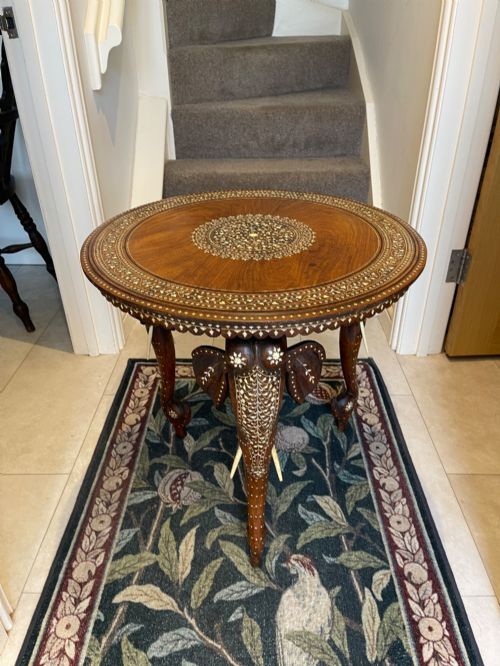
Individual pieces of bone and mother-of-pearl were hand-cut into floral or star motifs, then pressed into recesses within the wooden matrix alongside fine wire or dark resin. Carved panels frequently complemented the inlay work, utilising pierced foliage and animal figures such as elephants to frame the decorative schemes.
Bone Inlaid Occasional Table Retail Price Guide 2026
Typical asking prices for bone inlaid occasional table among the pieces listed under this phrase on Sellingantiques today, from the lower quarter to the upper quarter. They describe what is for sale here now, not the wider market.
Several tables rely on carved wooden elephants to support their heavily decorated tops.
What varies in quality
Quality rests in the density of the pattern and the precision with which the bone fragments fit their wooden channels. Superior examples display minimal filler, sharp geometric regularity, and crisp carving across both the top and the supporting base.
The choice of primary timber influences the overall heft and durability, with dense hardwoods providing a more stable carcass than lighter regional alternatives. Maker identification, such as stamps associated with Liberty & Co, elevates certain pieces through documented retail provenance.
Liberty & Co
The Bone Inlaid Occasional Table Glossary
- Hoshiarpur
- A district in Punjab known for producing intricately carved wooden furniture decorated with bone and shisham inlay. Tables from this tradition often feature folding bases and octagonal tops.
- Mother-of-pearl
- The iridescent inner layer of mollusc shell used alongside bone to create shimmering contrast within dark wooden surfaces. It catches ambient light from various angles.
- Ebonised
- Wood treated with a dark finish to imitate ebony. This technique highlights pale bone inlay through stark contrast.
- Marquetry
- The art of applying small pieces of veneer to a structure to form decorative patterns. It appears in European interpretations of inlaid furniture.
- Occasional table
- A small, movable table designed for specific, intermittent use rather than dining. These pieces serve as side, lamp, or display surfaces.
Bone Inlaid Occasional Table: Frequently Asked Questions
What is a bone inlaid occasional table?
A bone inlaid occasional table is a small, movable surface decorated with hand-cut bone or mother-of-pearl set into wood.
These pieces draw on traditions from South Asia, the Middle East, and European revival movements of the nineteenth century.
How do I identify a Hoshiarpur table?
Hoshiarpur tables typically feature octagonal tops and dense geometric or floral patterns made from bone inlay on hardwood.
Many examples are designed with clever folding bases that collapse flat when not in use.
Where were these tables used?
These tables served as decorative side surfaces for lamps, plants, or objects in Victorian and Edwardian reception rooms.
Their compact scale allowed them to be moved easily around the home to suit changing social needs.
How do I care for bone inlay?
Bone inlay requires gentle dusting with a dry cloth and protection from direct sunlight and excessive heat.
Stable indoor humidity prevents the wood from shrinking and loosening the small bone fragments.