





Ebonised Round Table
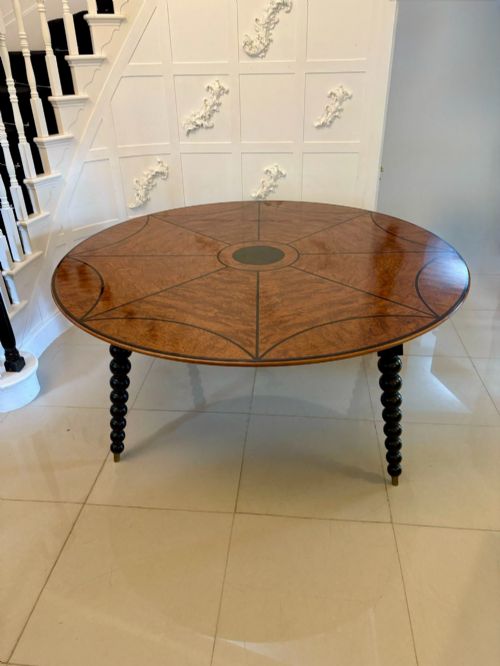
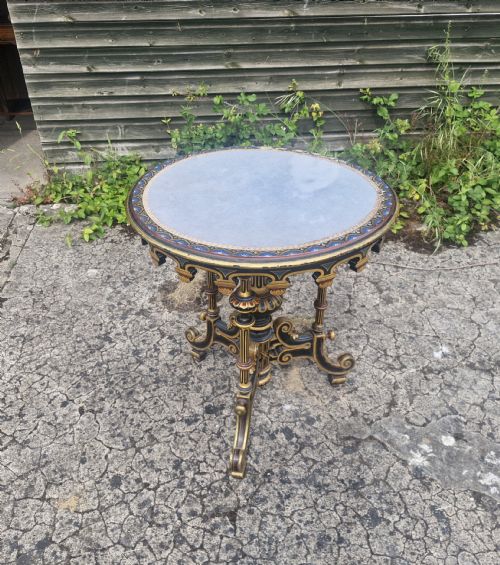
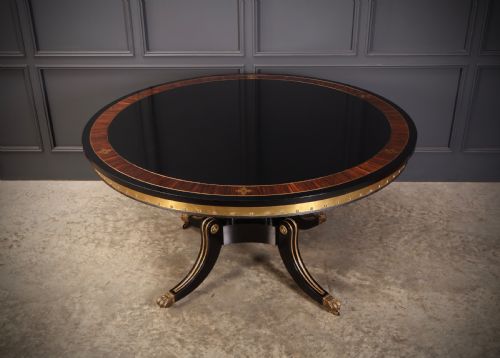
These ebonised round table examples span the Victorian and Art Deco eras, offering dark finishes and circular tops suited for practical placement.
Ebonised Round Table
An ebonised round table brings a dark, striking silhouette to a room, drawing on Victorian and later design traditions. These circular pieces function as side tables, centre tables, and occasional tables.
Buyers encounter forms such as breakfast tables, dining tables, and compact lamp tables. Many incorporate brass inlay, marble tops, or contrasting woods alongside the blackened finish.
How they were made
Wood surfaces are stained or painted to achieve the dense black ebonised finish, often mimicking more expensive ebony timber. Cabinetmakers combine this dark ground with marquetry inlay or brass detailing.
Structural timbers beneath the ebonised coating include walnut, amboyna, and general hardwoods. Marble tops are fitted directly into circular frames for lamp and side tables.
Ebonised Round Table Retail Price Guide 2026
Typical asking prices for ebonised round table among the pieces listed under this phrase on Sellingantiques today, from the lower quarter to the upper quarter. They describe what is for sale here now, not the wider market.
Listings span periods from the Victorian era to 1940, incorporating materials such as marble, brass, amboyna, and ebonised hardwood.
What varies in quality
The refinement of the ebonised finish and the precision of any brass or wood inlay distinguish finer examples. High-grade construction relies on stable timber selection to prevent warping across the circular top.
Attribution to known makers or design movements elevates certain pieces above standard production. The integration of secondary materials like marble or exotic veneers impacts the overall presence of the table.
Collinson and Lock·Reiners Mobler Mjolby
The Ebonised Round Table Glossary
- Ebonised
- Wood treated to resemble dense black ebony. This process is common in Victorian and Aesthetic Movement furniture.
- Marquetry
- Decorative patterns formed by inlaid pieces of wood veneer. Artisans apply this technique to tabletop surfaces.
- Occasional table
- A small, movable table used for specific tasks in a room. These pieces appear frequently in nineteenth and twentieth-century interiors.
- Centre table
- A freestanding table designed to be viewed from all sides in the middle of a room. Such pieces often feature elaborate top designs.
Ebonised Round Table: Frequently Asked Questions
Where should I place an ebonised round table?
These circular tables work well as centre pieces in a hallway or as side tables beside seating. Their dark finish contrasts effectively against lighter walls.
Consider the scale of the room when choosing between a compact lamp table and a larger dining or breakfast version.
How do I care for an ebonised surface?
Dust the surface regularly with a soft, dry cloth to protect the dark finish. Avoid placing the table in direct sunlight to prevent fading.
Use coasters under glasses and protect marble inserts from acidic spills to maintain the original appearance.
What periods do these tables come from?
The pieces span from the nineteenth century through the Victorian era and into the Art Deco period of the 1930s. Each era brings distinct decorative details.
Victorian pieces often feature heavy timber and brass inlay, while 1930s examples lean towards cleaner geometric lines.
What materials are used alongside ebonised wood?
Tables in this category incorporate brass inlay, marble tops, and contrasting woods like walnut, amboyna, and rosewood. These materials highlight the dark primary frame.
Some incorporate gilt bronze or painted decoration depending on the specific nineteenth or twentieth-century style.