

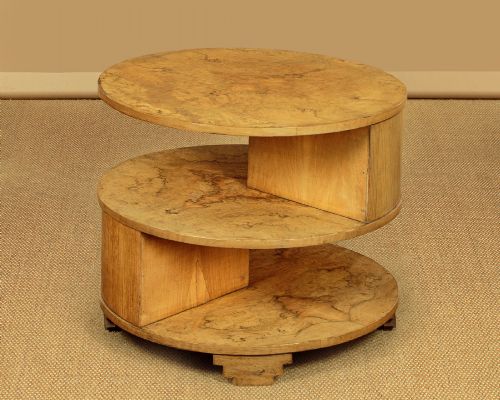


1930s Round Coffee Table
A 1930s round coffee table brings geometric warmth and low-profile elegance to a modern sitting room.
1930s Round Coffee Table
A 1930s round coffee table belongs primarily to the Art Deco period, alongside occasional examples shaped by Swedish Grace design. These low tables serve living spaces with compact footprints and strong circular geometry.
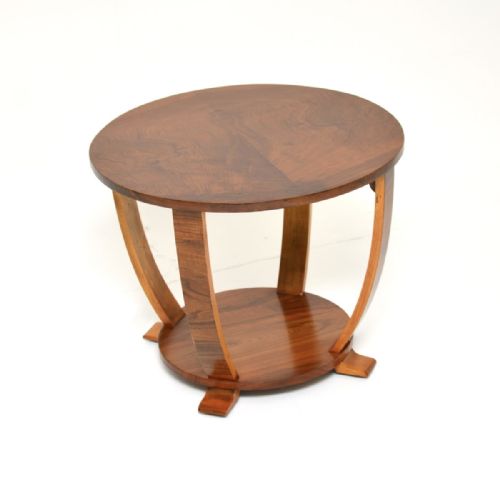
Most pieces encountered here take the form of dedicated coffee tables, side tables, or two-tier occasional pieces. Buyers frequently select them for their striking grain patterns and practical surface area.
How they were made
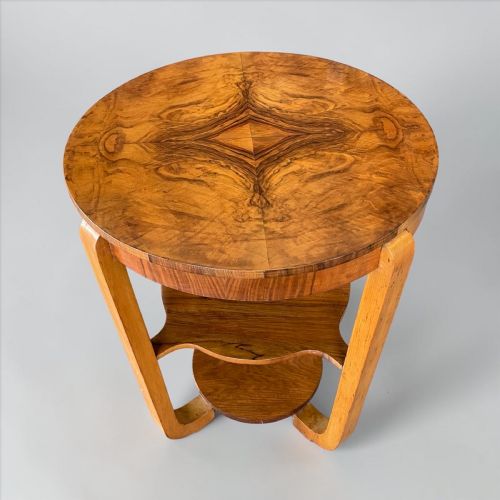
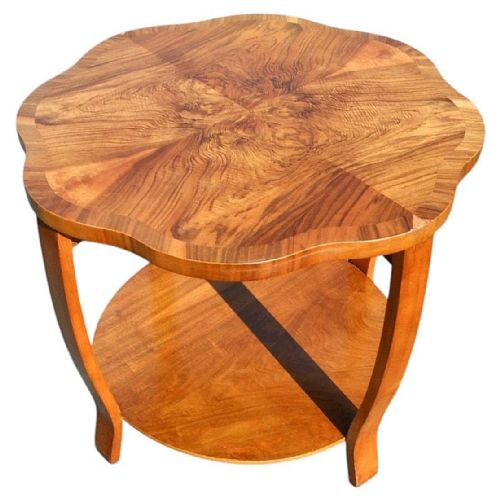
Cabinet makers utilised dense timbers like walnut, oak, and birch, frequently applying figured veneers to circular tops for visual impact. Burr walnut and birds eye maple provide rich, swirling patterns across the primary surfaces.
Secondary materials such as glass, marble, and chrome appear alongside traditional woodwork, reflecting both modernist influences and classic cabinet-making techniques.
The inventory spans the 1920s and 1930s, capturing the height of Art Deco production.
What varies in quality
The sophistication of the timber selection dictates the visual appeal of each piece, particularly where book-matched veneers meet at the centre of a round top. Elaborate multi-tiered structures and integrated lighting elements indicate higher ambition in the original workshop.
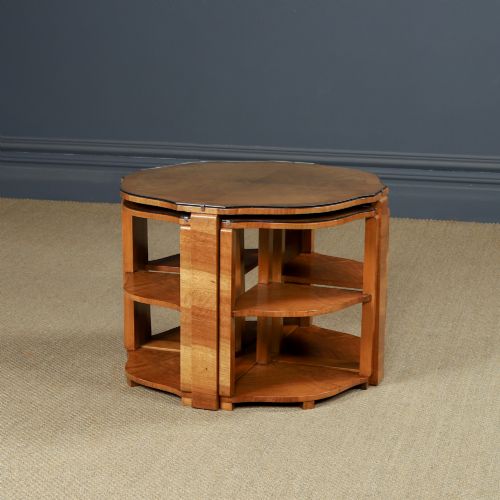
The choice between solid native hardwoods and exotic contrasting veneers changes the overall weight and presence of the table. Construction depth, such as the inclusion of a second tier or nest configuration, separates standard tables from more complex designs.
The 1930s Round Coffee Table Glossary
- Art Deco
- A design style dominant in the 1920s and 1930s characterised by clean geometric shapes, stylised motifs, and luxurious materials. It represents a sharp departure from heavy Victorian ornamentation.
- Veneer
- A thin slice of figured wood applied over a stable secondary timber to create decorative surfaces without excessive weight. Burr walnut and birch veneers are common examples.
- Swedish Grace
- A refined Scandinavian classicism bridging neoclassical restraint and early modernism during the 1920s and 1930s. It favours understated elegance and pale timbers.
- Two-tier
- A furniture construction featuring an upper surface and a lower shelf supported by legs or columns. This design increases functional storage in a compact footprint.
- Nest of tables
- A set of graduated smaller tables designed to fit neatly beneath a larger master table. They offer flexible surface space for entertaining.
1930s Round Coffee Table: Frequently Asked Questions
How do I style a round coffee table?
Pair the circular top with low seating to maintain the proportions intended by period designers. Keep decorative objects minimal to let the wood grain remain the focal point.
Allow enough space around the perimeter for movement, as these low forms anchor a seating arrangement without dominating the floor plan.
Are these tables solid walnut?
Most examples use solid timber frames combined with premium wood veneers across the broad top surfaces. This technique protected the furniture from warping while displaying striking grain patterns.
Figured walnut and burr walnut veneers were standard practice among quality makers of the period.
What is Swedish Grace design?
Swedish Grace is a sophisticated design movement from the interwar period that predates strict modernism. It combines classical restraint with simplified Scandinavian forms.
Pieces from this tradition frequently employ blonde timbers like birch and satin birch.
How do I clean veneer tops?
Dust regularly with a dry cloth and avoid excessive moisture on historic polish. Wax finishes benefit from occasional gentle feeding to maintain the lustre of the wood.
Protect the surface from direct heat and standing liquids to preserve the underlying veneer.