
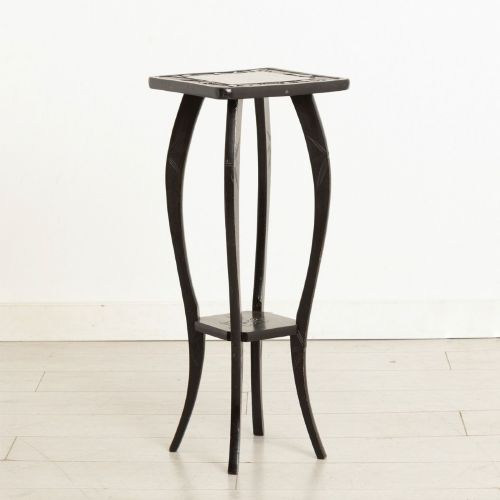
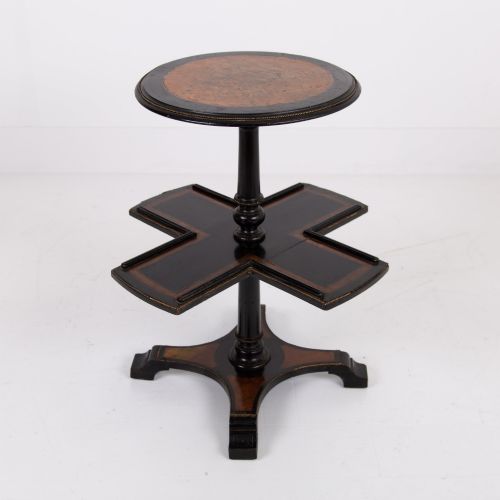
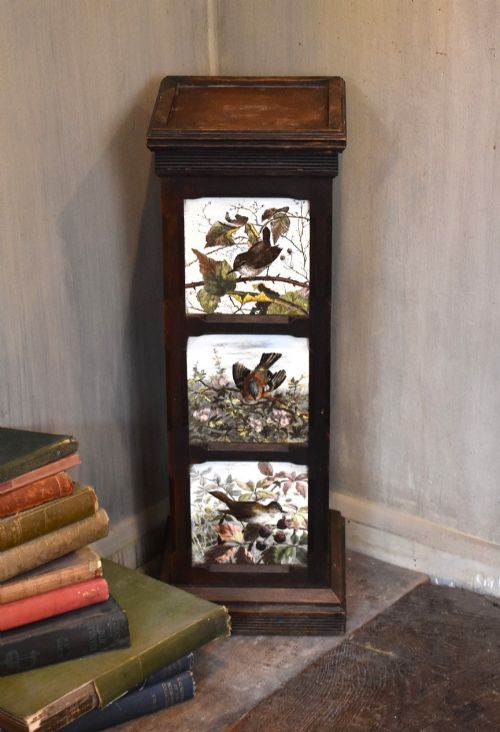


Ebonised Pedestal Stand
An ebonised pedestal stand brings dramatic dark contrast and classical height to a room, holding plants, sculpture or lamps with effortless poise.
Ebonised Pedestal Stand
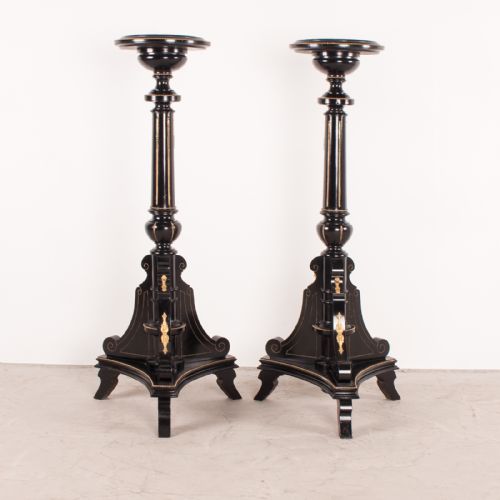
An ebonised pedestal stand functions primarily to elevate decorative objects, lamps, and plants within a domestic interior. These surfaces appear in forms such as torcheres, plant stands, and occasional side tables.
The pieces span various periods, with Victorian and nineteenth-century examples appearing frequently alongside later twentieth-century iterations. Design influences range from Aesthetic Movement and Regency to Chinese Export and Anglo-Indian styles.
Makers and origins vary widely, encompassing English workshops, Italian craftsmanship, and Japanese export pieces. Forms adapt to specific uses, including vase stands, column supports, and adjustable reading surfaces.
How they were made
Construction relies heavily on timbers such as hardwood, walnut, mahogany, and oak, which undergo ebonising to imitate the dense appearance of ebony. Workshops often combine these blackened woods with contrasting inlays of bone, marquetry, or mother-of-pearl.
Surface details frequently incorporate carved decoration, lacquering, or painted elements. Many examples integrate inset marble or rouge marble tops to provide a durable and decorative platform for heavy urns and vases.
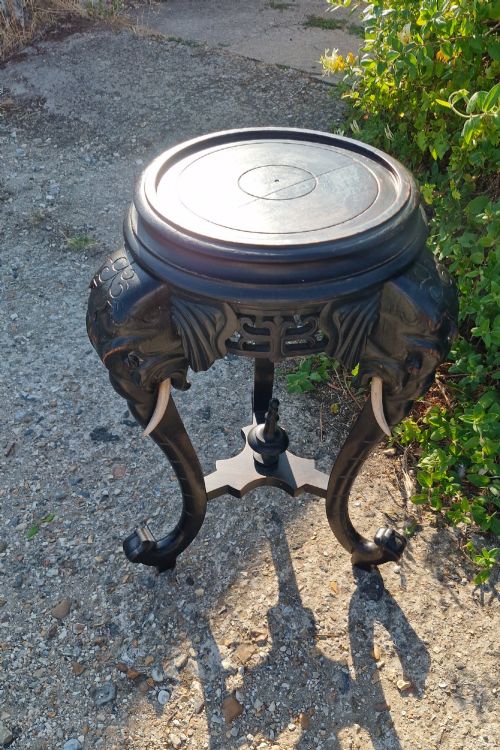
One late Victorian elephant table comes complete with painted wooden tusks.
What varies in quality
Quality separates through the precision of the ebonising process and the crispness of any carved wood details. Superior examples exhibit refined joinery and deliberate selection of underlying timbers rather than simple surface paint.
The integration of materials dictates distinction, particularly where marble inserts fit flush or where marquetry and bone inlay demonstrate careful hand execution. Attributed pieces from known firms display a higher degree of resolved proportion and decorative unity.
Druce & Co London·Liberty of London·Gillow & Co.
The Ebonised Pedestal Stand Glossary
- Ebonised
- Wood treated to resemble solid ebony through staining, painting, or chemical darkening. This finish gained popularity during the nineteenth century to achieve a sleek, dramatic surface.
- Torchere
- A tall, slender stand designed specifically to hold a light source or candle. These architectural supports often feature carved columns or tripod bases.
- Marquetry
- Decorative patterns formed by fitting small pieces of veneer into a wood foundation. Craftsmen utilise various coloured woods and bone to create intricate geometric or floral designs.
- Gueridon
- A small French table supported by one or more columns, often taking the form of a classical figure or pedestal. These versatile pieces function as plant stands or occasional tables.
- Jardiniere
- A decorative receptacle or stand intended to hold plants or flowers. They frequently incorporate waterproof inserts or marble tops to protect the wooden structure.
Ebonised Pedestal Stand: Frequently Asked Questions
Where should I place an ebonised pedestal stand?
These pieces suit corners, hallways, or beside seating where height variation adds visual interest to a room.
Their narrow footprint allows them to display lamps, ceramics, or trailing plants without occupying excessive floor space.
What is the difference between a torchere and a plant stand?
A torchere traditionally provides a tall, slender column for elevated lighting or sculptural display.
Plant stands and jardiniere supports generally offer a broader or more stable surface designed to accommodate heavier pots and moisture.
How can I identify an Aesthetic Movement stand?
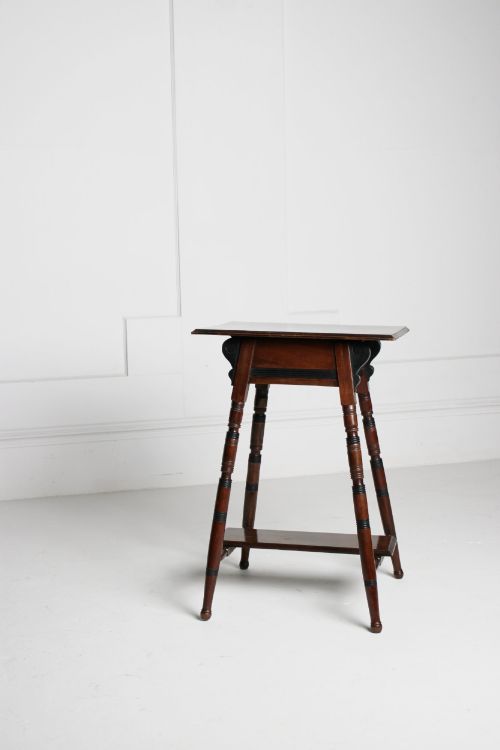
Aesthetic Movement pieces often feature ebonised surfaces combined with Japanese-inspired motifs, simple geometric lines, or contrasting brass details.
These designs prioritise artistic arrangement and craftsmanship over heavy historical revivalism.