


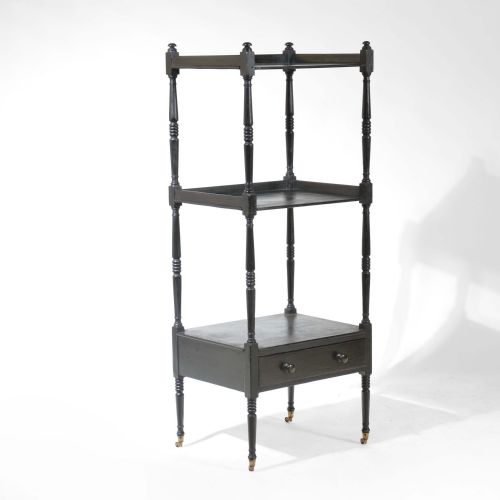

Ebonised Wooden Column
An ebonised wooden column brings sculptural weight and dark contrast to a room, offering a sturdy stage for clocks, urns, and figures.
Ebonised Wooden Column
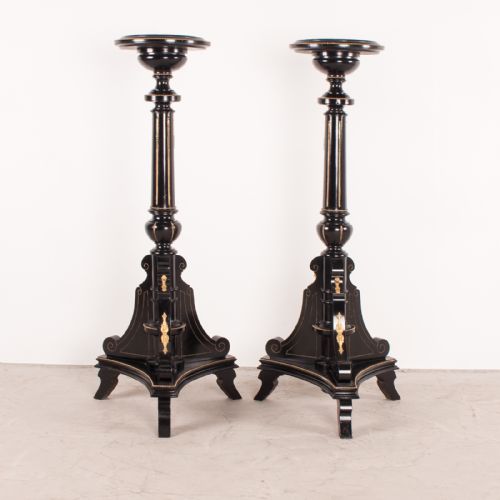
An ebonised wooden column acts primarily as a display pedestal, torchere, or forms part of the architectural framework of a portico clock. When you search for an ebonised wooden column, you encounter tall supporting pillars, display stands, and clock cases designed to elevate objects of importance.
The examples gathered here span from the eighteenth century through the Victorian era and into the nineteen-twenties, incorporating French Empire, Aesthetic Movement, and Georgian sensibilities. Most pieces lean towards nineteenth-century pedestals and French portico clocks, utilising the deep black finish to create a striking silhouette.
Makers and workshops applied this dark stain to various woods to mimic costly ebony, adapting classical architectural orders into domestic furnishings. These columns stand independently or support figures, serving practical display functions while introducing strong vertical lines.
How they were made
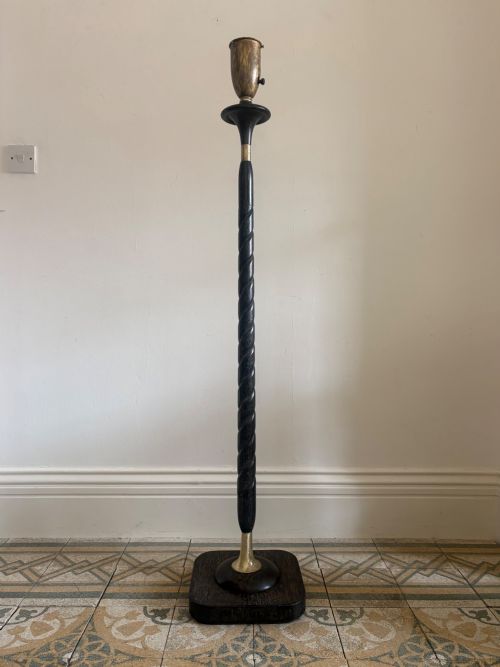
Artisans achieved the ebonised finish by treating timber with chemical stains or dark pigments, sinking the colour deep into the grain to resemble solid ebony. Walnut, oak, and mahogany form the structural cores beneath these blackened surfaces, often turned on a lathe into smooth shafts or barley twist configurations.
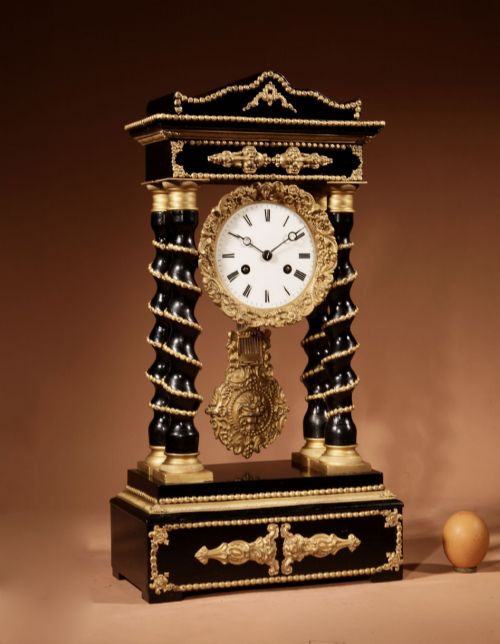
Gilding, ormolu mounts, and brass details frequently accent the dark wood, providing sharp contrast along capitals, bases, and dial bezels. Marquetry, inlay, and amboyna veneers appear alongside the primary ebonised surfaces on more elaborate portico clocks and pedestals.
Carved wooden figures and classical capitals demonstrate traditional hand-tool methods, shaping the timber before the final staining and polishing stages. French polish builds a smooth, reflective sheen across the ebonised surfaces, highlighting the precision of the turning and joinery.
A crouching figure stand waits patiently to support your burdens, proving that even nineteenth-century furniture appreciates a good squat.
What varies in quality
The crispness of the turned mouldings and the depth of the ebonised finish separate standard workshop pieces from exhibition examples. Superior pieces display sharp architectural detailing in the capitals and bases without softening of the carved edges through over-finishing.
Materials beneath the black surface dictate the baseline quality, with dense hardwoods providing greater stability than softer alternatives. The integration of fire-gilt bronze, ormolu, or fine brass mounts indicates higher production costs and greater ambition from the maker.
Proportion and structural balance determine how successfully a column supports its intended load, whether a heavy marble-cased movement or a bronze figure. Refined proportions reflect a deliberate adherence to classical design canons rather than hurried commercial manufacturing.
Gillow and Co
The Ebonised Wooden Column Glossary
- Ebonised
- Wood treated with stain or paint to imitate ebony. This dark finish gained immense popularity during the nineteenth century for furniture and clock cases.
- Portico clock
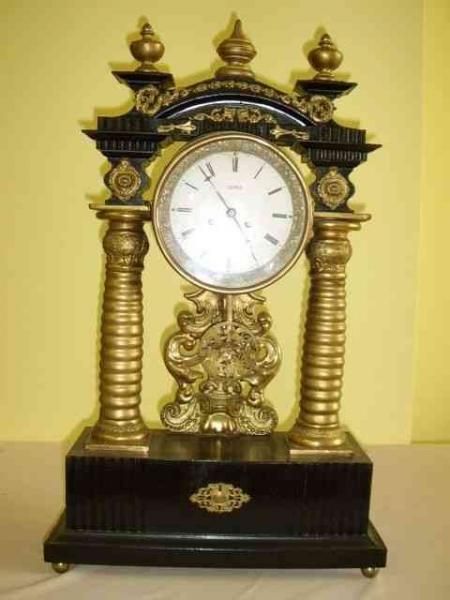
- A mantel clock built into an architectural frame resembling a classical portico. These structures rely heavily on twin columns supporting an upper entablature.
- Torcheere
- A tall ornamental stand designed to hold a light, candelabrum, or statue. These pieces elevate display items above floor level.
- Ormolu
- Gilded bronze used for decorative mounts on furniture and clock cases. The technique involves applying a mercury and gold amalgam to brass or bronze.
- Aesthetic Movement
- A nineteenth-century design current emphasising visual beauty over narrative content. Pieces from this movement often utilise ebonised finishes and Japanese-inspired details.
Ebonised Wooden Column: Frequently Asked Questions
What supported a portico clock?
Portico clocks rely on pairs of structural columns, frequently ebonised, to hold the heavy entablature housing the clock movement.
These architectural cases emulate classical temples, balancing the weight of the central drum movement between two vertical supports.
How do you distinguish Victorian from Georgian columns?
Georgian columns typically show restrained mahogany construction with subtle ebonising, favouring classic architectural proportions. Victorian examples often embrace heavier ornamentation, bolder turning like barley twists, and starker all-over black finishes.
Victorian makers also combined ebonised timber with exotic veneers such as amboyna or applied bright brass mounts, reflecting the eclectic tastes of the later nineteenth century.
Were these columns used for lighting?
Many tall stands function as torcheres, originally designed to elevate candles or oil lamps to illuminate a room.
Over time, similar tall columns and pedestals adapted to hold bronze figures, urns, or later electric floor lamps while retaining their slender profile.
What is an Aesthetic movement pedestal?
An Aesthetic movement pedestal applies the philosophy of art for art's sake to domestic display furniture. These pieces frequently feature ebonised surfaces, lacquer, and simplified forms inspired by Japanese design.
Makers of this movement used the dark finish to create neutral backdrops that allowed displayed porcelain or sculpture to stand out visually.