

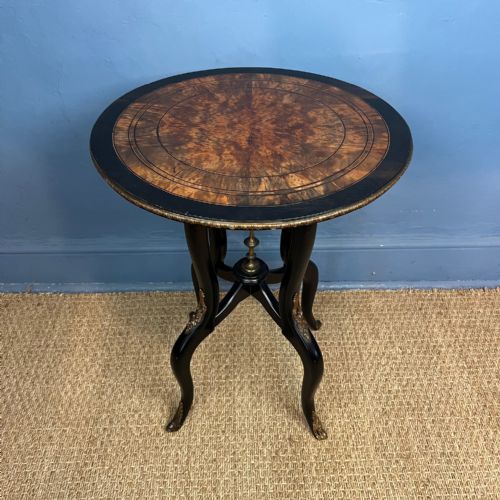
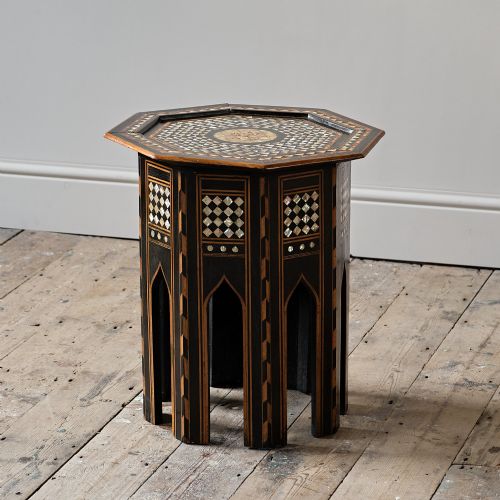
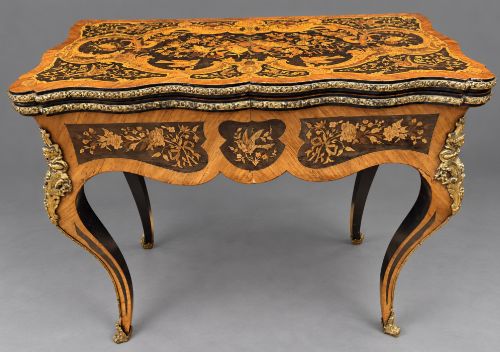
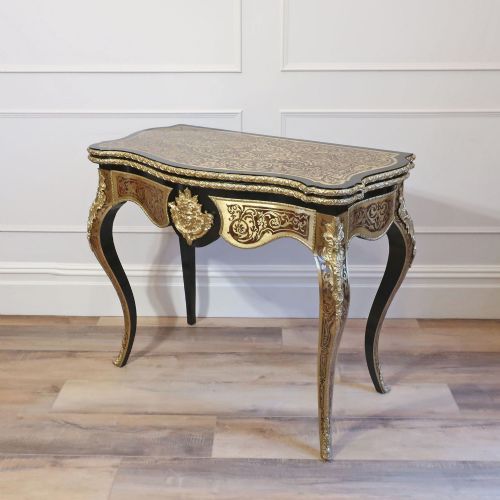



Ebonised Marquetry Side Table
An ebonised marquetry side table brings the dark, polished drama of nineteenth-century reception rooms into a modern interior.
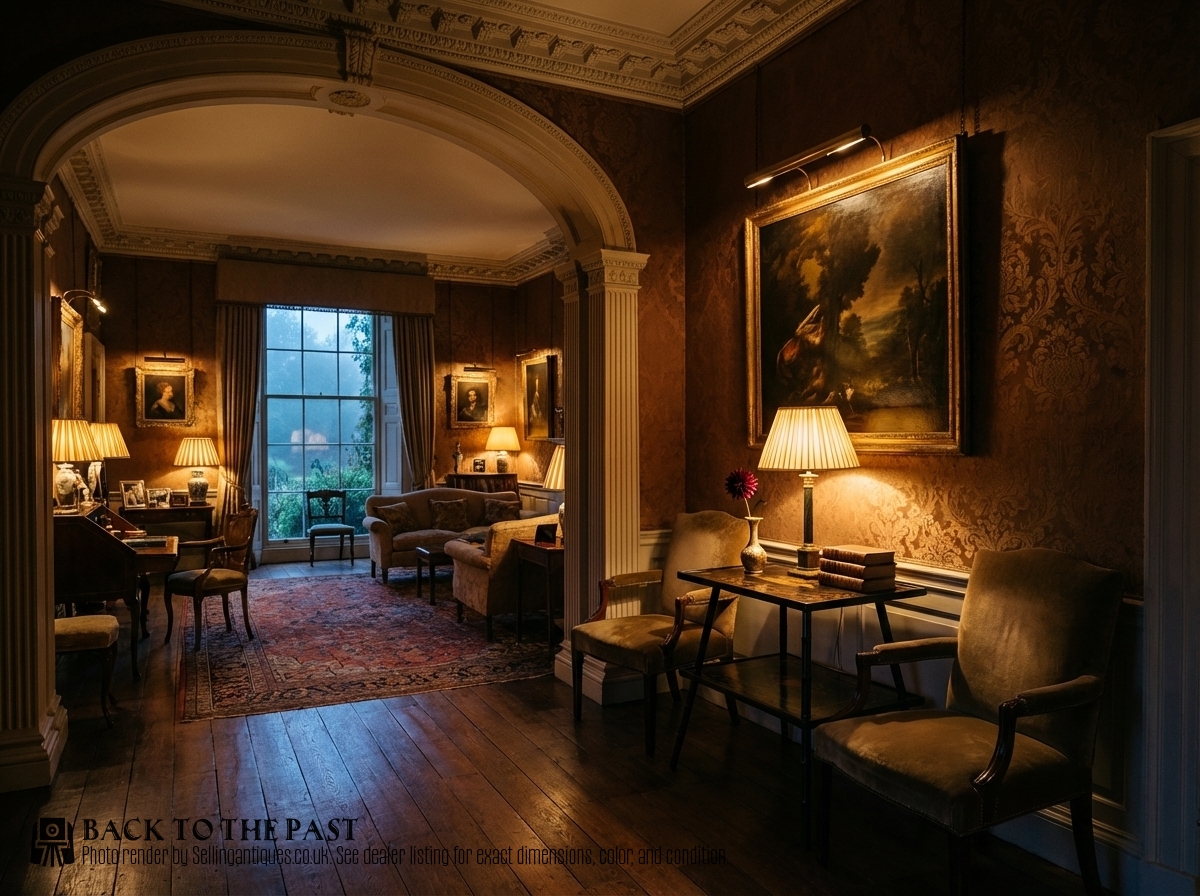
Ebonised Marquetry Side Table
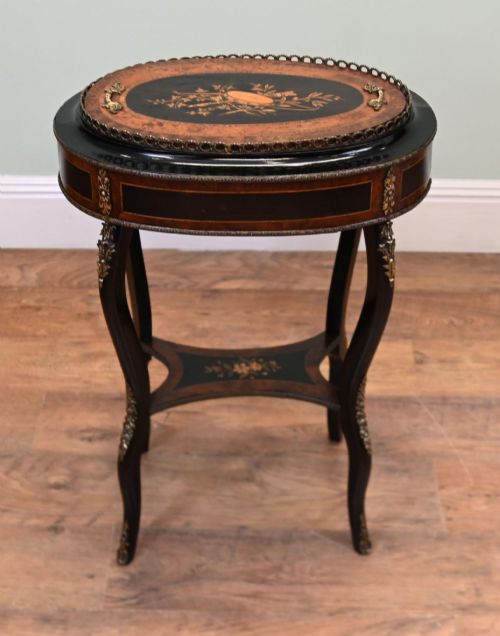
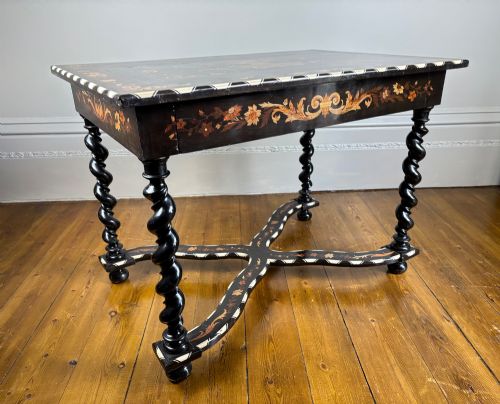
When you search for an ebonised marquetry side table, you encounter nineteenth-century decorative furniture designed to catch the eye through contrast. These pieces combine deep, dark timber surfaces with intricate wood, bone or metal inlay work.
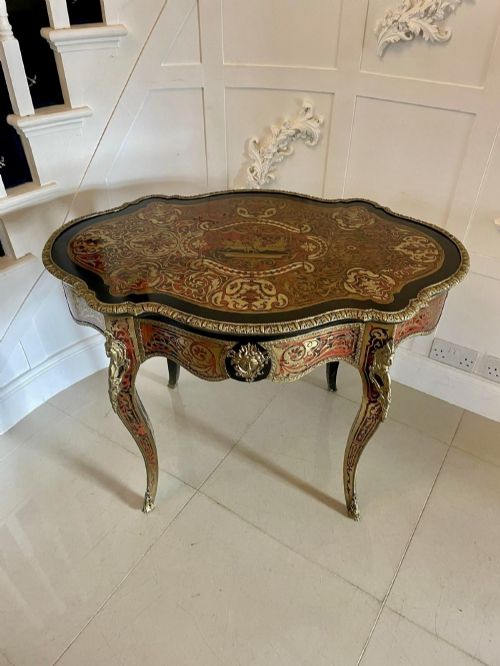
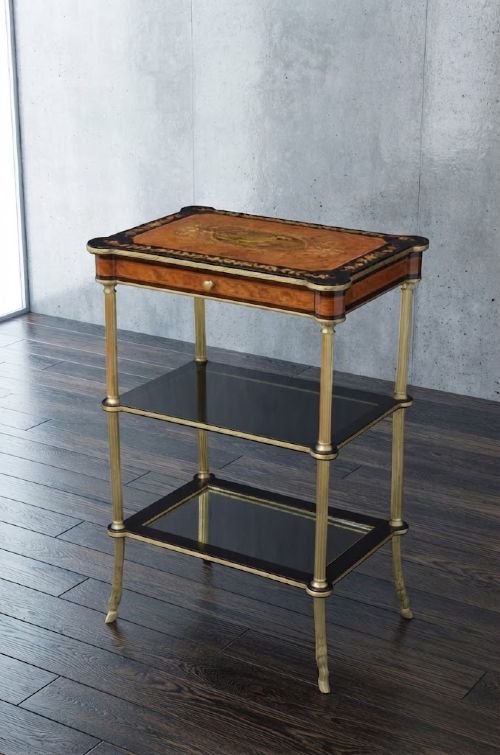
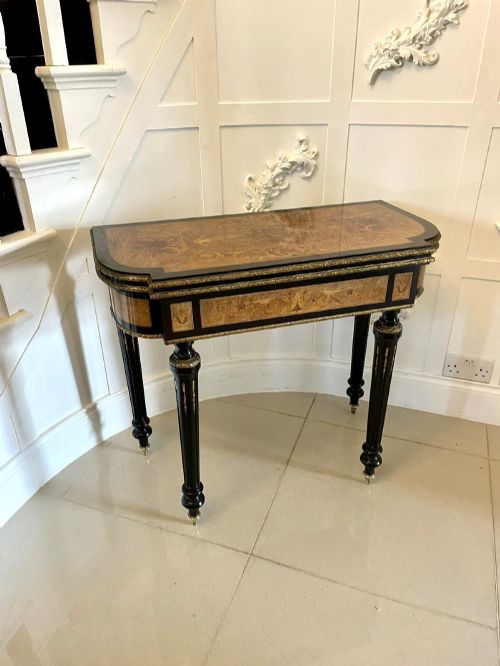
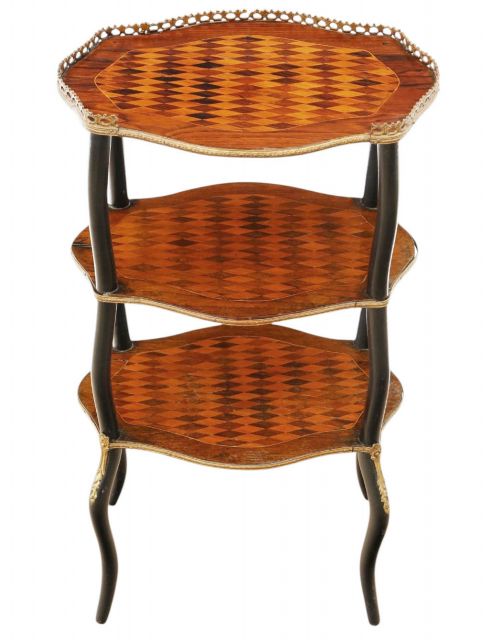
On this page, you are most likely to meet French examples from the Victorian and Napoleon III periods, taking the form of centre tables, tiered etageres and occasional tables. They serve as functional surfaces that double as decorative focal points in a room.
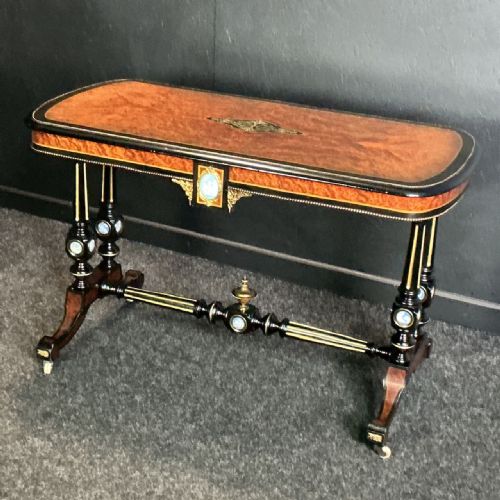
The styles range from Louis XV revivals to Aesthetic Movement designs, showing how makers across Europe adapted historical motifs for nineteenth-century drawing rooms.
Materials and Technique
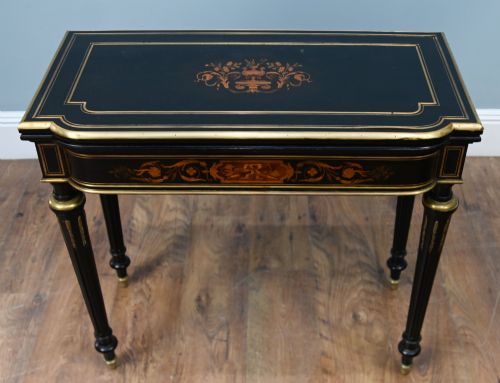
Makers achieved the characteristic dark finish by ebonising wood, often using fruitwoods or other pale timbers treated to imitate expensive ebony. This dark ground provided a stark canvas for marquetry inlay executed in contrasting woods, mother-of-pearl, and bone.
Many pieces incorporate cast ormolu mounts and brass stringing to accentuate the structural lines and protect the edges. The marquetry itself relies on precise hand-cutting, fitting different veneer species together to create floral or geometric pictures.
Ebonised Marquetry Side Table Retail Price Guide 2026
Typical asking prices for ebonised marquetry side table among the pieces listed under this phrase on Sellingantiques today, from the lower quarter to the upper quarter. They describe what is for sale here now, not the wider market.
Among the tables designed for quiet rooms, at least one example arrives equipped to play music.
Distinctions in Quality
The hierarchy among these pieces rests upon the crispness of the inlay and the ambition of the brass or ormolu mounts. Finer examples display tight, seamless botanical or geometric marquetry where different timbers and bone meet without visible filler.
Construction depth also separates the standard production from the exceptional. Better items feature secondary timbers of higher grade, heavier bronze mounts with chased detail, and sophisticated forms such as three-tier etageres or multi-functional writing tables.
Edward’s And Robert’s·Liberty & Co.·Maison Millet
The Ebonised Marquetry Side Table Glossary
- Ebonised
- Wood treated with stain or paint to imitate the dark, dense appearance of ebony. This finish became immensely popular during the nineteenth century for high-style revival furniture.
- Marquetry
- Decorative veneer work arranged in pictorial or geometric patterns using various woods, metals, and shell. It differs from parquetry by forming complex pictures rather than repeating geometric tile patterns.
- Ormolu
- Gilded bronze mounts applied to furniture edges and corners for decoration and reinforcement. The best examples are hand-chased after casting to sharpen the surface details.
- Etagere
- An open piece of furniture with multiple tiers for display or storage. These stands emerged in various revival styles during the nineteenth century.
Ebonised Marquetry Side Table: Frequently Asked Questions
How do I care for ebonised wood?
Keep these pieces away from direct sunlight and dramatic humidity changes to protect the ebonised finish and prevent timber shrinkage. Dust them gently with a dry, soft cloth and avoid commercial silicone polishes.
Wax can be used sparingly on unfinished wooden parts, but take care not to let moisture or polish pool around the delicate brass inlays and ormolu mounts.
What is the difference between a side table and a centre table?
A side table typically stands against a wall or in a corner, featuring decoration primarily on the front and sides. A centre table is designed to be viewed from all four angles, standing freely in the middle of a room with complete marquetry on the top surface.
Nineteenth-century examples of both types often served multiple functions, acting as writing desks, card tables, or plant stands depending on the specific model.
Are these tables purely French?
While the majority of pieces on this page reflect French Napoleon III and revival tastes, the category includes English, German, and Dutch examples. Each region brought distinct cabinetmaking traditions to the ebonising and inlay process.
English makers often aligned with the Aesthetic Movement, whereas continental workshops leaned towards exuberant floral marquetry and heavy ormolu mounts.
How do I identify a nineteenth-century piece?
Examine the construction methods underneath and inside the table, looking for hand-cut dovetails, timber shrinkage patterns, and period-appropriate secondary woods. The presence of ebonised fruitwood combined with brass stringing and floral marquetry usually points directly to the Victorian era.
Makers' stamps, paper labels, or signatures cast into the bronze mounts can also help pinpoint the exact workshop and decade of origin.