





Ebonised Tier Table
An ebonised tier table brings stacked surfaces and dark, polished wood into a room, offering practical display space with distinctive period character.
Ebonised Tier Table
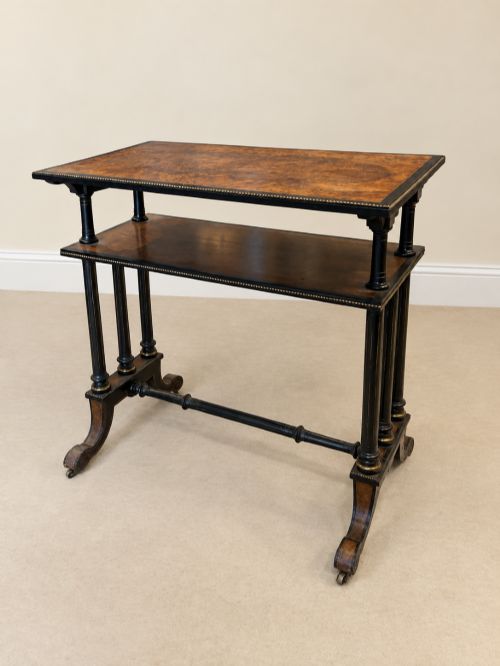
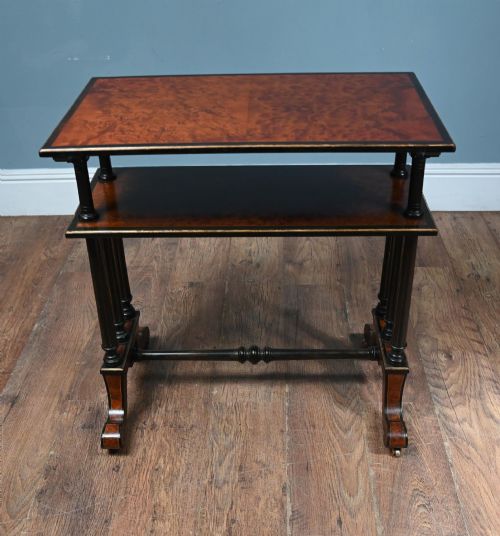
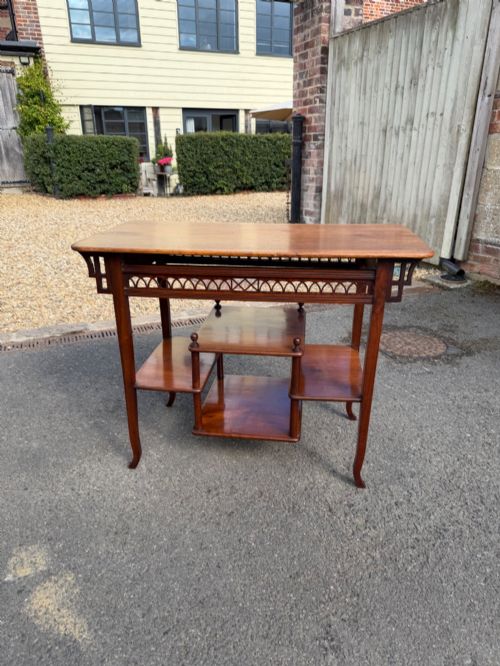
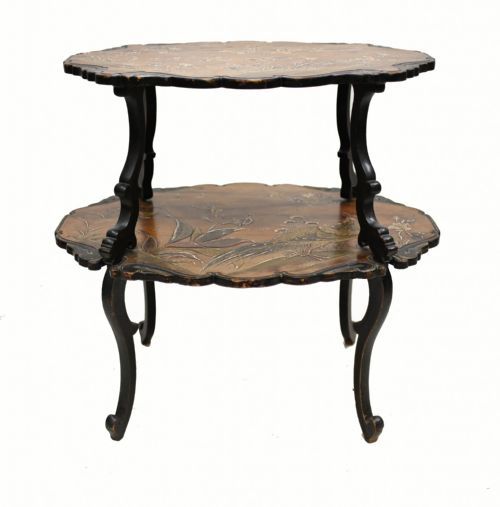
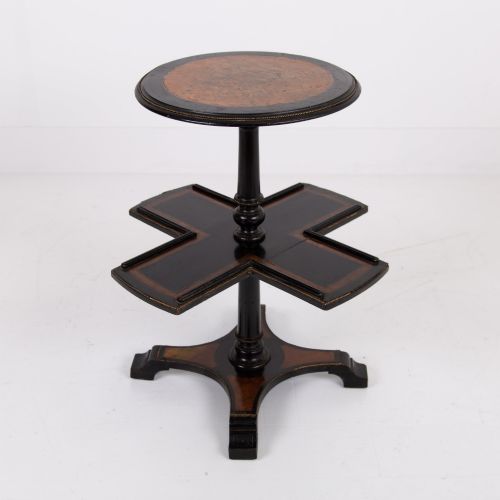
An ebonised tier table is a multi-level piece of furniture designed for display and occasional use, frequently appearing as a side table, étagère, or whatnot. These tables serve multiple tiers for arrangement while maintaining a compact footprint in a room.
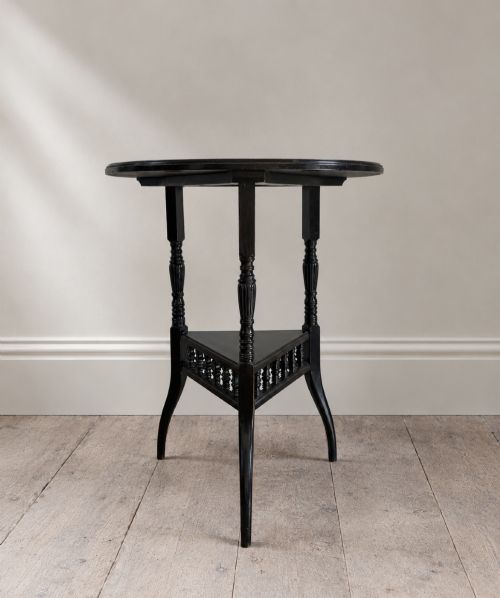
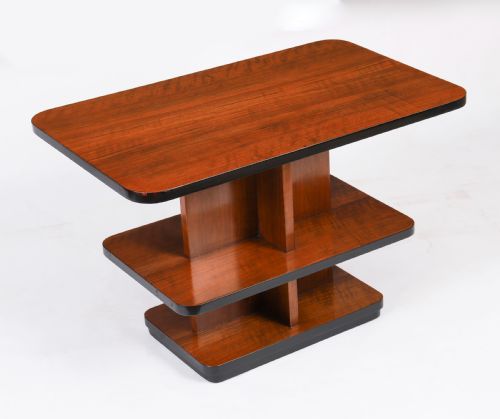
The selections available on this page lean heavily towards late nineteenth-century Victorian and Aesthetic Movement pieces, alongside French designs and later Art Deco examples. Many of these nineteenth-century items reflect the linear influence of designers such as E.W. Godwin, pairing darkened wood with slender uprights.
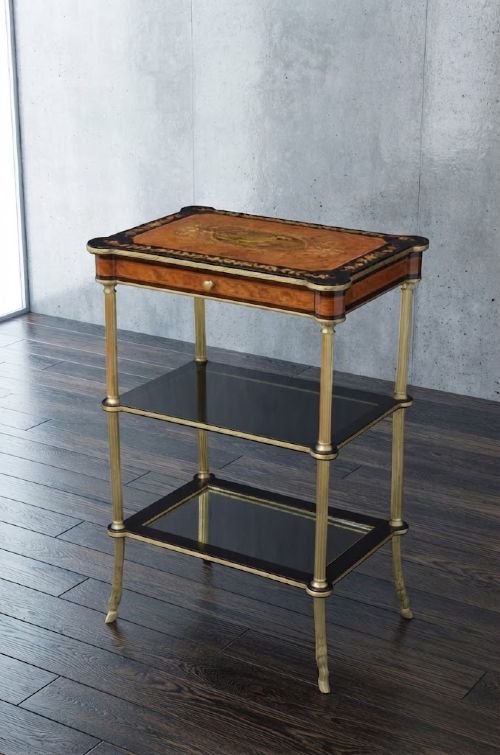
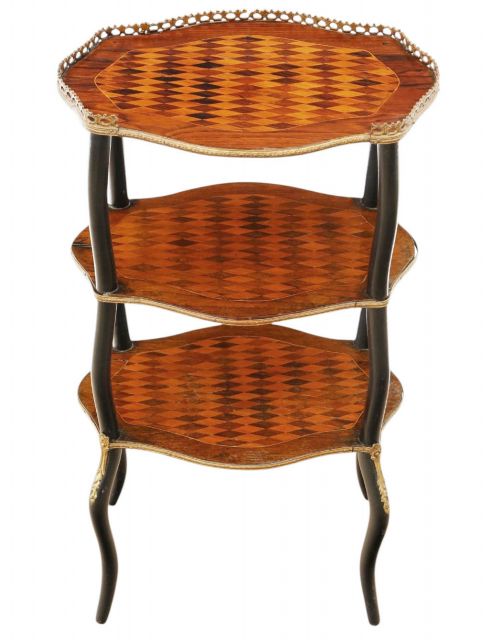
Forms range from simple two-tier rectangular and round side tables to taller display structures featuring mirrored backs or intricate parquetry. Buyers encounter formats intended for books, plants, or ornaments, each utilising stacked surfaces to maximise display area.
How they were made
Cabinet makers produced these tables using hardwoods like beech, walnut, or fruitwood, treating the surface with a dark stain or black lacquer to imitate costly ebony. This ebonised finish provided a uniform, sleek backdrop for decorative elements.
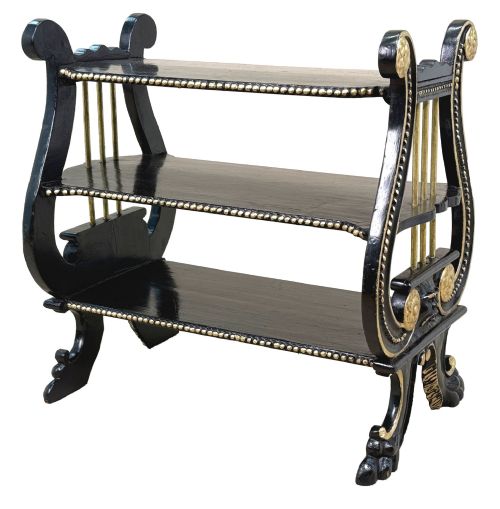
Makers integrated contrasting materials to lift the dark surfaces, incorporating brass galleries, ormolu mounts, parcel gilt highlights, and inlaid woods such as amboyna and boxwood. Structural joints relied on traditional woodworking techniques to support multiple tiers securely on slender legs.
Ebonised Tier Table Retail Price Guide 2026
Typical asking prices for ebonised tier table among the pieces listed under this phrase on Sellingantiques today, from the lower quarter to the upper quarter. They describe what is for sale here now, not the wider market.
Some nineteenth-century makers incorporated mother of pearl inlay into their ebonised tiers to catch the gaslight.
What varies in quality
The distinction between standard commercial output and finer workshops lies in the crispness of the turning, the precision of any inlay, and the integration of decorative mounts. Superior examples exhibit deliberate proportions where the weight of each shelf balances the thickness of the supporting uprights.
The execution of the ebonisation and the choice of secondary timbers also separate grades of manufacture. Higher quality pieces utilise dense hardwoods that hold a deep, durable polish, whereas simpler items rely on softer woods with painted or thinly stained surfaces.
Liberty of London·Bertram and Son·H Ogden of Manchester·Cottier and Co
The Ebonised Tier Table Glossary
- Ebonisation
- The process of treating timber with chemical solutions or dark finishes to simulate the dense, black appearance of solid ebony. This technique gained immense popularity during the Victorian and Aesthetic periods.
- Étagère
- A piece of furniture consisting of several open shelves or tiers for displaying small objects or ornaments. These structures often feature slender vertical supports.
- Aesthetic Movement
- A late nineteenth-century design current that prioritised visual beauty over narrative or moral purpose in art and furniture. It drew heavy inspiration from Japanese design principles.
- Parcel Gilt
- A decoration method where selected portions of an object are covered in thin gold leaf. This technique highlights carved details or structural edges against a dark background.
- Whatnot
- A multi-tiered shelving unit or small stand used for storing or displaying ornaments and books. It became a staple of Victorian interior furnishing.
Ebonised Tier Table: Frequently Asked Questions
What is an ebonised tier table used for?
These tables provide layered surfaces suited for holding lamps, small clocks, ceramics, and books. The secondary shelf allows for additional display without taking up extra floor space.
Historically, they functioned as occasional tables in drawing rooms or as display stands for prized collections. Today, they fit easily beside seating or serve as plant stands in hallways.
How do I identify an Aesthetic Movement table?
Aesthetic Movement tables usually feature ebonised wood frames, clean geometric lines, and occasional Asian-inspired motifs. Many follow designs associated with figures like E.W. Godwin.
They often include subtle details like parcel gilding, bamboo-turned legs, or brass fittings. The overall aesthetic values simplicity and flat planes over heavy Victorian carving.
Are these tables sturdy enough for daily use?
Most tier tables are constructed with multiple slender uprights supporting upper shelves, which makes them better suited for display than heavy weight-bearing tasks. They comfortably hold lamps and decorative objects.
Care should be taken not to overload the upper tiers. Placing them where they will not be knocked ensures the slender structural elements remain undamaged.
How do I care for an ebonised wood finish?
Ebonised surfaces benefit from regular dusting with a soft, dry cloth to prevent micro-abrasions. Avoiding direct sunlight and excessive moisture preserves the dark polish.
Applying a specialist wax sparingly helps maintain the lustre of the finish. Harsh chemical cleaners should be avoided entirely to protect the historic surface.