

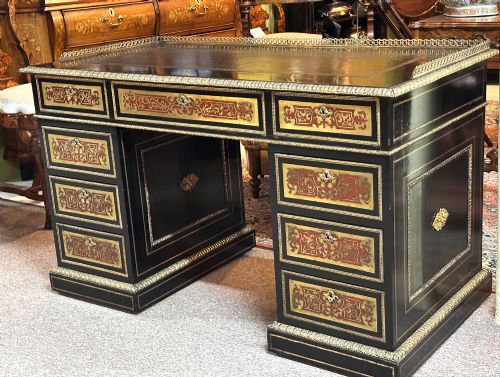


Ebonised Marquetry Desk
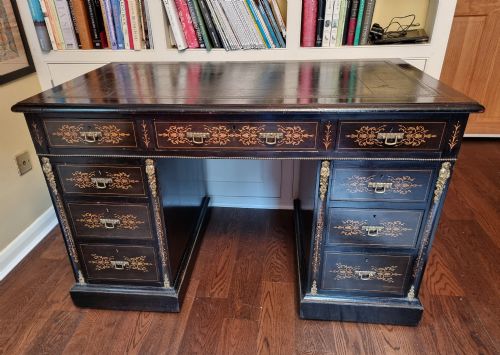
An ebonised marquetry desk brings deep dark timber and intricate patterned inlay together, offering a striking centrepiece for a study.
Ebonised Marquetry Desk
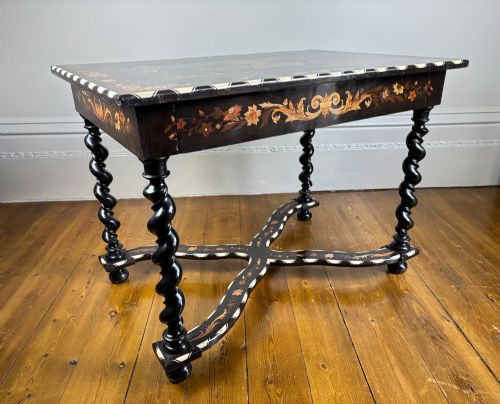
When you search for an ebonised marquetry desk, you are looking at nineteenth-century furniture that combines blackened wood surfaces with detailed wood, metal, or shell inlay. These pieces date across the Victorian period and the French Napoleon III era, spanning years from eighteen fifty to eighteen ninety.
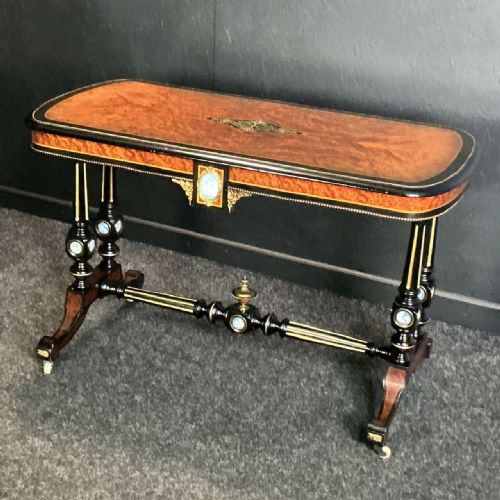
The selection on this page includes writing desks, bureau plat forms, and bonheur du jour cabinets alongside freestanding centre tables. Many adopt Louis XV style curves and revival details, reflecting French and Dutch influences from the nineteenth century.
How they were made
Makers built these desks using foundational carcases of walnut or other timbers, applying ebonisation treatments to darken the exterior to a deep black finish. They then set marquetry and parquetry patterns into the surface using contrasting woods like burr walnut and amboyna.
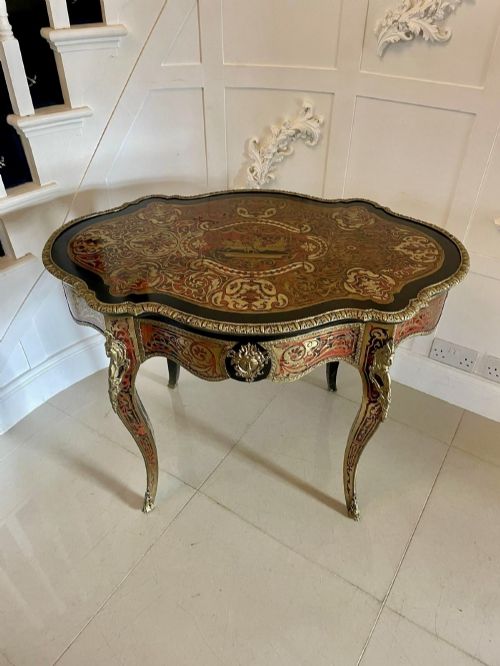
Many examples incorporate brass and ormolu mounts, tortoiseshell, and bone inlay within Boulle work techniques. Craftsmen secured these delicate metallic and organic elements directly into the wood ground to create shimmering surface patterns.
A tiny bone inlay detail hides quietly inside a nineteenth-century Dutch table, waiting for someone to run a finger across its surface.
What varies in quality
The distinction between standard production and top quality pieces lies in the crispness of the marquetry cut and the precision of the brass inlay. Superior examples display tightly fitted veneers and intricate engraving within the metalwork rather than simple stamped shapes.
Mount quality dictates the grade of the desk, with finely chased ormolu mounts and genuine tortoiseshell elevating a piece far above simpler veneered alternatives. The integration of secondary timbers and the refinement of the ebonised finish further separate ordinary items from exceptional works.
Edwards & Roberts·Maison Millet·Paul Sormani
The Ebonised Marquetry Desk Glossary
- Ebonised
- Wood treated with stain or paint to imitate expensive ebony. This dark finish provides a high-contrast background for brass and marquetry inlay.
- Marquetry
- Decorative veneer work arranged in pictorial or geometric patterns. Craftsmen cut thin slices of various woods and other materials to fit together seamlessly.
- Boulle
- A method of marquetry using brass and tortoiseshell developed in France. Artisans cut sheets of metal and shell simultaneously to create contrasting positive and negative designs.
- Ormolu
- Gilded bronze used for decorative mounts and furniture feet. This material adds metallic warmth and sculptural detail to the corners and legs of tables and desks.
- Bonheur du jour
- A small ladies' writing desk featuring a tiered superstructure with shelves, drawers, or a small cabinet above the main writing surface.
Ebonised Marquetry Desk: Frequently Asked Questions
What is an ebonised marquetry desk?
An ebonised marquetry desk is a nineteenth-century writing table featuring a dark, blackened wood finish combined with patterned wood or metal veneer inlay. These pieces often follow French revival styles from the Victorian era.
They serve both practical writing functions and decorative display roles within a room. Many examples incorporate subsidiary drawers, brass mounts, and tiered compartments.
How do I identify French Boulle work?
French Boulle work is identified by the distinctive pairing of tortoiseshell and brass inlay, often creating elaborate scrollwork patterns across the desk surface. This technique produces a reflective, two-tone tortoiseshell and metal effect.
Such decoration usually dates to the nineteenth century under Napoleon III influence. The brass elements are frequently engraved with fine floral or geometric details.
Where were these desks placed?
These desks were designed for principal reception rooms, private boudoirs, and refined nineteenth-century home offices. Freestanding centre tables and partners desks were placed to be viewed from all angles in large spaces.
Smaller bonheur du jour writing cabinets were typically positioned against walls or near windows to catch natural light for correspondence.
How do I care for ebonised furniture?
Care for ebonised wood and inlaid surfaces by avoiding direct sunlight and excessive moisture, which can damage delicate veneers and tortoiseshell. Regular dusting with a soft, dry cloth preserves the polished dark finish without chemical buildup.
Keep the environment at a stable humidity level to prevent the wood and metal inlay from expanding or contracting at different rates.