



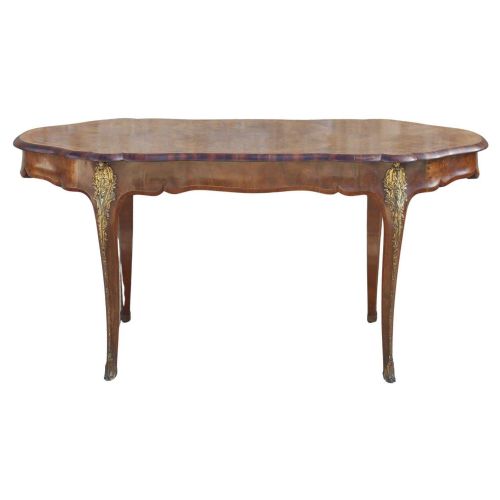
Victorian Louis XV Desk
When you search for a victorian louis xv desk, you find ornate nineteenth-century writing furniture shaped by continental rococo revivals.
Victorian Louis XV Desk
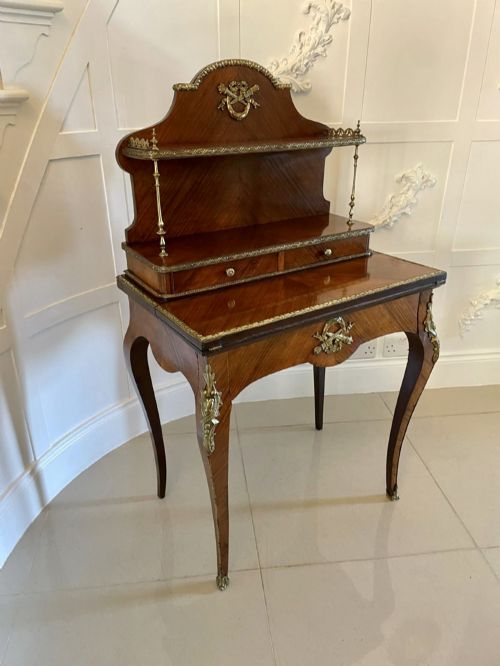
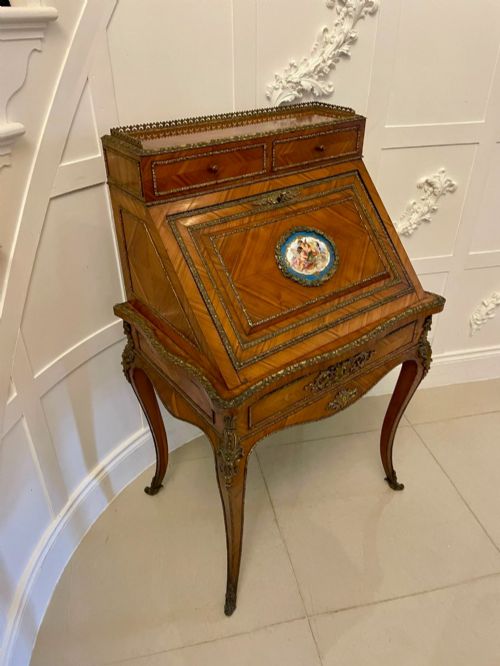
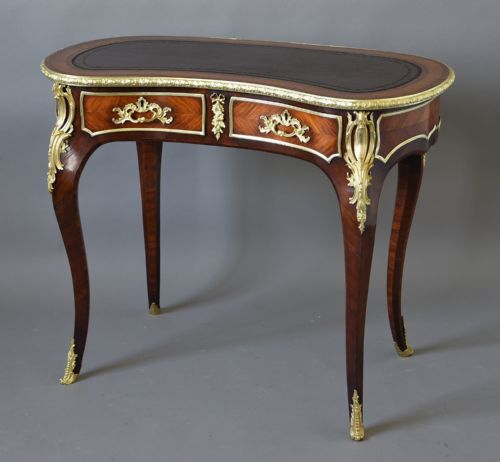
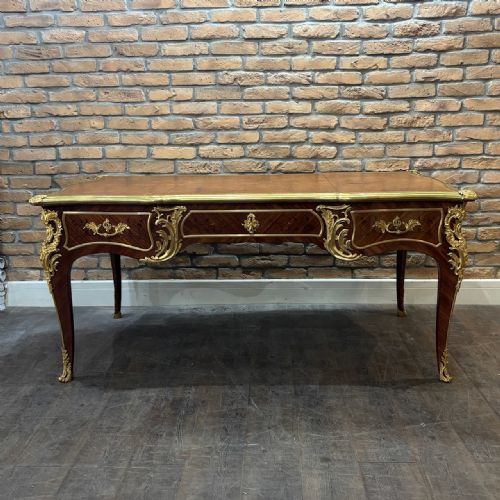
A victorian louis xv desk combines nineteenth-century British cabinet-making with French rococo design vocabulary. These pieces emerge in forms such as writing tables, kidney-shaped library tables, and slope-front bureaus.
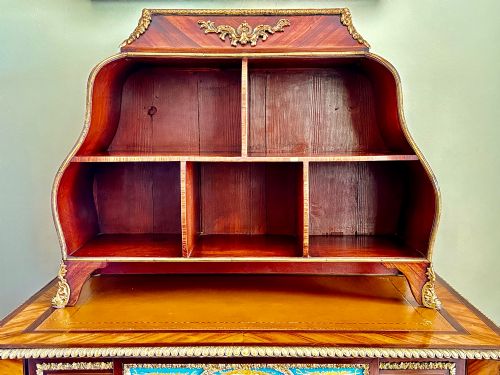
Makers adapt continental serpentine contours and cabriole legs for Victorian interiors. The selection spans freestanding centre tables and elaborate bonheur du jour writing cabinets.
Materials and construction
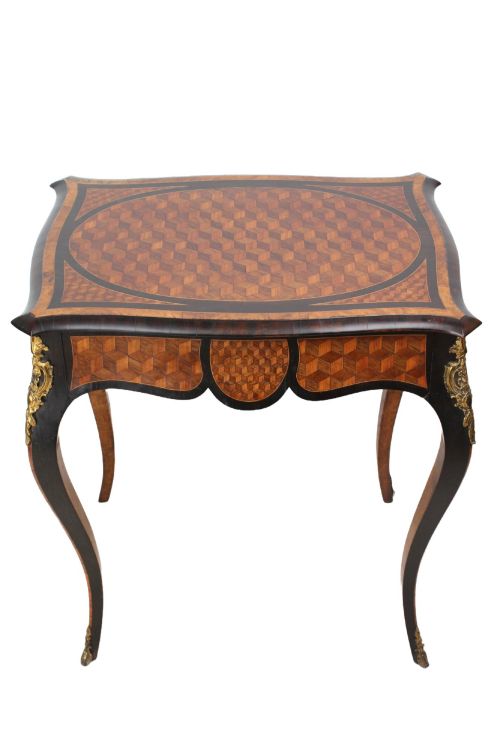
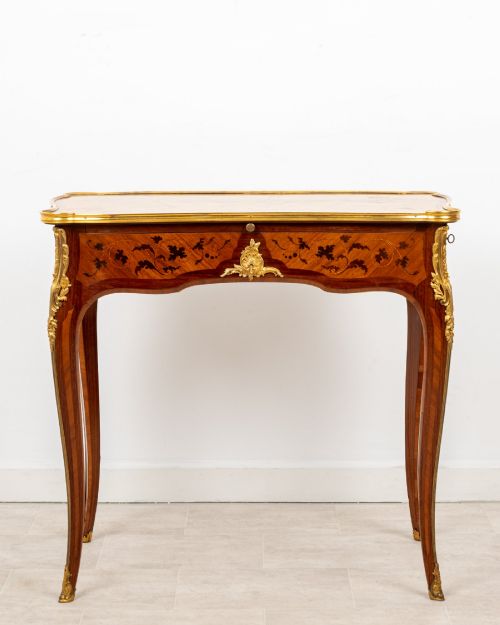
Cabinet-makers employ walnut, burr walnut, kingwood, and satinwood over supportive softwood carcases. Complex marquetry and parquetry patterns decorate the writing surfaces and friezes.
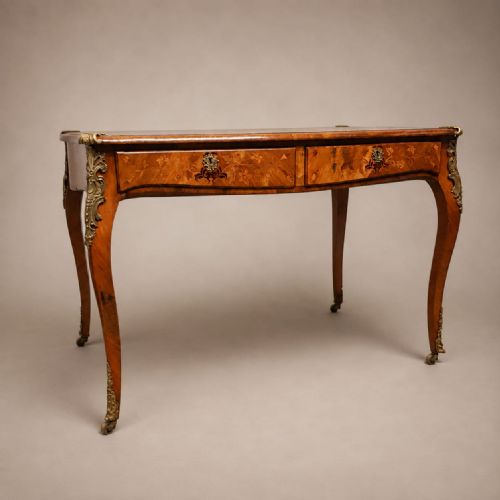
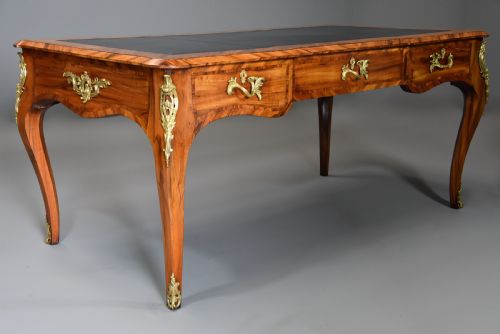
Gilt bronze and ormolu mounts accentuate the organic curves and protect vulnerable corners. Leather inserts form the writing surface on bureau plat examples.
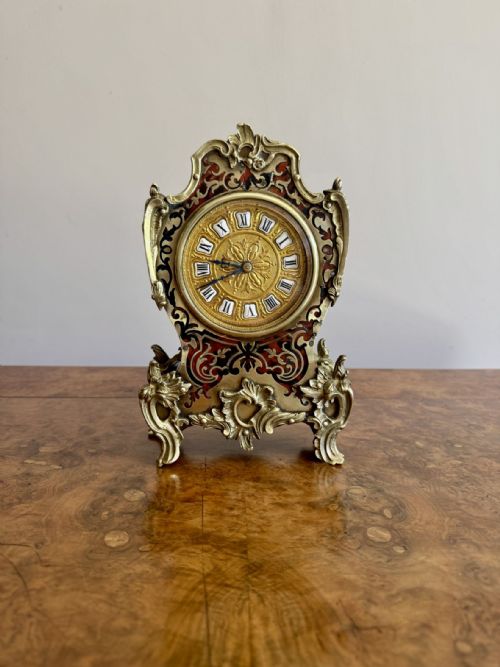
Miniature bedside clocks keep ticking quietly through the decades.
Judgments of quality
The distinction between standard production and top tier work rests on timber selection and mount chiselling. Finely figured burr walnut and crisply chased ormolu elevate a piece above simpler veneered alternatives.
Makers known for exceptional joinery, such as Edwards & Roberts or JAS Shoolbred, demonstrate superior precision in internal drawer construction and marquetry alignment.
JAS Shoolbred·Durand·Edwards & Roberts
The Victorian Louis XV Desk Glossary
- Ormolu
- Gilded bronze used for decorative mounts and furniture garniture. It provides bright metallic highlights along the serpentine edges.
- Bureau plat
- A freestanding writing table fitted with drawers in the frieze. This form lacks a superstructure and stands away from the wall.
- Bonheur du jour
- A small light lady's writing desk featuring a raised cabinet with shelves or small drawers. It sits on slender cabriole legs.
- Marquetry
- Veneers arranged in pictorial or decorative patterns across a wooden surface. Craftsmen cut contrasting timbers to create floral or geometric designs.
- Cabriole leg
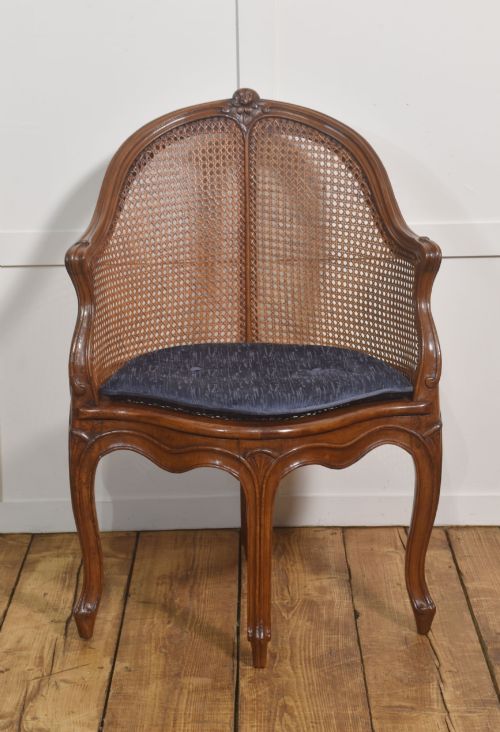
- A furniture leg that curves outward and then tapers inward with a pad foot. It mimics animal limbs and defines rococo revival seating and tables.
Victorian Louis XV Desk: Frequently Asked Questions
What is a bureau plat?
A bureau plat is a flat-topped writing table designed to be viewed from all sides in the middle of a room.
These tables typically feature multiple frieze drawers and gilt metal mounts following rococo lines.
How do I identify Louis XV revival?
Louis XV revival pieces display asymmetrical curves, cabriole legs, and naturalistic scrollwork. Makers adopt these French forms during the nineteenth century.
Look for serpentine outlines and floral marquetry patterns rather than straight geometric lines.
Where were these desks used?
Owners placed these writing tables in principal reception rooms, libraries, and private boudoirs. Their finished backs allowed them to stand away from walls.
They served as elegant surfaces for correspondence and light administrative tasks.
What woods are common?
Cabinet-makers utilise walnut, burr walnut, kingwood, and satinwood forveneered surfaces. Secondary woods provide structural stability inside the carcase.
Inlaid contrasting timbers create geometric parquetry patterns across the tops and drawers.