

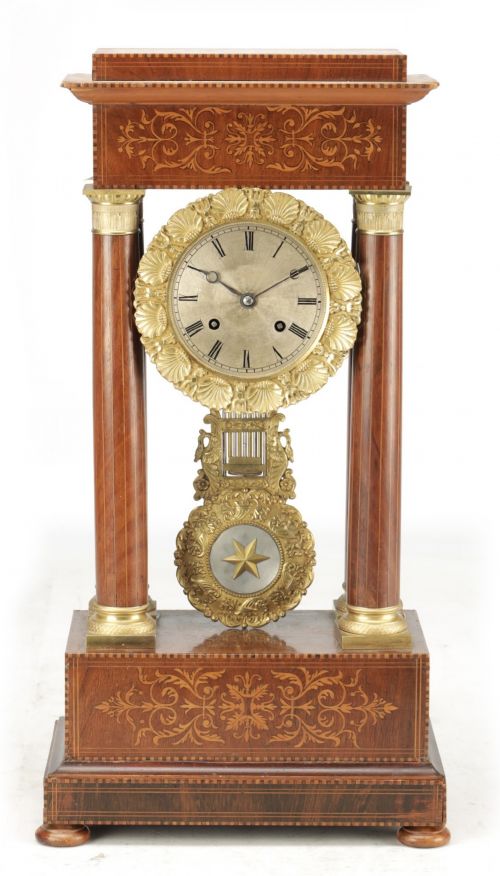
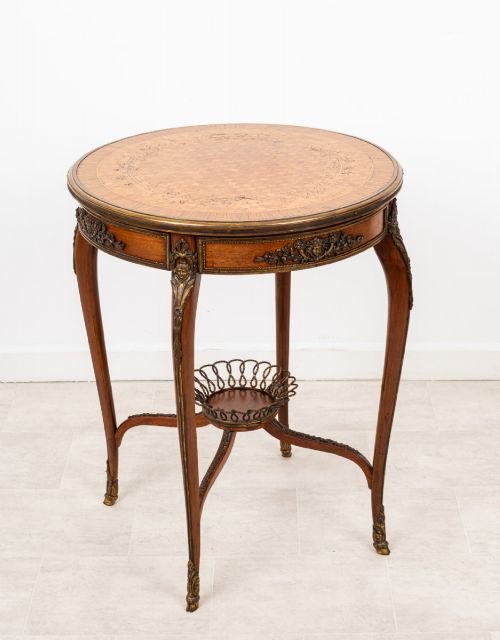
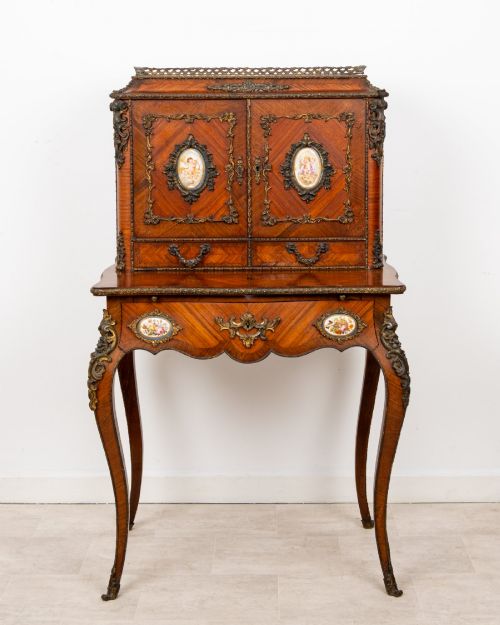
Ormolu Mounted Wood Table
An ormolu mounted wood table combines rich timbers with cast bronze details, offering functional elegance for period and eclectic interiors alike.
Ormolu Mounted Wood Table
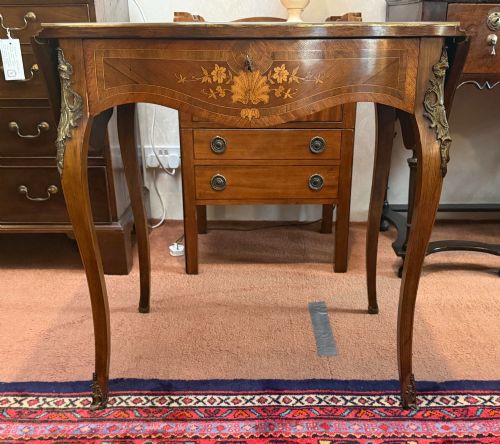
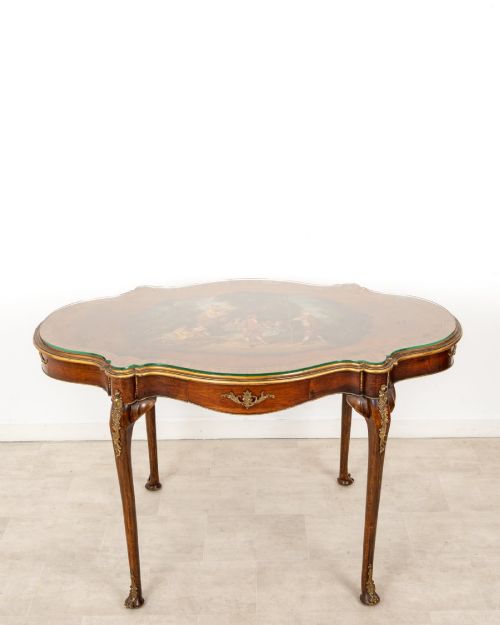
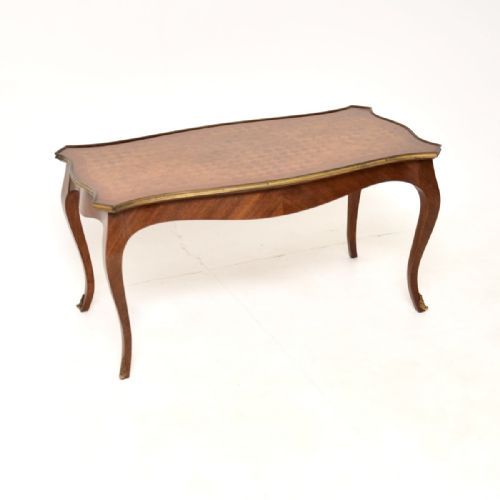
When searching for an ormolu mounted wood table, buyers encounter a variety of forms designed for nineteenth-century and early twentieth-century reception rooms. Side tables, centre tables, and writing desks predominate across the selection.
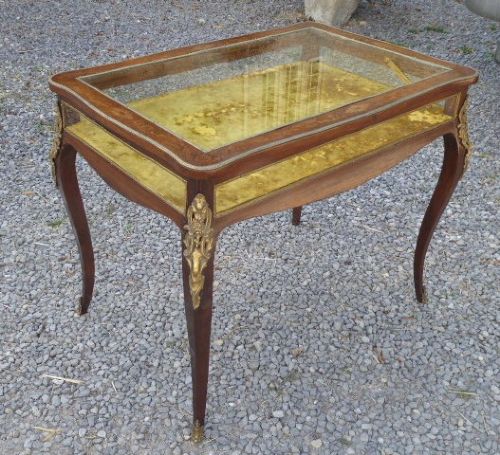
The inventory includes occasional tables, card tables, and vitrine display pieces originating primarily from French and Victorian workshops. These items served both utilitarian and decorative purposes in formal residential settings.
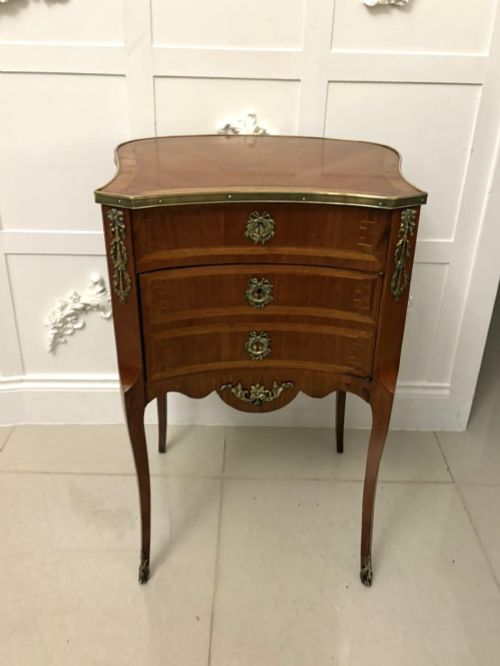
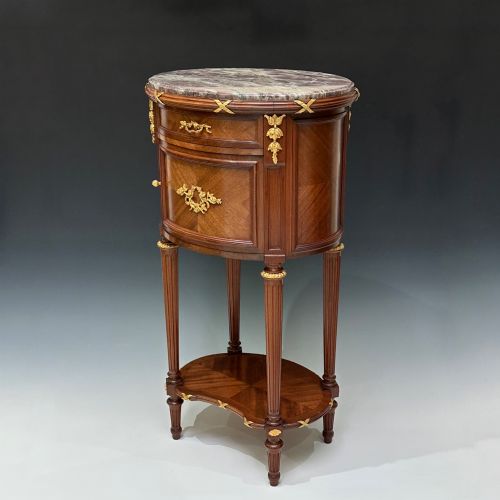
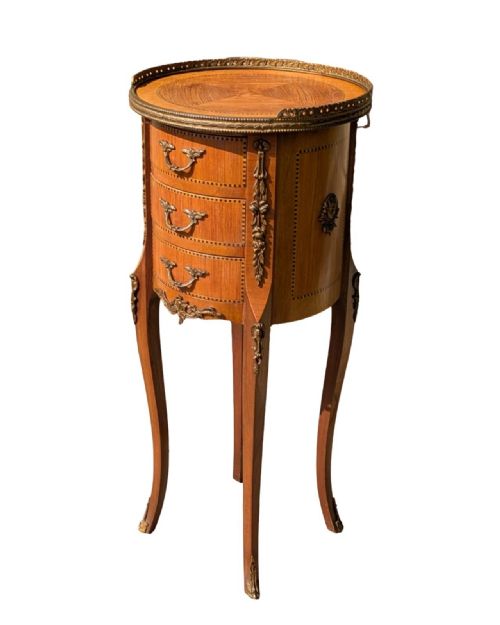
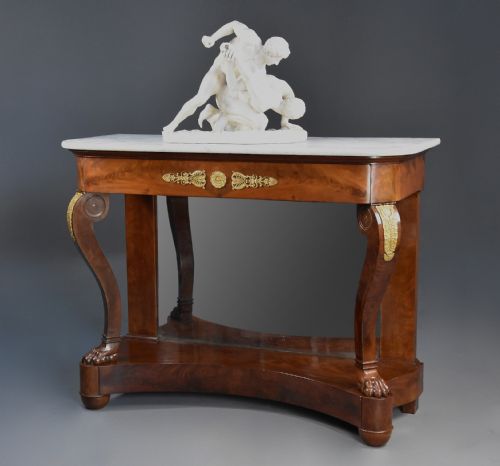
Most examples date from the nineteenth century, drawing on Louis XV and Louis XVI revival aesthetics. Makers utilised distinct forms such as console tables and bedside cabinets alongside larger freestanding pieces.
How they were made
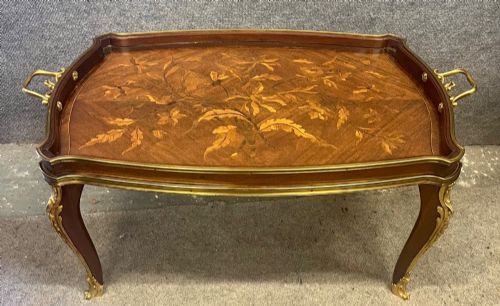
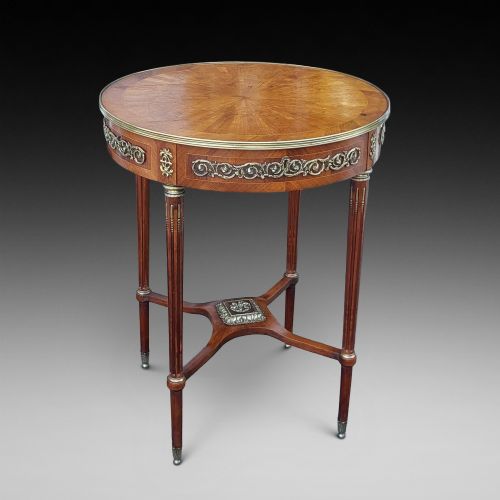
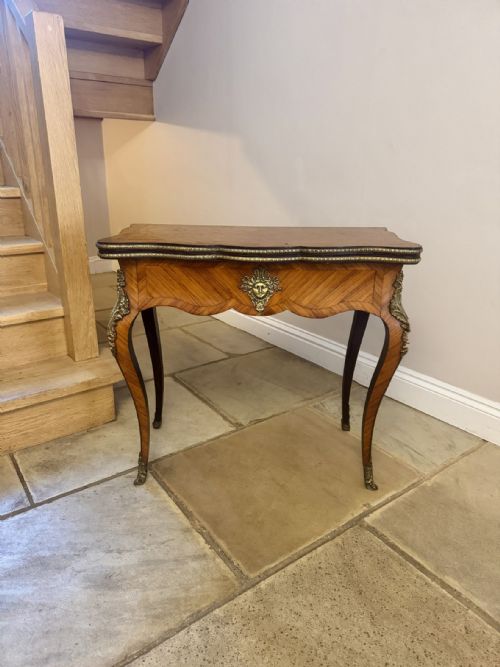
Craftsmen built these tables using dense cabinet timbers like kingwood, mahogany, walnut, and rosewood, often applying intricate marquetry and parquetry veneers in geometric or floral patterns.
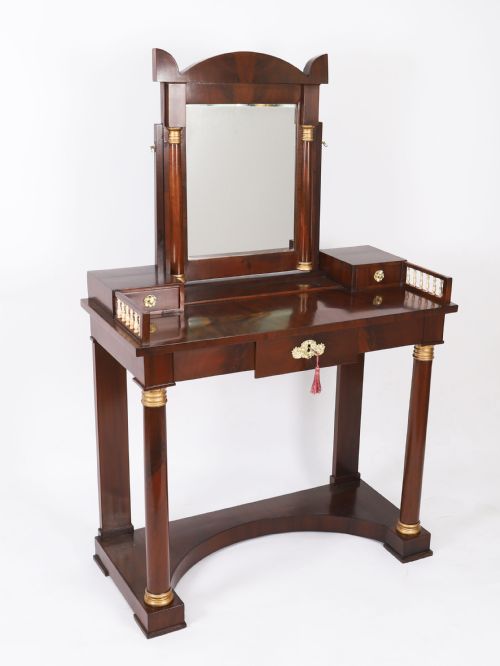
Gilt bronze ormolu mounts were cast and chased by hand before being fixed to corners, aprons, and legs to accentuate the structural lines of the furniture.
Marble tops and Sevres porcelain plaques frequently accompany ormolu mounts on nineteenth-century centre and writing tables.
What varies in quality
The refinement of the cast bronze ormolu mounts distinguishes superior pieces, showing crisp detail and careful chasing rather than flat, machine-finished surfaces.
The complexity of the wood veneers and the precision of the marquetry inlay determine the grade of the cabinetwork, alongside the reputation of the maker or workshop responsible for the construction.
François Linke·Edwards & Roberts·G T Morant·Joseph-Emmanuel Zwiener·Durand·Schneckenburger
The Ormolu Mounted Wood Table Glossary
- Ormolu
- Gilt bronze mounts applied to furniture. This technique involves treating bronze with an acid and gold mixture to produce a rich metallic lustre.
- Marquetry
- Decorative veneer applied to furniture in pictorial patterns. Artisans cut thin slices of different coloured woods to create floral or geometric designs.
- Parquetry
- Geometric veneer work forming repeating patterns. Squares, triangles, and diamonds of contrasting timber are arranged to create an optical effect.
- Bijouterie table
- A glass-topped display table designed for small valuables. These pieces feature glazed lids and velvet-lined interiors for showing delicate items.
- Bureau plat
- A flat-topped freestanding writing desk. These tables typically feature leather inserts and multiple drawers integrated into the frieze.
Ormolu Mounted Wood Table: Frequently Asked Questions
What is an ormolu mounted wood table?
These items are nineteenth-century and early twentieth-century wooden tables decorated with cast gilt bronze mounts. They span forms such as card tables, writing desks, and centre tables.
Cabinetmakers paired exotic timbers like kingwood and rosewood with metallic ornamentation to create formal furniture for domestic interiors.
How were these tables used originally?
Owners placed them in salons, drawing rooms, and studies for writing, displaying collectibles, or playing cards. Some variants functioned as specialised work tables for sewing.
Freestanding centre tables stood in the middle of rooms to display decorative objects, while smaller bedside cabinets served private quarters.
How do I identify the revival styles?
Louis XV revival pieces display curved cabriole legs, asymmetrical floral marquetry, and organic ormolu mounts. Louis XVI style pieces feature straighter lines, classical symmetry, and fluted legs.
Empire style items incorporate heavier mahogany construction with military or classical gilt bronze motifs reflecting nineteenth-century French taste.
How do I care for ormolu and wood surfaces?
Keep the wood conditioned using appropriate furniture wax applied sparingly with a soft cloth. Avoid placing these tables in direct sunlight or near heat sources.
Dust the ormolu mounts gently with a dry brush, avoiding abrasive metal cleaners that can damage the underlying gilt surface.