

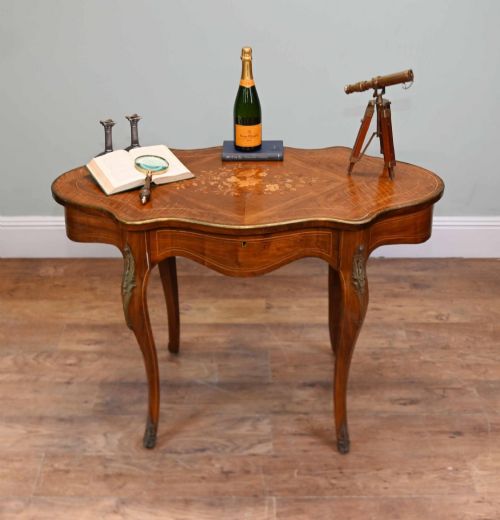
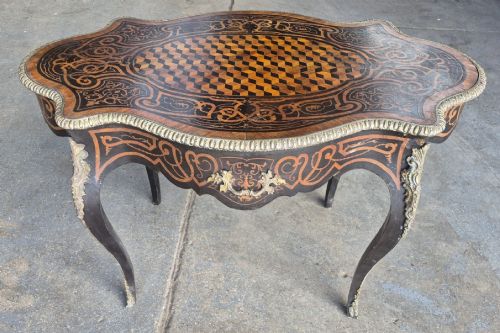
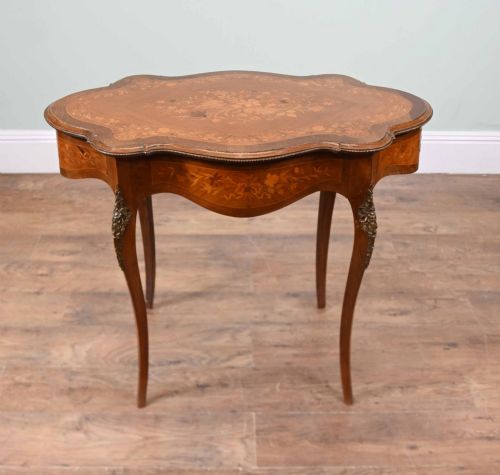
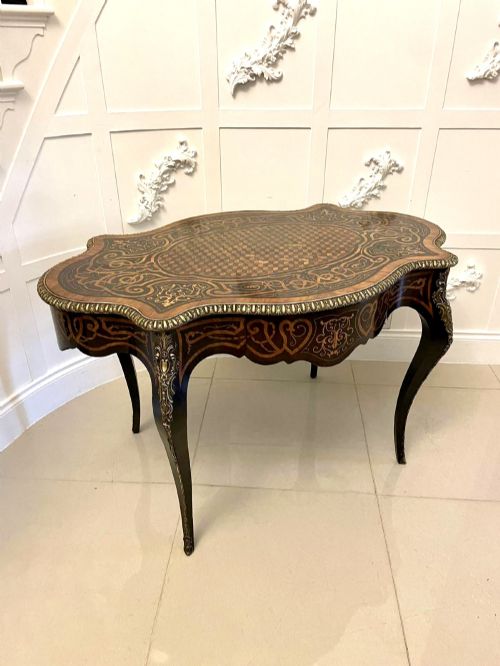





Serpentine Marquetry Centre Desk
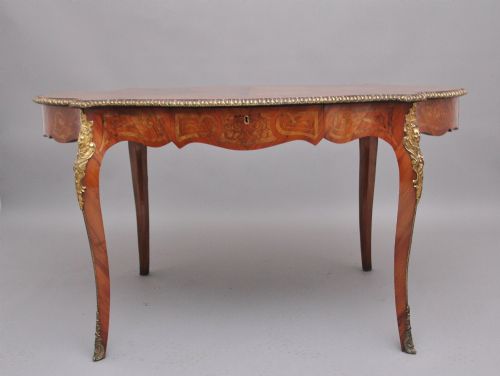
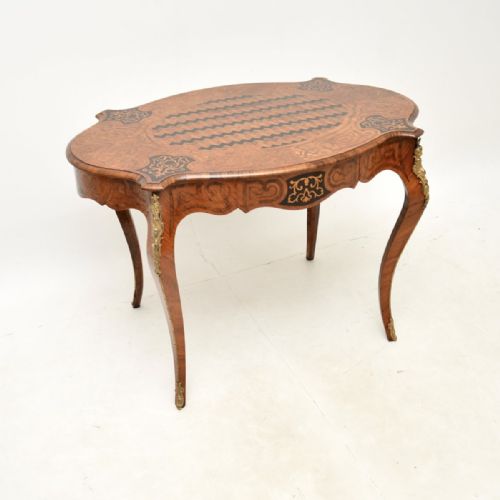
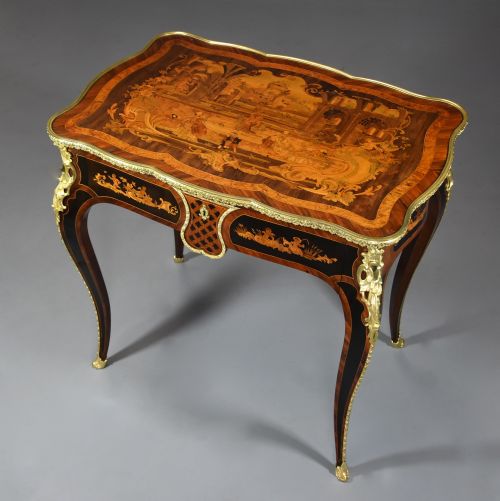
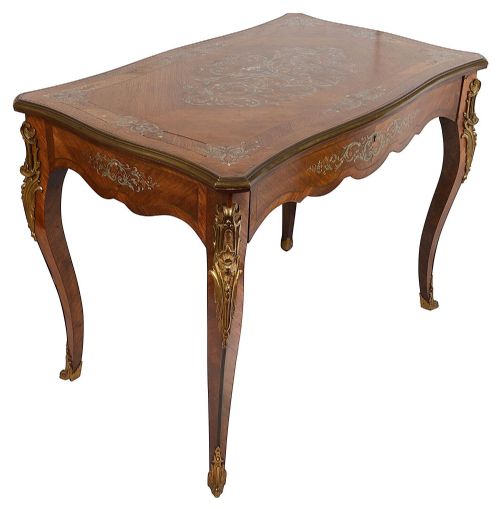
These serpentine marquetry centre desks are elaborate nineteenth-century showpieces combining intricate wood veneers with gilded mounts.
Serpentine Marquetry Centre Desk
A serpentine marquetry centre desk is a freestanding piece designed to sit in the middle of a room rather than against a wall. These items emerge primarily from the nineteenth century, including specific decades such as the eighteen-sixties, eighteen-seventies, eighteen-eighties, and eighteen-nineties, within Victorian and Napoleon III contexts.
Most examples adopt French Louis XV styles, featuring curved serpentine outlines and elaborate floral or geometric veneer patterns. Forms range from dedicated bureau plat writing desks to decorative centre tables and side tables with writing surfaces.
How they were made
Cabinet makers utilised a rich variety of timbers including walnut, burr walnut, satinwood, kingwood, coromandel, ebonised wood, and rosewood. These woods formed complex marquetry and parquetry patterns across the tops and sides of each piece.
Structures were frequently finished with cast or chased ormolu, brass, gilt bronze, and silver inlay. Boulle work incorporating tortoiseshell and brass also appears alongside traditional wood inlay techniques.
Serpentine Marquetry Centre Desk Retail Price Guide 2026
Typical asking prices for serpentine marquetry centre desk among the pieces listed under this phrase on Sellingantiques today, from the lower quarter to the upper quarter. They describe what is for sale here now, not the wider market.
Nineteenth-century makers ensured these tables looked equally impressive from behind, sparing no effort on the reverse sides for owners who walked around them.
What varies in quality
The sophistication of the veneer work dictates the standing of the piece. Master craftsmen combined multiple exotic timbers with precision, whereas simpler items relied on basic surface decoration.
Mount quality separates standard production from exceptional examples. Heavy, finely chased gilt bronze or ormolu mounts indicate superior workshop standards compared to lighter brass alternatives.
Maison Millet
The Serpentine Marquetry Centre Desk Glossary
- Serpentine
- A curved shape curving outward at the centre and inward at the sides. This contour defines the characteristic silhouette of these tables.
- Marquetry
- Decorative patterns formed by fitting together small pieces of wood veneer. It creates elaborate pictorial designs across the tabletop.
- Bureau Plat
- A flat-topped freestanding writing desk usually fitted with drawers. It serves as the primary writing form within these listings.
- Ormolu
- Gilded bronze mounts applied to furniture edges and corners. This technique adds metallic contrast to the timber surfaces.
- Boulle
- An intricate form of marquetry using brass and tortoiseshell developed in France. It provides a striking metallic pattern against a dark background.
Serpentine Marquetry Centre Desk: Frequently Asked Questions
Where should a centre desk sit?
These pieces are finished on all sides to stand freely in the middle of a room rather than pushed against a wall. They function well as central room focal points or functional writing surfaces.
Placement requires careful consideration of light and walking routes around the furniture. Their decorated backs and sides demand open space to be fully appreciated.
How do I identify a bureau plat?
A bureau plat is a specific type of writing table featuring a finished top and integrated drawers beneath the writing surface. They usually display shaped serpentine edges.
These desks date primarily to the nineteenth century and often reflect French revival aesthetics. Their primary purpose is writing while maintaining decorative appeal from every angle.
What is Boulle work?
Boulle work is a decorative technique combining brass inlay against a dark background material. It appears on nineteenth-century tables alongside traditional wood marquetry.
This method provides a dramatic metallic contrast to walnut and ebonised timber surfaces. Pieces featuring this technique require careful handling to preserve the delicate metal inlay.
How do I care for marquetry?
Marquetry surfaces require gentle dusting with a dry cloth and protection from direct sunlight and extreme humidity. Excessive heat can cause delicate wood veneers to lift.
Applying appropriate wax preserves the polished finish of exotic timbers like satinwood and kingwood. Avoid harsh chemical cleaners that might damage the historical polish.
What distinguishes Napoleon III style?
Napoleon III furniture draws heavily on Louis XV and Rococo revivals, favouring curved serpentine lines and lavish ornamentation. These pieces often incorporate rich ormolu mounts and complex veneer work.
Such items reflect nineteenth-century French taste for opulent historical revivals. They showcase advanced cabinet-making techniques through elaborate parquetry and marquetry.