
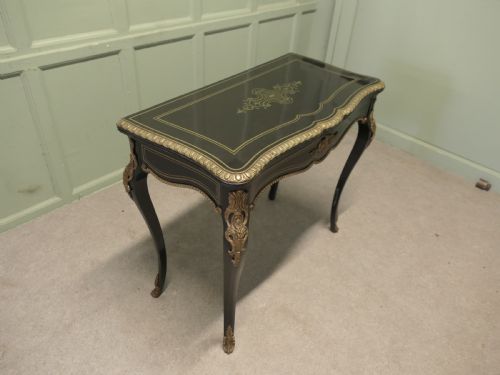


Ebonised Games Table
An ebonised games table brings dark, polished wood and intricate brass or mother-of-pearl detail into a room, serving as both a functional playing surface and a striking centrepiece.
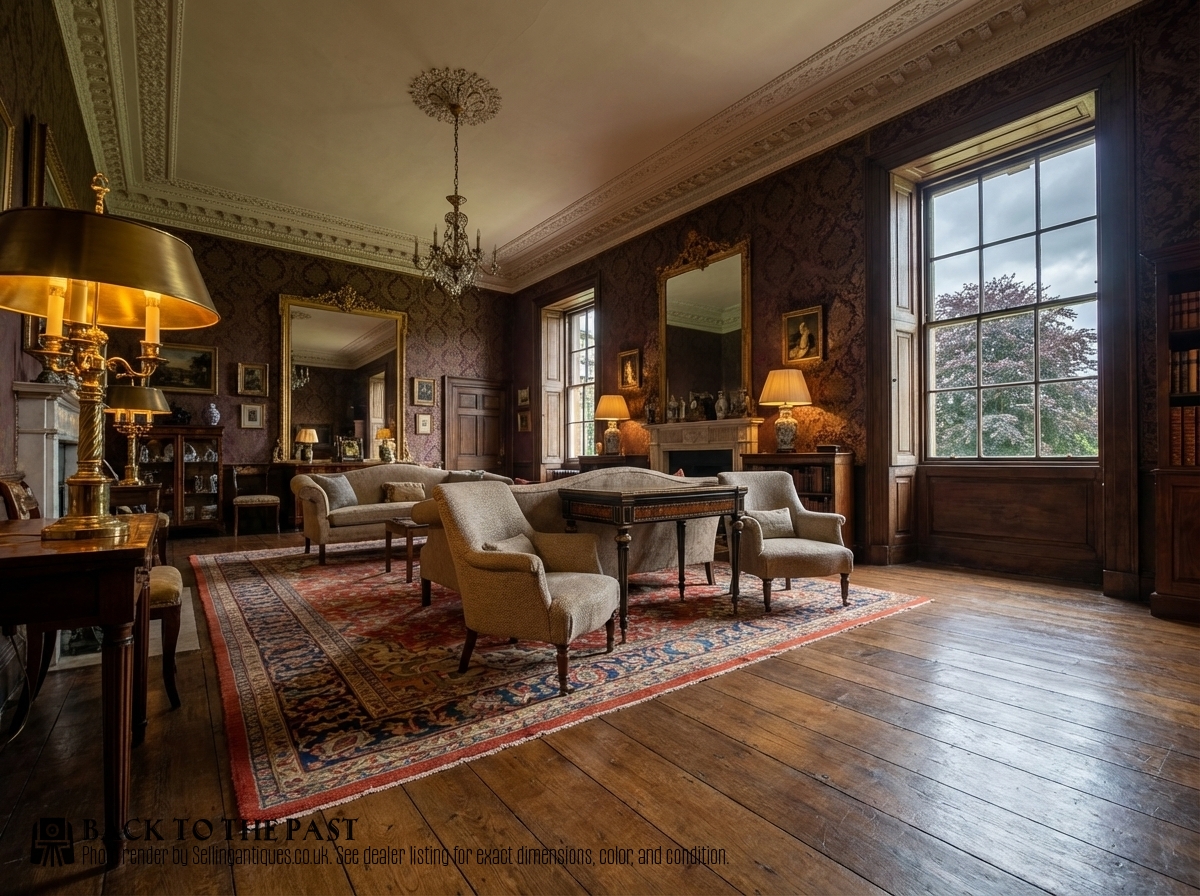
Ebonised Games Table
An ebonised games table is typically encountered as a Victorian or nineteenth-century folding card table, console, or envelope table designed for domestic leisure.
The pieces on this page span the Regency, Victorian, and Edwardian periods, with frequent appearances from the Aesthetic Movement and French Napoleon III or Louis XV styles.
Many examples double as occasional tables or sewing tables, featuring clever pivoting tops, trifold leaves, or compartments for counters and cards.
Craftsmanship and Detail
Quality rests in the crispness of the ebonisation and the precision of the brass stringing or marquetry, which separates standard production from exhibition pieces.
The smoothness of the folding mechanism and the stability of the legs dictate how well the table survived decades of active domestic use.
Finer examples incorporate secondary details like parcel gilt highlights, hand-drawn penwork, or signed mounts from prominent cabinet makers.
Ebonised Games Table Retail Price Guide 2026
Typical asking prices for ebonised games table among the pieces listed under this phrase on Sellingantiques today, from the lower quarter to the upper quarter. They describe what is for sale here now, not the wider market.
A roulette wheel sits among the card tables, complete with its original felt cloth ready for nineteenth-century parlor wagers.
Edwards & Roberts·Lamb of Manchester·S&H Jewell·George Merrifield·Gillow & Co
The Ebonised Games Table Glossary
- Ebonised
- Wood finished to resemble ebony through staining, painting, or chemical treatment. This technique gained immense popularity during the Victorian and Aesthetic periods.
- Penwork
- A decorative technique using Indian ink drawn onto wood to create intricate geometric or pictorial designs. It appears frequently on Regency chess tables.
- Ormolu
- Gilded bronze used for mounts, feet, and decorative trims on nineteenth-century furniture. It provides a bright metallic contrast to dark ebonised timber.
- Marquetry
- Inlays of different woods, veneers, or shell forming decorative patterns across the table top. Floral and scroll motifs dominate French revival pieces.
- Envelope table
- A card table with four triangular flaps that fold over each other like an envelope. Rotating the top reveals a baize-lined playing surface.
Ebonised Games Table: Frequently Asked Questions
What were these tables used for?
These tables served primarily for card games, chess, and social entertainment in nineteenth-century drawing rooms. Their folding mechanisms allowed them to function as console or occasional tables when not in use.
Many designs included hidden compartments beneath the top to store playing cards, counters, and dice safely away from view.
How do I care for ebonised wood?
Ebonised surfaces require gentle dusting with a soft, dry cloth to prevent the dark finish from scratching. Avoid placing them in direct sunlight or near heat sources that might dry out the timber.
Wax polish formulated for dark woods can be applied sparingly to maintain the deep lustre without building up heavy residue.
How do I date an ebonised games table?
Dating relies on the structural style, decorative motifs, and mechanical cleverness of the folding top. Regency pieces lean toward linear penwork and tripod bases, while Victorian examples often feature heavy brass inlay and Aesthetic Movement motifs.
Cabinet makers' stamps or labels found beneath the frame provide the most definitive chronological anchor.
Are these tables practical for daily use?
Most antique games tables remain sturdy enough for occasional dining, display, or board games. The pivoting and folding tops require careful handling to protect nineteenth-century hinges and internal wooden pivots.
Placing felt pads beneath items resting on the surface helps preserve the polished finish from marks.