



Earthenware Staffordshire Statuette
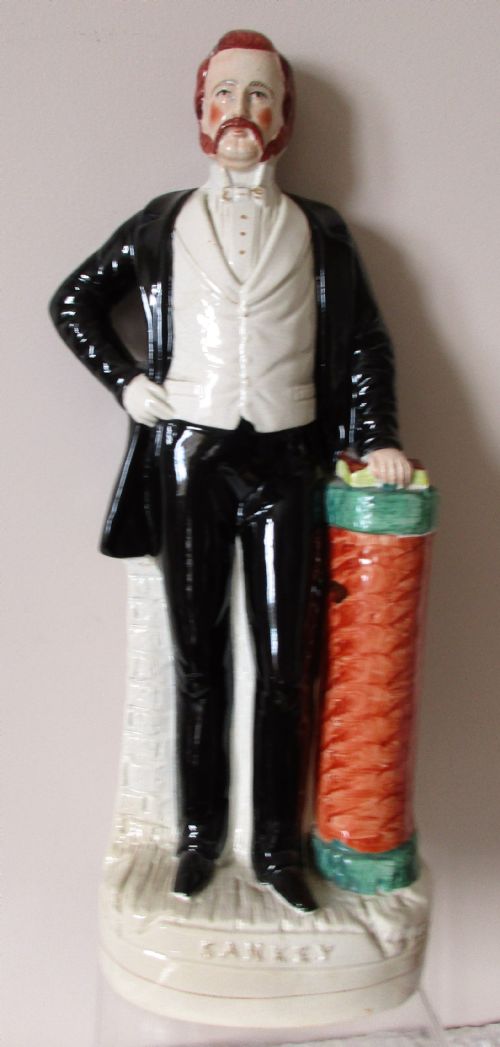
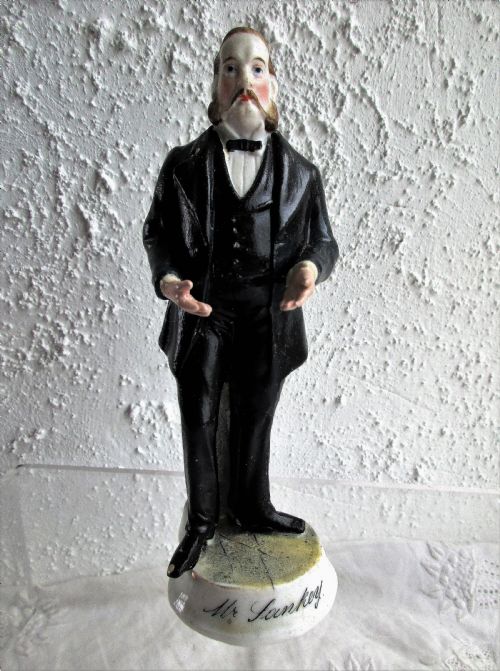
An earthenware staffordshire statuette captures Victorian portraiture, literature and popular heroes in colourful ceramic form for the mantelpiece.
Earthenware Staffordshire Statuette
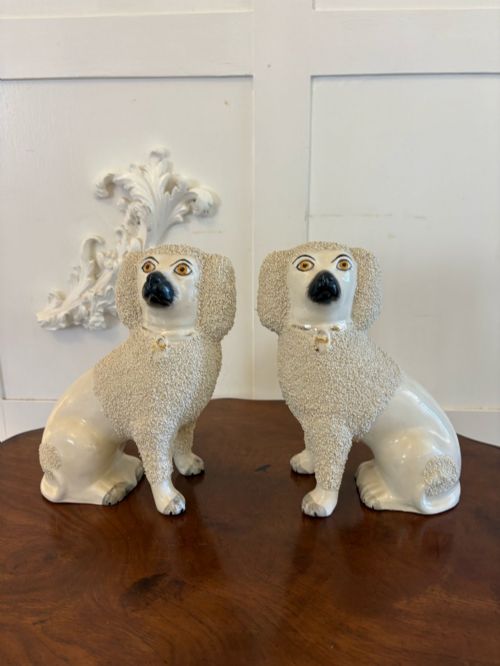
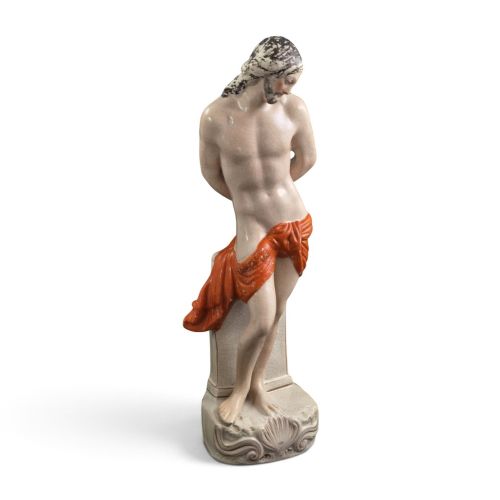
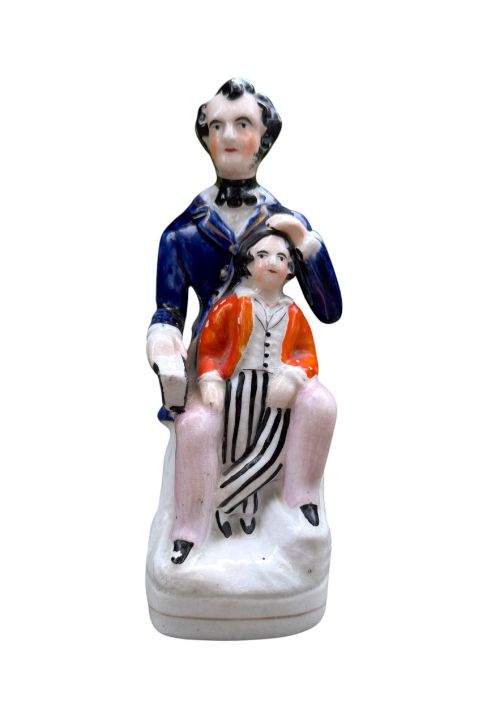
An earthenware staffordshire statuette brings nineteenth-century personalities, animals and literary scenes directly to the shelf in moulded ceramic. These figures range from early Georgian pairs and mid-century political portraits to later Victorian flatbacks designed to be viewed from the front.
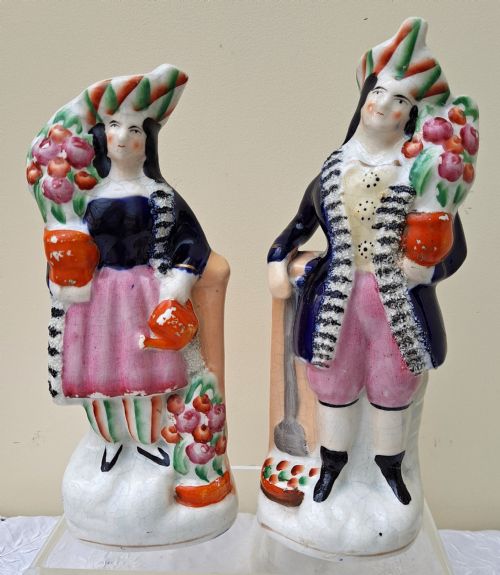
Makers and subjects vary widely, capturing everything from religious scenes and historical events to regional folk art. Buyers encounter both single portrait figures and matched pairs intended to balance each other on either side of a fireplace.
Materials and construction methods
Potters built these pieces using local earthenware clays shaped in moulds, which were then fired and finished with glazes. Many examples rely on lead glaze to seal the porous body and provide a smooth, glossy surface.
Listings span the nineteenth century, including Georgian precursors, Victorian portrait figures and Edwardian porcelain examples.
Judgements of quality and finish
Superior pieces display crisp moulding where facial expressions, hands and costume details remain sharp rather than blurred by worn moulds. The precision of the enamel painting determines how lifelike a portrait figure appears.
The distribution of the glaze and the vibrancy of the enamel colours separate standard workshop output from finer examples. Heavier, larger figures often demonstrate greater ambition in modelling and stability.
Wedgwood and Co Ltd
The Earthenware Staffordshire Statuette Glossary
- Flatback
- A figurine moulded with a finished front and a plain, unpainted or partially glazed back intended to sit flush against a wall. These became common on nineteenth-century mantelpieces.
- Earthenware
- A porous pottery body fired at relatively low temperatures, requiring a glaze to hold liquids and provide a smooth decorative surface. It forms the base of nearly all these figures.
- Enamel paint
- Coloured decoration applied over the fired glaze and subjected to a second, lower temperature firing to fuse it to the surface. It provides the bright reds, blues and blacks on the figures.
- Lead glaze
- A traditional liquid glass coating containing lead that melts during firing to create a glossy, waterproof finish. It gives early pottery its characteristic reflective sheen.
- Gold leaf
- Extremely thin beaten gold applied sparingly to highlights, buttons or lettering on finer figures. It adds a touch of brightness to the finished piece.
Earthenware Staffordshire Statuette: Frequently Asked Questions
What are earthenware staffordshire statuettes?
These are moulded ceramic figures produced in Staffordshire potteries during the nineteenth century, depicting notable people, animals, and scenes from literature or current events.
Potters created them for ordinary homes, serving as affordable decorative ornaments for mantelpieces and side tables.
How were they displayed?
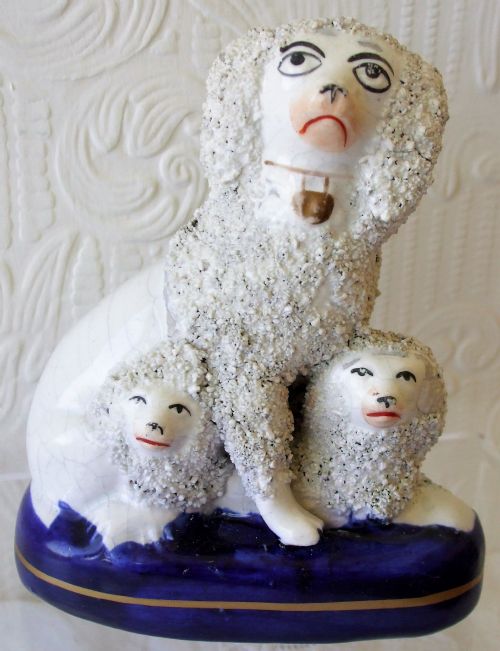
Figures with flat backs sat directly against walls on mantelpieces, while pairs of poodles, lions or gardeners were arranged symmetrically on either side of a fireplace.
Their bright enamel colours and gold leaf highlights were designed to catch the flickering light of gas lamps and candles.
How do I date a figure?
Dating relies on the subject matter, costume details, and construction style, such as whether the piece is fully modelled in the round or made as a flatback.
Historical events, such as the Crimean War or political campaigns, provide reliable after-dates for when specific portrait figures could first be manufactured.
Are these figures fragile?
The earthenware body is relatively robust, but protruding limbs, hats and painted enamel surfaces remain vulnerable to sharp impacts and abrasive cleaning.
Gentle dusting with a dry cloth keeps the glaze and enamel paint secure without risking moisture damage to the porous clay underneath.