



Antique Staffordshire Group
These antique staffordshire group items are earthenware figures and table pieces that bring direct narrative and folk charm from nineteenth-century parlours.
Antique Staffordshire Group
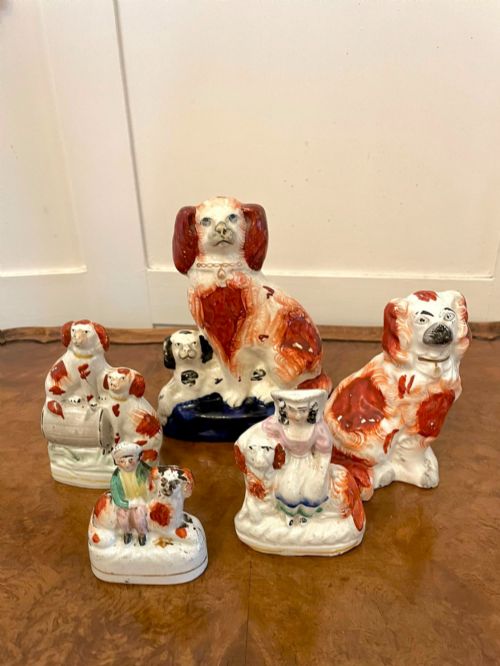
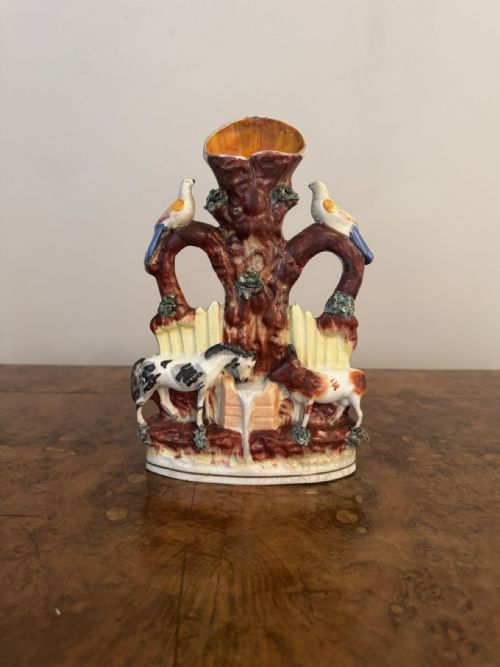
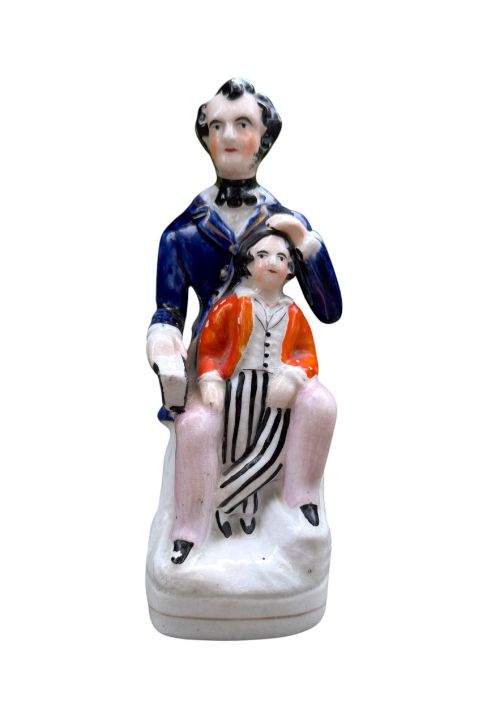
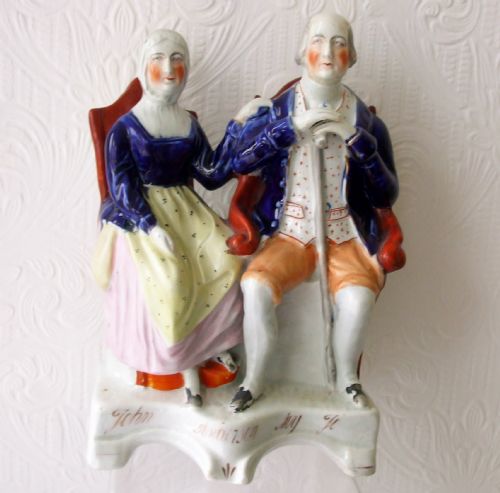
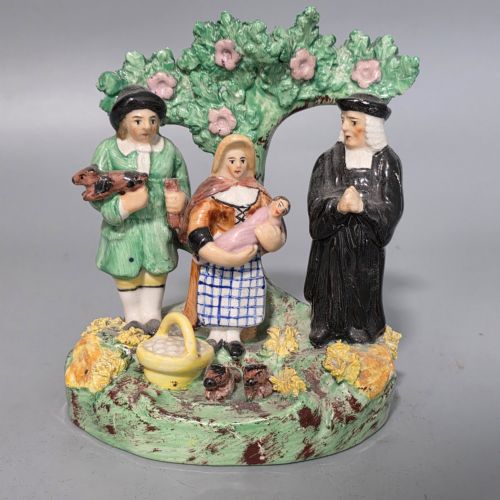
An antique staffordshire group comprises ceramic figures and pottery figure groups produced primarily during the nineteenth century across the Staffordshire potteries. The pieces range from multi-figure historical scenes and literary pairs to portrait figures, spill vases, and flatback animals designed for mantelpiece display.
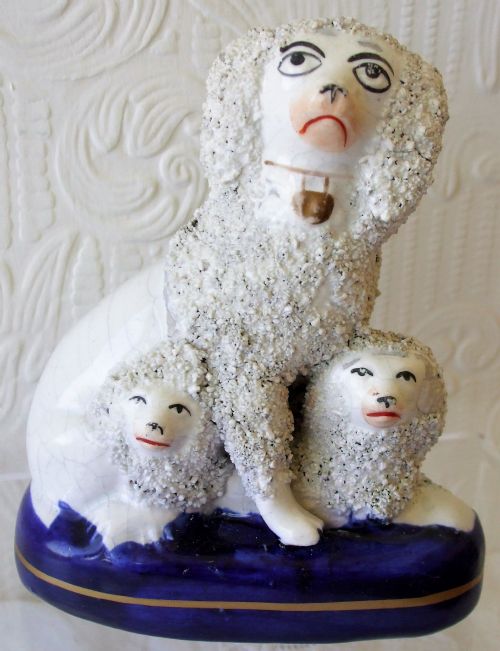
Collectors most frequently encounter Victorian examples depicting romantic themes, royal subjects, poodles, and theatrical subjects. Earlier pearlware versions from the eighteenth century appear alongside later Edwardian ceramic pieces.
Makers shaped these objects as flatbacks meant to sit against a wall, or as freestanding sculptural groups intended to be viewed from multiple angles. The subjects draw from contemporary news, literature, religion, and pastoral life.
What varies in quality
The sophistication of the modelling and the crispness of the mould details determine the distinction between standard production and superior examples. Finer pieces display expressive faces, careful undercuts, and distinct textural work on clothing or fur rather than blurred outlines.
The precision and richness of the hand painting dictate visual success, where skilled brushwork on enamel details elevates a simple earthenware casting into a lively portrait or narrative scene.
Dogs feature prominently alongside Scottish lairds, sailors, and milkmaids.
Ralph Wood·Wedgwood and Co Ltd
The Antique Staffordshire Group Glossary
- Pearlware
- A refined earthenware body developed in the eighteenth century featuring a subtle bluish tinge in the glaze due to small amounts of cobalt.
- Flatback
- A figure moulded with a plain or unpainted reverse side specifically designed to stand flat against a wall on a mantelpiece.
- Spill vase
- A hollow figural group incorporating a small cylindrical holder intended to contain wooden spills used for lighting candles or pipes.
- Enamel paint
- Coloured glassy decoration fused to the glazed ceramic surface during a secondary low-temperature kiln firing.
- Lead glaze
- A glossy coating containing lead oxide applied to earthenware to waterproof the porous body and brighten the colours beneath.
Antique Staffordshire Group: Frequently Asked Questions
What is an antique staffordshire group?
These pieces are ceramic figures and multi-character pottery groups made in the Staffordshire potteries during the eighteenth and nineteenth centuries. They capture historical events, literary scenes, and domestic animals.
Most items function as decorative shelf ornaments designed to bring colour and narrative interest to Victorian rooms. Their subjects range from royal portraits to pastoral figures.
How were staffordshire figures used?
Victorian households placed these ceramic groups on mantelpieces, chiffoniers, and parlour tables as decorative displays. They served as conversation pieces and visible markers of popular culture, patriotism, or literary taste.
Some iterations combined decoration with utility, incorporating spill vases to hold wooden tapers near the fireplace. Others functioned purely as portrait memorials or sentimental keepsakes.
How do I date an antique staffordshire group?
Dating relies on stylistic evidence, manufacturing materials, and subject matter such as specific historical events or royal reigns. Pearlware bodies and simpler modelling suggest eighteenth-century or early nineteenth-century origins.
Victorian flatback construction and bright enamel palettes typically point toward the mid-to-late nineteenth century. Edwardian pieces display finer modern ceramic bodies and distinct factory marks.
How should I display staffordshire figures?
These ceramic groups require stable placement on flat surfaces away from heavy foot traffic to prevent accidental tipping. Mantelpieces and enclosed wooden cabinets offer traditional settings that protect the earthenware from knocks.
Good lighting enhances the hand-painted enamel details and glaze finish without exposing the pigments to direct, prolonged sunlight. Gentle dusting with a dry brush maintains the surface safely.