







Vintage Ceramic Group
These vintage ceramic group pieces bring multi-figure narrative scenes to life, offering a glimpse into centuries of craftsmanship.
Vintage Ceramic Group
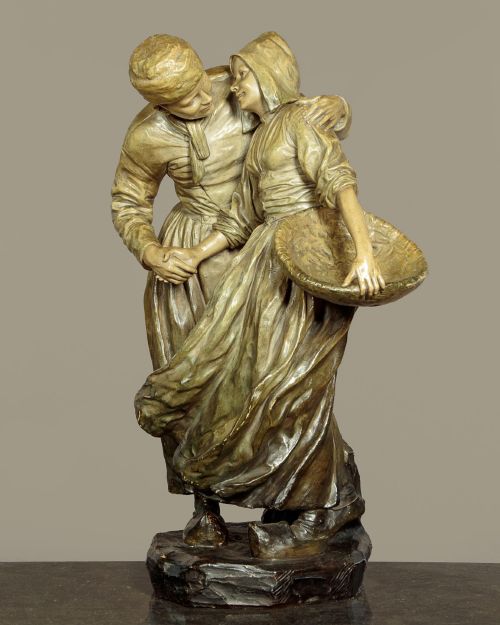
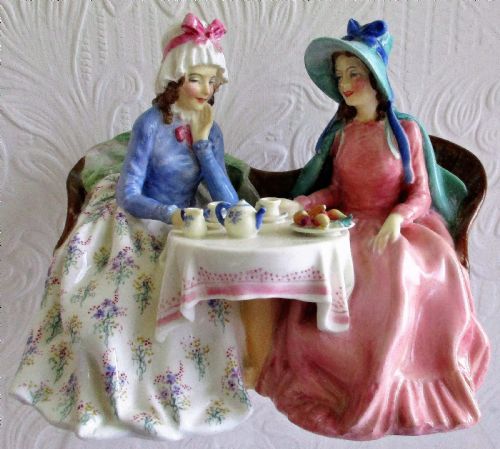
When you search for a vintage ceramic group, you encounter multi-figure arrangements spanning eras from the eighteenth century to the mid-twentieth century. The selection ranges from delicate porcelain pairings to robust earthenware and terracotta sculptural compositions.
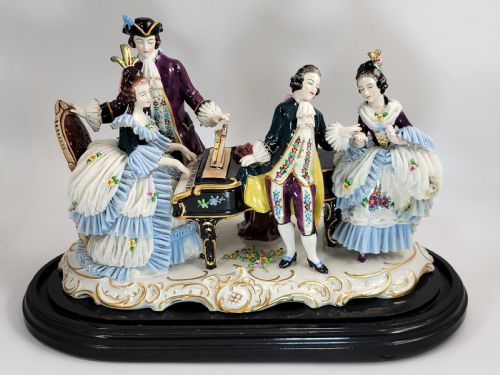
You frequently meet Staffordshire earthenware figures and continental porcelain groups on this page. These objects depict human interactions, pastoral scenes, and literary subjects in three dimensions.
The styles shift from Rococo Revival and Victorian folk art to Art Deco and Art Nouveau designs. Each period brings distinct moulding techniques and painting traditions to the multi-figure format.
Materials and methods
Potters shaped these groups using earthenware, terracotta, hard-paste porcelain, and soft-paste porcelain. Biscuit porcelain and Parian ware also appear without glaze to highlight the sculpted details.
Fishermen brave the ceramic waves while seated securely inside a porcelain boat on the mantelpiece.
Qualities to consider
The crispness of the modelling defines the top tier of these sculptural groups. Sharp facial expressions and well-defined fingers separate superior pieces from softer, heavily recast examples.
The precision of the hand-painted enamel work and the subtlety of the glaze application determine the visual impact of the piece. Superior examples maintain clean brushwork and harmonious colour palettes.
Meissen·Goldscheider·Royal Doulton·Ernst Bohne Sohne·Wedgwood·Royal Dux·Guido Cacciapuoti·Karl Tutter
The Vintage Ceramic Group Glossary
- Bisque porcelain
- Unglazed porcelain fired once to create a matte, marble-like surface texture. It is often utilised for detailed figural sculpture.
- Pearlware
- An earthenware body developed by Josiah Wedgwood featuring a bluish glaze that pooled in recesses. It bridges the gap between salt-glazed stoneware and later creamware.
- Parian ware
- A fine-grained white biscuit porcelain resembling carved marble. Victorian makers used it extensively for portrait busts and animal groups.
- Soft-paste porcelain
- An artificial ceramic composition fired at lower temperatures than hard-paste porcelain. It produces a warm, creamy body with a distinctive glaze feel.
- Flatback
- A Staffordshire pottery figure designed to be viewed only from the front with an unglazed or minimally finished rear. This technique saved materials and kiln space during production.
Vintage Ceramic Group: Frequently Asked Questions
How do I date a ceramic group?
Dating relies on identifying the material type, base markings, and stylistic clues. Earlier eighteenth-century pieces often show soft-paste bodies and Rococo styling, while later twentieth-century items embrace Art Deco geometries.
Examining the glaze characteristics and any impressed numbers or factory ciphers helps narrow down the production era.
Where were these figures displayed?
Historically, homeowners placed these figural groups on mantelpieces, side tables, and within dedicated display cabinets. Staffordshire flatbacks specifically sat on mantels where viewers only saw the front.
Their primary function was domestic decoration, reflecting the literary tastes and social interests of the household.
How should I care for antique porcelain?
Dust these delicate figures gently with a soft, dry brush to prevent accumulation in crevices. Avoid using water or chemical cleaners, especially on pieces with hand-painted enamels or gold leaf.
Keep them away from direct sunlight and areas prone to sudden temperature fluctuations to protect the ceramic body.