
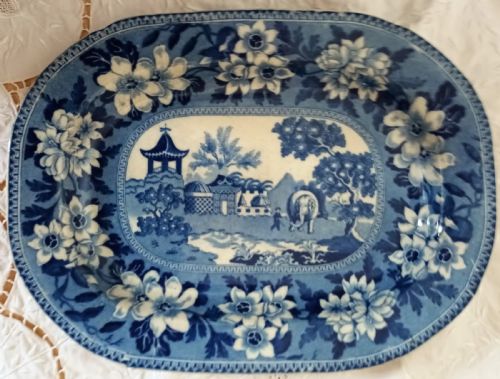
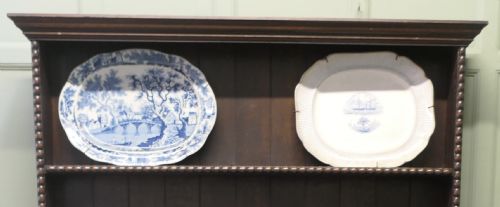
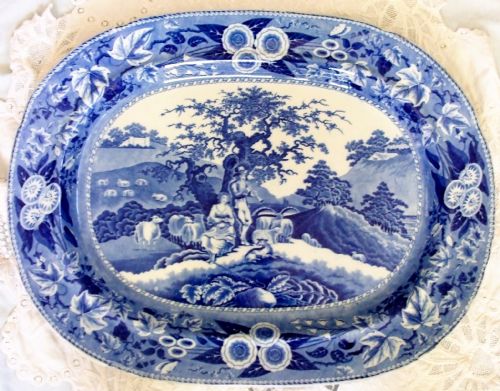


Earthenware Meat Platter
An earthenware meat platter brings generous proportions and bold transfer-printed scenes to the table, offering a robust centrepiece for historic dining.
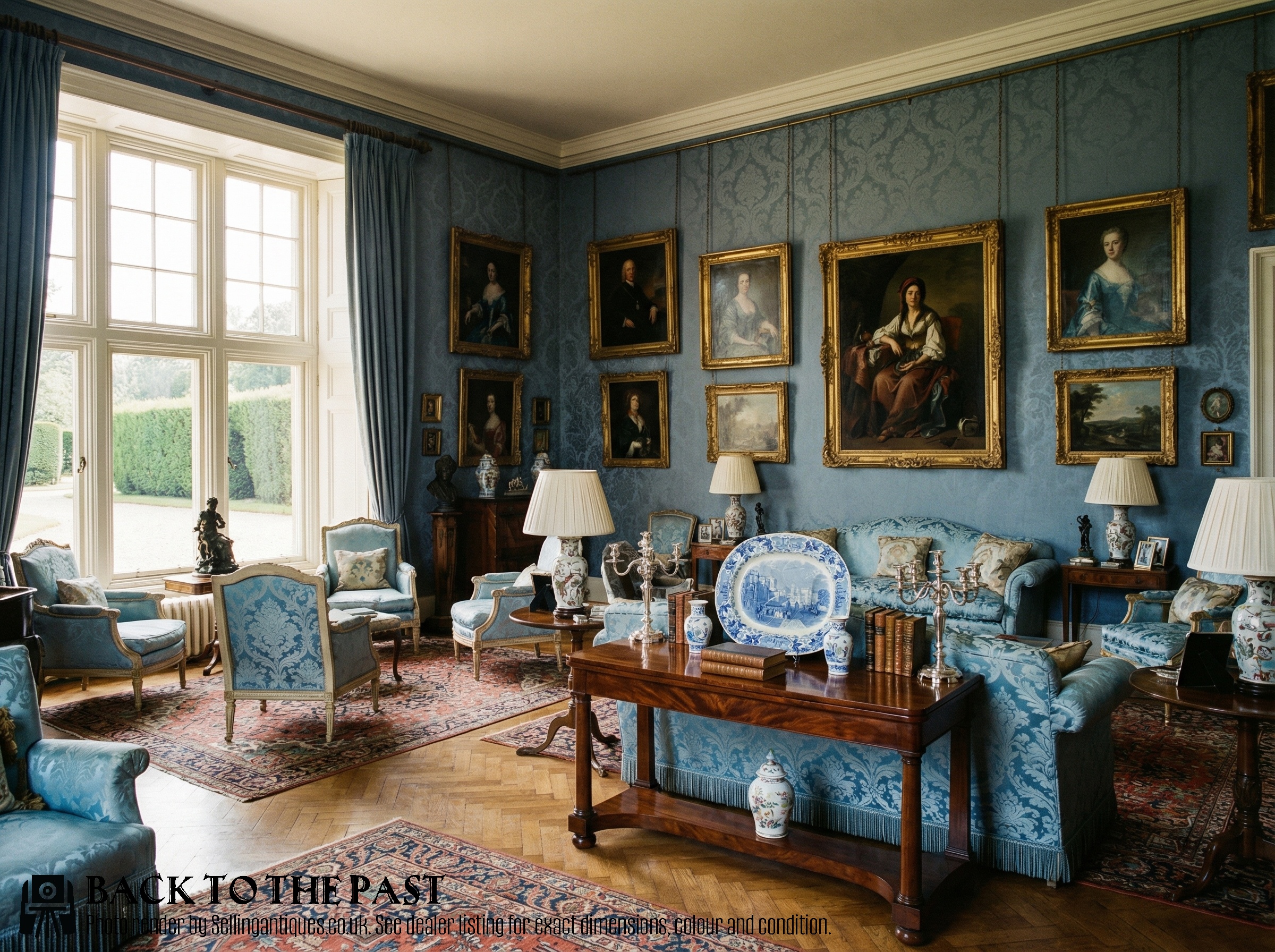
Earthenware Meat Platter
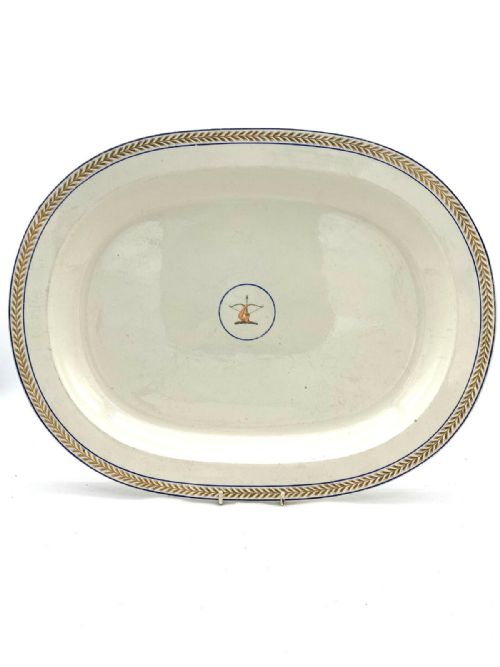
An earthenware meat platter serves as a large ceramic vessel designed for presenting joints of meat at the historic dining table. The pieces found here predominantly hail from the Georgian and Victorian periods, stretching from the late eighteenth century through to the end of the nineteenth century. Common variants include large rectangular plates, chargers, and dishes fitted with wells and drainers to catch juices.
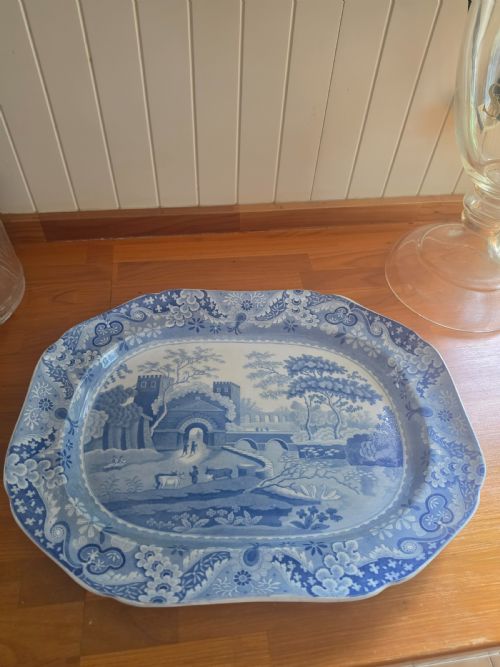
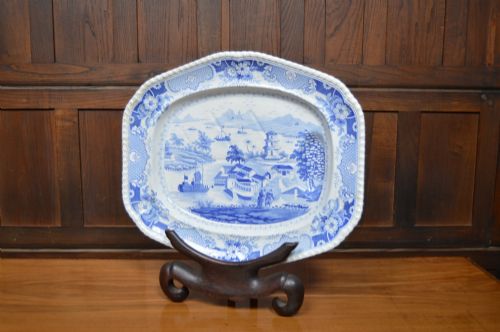
Makers across Staffordshire and other English potteries produced these heavy servants of the dining room in abundance, often employing blue and white transfer printing. Buyers will regularly encounter pastoral scenes, architectural views, and exotic patterns such as Chinese Garden, India Temple, and various British topographical series. These large platters survive as functional antiques that continue to serve modern households or hang as wall displays.
Materials and Technique
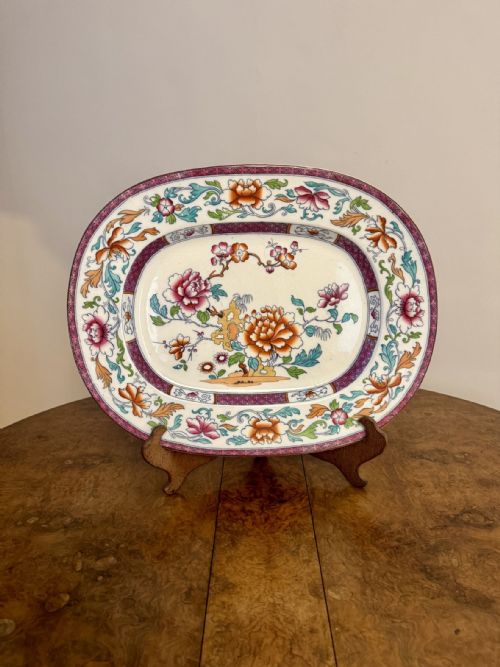
The combination of absorbent earthenware or refined pearlware with durable glaze protected the porous clay body from moisture and staining during service. Factories utilised hand-painting alongside transfer printing to embellish borders and enrich specific motifs with enamel colours. This established a robust manufacturing tradition that balanced practical utility in the dining room with decorative ambition.
A nineteenth-century cook could rely on a ceramic drainer to keep the joint dry while gravy pooled happily in the well below.
Assessing Quality
Quality in an earthenware meat platter rests upon the crispness of the transfer print and the clarity of the cobalt pigment against the white or cream glaze. Superior examples display deep, uniform cobalt tones without blurring, smudging, or dry patches in the printed design. The weight and stability of the ceramic body also matter, with finer pieces maintaining precise edges and well-balanced proportions despite their large size.
The inclusion of original matching accessories, such as a pierced draining insert or a well-engineered gravy reservoir, elevates a piece significantly. Finer platters often bear the impressed or printed marks of notable potteries and carry complex, highly detailed pictorial scenes rather than simple geometric borders. Condition remains paramount, distinguishing heavily worn kitchen implements from well-preserved display items.
Spode·Wedgwood·John Rogers and Son·Copeland and Garrett·Minton·Thomas Lakin·Don Pottery·Davenport·Elkin Knight and Bridgwood·Mason's Ironstone
The Earthenware Meat Platter Glossary
- Earthenware
- A porous pottery body fired at lower temperatures than stoneware or porcelain, requiring a vitreous glaze to hold liquids.
- Transferware
- Ceramic decoration applied by pressing a paper sheet engraved with a copperplate design onto the damp glaze or biscuit body.
- Pearlware
- A refined earthenware developed in the late eighteenth century featuring a subtle bluish glaze that pooled in recesses to mimic Chinese porcelain.
- Creamware
- A fine earthenware perfected by Josiah Wedgwood and others, characterised by a warm, pale yellow or cream-coloured transparent glaze.
- Well and tree
- A platter design featuring a recessed channel system and a central well that directs meat juices away from the carving area.
- Meat drainer
- A separate pierced ceramic insert that sits within the platter to elevate the joint above accumulated pan juices.
Earthenware Meat Platter: Frequently Asked Questions
What is a well and tree platter?
A well and tree platter incorporates a carved channel system on the surface that directs meat juices down toward a central collecting well. This clever design kept the joint elevated and dry during the carving process at the dining table.
Such vessels represent some of the most elaborate and substantial serving pieces produced by nineteenth-century potteries. They were essential tools for large formal dinners where joints of beef or game required orderly presentation.
How were transfer printed scenes applied?
Potters engraved copper plates with detailed pictorial scenes, inked them with cobalt pigment, and pulled impressions onto thin tissue paper. This paper was then rubbed firmly onto the ceramic surface to transfer the design before the piece went into the kiln.
This technique allowed potteries to mass-produce intricate patterns like classical ruins, landscapes, and exotic animal motifs with remarkable consistency. It transformed utilitarian kitchenware into highly decorative items suitable for display.
Can I use these platters for serving food?
These historic earthenware vessels are generally sturdy enough to hold food, but modern dishwashers and harsh detergents can damage the antique glaze and delicate transfer prints. Gentle hand washing is essential to preserve the surface integrity of the ceramic.
Many collectors prefer to use them for display, mounting them on walls or placing them on sideboards. When utilised for dining, they make impressive centerpieces for serving dry foods or whole joints.