



Earthenware Lidded Jar
An earthenware lidded jar offers practical utility and decorative presence, holding everything from tobacco to powder while anchoring a room with historic ceramic art.
Earthenware Lidded Jar
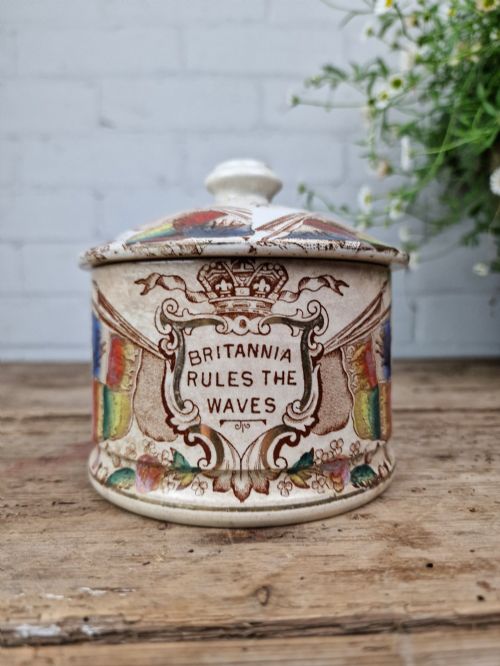
When you search for an earthenware lidded jar, you encounter covered vessels spanning several centuries, from Dutch Delft and Italian maiolica to Japanese Satsuma and English Staffordshire. These pieces take various forms, including tobacco jars, sugar bowls, butter dishes, and large ornamental urns with matching covers. The selection ranges widely across stylistic traditions like Dutch Baroque, Victorian Chinoiserie, and Art Deco.
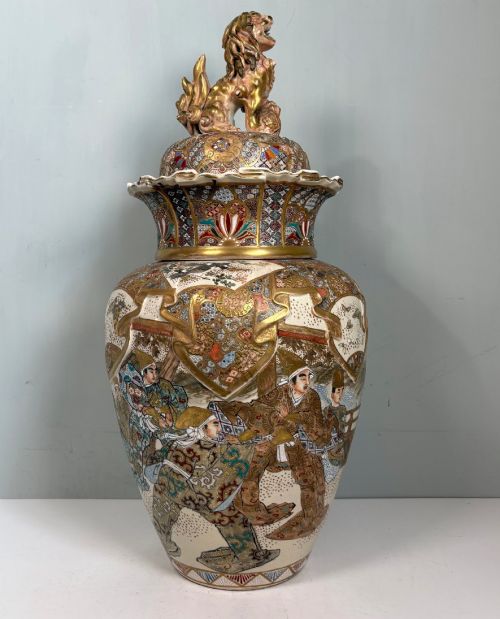
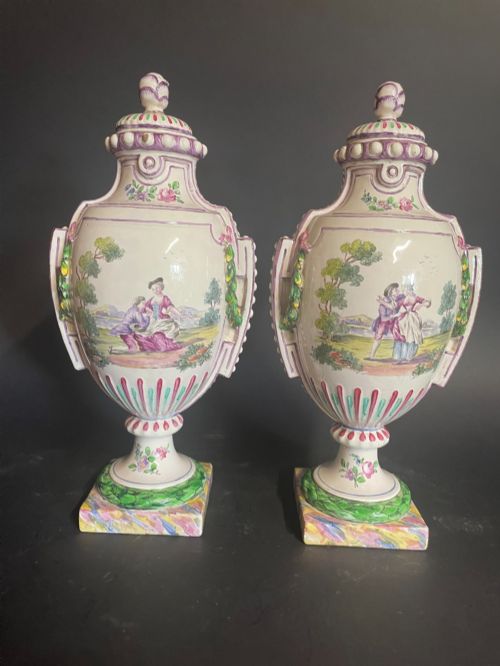
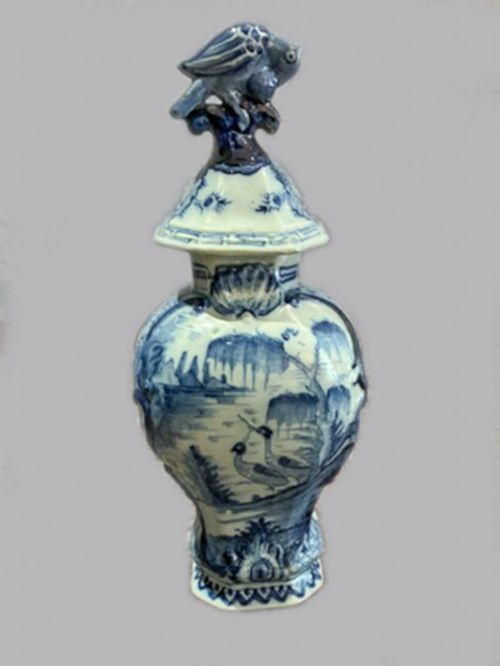
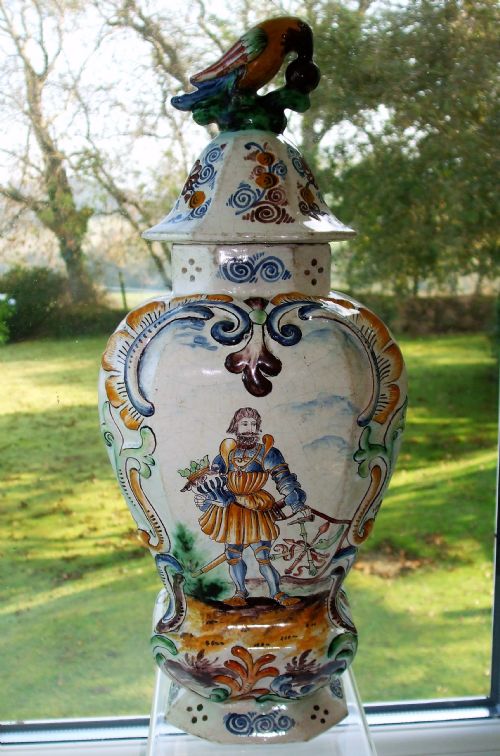
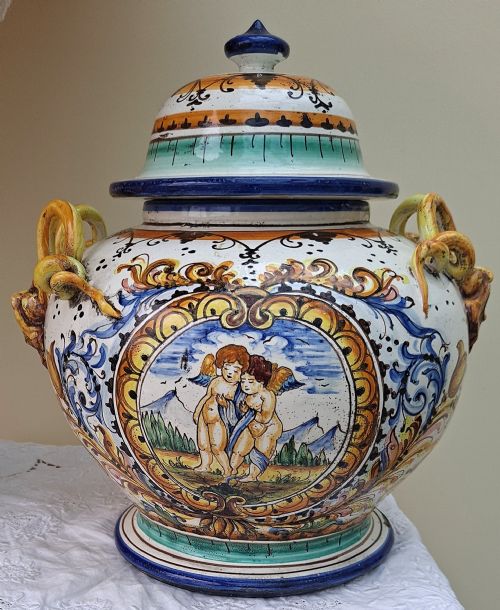
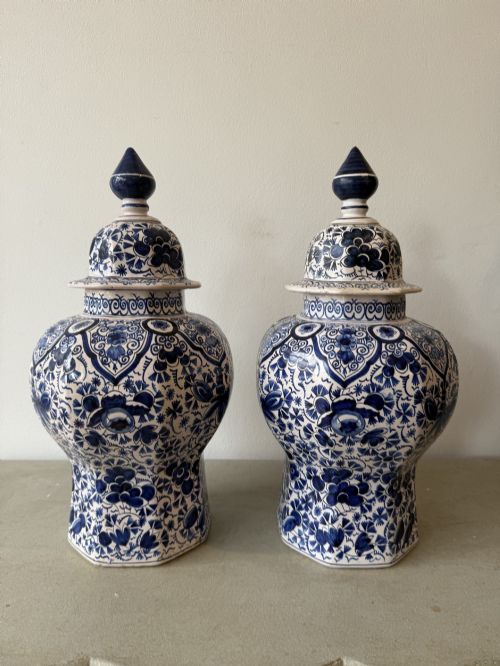
The version you are most likely to meet on this page is a covered vessel from the eighteenth or nineteenth century, rendered in tin-glazed earthenware or faience. Many examples emerge from European potting traditions, particularly Dutch Delftware and French or Italian faience, alongside Japanese Satsuma wares. These objects often display either crisp blue and white palettes or rich polychrome enamel decoration.
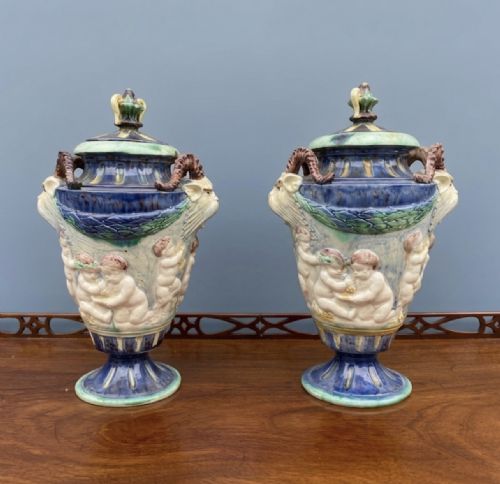
Beyond storage containers, many of these pieces function primarily as decorative lidded vases and urns designed for visual impact on a mantelpiece or side table. The evidence reveals forms equipped with handles, distinct lids, and occasionally brass or gold leaf detailing. Collectors encounter both single jars and balanced pairs intended for symmetrical display.
How they were made
Potters shaped these vessels from earthenware clay bodies before applying specialised surface treatments like tin glaze, faience, or maiolica coatings. These opaque white or tinted glazes provided a smooth canvas for hand-painted decoration in cobalt blue, enamel, and occasionally gold leaf. Artisans then fired the pieces to fuse the vitreous coatings to the underlying ceramic body.
Decoration techniques varied by region and period, encompassing traditional Dutch Delft brushwork, intricate Japanese Satsuma gilding, and English transfer or hand-painted motifs. Lids were thrown and glazed to match the accompanying body, often featuring figural or abstract finials. Master painters executed detailed botanical, architectural, or figurative scenes directly onto the raw glaze before the final kiln firing.
Materials documented in these ceramic listings include tin-glazed earthenware, faience, maiolica, enamel, brass, and gold leaf.
What varies in quality
The standard of painting distinguishes ordinary production wares from exceptional studio pieces, visible in the precision of brushstrokes and the complexity of the polychrome palette. Superior examples display crisp detail in figurative or floral scenes without the blurring or pooling common in mass-produced items. The harmony between the jar body and its original matching lid further elevates an object's integrity.
Material refinement and glaze stability also separate the tiers of quality within these ceramics. Better pieces exhibit an even, luminous glaze layer free from extensive pitting or discoloration, while retaining sharp relief on moulded elements. Satsuma and majolica wares demonstrate quality through the controlled application of enamels and the careful integration of gold leaf highlights.
Royal Winton·Moorcroft Macintyre And Co·Carlton Ware·Shozan Kyoto Studio
The Earthenware Lidded Jar Glossary
- Delftware
- Tin-glazed earthenware originating from the Netherlands, traditionally known for its distinctive white surface and blue painted decoration.
- Maiolica
- Italian tin-glazed earthenware produced from the Renaissance onward, celebrated for its bright polychrome pictorial scenes.
- Faience
- European tin-glazed pottery, particularly associated with French and general continental workshops producing decorative vessels and tableware.
- Satsuma
- Japanese earthenware pottery featuring a crackle-phase cream glaze heavily decorated with enamels and intricate gold leaf.
- Polychrome
- Decoration utilising multiple distinct colours rather than a single monochrome palette, common in fine ceramic painting.
Earthenware Lidded Jar: Frequently Asked Questions
How were antique earthenware jars used?
These vessels served diverse practical purposes in historic households, functioning as secure containers for tobacco, dry foodstuffs, butter, and toilet powders. Many were built specifically as storage jars or sugar bowls to protect contents from moisture and pests.
At the same time, larger lidded urns and vases served a purely decorative role in period interiors, displayed on mantelpieces and tables simply to showcase fine ceramic artistry.
How can I tell Dutch Delft from Italian maiolica?
Dutch Delft typically relies on a cooler tin glaze with cobalt blue painting inspired by imported Asian porcelain, reflecting seventeenth and eighteenth-century tastes. The forms tend toward clean architectural lines and floral motifs.
Italian maiolica generally employs warmer, highly varied polychrome palettes with rich narrative scenes drawn from Renaissance traditions, showing heavier, more sculptural body forms.
Are lids usually original to the jar?
Many surviving jars retain their original matching covers, which share the exact glaze characteristics, wear patterns, and stylistic execution of the base. Dealers note when a lid belongs properly to the piece.
Replacement lids occur frequently in ceramics due to centuries of handling, making it essential to examine how the cover rests and whether the glaze matches the interior rim.