


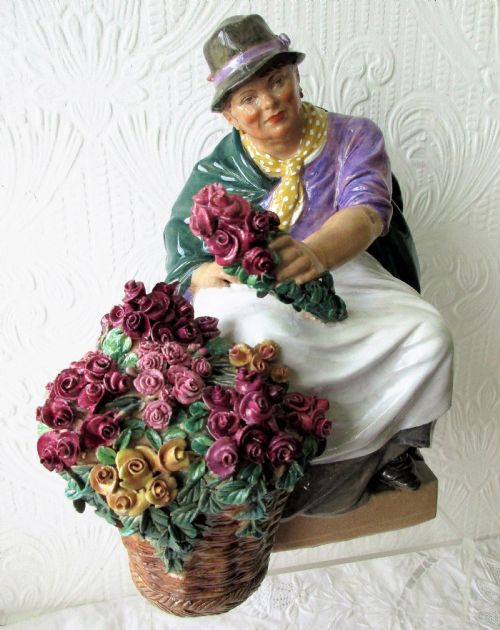
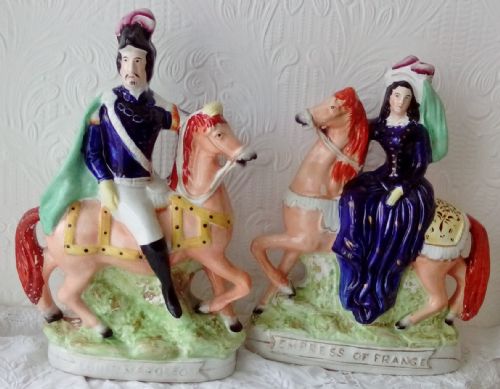
Earthenware Ceramic Statues
Earthenware ceramic statues bring tactile presence and storied characters into a room, spanning rustic Staffordshire pairs to continental figures.
Earthenware Ceramic Statues
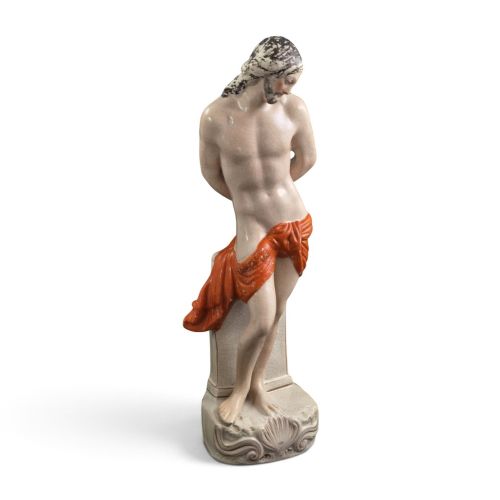
Earthenware ceramic statues encompass a broad family of figural works, from Victorian Staffordshire poodles and historical portraits to Chinese sancai glazed horses and pre-Columbian figures. When exploring this selection, buyers encounter everything from humble domestic mantle ornaments modelled in Britain to international studio creations and territorial sculptures.
How they were made
Potters shaped these earthenware ceramic statues using local clays, terracotta, or refined pearlware, often building forms by hand or pressing them into moulds. Artisans then applied liquid slips, lead glazes, or colourful enamels before firing the pieces in kilns to fix the surface decoration.
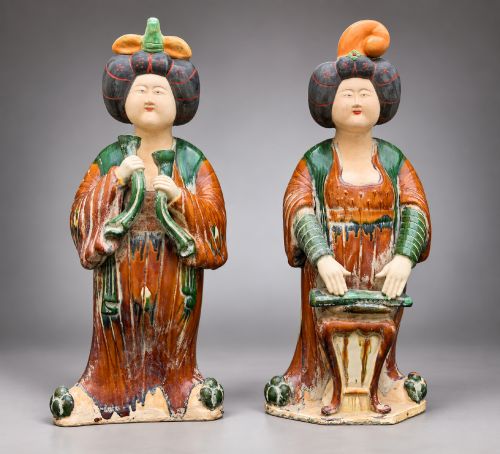
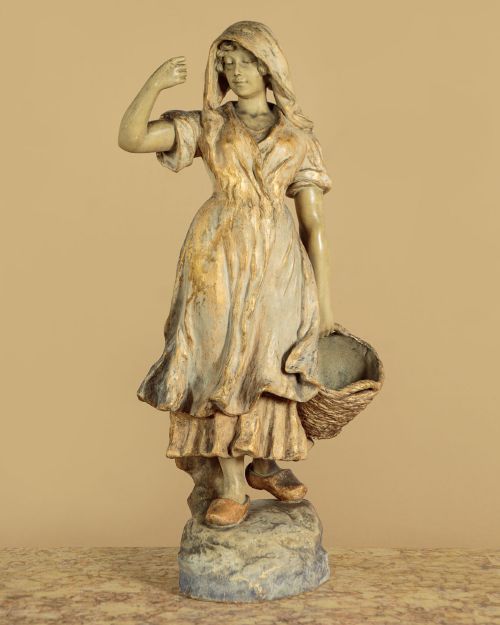
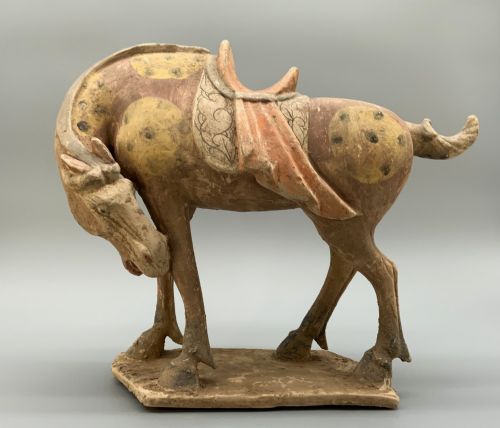
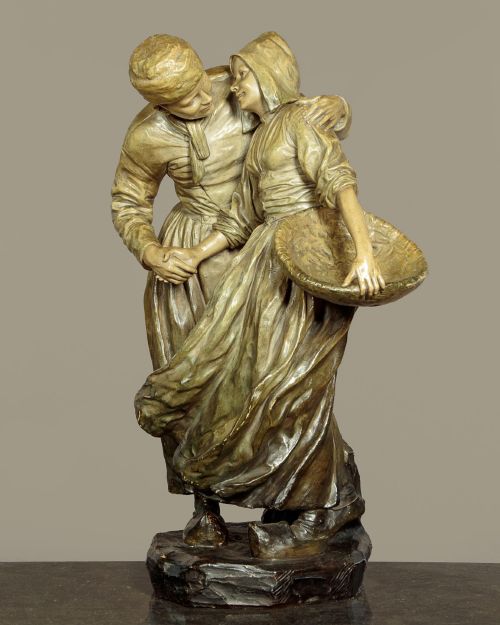
Specialist techniques defined different traditions, such as the multi-coloured sancai lead glazing on Chinese pottery figures or the hand-sculpted details found on studio pottery. Selected works incorporated subtle enhancements like gold leaf or bronzed slip casts to accentuate garments and textures.
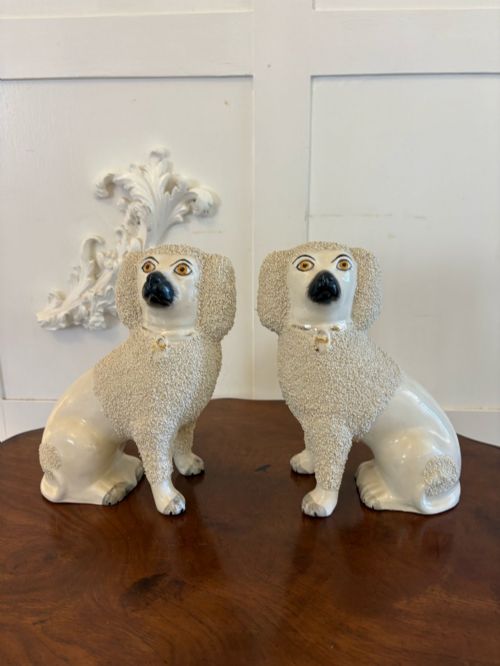
Staffordshire poodles frequently sport clay curls resembling tiny piped frosting, formed by applying wet slip through a syringe before firing.
What varies in quality
Quality rests in the crispness of the moulding and the expressive hand-painted details applied to faces and garments, separating standard commercial production from superior studio modelling. Stronger examples display confident brushwork on enamel surfaces and well-balanced proportions without heavy distortion from the kiln.
The sophistication of the glaze application also dictates standing, where smooth, even lead glazes or rich, multi-toned sancai finishes elevate a piece. Studio output relies heavily on the individual sculptor's artistry, making the originality of the modelling a primary marker of distinction.
Goldscheider·Charles Vyse·Ralph Wood·George Kemper
The Earthenware Ceramic Statues Glossary
- Earthenware
- A porous pottery type fired at lower temperatures, requiring a glaze to achieve watertightness. It forms the structural body for the vast majority of traditional figures and Staffordshire animals.
- Pearlware
- A refined fine-grained earthenware developed in the eighteenth century, featuring a slight bluish tinge in the glaze pooled in recesses. It served as a popular base for Staffordshire portrait and narrative figures.
- Sancai
- A three-colour glaze tradition associated with Chinese pottery, typically employing amber, green and cream tones that run and mingle during firing. It appears on horses, musicians and funerary figures.
- Terracotta
- Unglazed or slipped baked red clay valued for its warm earthy tones and capacity to hold fine sculptural detail. European makers utilised it extensively for portrait busts and figural groups.
- Spill Vase
- A hollow cylindrical holder incorporated into a ceramic figure's design, intended to hold wooden tapers for lighting pipes or candles. These paired utility with decorative display on Victorian mantelpieces.
Earthenware Ceramic Statues: Frequently Asked Questions
What are Staffordshire dog figurines?
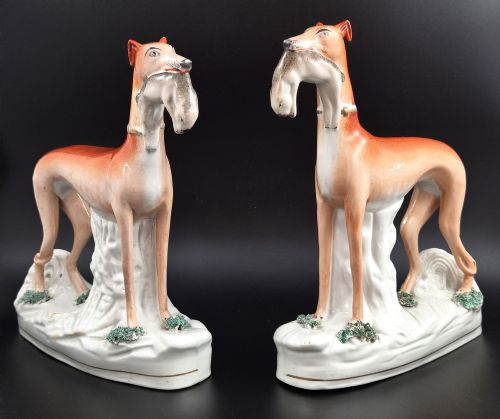
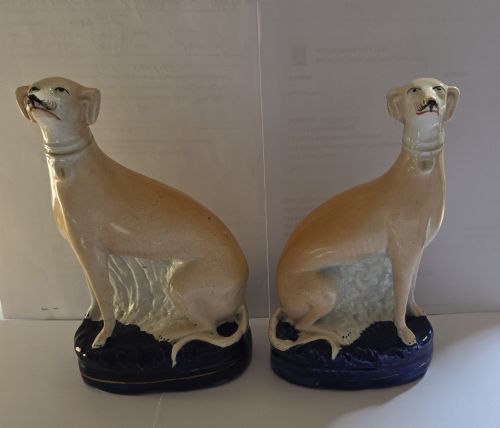
Staffordshire dog figurines are ceramic mantle ornaments modelled as spaniels, poodles, and greyhounds, traditionally displayed facing each other on either side of a fireplace.
Potters produced these popular pairs throughout the nineteenth century in various sizes, decorating them with hand-painted spot markings or metallic lustre touches.
How do I date antique earthenware figures?
Dating relies on examining the clay body, glaze characteristics, underglaze markings, and the stylistic clothing of the subject. Nineteenth-century British pieces often show crazing in the glaze and lighter earthenware bodies beneath.
Earlier territorial pieces or studio works require familiarity with specific regional techniques and the distinctive palettes used by individual potteries over time.
How were ceramic figures used historically?
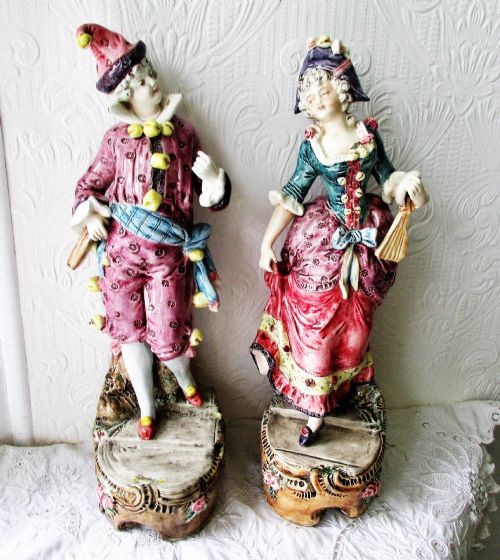
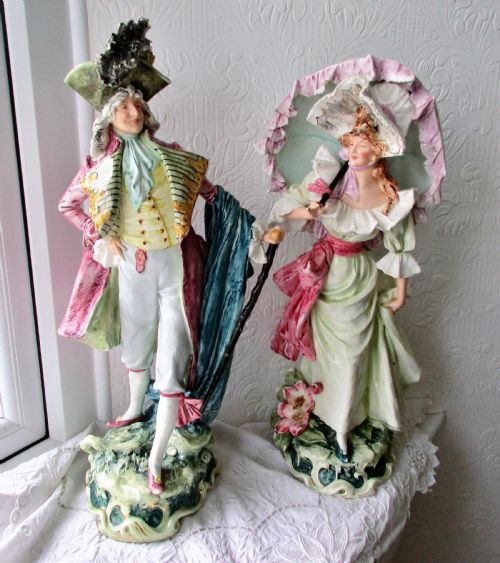
Many figures served as domestic ornaments, placed upon mantelpieces, sideboards, or bookshelves to display taste, political allegiance, or theatrical interests. Others, such as spill vases, combined decoration with the practical task of holding wooden matches or tapers.
Earlier international examples often fulfilled funerary or ritual functions, placed within tombs to accompany figures into the afterlife.
How do I care for antique earthenware?
Antique earthenware benefits from gentle dusting with a dry, soft brush and stable environmental conditions away from direct sunlight and dampness. Avoiding water immersion protects fragile enamels and prevents moisture from entering older, porous ceramic bodies through fine glaze cracks.
Displaying figures on secure, level surfaces prevents accidental tipping, as many older bases are narrow or uneven.