



Multicoloured Pottery Ornaments
Multicoloured pottery ornaments bring tactile character and narrative history into a room through hand-painted earthenware figures.
Multicoloured Pottery Ornaments
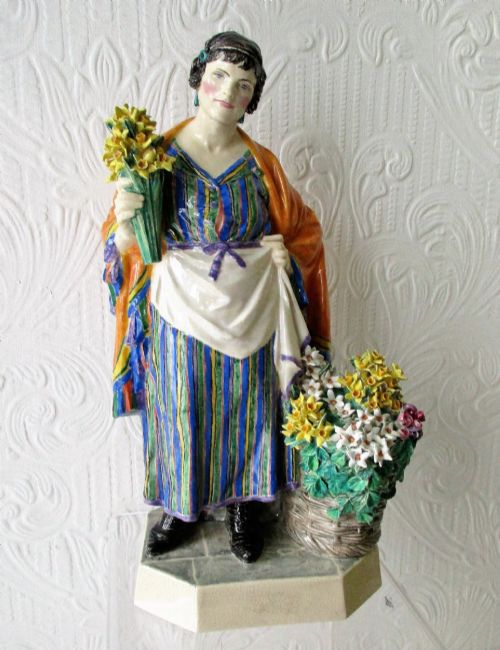
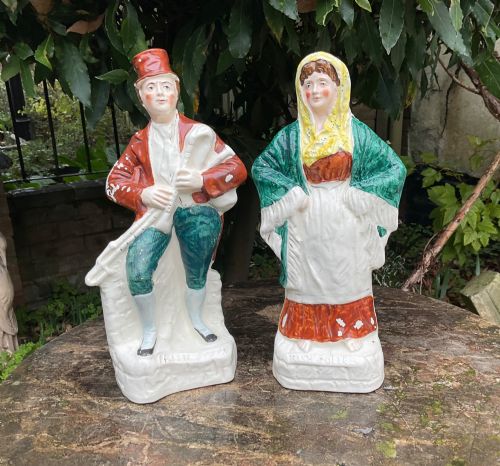
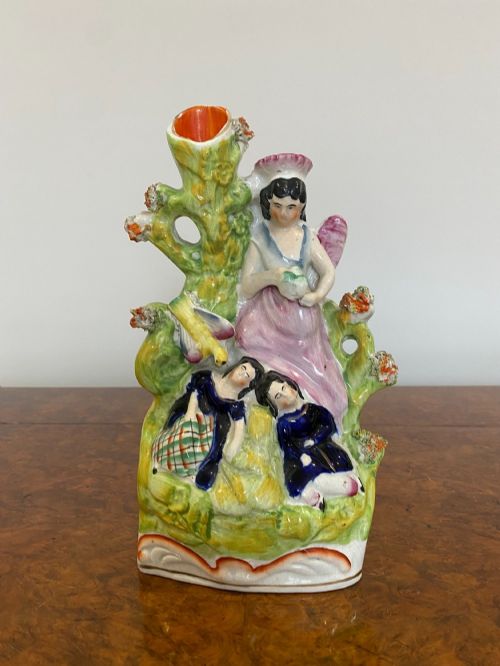
When you search for multicoloured pottery ornaments, you encounter a diverse array of ceramic figures and spill vases spanning the Georgian, Victorian, and Edwardian eras. These pieces range from primitive folk art depictions of animals and historical figures to refined portrait groups.
The selection on this page is dominated by Staffordshire earthenware, alongside pieces from Scottish Portobello potteries, Dutch makers, and English factories such as Wedgwood. Subjects stretch from literary characters like Little Red Riding Hood and Robin Hood to royal portraits and biblical scenes.
How they were made
Makers shaped these earthenware and ceramic bodies by hand or in moulds before applying lead glazes to seal the porous clay. The distinctive surface finish relies upon enamel paint applied over or under the glaze to build up the palette.
Firing techniques of the nineteenth and early twentieth centuries produced the characteristic crazing and surface variations seen on these figures. Enamel colours were fixed in secondary kilns, yielding the rich polychrome surfaces that define the genre.
Multicoloured Pottery Ornaments Retail Price Guide 2026
Typical asking prices for multicoloured pottery ornaments among the pieces listed under this phrase on Sellingantiques today, from the lower quarter to the upper quarter. They describe what is for sale here now, not the wider market.
Potters immortalised history in clay, giving Victorian mantelpieces goats with attitude and royalty in full enamel colour.
What varies in quality
The sophistication of the form also dictates distinction, moving from primitive folk art interpretations to finely executed portrait groups and marked factory output. Intact pairs and larger sculptural forms demonstrate greater ambition from the potter.
Wedgwood and Co Ltd·Lakin and Poole·Rozenburg
The Multicoloured Pottery Ornaments Glossary
- Earthenware
- A porous pottery fired at lower temperatures, serving as the primary ceramic body for the majority of these figures. It requires a glaze to become impermeable to liquids.
- Lead glaze
- A glossy coating containing lead oxide applied to pottery before firing, creating a smooth and protective transparent surface over the clay and paint.
- Pearlware
- A refined earthenware developed in the late eighteenth century featuring a bluish-white glaze that made the underlying ceramic body appear whiter.
- Spill vase
- A hollow figurine incorporating a small cylindrical holder designed to store wooden matches or tapers used for lighting candles and fires.
- Flatback
- A Staffordshire figure modelled with a finished front and a plain, unpainted flat reverse intended to stand against a mantelpiece wall.
Multicoloured Pottery Ornaments: Frequently Asked Questions
How do I date an old Staffordshire figure?
Dating relies upon stylistic clues, the type of ceramic body, and the nature of the glaze or enamel paint. Earlier Georgian examples often show simpler primitive modelling, while Victorian pieces frequently feature flat backs and historical subjects.
Changes in palette and the presence of factory marks help narrow the timeline. Comparing the piece to documented examples from periods like the Crimean War or the Victorian era provides further clarity.
What is the purpose of a spill vase?
A spill vase combines a decorative figurine with a functional container used to hold thin wooden spills. These wooden sticks were lit from the hearth fire and carried to candles or lamps.
By integrating the holder into the pottery figure, makers created an item that was both ornamental and practical for everyday nineteenth-century domestic life.
How should I display pottery figures at home?
These ornaments suit stable surfaces away from direct sunlight and high humidity, which can affect fragile enamel paints. Placing them on mantelpieces or within enclosed shelving protects them from accidental knocks.
Allowing sufficient space around each figure lets the hand-painted details and distinct silhouettes stand out without visual clutter.
Are flatback figures meant to be seen from behind?
Flatback figures are deliberately modelled with unpainted, flat rears because they were designed to sit flat against a wall on a shelf or mantelpiece. This construction method saved materials and focused all sculptural effort on the front view.
Makers painted only the visible surfaces, capturing the narrative scene for viewers positioned directly in front of the piece.