


Earthenware Ceramic Jardiniere
An earthenware ceramic jardiniere brings sculptural planting indoors, offering glazed surfaces and decorative motifs shaped across centuries of British and continental pottery production.
Earthenware Ceramic Jardiniere
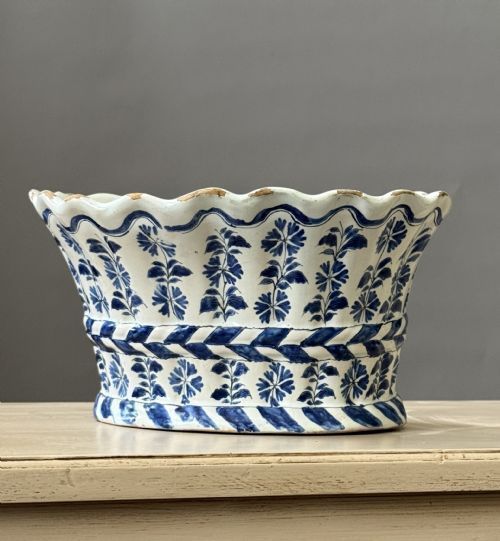
When you search for an earthenware ceramic jardiniere, you encounter plant vessels designed to hold potted greenery, often paired with matching pedestals or stands. The selection spans the nineteenth century through the early twentieth century, taking forms from simple cachepots to large moulded urns.
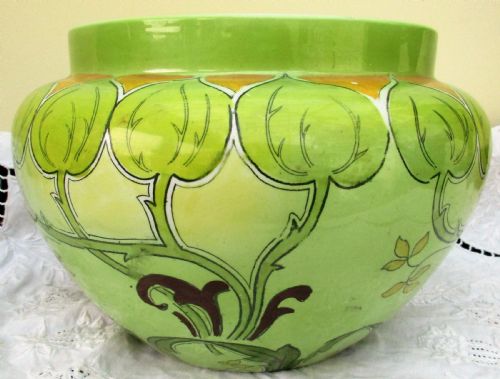
The nineteenth century dominates the current range, with Victorian, Art Nouveau, and Arts and Crafts examples appearing alongside earlier pieces from the eighteenth century. British potteries such as Doulton, Minton, and Burmantofts sit alongside continental majolica and Japanese stoneware.
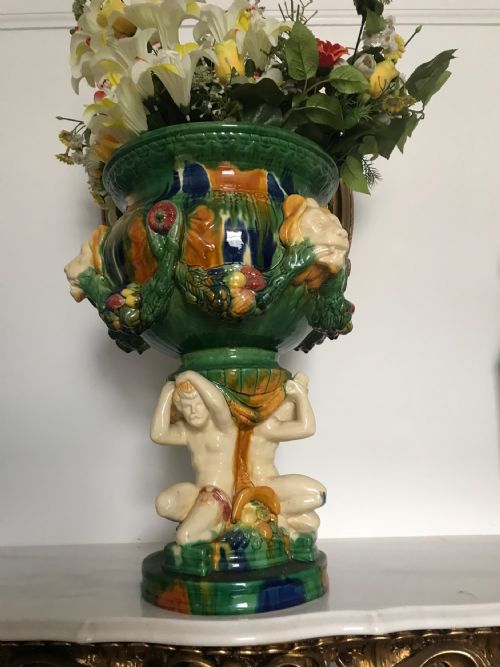
Forms vary from standard circular pots to three-handled vessels, bough pots, and fern rockwork designs. Many survive as single vessels, while others retain their original figural base stands.
How they were made
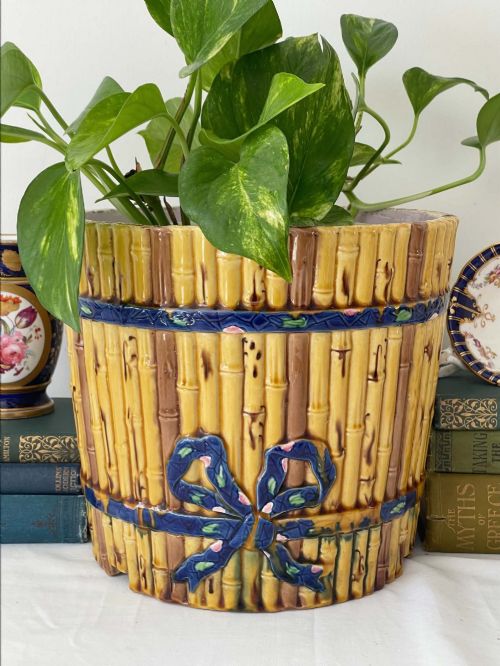
Potters shaped these vessels using earthenware and stoneware bodies, applying coloured glazes, enamel, and metallic lustre to achieve rich surface sheens. Majolica glazes were widely employed to build vibrant relief decoration across botanical and figural subjects.
Techniques combine thrown clay bodies with moulded elements, incorporating lion heads, bamboo stalks, and naturalistic foliage applied before firing. Stoneware and terracotta provide heavier structural foundations for larger planters and pedestal sets.
Keep an eye out for glazed griffins guarding your ferns.
What varies in quality
Quality rests on the crispness of the moulded relief and the depth of the glaze application. Pieces decorated by named artists or produced by leading ceramic works display superior control over coloured enamels and complex firing results.
The survival of matching stands and original liners elevates an example, as does the complexity of the body form, such as multi-handled vessels or figural support bases.
W.A. Adderley·Makuzu Kozan II·Doulton Burslem·Doulton Lambeth·Clement Massier·Royal Worcester·Julius Dressler·George Jones·William Adams & Sons·Linthorpe Pottery
The Earthenware Ceramic Jardiniere Glossary
- Jardiniere
- A large ornamental pot or planter designed to hold a live plant or floral arrangement. These vessels sit directly on tabletops, wash stands, or dedicated ceramic pedestals.
- Majolica
- A type of earthenware coated with an opaque tin-lead glaze and painted with metallic oxide colours. It is known for bright green, brown, and yellow hues applied over moulded relief decoration.
- Cachepot
- A decorative flowerpot used to conceal a plain inner growing pot without drainage holes. They often feature matching saucers or flat bases to protect furniture surfaces.
- Stoneware
- A heavy, durable ceramic fired at high temperatures until vitrified and impermeable to liquids. It provides a dense body capable of supporting large garden urns and planters.
- Lustre glaze
- A metallic film applied to pottery surfaces to create an iridescent sheen. This technique produces shimmering reflections when viewed under directional light.
Earthenware Ceramic Jardiniere: Frequently Asked Questions
What is a jardiniere used for?
A jardiniere holds potted plants and floral displays within interior spaces, serving as a decorative container rather than a direct planting bed.
Historically, they rested on wash stands, pedestals, or tabletops in reception rooms to bring garden foliage indoors.
How do I care for antique pottery?
Keep these vessels away from direct moisture by using a plastic liner inside the ceramic body rather than planting directly into the pot.
Dust surfaces gently with a soft cloth and avoid abrasive cleaning agents that can damage historic glazes.
How do I date a ceramic jardiniere?
Examine the base for impressed factory marks, registration numbers, or artist signatures that link the piece to documented production periods.
Stylistic cues such as Art Nouveau asymmetrical curves or Victorian naturalistic majolica foliage help narrow the decade of manufacture.
Are stands usually original?
Many large planters were manufactured alongside matching pedestals to form a single unified display piece for hallways and corner spaces.
Matching glazes and clay bodies confirm whether a jardiniere and its stand belong together as a matched pair.