
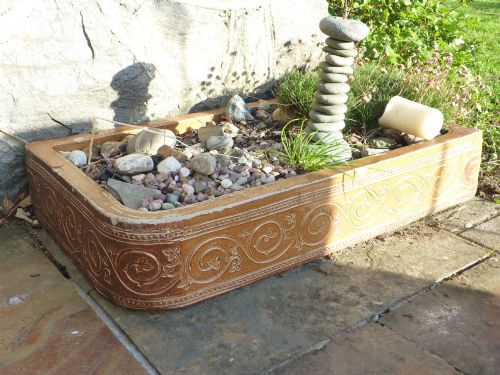
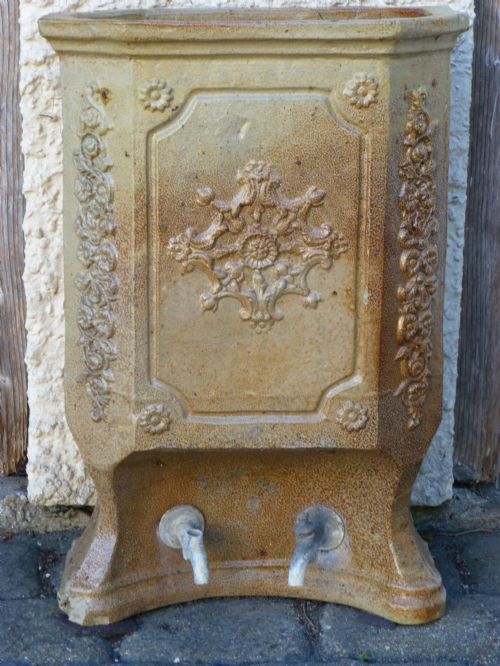


Vintage Stoneware Planter
These vintage stoneware planter options bring robust utility and earthy texture to interiors and gardens alike.
Vintage Stoneware Planter
A vintage stoneware planter serves as a heavy, durable vessel for flora, often encountered in forms such as jardinieres, cachepots, and window troughs. These pieces draw from periods spanning the nineteenth century through the early twentieth century, reflecting Victorian and continental aesthetics.
The most common examples on this page are salt-glazed and glazed stoneware vessels originating from British potteries like Doulton Lambeth and French workshops. Collectors also find specialised forms including water filtration fountains converted to planting use and faux bois garden troughs.
Buyers will encounter stylistic influences ranging from Arts and Crafts and the Aesthetic Movement to French Country and French Art Nouveau. Each piece combines functional gardening utility with distinct period craftsmanship.
Materials and construction methods
Potters utilised durable stoneware clays fired at high temperatures to ensure the vessels could hold moisture and withstand outdoor conditions. Many pieces feature salt glaze applied during the kiln firing, creating a characteristic pitted texture on the surface.
Other examples utilise rich green glazes over terracotta or intricate hand-modelling to achieve naturalistic textures like faux bois wood grain. Workshops combined wheel-throwing with moulded relief decoration, particularly in Victorian and continental production.
Some nineteenth-century potters painstakingly sculpted clay to mimic chopped logs, proving that gardeners have long desired wooden textures without the pesky rot.
Assessing quality in stoneware vessels
Quality in a vintage stoneware planter rests upon the crispness of moulded ornamentation and the evenness of the glaze application. Superior examples display controlled kiln reactions and well-defined decorative motifs without distortion.
The reputation of the maker also dictates distinction, with signed factory pieces or recognised studio marks elevating the standing of the object. Weight, wall thickness, and structural integrity further separate standard utility vessels from masterworks.
Royal Doulton·Doulton Lambeth·Makuzu Kozan II·Guichard Carriès·Enoch Wood & Sons
The Vintage Stoneware Planter Glossary
- Stoneware
- A robust pottery type fired at high temperatures until vitrified and rendered impermeable to liquids. It forms the primary material base for durable garden vessels and indoor jardinieres.
- Salt Glaze
- A glossy, slightly textured finish achieved by throwing common salt into the kiln during high-temperature firing. This reaction produces an orange-peel texture across the stoneware body.
- Jardiniere
- An ornamental ceramic pot or stand designed to hold growing plants or flowers indoors. These vessels frequently feature decorative relief patterns or coloured glazes.
- Faux Bois
- An artistic imitation of wood grain executed in clay, stone, or cement. This technique appears on nineteenth-century garden troughs to mimic natural timber.
- Cachepot
- A decorative container used to conceal an ordinary flowerpot rather than planting directly into the vessel. The term translates from French as hiding pot.
- Terracotta
- Unglazed or glazed fired earthenware possessing a porous reddish-brown body. It appears in continental garden jars and confit vessels.
Vintage Stoneware Planter: Frequently Asked Questions
Can I use these planters outdoors all year?
Many stoneware and salt-glazed pieces tolerate frost well due to their high firing temperatures, but severe freezing can crack older glazed ceramics. It remains wise to shelter delicate antique vessels during harsh winter weather.
Checking the specific density of the clay body helps determine outdoor suitability. Unglazed earthenware and water-logged bodies are particularly vulnerable to frost damage.
How do I clean a vintage salt-glazed planter?
Gentle washing with warm water and a soft brush removes dirt and mineral deposits without harming the historic glaze. Avoid harsh chemical cleaners or abrasive scourers that can etch the ceramic surface.
Stoneware is hardy, but historic salt-glaze can retain old salts and moisture. Allowing the vessel to dry thoroughly after cleaning preserves the integrity of the material.
What is the difference between a jardiniere and a cachepot?
A jardiniere typically acts as a standalone vessel meant for direct planting or holding substantial floral arrangements indoors. A cachepot functions primarily as an outer sleeve to hide a plain plastic nursery pot.
Historical usage often blurred these lines, as many large ceramic bowls served interchangeably depending on the interior setup. Both forms prioritise decorative display alongside practical plant care.
How do I date a Victorian stoneware planter?
Dating relies on identifying impressed factory stamps, registration marks, and stylistic clues specific to the nineteenth century. Aesthetic Movement and Arts and Crafts motifs often point towards the latter decades of the era.
Weight, glaze chemistry, and the presence of model numbers further narrow the timeframe. Consulting maker archives helps confirm the exact decade of production.