
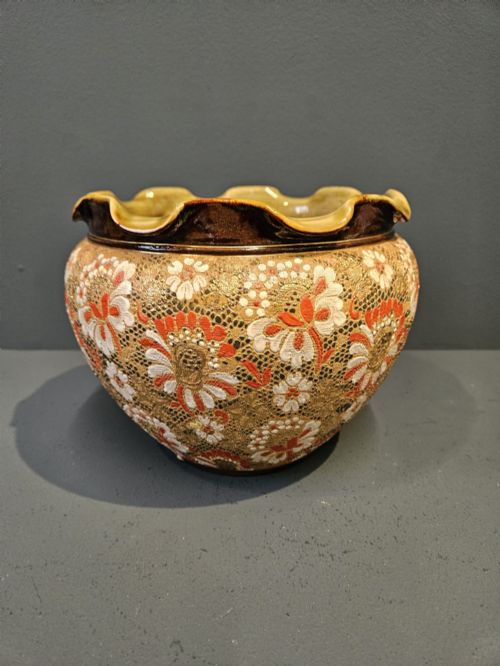


Decorative Ceramic Plant Pot
A decorative ceramic plant pot brings character to a room through rich glazes, distinctive forms, and traditional hand-painting.
Decorative Ceramic Plant Pot
A decorative ceramic plant pot encompasses a variety of jardinières, planter stands, and traditional flower pot vessels designed to house indoor greenery. When exploring these items, buyers will frequently encounter pieces shaped as jardinières, sometimes paired with matching pedestals or fitted with double handles.
The selections span distinct periods ranging from the Victorian era and Edwardian times through to the early decades of the twentieth century. Common stylistic influences include Victorian Art Pottery, Arts and Crafts, Art Nouveau, Chinoiserie, and Aesthetic Movement designs.
Origins represented across these pieces include English potteries, Scottish makers, French workshops, and German stoneware manufacturers. Buyers often find standalone vessels as well as paired square planters incorporating inset panels.
Markers of Quality
The distinction between standard examples and finer pieces rests upon the execution of the glaze and the precision of the hand-painted decoration. Superior items display careful control of coloured glazes and well-defined mouldings that retain crisp architectural or botanical detail.
Attribution also plays a role in differentiation, as works associated with known potteries or specific artists carry distinct manufacturing marks. The complexity of the form, such as integrated double handles or matching pedestals, further elevates the stature of an individual piece.
Listings feature works in ceramic, earthenware, stoneware, and porcelain, spanning periods from the Victorian era through to the Edwardian period.
Doulton Lambeth·Doulton Burslem·Burmantofts Majolica·Royal Worcester·Linthorpe Pottery·Minton
The Decorative Ceramic Plant Pot Glossary
- Jardiniere
- A large ornamental pot or stand designed to hold a plant or flower arrangement indoors. These vessels often sit directly on tabletops or floor pedestals.
- Majolica
- A type of earthenware coated with an opaque tin glaze and painted with brightly coloured metallic oxide pigments. It was widely utilised during the Victorian period for vibrant floral and figurative vessels.
- Art Nouveau
- A decorative art style characterised by flowing, organic lines and asymmetrical plant motifs popular around the turn of the twentieth century.
- Aesthetic Movement
- A late nineteenth-century design ethos that emphasised beauty and craftsmanship over narrative content, drawing heavy inspiration from Japanese art.
Decorative Ceramic Plant Pot: Frequently Asked Questions
What is a jardiniere?
A jardiniere is an ornamental container designed to hold a potted plant, acting as a decorative outer vessel rather than a direct planting pot.
These pieces were traditionally placed on tabletops, windowsills, or dedicated pedestals to bring greenery into interior living spaces.
How do I identify Victorian pieces?
Victorian items frequently exhibit heavy ornamentation, rich majolica glazes, or classical revival motifs such as those found in nineteenth-century Art Pottery.
Examining the base for impressed pottery marks, maker ciphers, or registration numbers can also help confirm the period of manufacture.
What distinguishes stoneware from earthenware?
Stoneware is fired at significantly higher temperatures, causing the clay body to vitrify and become naturally impermeable to water without needing a heavy glaze.
Earthenware is more porous and requires a surface glaze, such as enamel or majolica, to hold moisture effectively.
How do I style a jardiniere at home?
A jardiniere makes an effective centrepiece on a large table or sideboard when filled with ferns, palms, or trailing indoor foliage.
Standing vessels and pedestal sets work well placed directly on the floor in empty corners to add height and texture to a room.