


Early Georgian Floor Clock
An early georgian floor clock brings the steady ticking of eighteenth century life directly into a room, offering both reliable timekeeping and stately height.
Early Georgian Floor Clock
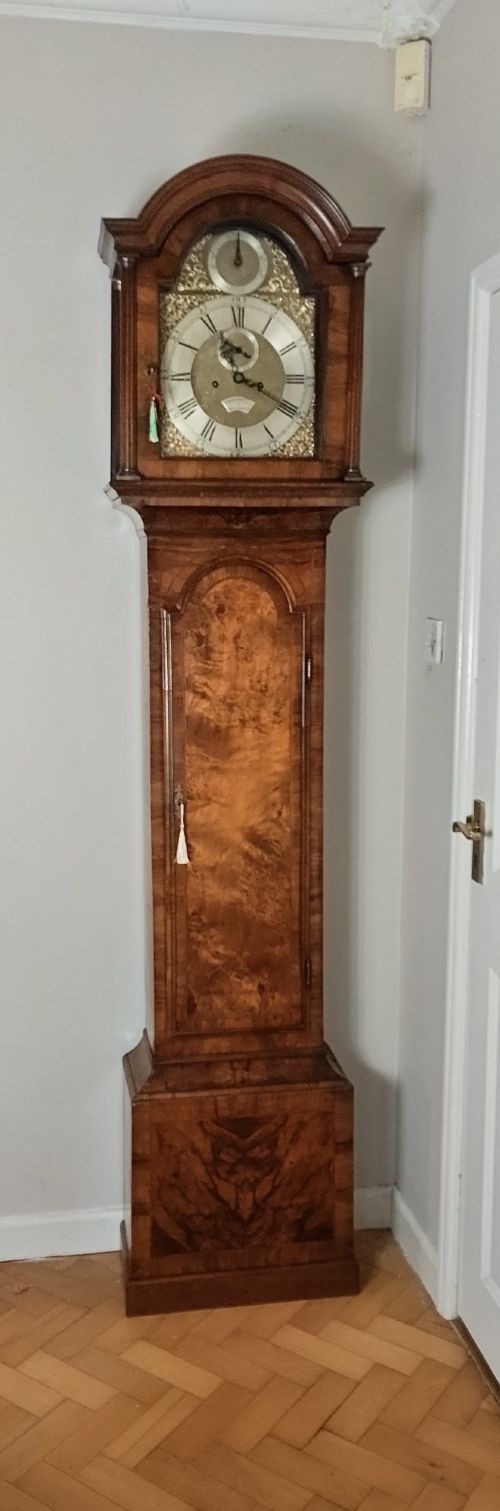
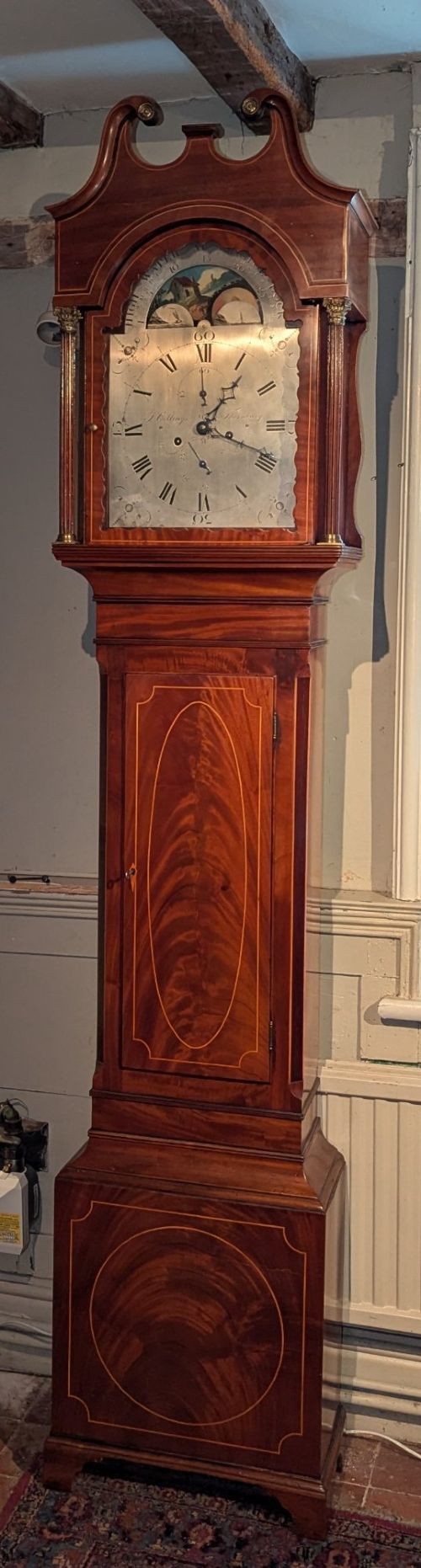
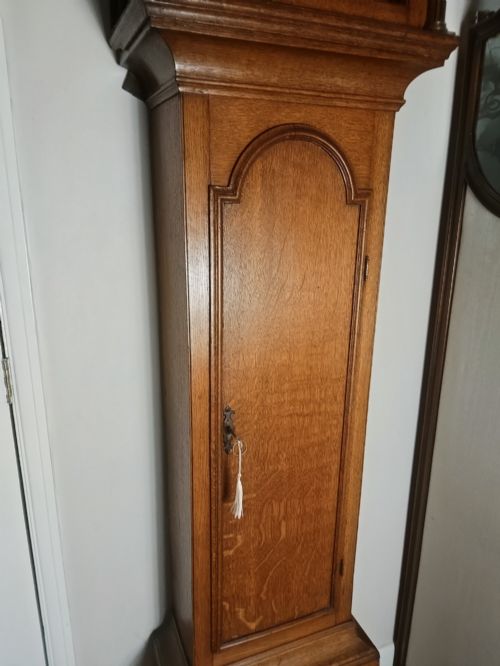
An early georgian floor clock is a tall domestic timepiece, commonly called a grandfather or longcase clock, designed to stand upright against a wall. The examples on this page span the georgian and queen anne periods into the nineteenth century, capturing a time when clockmaking was both a domestic utility and a display of fine cabinetry.
Most pieces encountered here are housed in timber cases of oak, mahogany, or walnut, sometimes enhanced by burr walnut veneers or dark green chinoiserie decoration. Their heights accommodate hanging weights and swinging pendulums, creating a commanding vertical presence in a hallway or parlour.
The dials range from single-handed brass faces of the early eighteenth century to later painted moon dials and penny moon displays. Makers inscribed their names across these dials, connecting the clocks to provincial towns and metropolitan workshops alike.
What varies in quality
Quality rests in the harmony between the clock movement and its housing, where the skill of the horologist meets the competence of the cabinetmaker. A superior piece maintains original proportions, timber patination, and movement components that have not suffered careless alterations over the centuries.
The sophistication of the dial work and the crispness of any wooden carving or inlay also divide ordinary examples from exceptional ones. Finer makers invested greater precision into the engraving of brass dials and the selection of figured veneers like burr walnut.
The listings on this page include oak, mahogany, walnut, and burr walnut cabinetry housing brass and painted dial movements.
Thomas Webbe of New Quay·David Morice of Auchtermuchty·William Smith of Keighley·John Harrington of London·George Adams·John Welsh of Luton·Ganthony of London·Hampston Prince and Cattles of York·John Bishop of Sherborne Dorset
The Early Georgian Floor Clock Glossary
- Longcase clock
- A tall pendulum clock enclosed in a wooden case that stands directly on the floor. These pieces protect the delicate weights and pendulum while serving as prominent furniture in a home.
- Moon dial
- A specialised clock face featuring a rotating disk that tracks the phases of the lunar cycle. This mechanical addition was particularly popular on eighteenth and nineteenth century dials.
- Count wheel
- An early internal locking plate mechanism that regulates the number of hours a clock strikes on its bell. It forms part of the traditional striking train found in older movements.
- Chapter ring
- The circular ring fixed to the dial face that displays the hour numerals. On brass dials, this is often a separate silvered piece pinned to the dial plate.
Early Georgian Floor Clock: Frequently Asked Questions
How do I wind an eight day clock?
An eight day clock requires winding approximately once a week using a specialised crank key fitted to the winding holes on the dial face. Care must be taken not to overwind the weights.
Lifting the glass door or hood allows access to the face where the key engages the arbors to draw the heavy lead or iron weights back up towards the top of the case.
Where should I place a longcase clock?
A longcase clock needs a stable, dry interior location on a firm floor away from direct sunlight, heating vents, and damp exterior walls. Plumb placement ensures the pendulum swings evenly.
Securing the tall wooden trunk to the wall using hidden brackets prevents accidental tipping and keeps the delicate internal escapement beating in a steady, regular rhythm.
What is a single handed clock?
A single handed clock uses one central hand to indicate the hour, with the dial divided into quarter-hour and five-minute intervals to allow reading the time closely. This was standard on earlier movements before minute hands became common.
Such pieces reflect the more leisurely pace of daily life in the early eighteenth century, where precision to the exact minute was rarely required.
How do I tell if the movement is original?
Examining the fit of the movement within the wooden seat board and checking the dial feet against the mounting holes reveals whether the parts were made for each other. Consistent wear and matching age across iron and brass components provide further clues.
Clockmakers often signed their work directly on the brass dial plate or movement backplate, helping to link the mechanism securely to the cabinet origin.