


Brown Walnut Longcase Clock
A brown walnut longcase clock brings architectural presence and precision engineering into a room, spanning centuries of cabinetmaking from the seventeenth century onwards.
Brown Walnut Longcase Clock
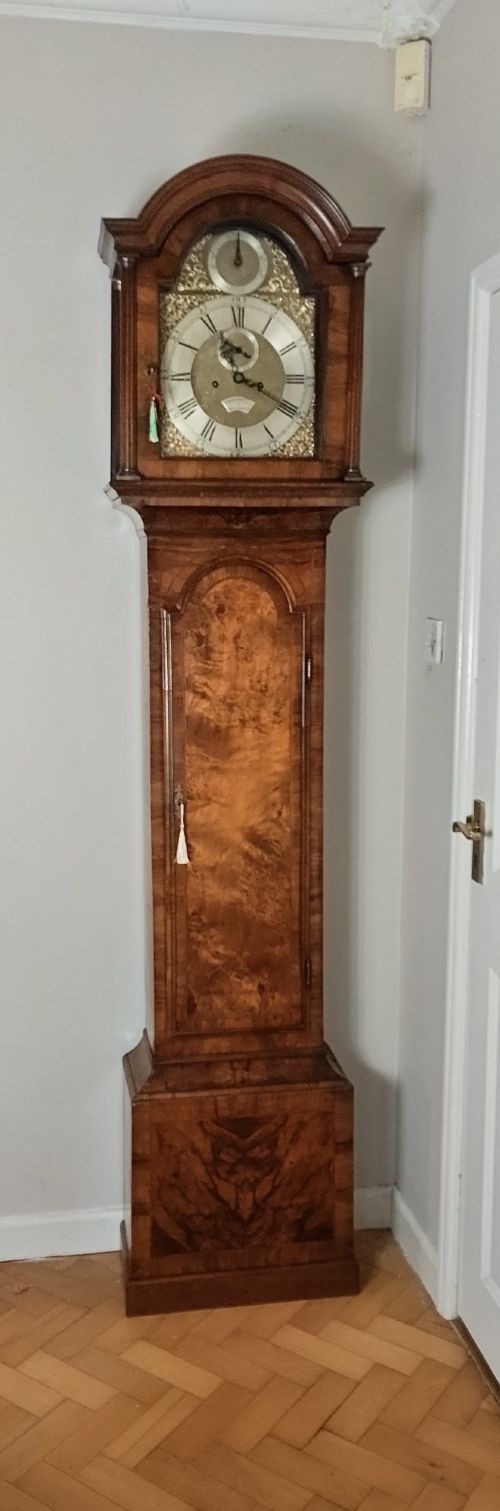
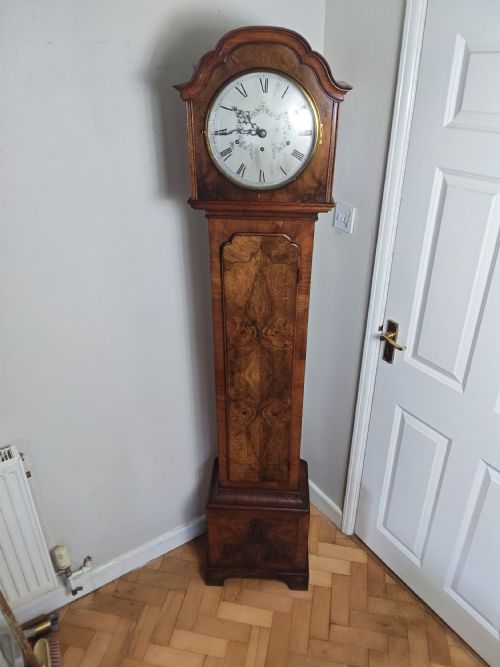
A brown walnut longcase clock combines tall wooden cabinetry with intricate mechanical movement, designed to stand upright against a wall. Pieces meeting this search phrase range from imposing seventeenth-century examples down to compact twentieth-century grandmother clocks.
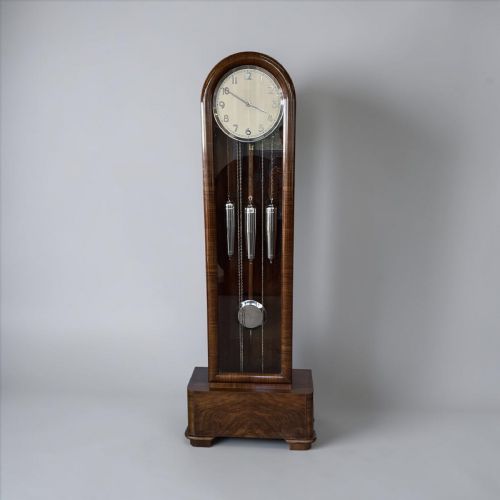
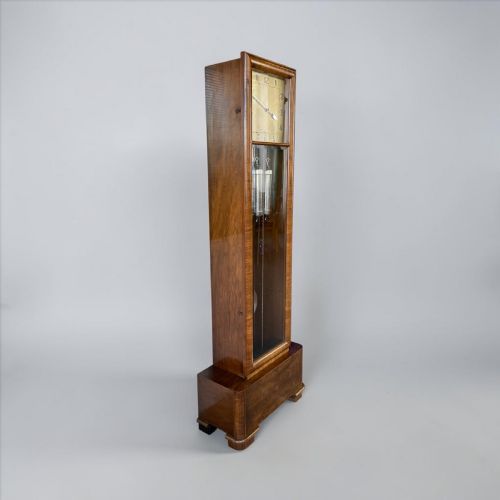
Makers produced these timepieces in various scales, including miniature versions and musical variants with multiple weights. The selection balances early Georgian craftsmanship with later revivals from the Art Deco period and eighteen-nineties.
Cabinets typically feature figured timbers like burr walnut and quarter veneered panels set within oak carcases. Dial configurations accommodate brass chapter rings and subsidiary work executed by period watchmakers.
Materials and construction methods
Cabinetmakers constructed the tall cases using solid oak frames applied with walnut veneers, often selecting burr walnut sections for dramatic grain patterns on the trunk door and base. Glass panels protected the dial face while allowing visibility of the swinging pendulum.
Clockmakers fitted brass movements driven by hanging weights, utilising steel and metal components for the gear trains and striking mechanisms. Dials featured engraved brass chapter rings alongside cast brass spandrels in the corners.
Listings span multiple centuries, incorporating seventeenth-century masterworks, eighteenth-century Georgian designs, and nineteen-thirties Art Deco interpretations.
Assessing quality in walnut longcases
Quality rests heavily on the fidelity of the timber selection and the skill with which the walnut veneers are matched across the trunk door. Superior examples display harmonious grain movement and restrained use of quarter veneering.
The sophistication of the mechanical movement and the reputation of the original maker elevate a piece significantly. Retaining original brass dial work and well-proportioned hood mouldings distinguishes finer clocks from later reproductions.
Edin Burgis of London·Langley Bradley·Edward Upjohn·Edward East·Joseph Knibb·John Harrington·James Drury of London
The Brown Walnut Longcase Clock Glossary
- Longcase clock
- A tall pendulum clock enclosed in a wooden case standing directly on the floor. These pieces are frequently referred to as grandfather clocks.
- Burr walnut
- A prized timber harvested from walnut tree growths, yielding intricate swirling grain patterns. Cabinetmakers sliced this wood into thin veneers for decorative door panels.
- Grandmother clock
- A smaller, more slender version of the traditional longcase clock. They typically measure under six feet in height.
- Chapter ring
- The metal ring on a clock dial that bears the hour numerals. These are commonly made of silvered or polished brass.
Brown Walnut Longcase Clock: Frequently Asked Questions
Where should I place a longcase clock?
Position your clock against an interior wall away from direct sunlight and heating vents to protect the timber and veneer.
Ensure the floor is entirely level so the pendulum swings evenly and keeps accurate time.
How do I wind an eight day clock?
Insert the winding key into the holes on the dial face and turn clockwise until you feel resistance.
Support the weight chains gently if necessary and avoid over-winding the mechanism.
What is the difference between a grandfather and grandmother clock?
Grandfather clocks are standard full-sized floor clocks measuring around six to eight feet tall.
Grandmother clocks are significantly shorter and narrower versions produced primarily during the twentieth century.
How do I identify seventeenth-century walnut furniture?
Look for rich brown walnut timbers combined with pegged oak construction inside the case carcase.
Early pieces often feature simpler architectural hood designs without the elaborate fretwork seen later.