




Early English Oak Coffer
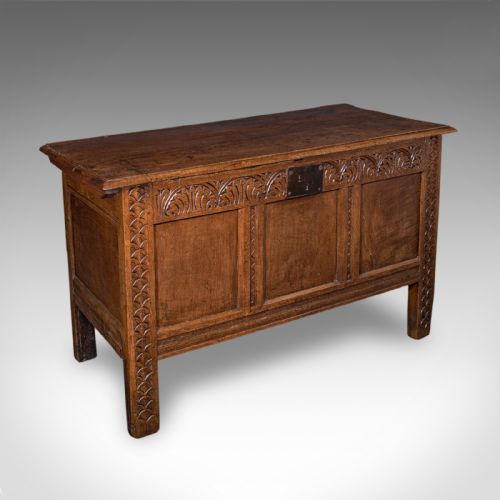
An early english oak coffer is a robust storage chest designed for domestic security and utility, offering heavy timber construction built to endure for centuries.

Early English Oak Coffer
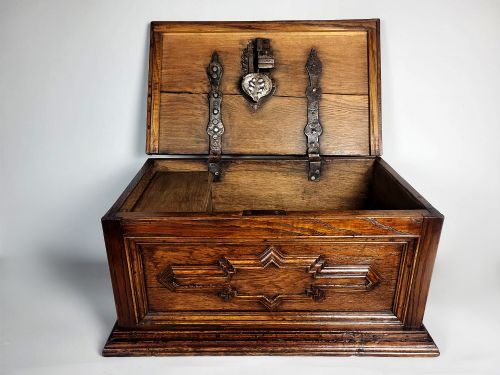
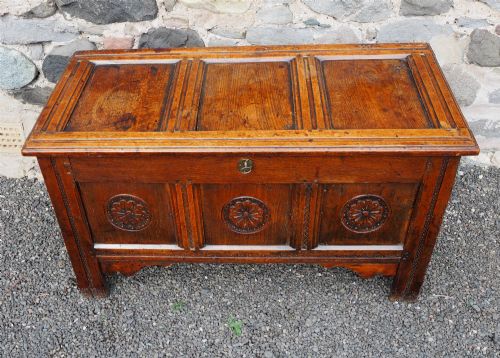
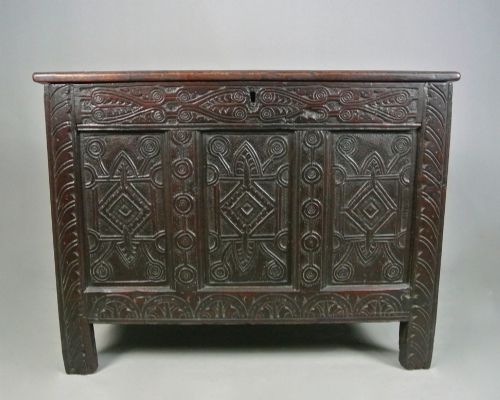
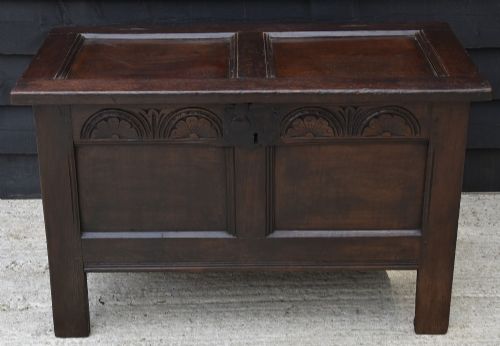
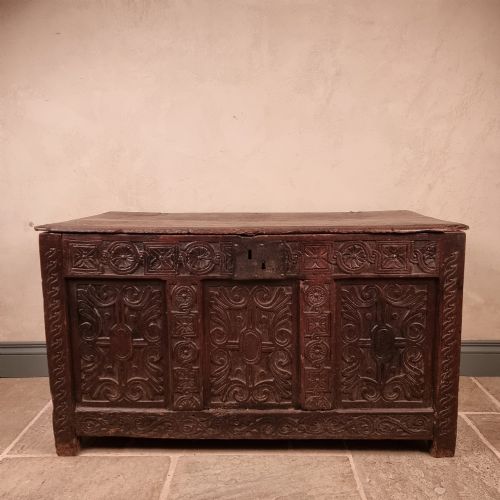
When you search for an early english oak coffer, you are looking at substantial storage pieces spanning the sixteenth, seventeenth, and early eighteenth centuries. These items range from simple planked constructions to elaborately joined and carved panelled trunks.
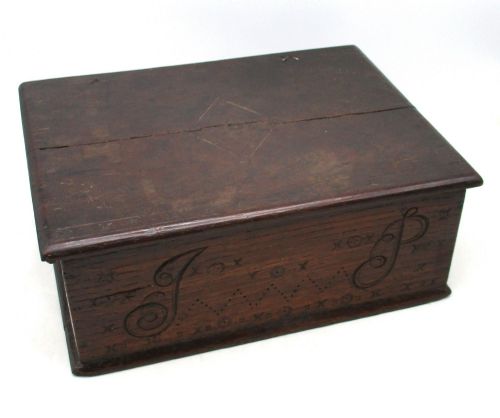
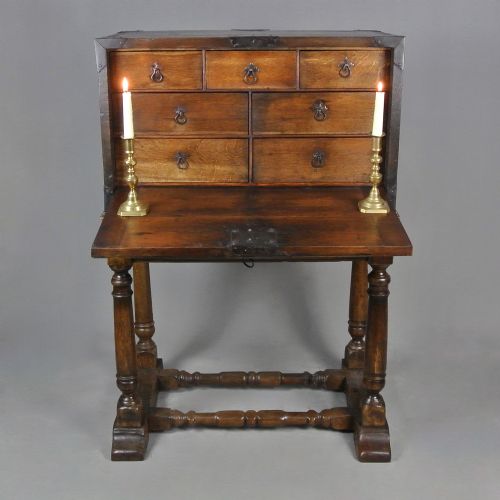
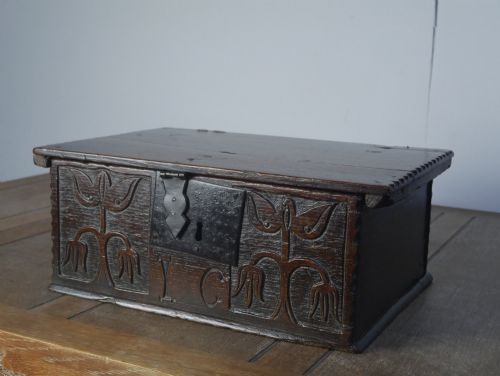
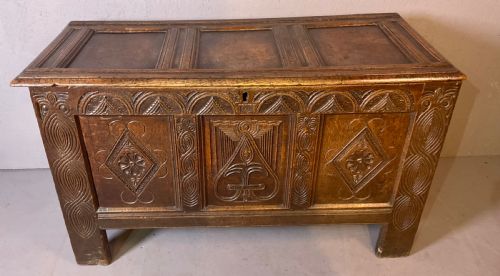
The versions you are most likely to meet on this page date predominantly from the seventeenth century and the Jacobean or Charles II periods. They frequently appear as panelled coffers, small document boxes, or blanket chests shaped by domestic English craftsmanship.
Assessing quality and proportion
Quality in these pieces rests upon the integrity of the original timber and the crispness of the hand-carved decoration. Examples retaining their original boarded lids, floor timbers, and complex locking mechanisms sit firmly at the upper end of the scale.
Proportion and scale also dictate desirability, with smaller boxes and compact coffers commanding particular attention. Pieces that have undergone extensive replacement of boards or structural framing diverge significantly from those preserved in their original state.
Early English Oak Coffer Retail Price Guide 2026
Typical asking prices for early english oak coffer among the pieces listed under this phrase on Sellingantiques today, from the lower quarter to the upper quarter. They describe what is for sale here now, not the wider market.
Listings feature solid oak construction combined with wrought iron and steel hardware across sixteenth, seventeenth, and eighteenth-century periods.
The Early English Oak Coffer Glossary
- Linenfold
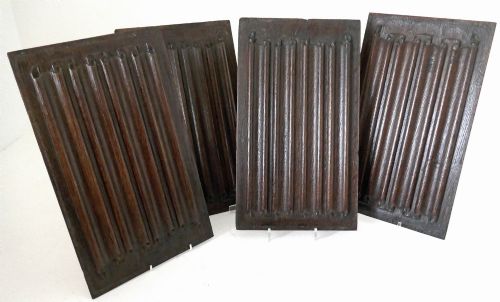
- A style of wood carving popular in the Tudor period that imitates folded linen fabric. It appears commonly on the vertical panels of early chests.
- Joined coffer
- A chest constructed using a frame and panel technique rather than simple boards. Pegged mortise and tenon joints hold the structural skeleton together.
- Plank coffer
- A primitive chest constructed from a small number of thick boards joined at the edges. These pieces rely on pegged or nailed joints directly through the timber.
- Arcaded
- Decorated with a series of arched motifs carved in relief along the frieze or panels. This stylistic detail occurs frequently on seventeenth-century woodwork.
Early English Oak Coffer: Frequently Asked Questions
What were early english oak coffers used for?
These chests originally served as secure storage containers for valuable household goods, legal documents, and textiles. Households utilised them to protect prized possessions from theft, dampness, and fire.
Over subsequent centuries, their function shifted toward general domestic storage, blankets, and occasional seating beneath windows. Their heavy lids made them suitable for doubling as tables or benches in early homes.
How can I tell a sixteenth-century coffer from a seventeenth-century one?
Sixteenth-century examples frequently feature distinct linenfold carving and heavier plank construction characteristic of the Tudor and Henry VIII periods. The timber boards tend to be wider and show the marks of pit-sawing.
Seventeenth-century pieces introduce joined framing with geometric mouldings, arcading, and dated carvings associated with Jacobean and Charles II styles. The joinery becomes more intricate, moving away from simple boarded boxes toward sophisticated frame-and-panel assemblies.
Where should I place an oak coffer in my home?
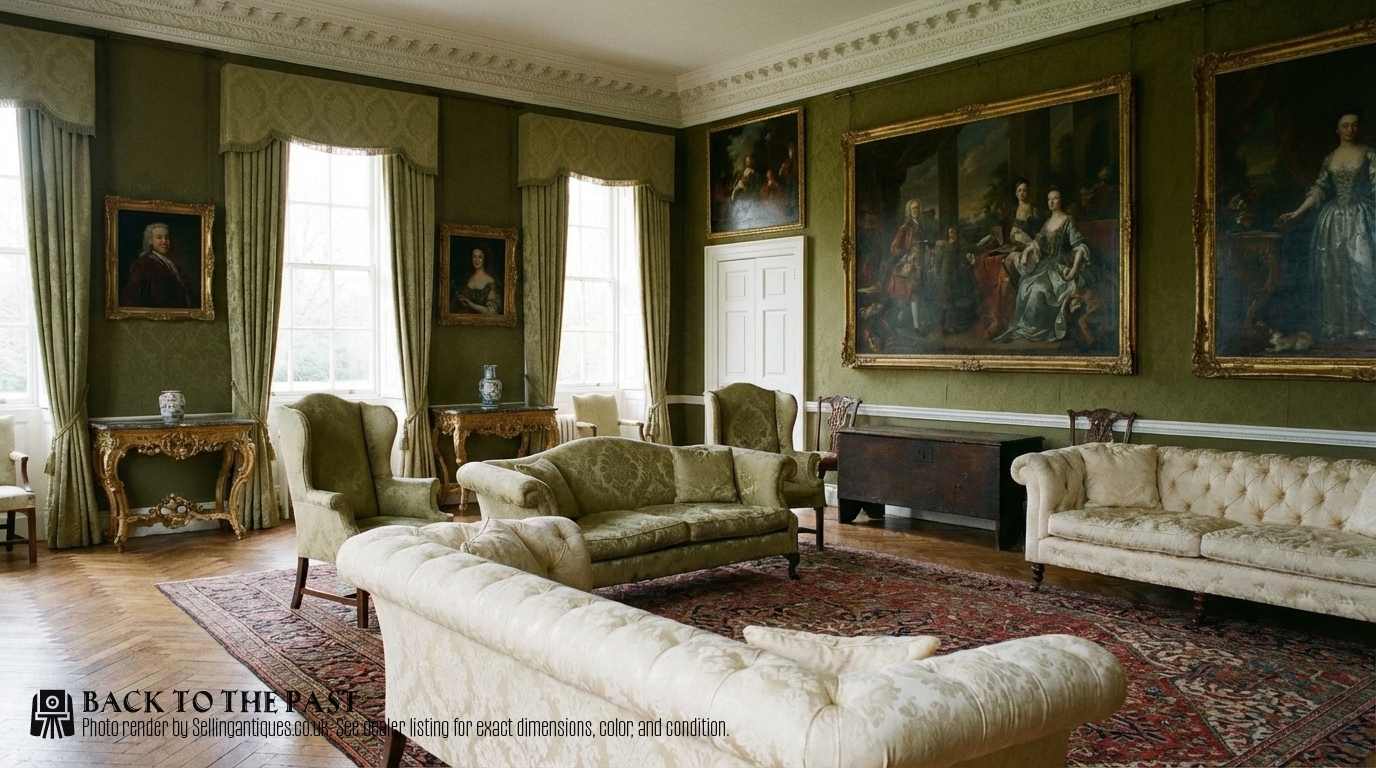
An oak coffer suits entrance halls, living rooms, or bedrooms where its substantial visual weight anchors the space. Placing it away from direct heat sources and radiators prevents the old oak timber from drying out and splitting.
Using the interior storage for blankets or linens keeps the piece functional while displaying its carved exterior. The flat top functions well as a display surface for ceramics or books.
Are replacement hinges common on these chests?
Iron and steel hardware on early coffers underwent heavy daily use, meaning strap hinges and locking mechanisms often required repair over the centuries. Original ironwork adds significantly to the historical integrity of the piece.
When examining a chest, look closely at the wood around the hinge placements for signs of historic alterations. Replacements are acceptable provided they match the period style and do not compromise the surrounding oak.