

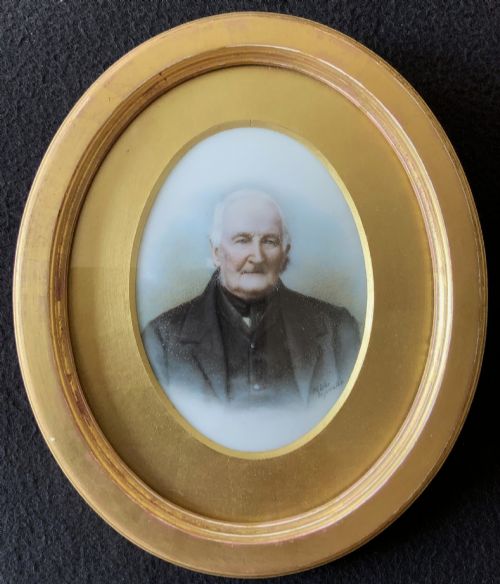
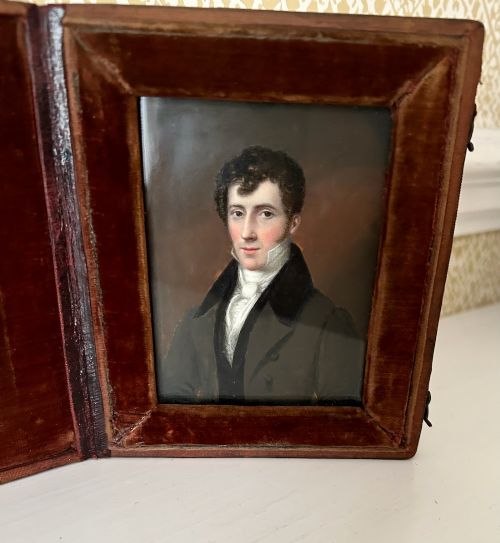


Early 19th Century Watercolour
An early 19th century watercolour brings the distinct atmosphere of the Regency and Georgian eras straight into a room through delicate washes and hand-mixed pigments.
Early 19th Century Watercolour
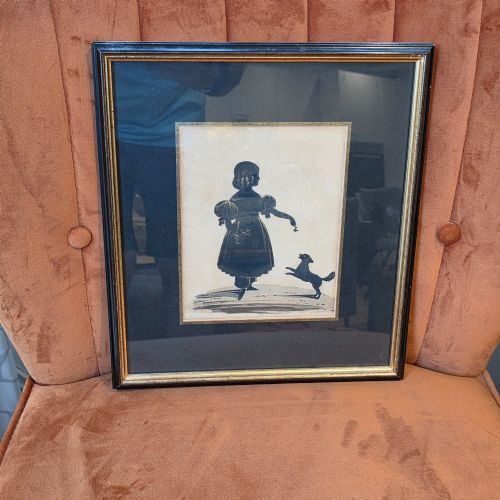
An early 19th century watercolour captures the diverse visual culture of the period through intimate portrait miniatures, sweeping landscapes, and detailed architectural studies. These works range from provincial folk art and silhouette compositions to accomplished topographical views by recognised artists of the day.
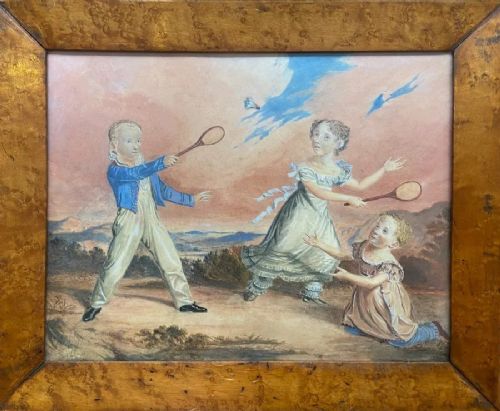
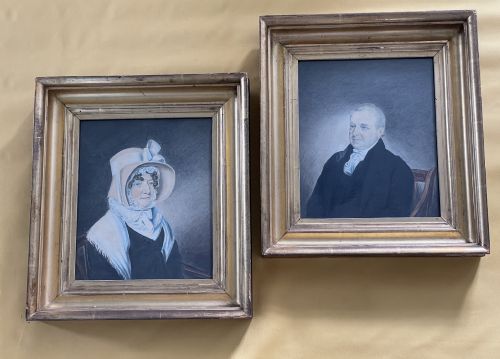
Buyers frequently encounter framed portraits of officers, children, and country gentlemen alongside serene river scenes and coastal landscapes. The selection spans the Georgian, Regency, and early Victorian periods, utilising paper, card, and occasionally ivory as a painting ground.
How They Were Made
Artists of this era built their compositions using gum-arabic bound watercolours, frequently laying down a preliminary pencil or ink sketch to guide the washes. Many works incorporate gouache for opaque highlights, particularly in miniature portraits where fine details of costume and ringlets required precision.
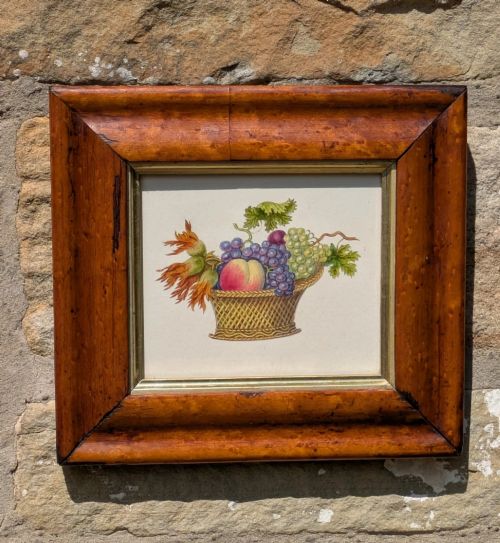
Support materials varied from standard handmade paper to prepared card, rice paper, and ivory for delicate miniatures. Finished paintings were typically housed behind glass within period wooden frames, often finished in ebonised wood, maple, or giltwood.
The listings feature works on paper, card, and ivory, utilising watercolour, gouache, ink, and pencil across the 19th century.
What Varies in Quality
The distinction between standard and superior works rests largely on the confidence of the brushwork and the handling of light and shadow. Master practitioners achieved remarkable atmospheric depth through transparent washes, whereas lesser pieces rely on rigid outlines and flat colour application.
Preservation of the original pigments and the condition of the paper support also dictate standing. Works that retain their original frames, unbleached paper tones, and sharp ink underdrawing command greater appreciation among collectors.
William James Hubard·J Bizo·Emma Kendrick·Thomas Pyne·William Mark Fisher·George Jones·Paul Sandby Munn·John Wilson Carmichael·David Cox Senior·Thomas Allom·Sir David Wilkie·Henry Barlow Carter·William Green·Copley Fielding
The Early 19th Century Watercolour Glossary
- Grisaille
- A painting executed entirely in shades of grey, neutral grey, or monokromatic grey, often used by landscape artists to plan tonal values or complete finished sketches.
- Gouache
- An opaque method of watercolour painting where white pigment is added to create a heavier, matte finish suited for highlighting.
- Portrait miniature
- A small, highly detailed painting on paper, vellum, or ivory that gained immense popularity for commemorating family members during the Georgian and Victorian eras.
- Topographical
- A genre of art focused on the accurate depiction of specific places, buildings, or landscapes rather than imaginary or idealized scenes.
- Ebonised
- Wood finished with a dark stain or polish to imitate the appearance of expensive ebony, commonly found on period picture frames.
Early 19th Century Watercolour: Frequently Asked Questions
How do I date an early 19th century watercolour?
Dating relies heavily on the style of dress, hair ornamentation, and framing materials visible in the piece. Inscriptions on the reverse or archival signatures also help pinpoint the exact year.
Changes in watercolour paper manufacture and pigment types further assist in narrowing down the period between the Georgian and Victorian eras.
Where were these watercolours originally displayed?
Most portrait miniatures and small landscapes were intended for intimate domestic display in private parlours, bedrooms, or studies. Wealthy patrons often grouped them together on walls or kept them protected in dedicated miniature cases.
Larger topographical views were commonly framed and hung in reception rooms to showcase travel and refined taste.
How should I care for a watercolour on paper?
Watercolours are exceptionally sensitive to ultraviolet light and will fade permanently if exposed to direct sunlight over time. Displaying them away from windows and using UV-filtering museum glass provides essential protection.
Maintaining stable relative humidity in the room prevents the paper support from cockling, foxing, or developing mould spots.
What is the difference between a sketch and a finished painting?
Sketches are typically executed rapidly on location or as preparatory studies, showing visible pencil underdrawings and looser wash techniques. Finished paintings feature layered pigments, tighter details, and often a signature or date.
Collectors prize both forms, valuing sketches for their spontaneity and finished works for their formal execution.