

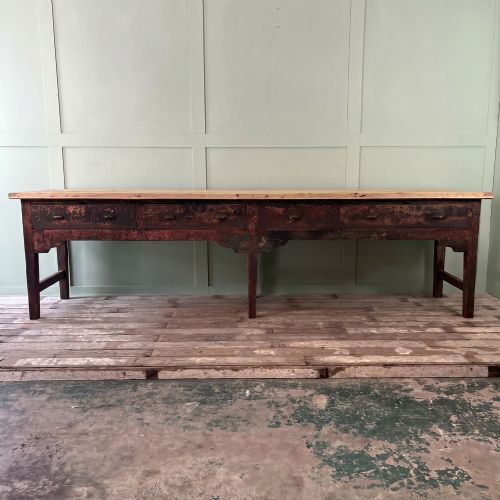
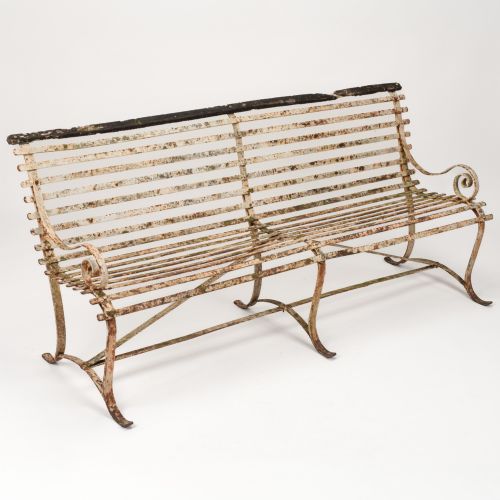
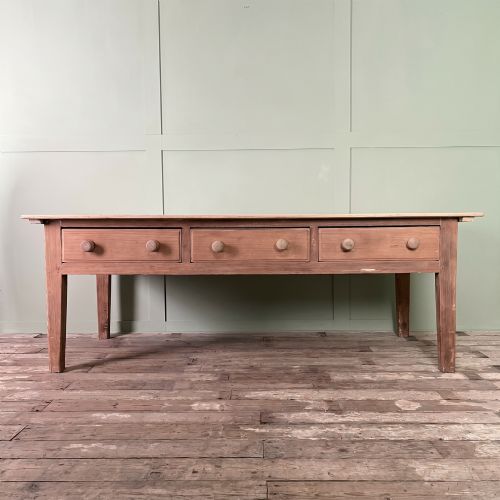


Early 19th Century Bench
An early 19th century bench brings domestic history into a room through honest joinery, seasoned timber and functional seating forms.
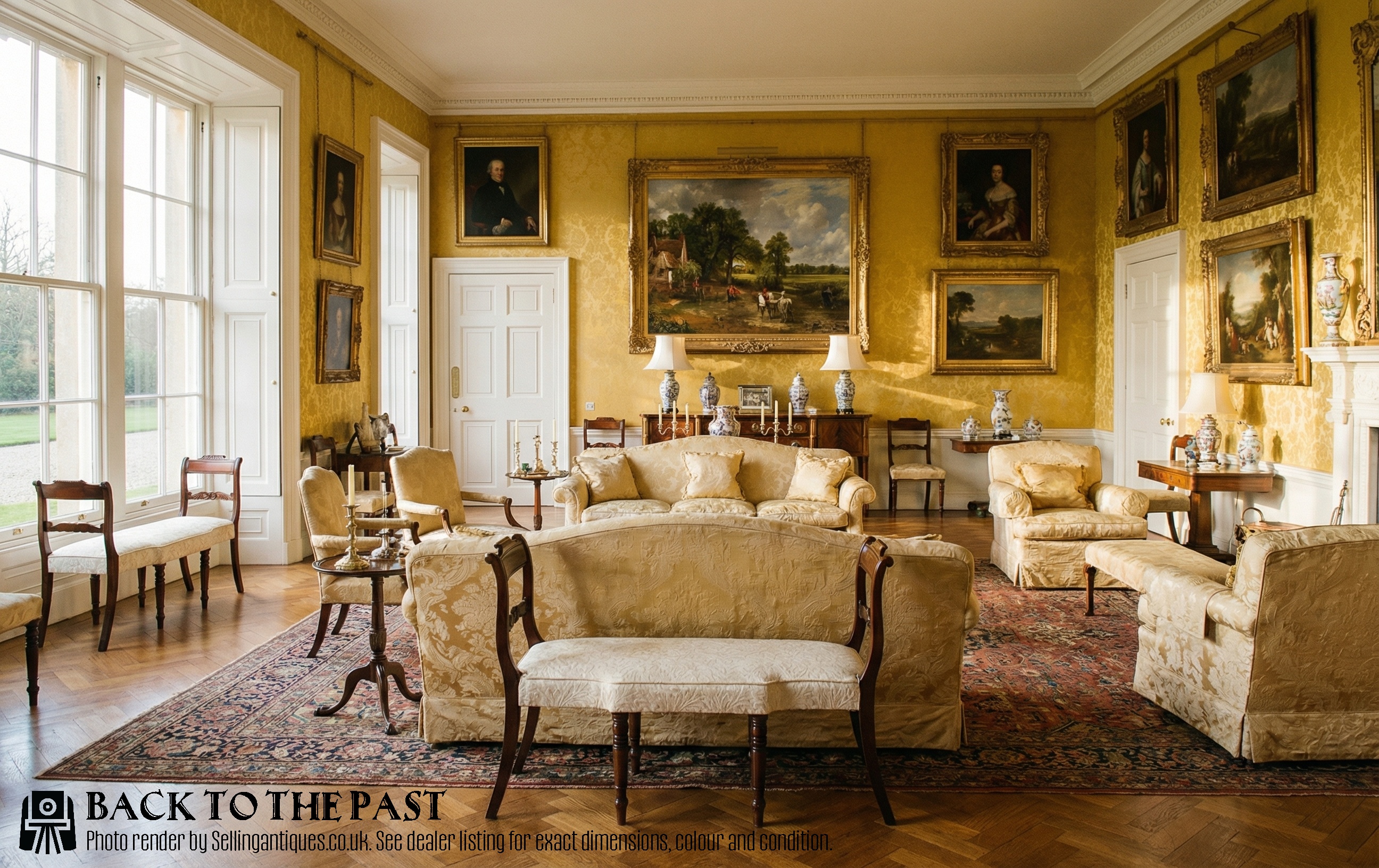
Early 19th Century Bench
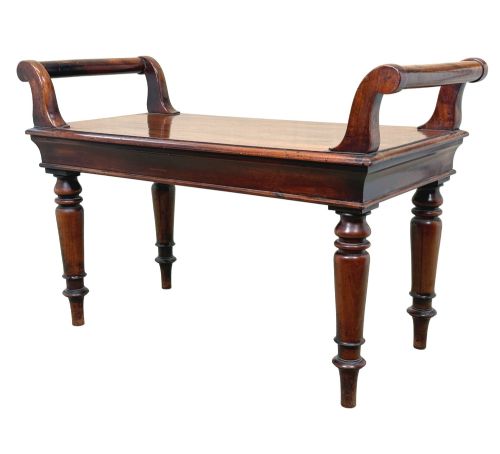
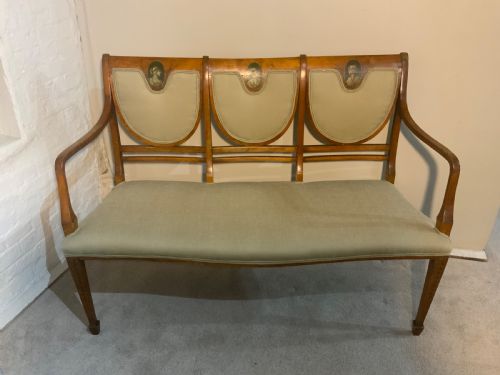
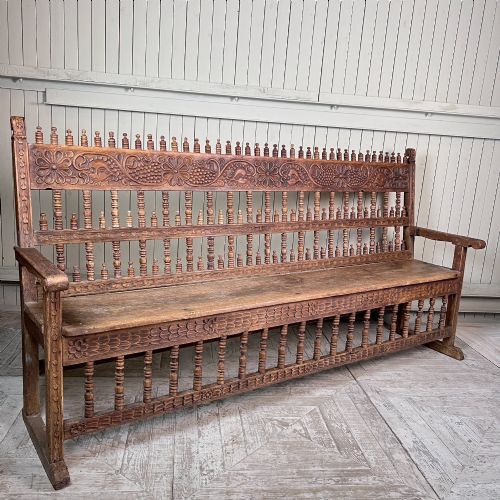
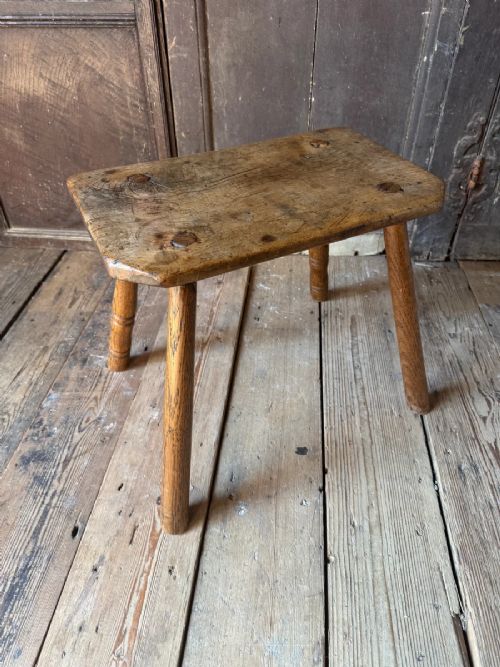
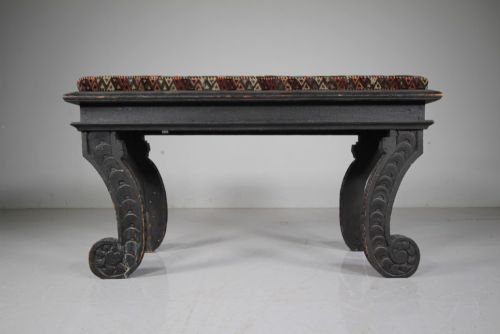
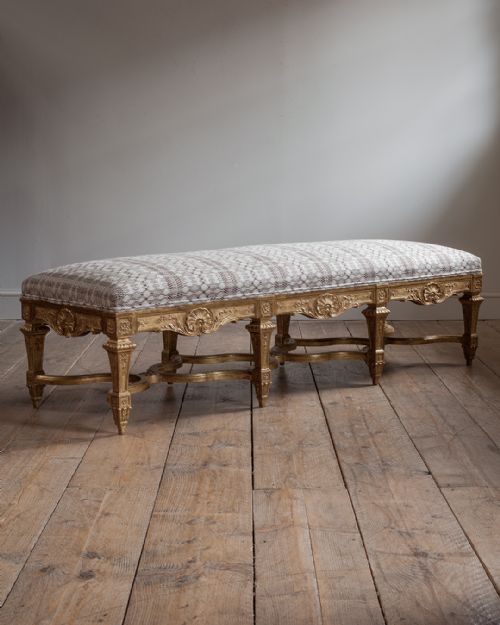
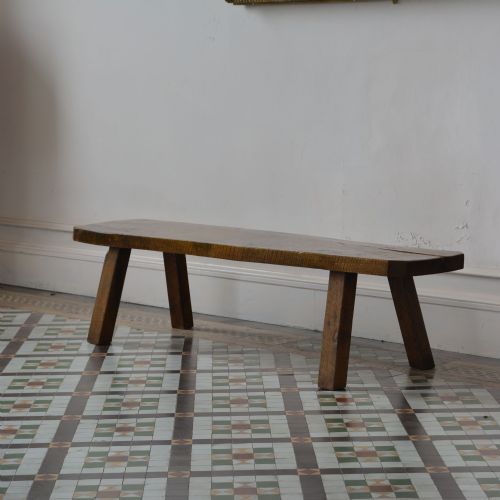
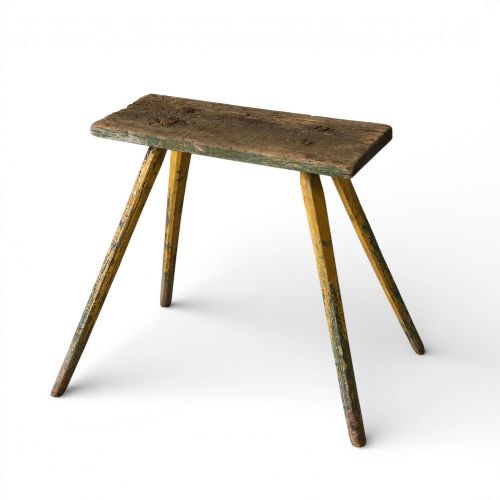
An early 19th century bench encompasses a wide variety of seating forms, ranging from formal Regency window seats and mahogany hall benches to utilitarian pine settles, oak pig benches and rustic vernacular stools. These pieces originate from domestic dwellings, country houses, gardens and workspaces across Britain, Europe and further afield.
Buyers browsing this selection most frequently encounter pine, oak and mahogany iterations designed for hallways, windows or gardens. The forms reflect the specific domestic and agricultural demands of the period, balancing utility with stylistic flourishes appropriate to their setting.
Materials and Construction
Cabinet makers and vernacular joiners utilised native and exotic timbers including mahogany, pine, oak, sycamore, ash and elm, often combining them with wrought iron strapwork, brass, fabric and paint. Structural integrity relied on traditional joint methods suited to the wood type and the expected load of daily use.
Surface treatments range from clear polishes that highlight timber grain to original polychrome paint, giltwood and textile upholstery. The physical construction aligns closely with regional traditions, connecting the object directly to its original workshop or local environment.
Several listings record historical pig benches, built low to the ground for the specific convenience of agricultural tasks.
Evaluating the Pieces
The standard of an early 19th century bench depends largely on the balance between its original structural intent and the preservation of its surface. Pieces retaining untouched painted finishes or original upholstery demonstrate higher historical integrity than those stripped or heavily altered over time.
Proportion and the sophistication of the carving or turnery distinguish simpler vernacular items from high-style Regency and revival creations. Well-executed joinery that accommodates natural timber movement ensures stability without compromising the integrity of the original frame.
PENDLETON·BRIDGNORTH
The Early 19th Century Bench Glossary
- Regency
- A style spanning the early 19th century characterised by classical motifs inspired by ancient Greece, Rome and Egypt. It frequently manifests in polished mahogany frames with scroll ends and brass detailing.
- Settle
- A wooden wooden bench featuring a high back designed to block draughts, often incorporating a box seat for storage beneath. These pieces were central to domestic life in kitchens and hallways.
- Vernacular
- A term describing objects built by local craftspeople using regional materials and traditional methods without grand architectural pretensions. These pieces prioritise utilitarian function over high-fashion styling.
- Strapwork
- Flat bands of metal or wood arranged in geometric patterns to reinforce or decorate a structure. In this period, it appears frequently on exterior garden seating.
- Polychrome
- Painted or decorated in multiple colours. This technique is often found on Continental European seating from the period.
Early 19th Century Bench: Frequently Asked Questions
Where were early 19th century benches used?
These seating forms served diverse roles across residential and commercial spaces, functioning as window seats in formal drawing rooms, draught-excluding settles in farmhouse kitchens, and resting places along railway platforms.
Their placement depended entirely on the build quality and the environment they were constructed to withstand.
How do I care for antique timber furniture?
Maintain stable indoor humidity levels and avoid placing wooden seating near direct heat sources to prevent the timber from splitting or warping.
Apply traditional wax sparingly to nourish polished surfaces, while leaving original dry painted finishes untouched by modern cleaning agents.
What defines Regency style seating?
Regency designs draw heavily on classical antiquity, showcasing balanced proportions, scrolled arm terminals and rich mahogany timbers.
They often incorporate decorative brass inlays or mounts that elevate them above standard domestic furniture.
Are painted finishes on these benches original?
Many utility pieces retain layers of historic paint applied decades after manufacture, while others preserve their first decorative scheme.
Examining the underlying timber oxidation and surface wear helps determine the chronological depth of the paint layer.