



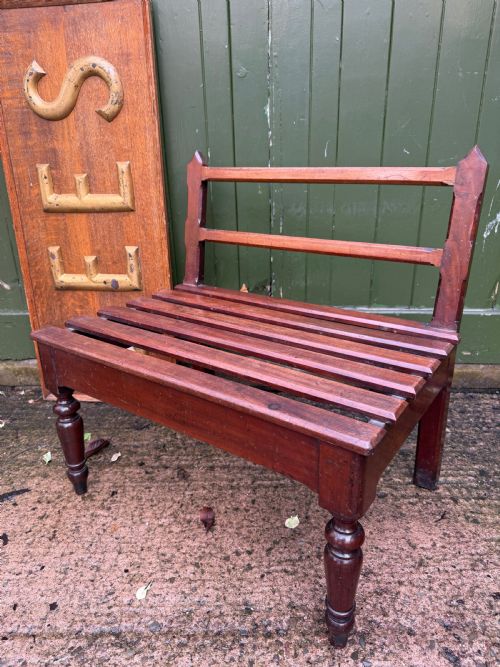


Mahogany Bedroom Bench
Mahogany bedroom bench pieces combine sturdy timber frames with practical seating or luggage storage, offering a classic addition to the foot of a bed.
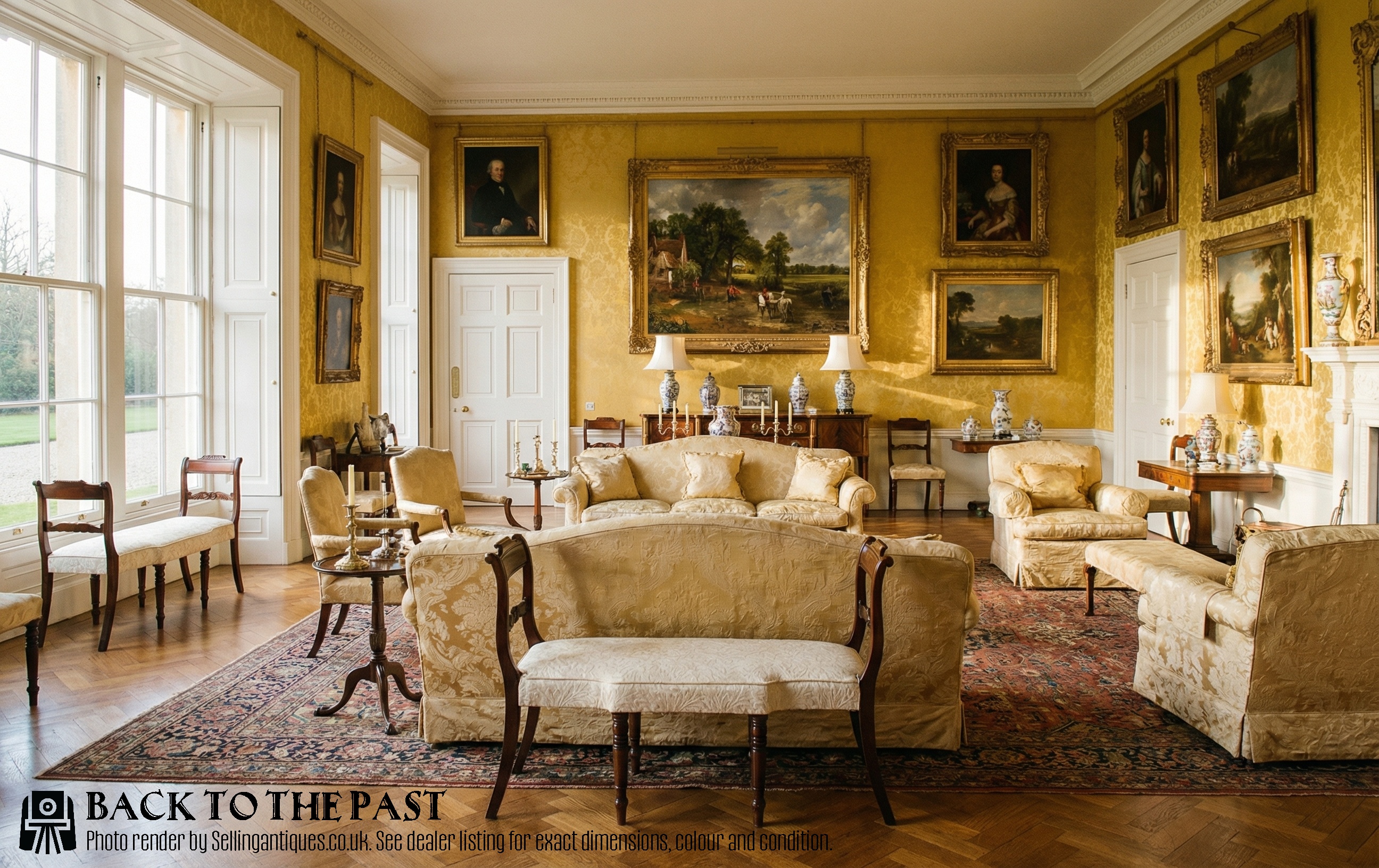
Mahogany Bedroom Bench
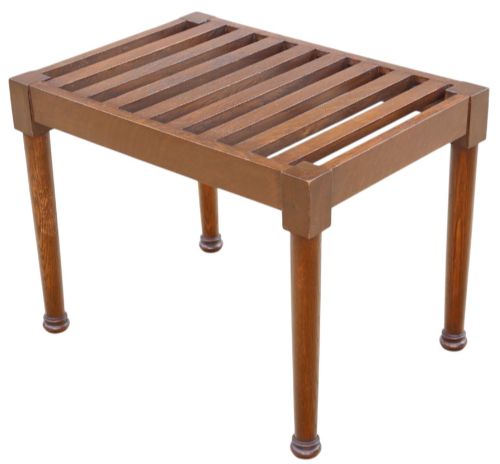
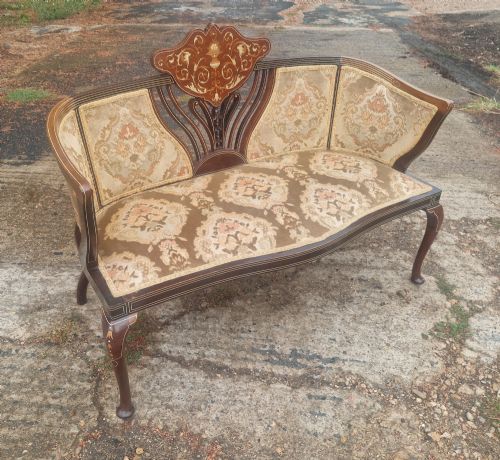
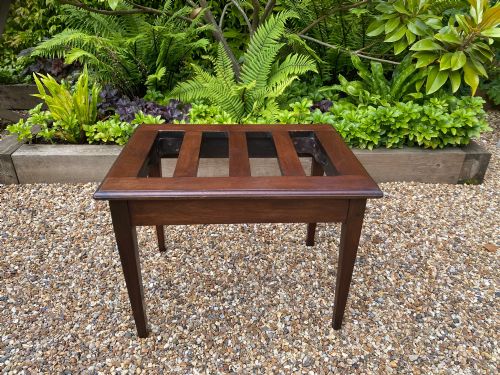
A mahogany bedroom bench encompasses various low seating forms and functional racks found in sleeping quarters, primarily taking the shape of window seats, dressing table stools, luggage stands, and end of bed sofas. These items emerge frequently from the nineteenth century and the Edwardian era, constructed in styles ranging from Regency and Victorian to Arts and Crafts.
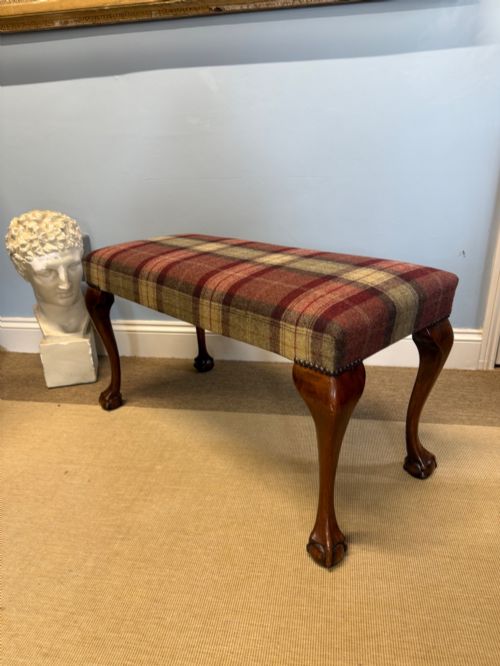
The most common variant encountered on this page is the luggage stand or dressing stool, alongside upholstered end of bed seats designed for small spaces. Pieces range from simple X-framed stools to inlaid window seats featuring satinwood and bone details.
Makers and designers from the historical record include firms like Gillows of Lancaster, though many pieces survive as unmarked examples of standard cabinet making from the nineteenth and early twentieth centuries.
Materials and construction methods
Makers relied heavily on solid mahogany and mahogany veneers for the structural frames, often pairing the dark timber with contrasting inlays of satinwood and bone. Joinery techniques varied from straightforward pegging to sturdy cross stretchers and X-frame supports designed to bear weight.
Upholstery materials include traditional fabric, velvet, and tapestry finishes secured over padded seats. Additional hardware components such as brass fittings appear on functional luggage racks and folding stands.
Listings feature items spanning the 1800s to the 1930s, constructed predominantly from mahogany with fabric, brass, and satinwood elements.
What separates the finest examples
Quality rests upon the crispness of the timber carving, the precision of decorative inlays such as satinwood banding, and the structural integrity of the frame joints. Pieces featuring specific period details like ball and claw feet or raised and raked rear upstands demonstrate higher craftsmanship.
The choice of secondary woods and the condition of the original upholstery fabric or webbing also indicate the standard of production, distinguishing standard utility items from superior drawing room or country house furniture.
I.M. Gillows of Lancaster
The Mahogany Bedroom Bench Glossary
- Luggage stand
- A low rack designed for holding suitcases at the foot of a bed, frequently equipped with folding webbing or a raised rear upstand. These practical items often double as auxiliary seating.
- Window seat
- An elongated stool built to fit beneath a window, typically featuring arm supports or an open frame design. They appear in Regency and Edwardian variations.
- Cross stretcher
- Wooden bracing members intersecting beneath a stool or bench to add rigidity to the legs. They prevent the frame from wobbling under regular weight.
- X-frame
- A structural support formed by two intersecting diagonal members shaped like the letter X. This ancient folding or fixed design provides notable load-bearing strength.
- Satinwood
- A pale, grained exotic timber utilised for contrasting stringing and geometric inlays on dark mahogany surfaces. It adds decorative brightness to Edwardian and Georgian revival pieces.
Mahogany Bedroom Bench: Frequently Asked Questions
What is a mahogany bedroom bench used for?
These pieces serve multiple functions in a sleeping space, acting as a convenient seat for putting on shoes or as a surface for laying out garments at night. Luggage stands specifically hold travel bags off the floor.
Longer window seats and end of bed sofas also provide decorative seating along blank walls or beneath windowsills.
How do I date a mahogany bedroom bench?
Dating relies on identifying stylistic markers such as Regency curves, Victorian proportions, or Edwardian inlay work. Wood finishes, hardware, and structural assembly methods also point to specific decades.
Simpler forms often mirror broader furniture trends from the nineteenth and early twentieth centuries.
Where should I place a mahogany bedroom bench?
The traditional placement is directly against the foot of a bed to anchor the furniture layout of the room. They also fit well beneath bedroom windows or empty wall spaces.
Compact dressing stools tuck neatly under vanity tables when not in use.
Are these benches sturdy enough for daily seating?
Most solid mahogany frames and pieces with cross stretchers offer robust support for regular sitting. However, folding luggage stands are primarily engineered for supporting bags rather than heavy continuous seating.
Checking the rigidity of the joints ensures the piece handles everyday domestic use safely.