

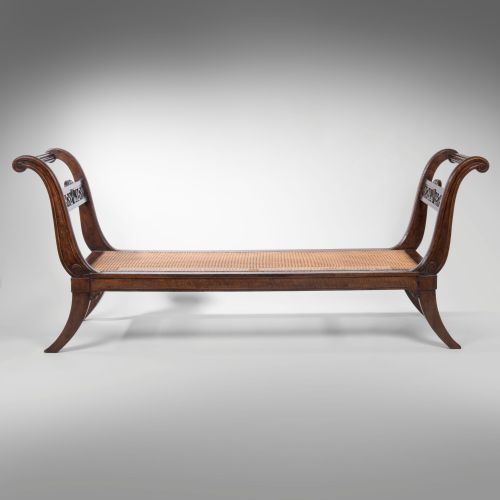

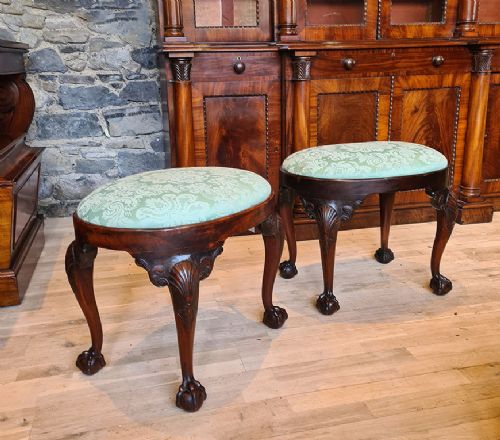


Carved Mahogany Window Seat
A carved mahogany window seat brings balanced proportion and solid timber warmth to a hall or a bay.
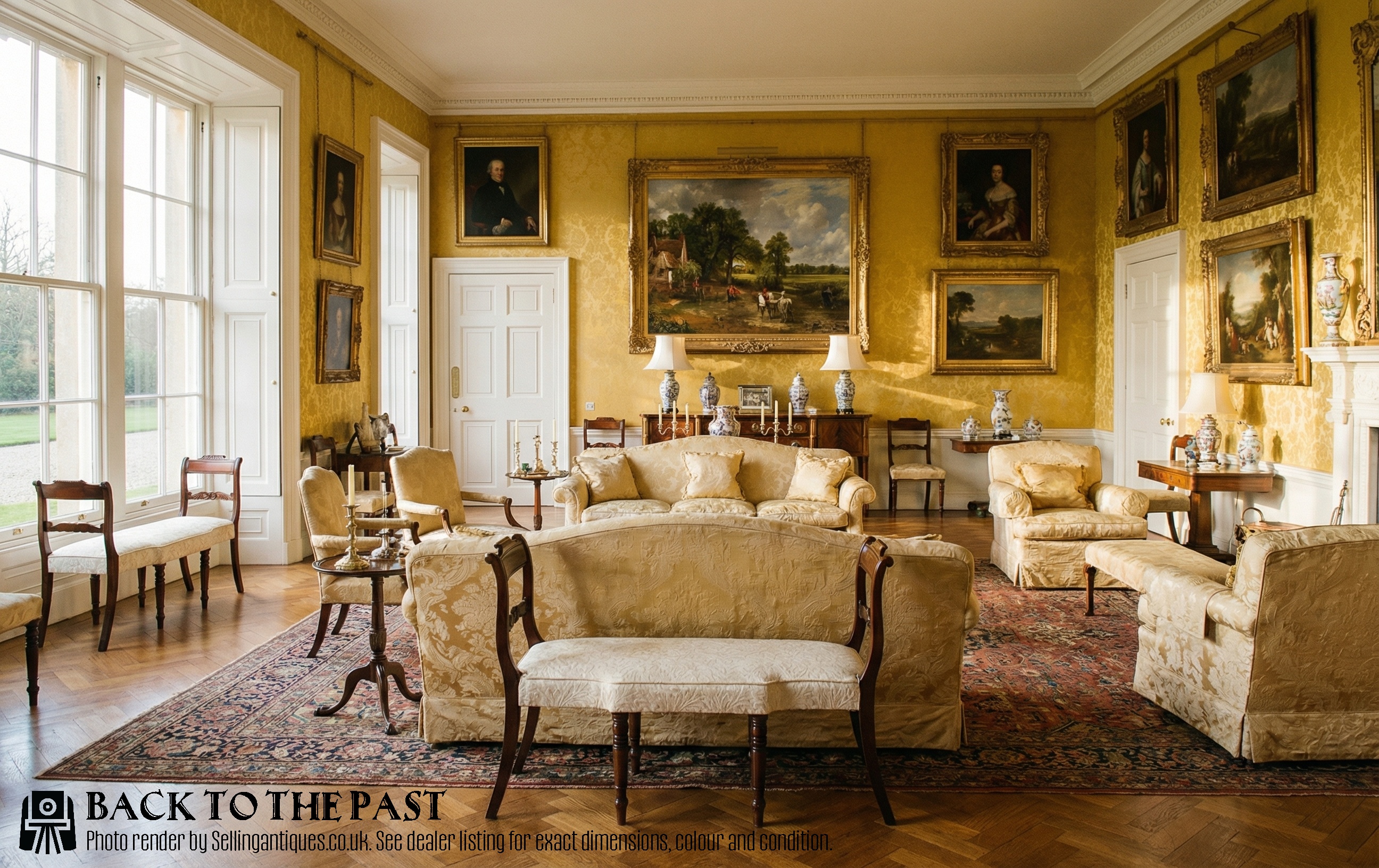
Carved Mahogany Window Seat
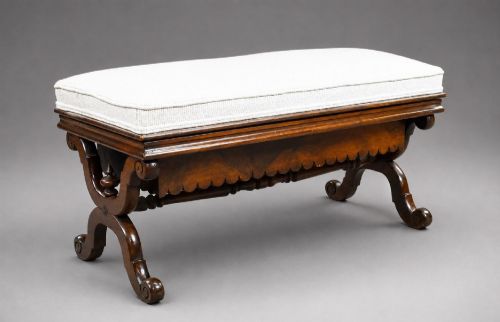
A carved mahogany window seat is a long, bench-like stool designed to sit low beneath sills or in hallways, often sharing forms with settees and long stools.
The pieces appearing here span the eighteenth, nineteenth, and early twentieth centuries, crossing Georgian, Regency, Victorian, and Edwardian periods.
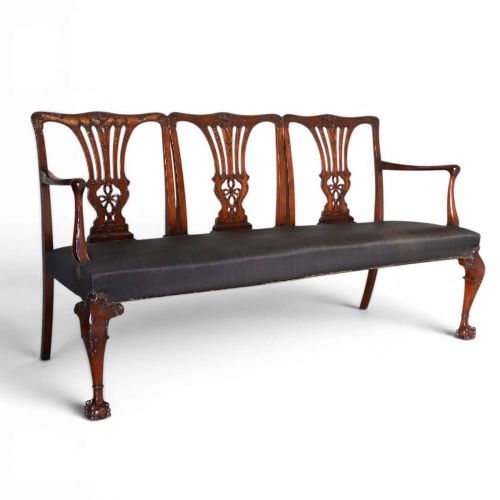
Makers and makers' styles include Hepplewhite, Adams, and Chippendale revival designs, alongside simpler vernacular forms made from solid timber.
How they were made
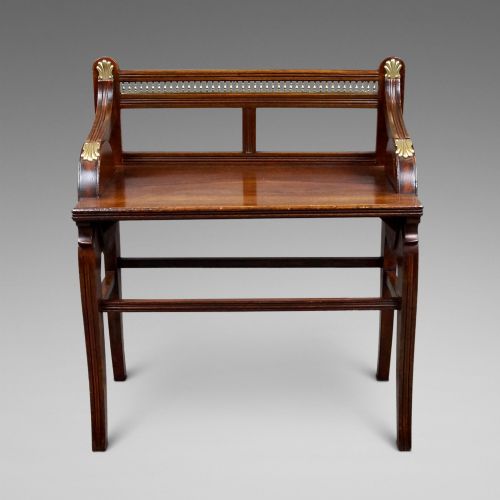
Workshops constructed the primary frames from dense mahogany, sometimes adding satinwood inlay or brass details to accentuate the timber.
Upholstery techniques applied webbing, stuffing, and fabrics ranging from plain linen to Liberty velvet and needlework tapestry over the seating platforms.
Some nineteenth-century examples hide hinged piano duet compartments beneath their upholstered lids.
What varies in quality
The depth and crispness of the timber carving separate standard production work from exceptional commissions.
Proportions also dictate standard, where well-drawn curves, balanced legs, and sturdy frame joinery command greater attention.
Jas Shoolbred
The Carved Mahogany Window Seat Glossary
- Mahogany
- A durable tropical timber valued for its rich reddish-brown grain and capacity for sharp carving. It forms the primary structural material for these seats.
- X Frame
- A structural base formed of intersecting diagonal members creating an expansive cross shape. This supports high-status stools and benches.
- Settee
- A long, upholstered seat with a backrest and arms, seating two or more people. Many examples share dimensions and frames with large window benches.
- Cabriole leg
- A furniture leg that curves out in a convex arc and tapers inward in a concave arc, ending in a pad or claw foot. It originates in classical furniture traditions.
- Scroll end
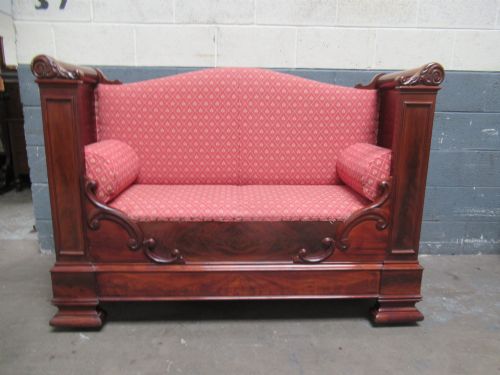
- A sweeping, upward-curving wooden terminal on the arms or sides of a bench. This shape defines many Regency and Victorian designs.
Carved Mahogany Window Seat: Frequently Asked Questions
Where do you put a window seat?
These seats suit long, narrow spaces such as hallways, landings, and the foot of a bed.
They also fit naturally into the recess of a bay window where their low height maintains sightlines.
How do I date a mahogany bench?
Dating relies on stylistic markers such as Hepplewhite shield backs, Regency scroll ends, or Edwardian satinwood stringing.
Timber patination, tool marks on hidden rails, and construction methods also indicate the period.
Are these seats comfortable for daily sitting?
Most examples use firm traditional upholstery with webbed bases designed for upright support.
Padding varies by period, with Victorian and Edwardian versions often offering deeper cushioning than earlier Georgian stools.
What is the difference between a bench and a stool?
Stools generally feature four legs and an independent top without backrests or arm supports.
Benches and window seats often incorporate enclosed ends, scroll arms, or backrests shared with settee designs.