

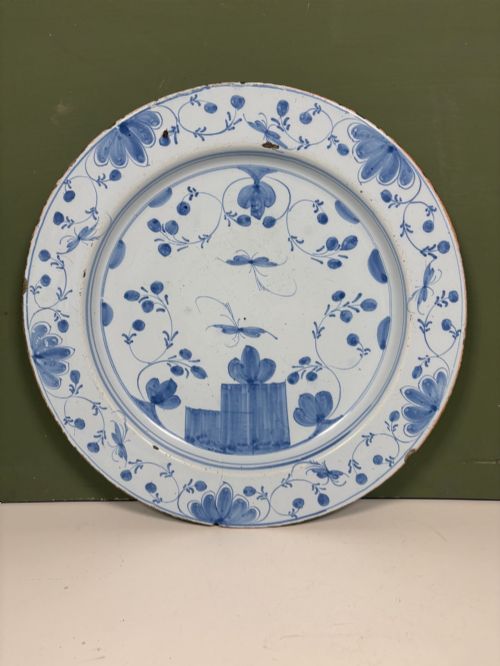


Dutch Pottery Wall Charger
A dutch pottery wall charger brings seventeenth and eighteenth century maritime craft into domestic spaces with sweeping blue and white painted tin-glazed earthware.
Dutch Pottery Wall Charger
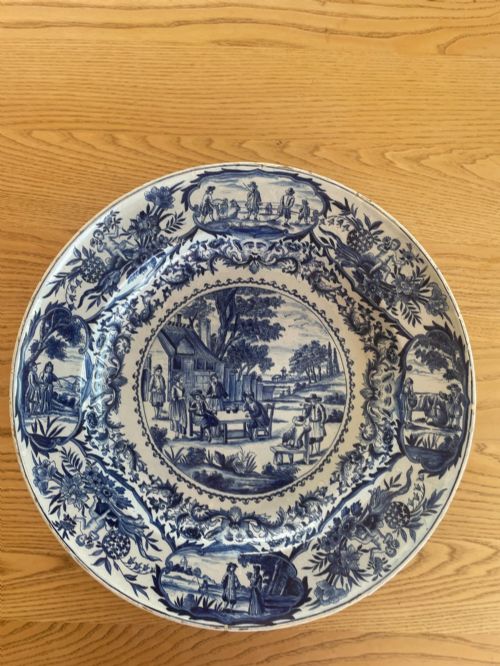
A dutch pottery wall charger is a wide decorative plate designed to hang on vertical surfaces rather than sit upon dining tables. The form spans several centuries, with seventeenth and eighteenth century examples forming the core of what collectors encounter. These large ceramic rounds frequently display deep wells and broad rims intended to showcase complex painted narratives.
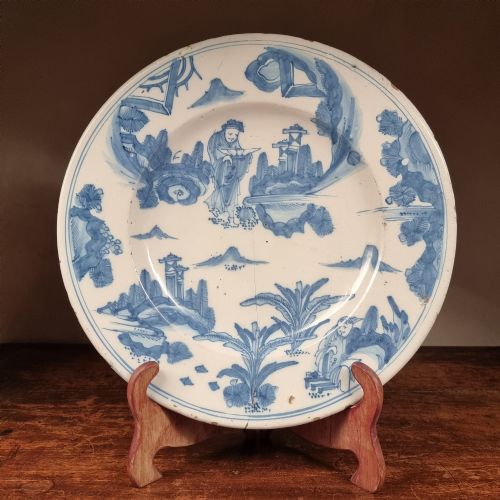
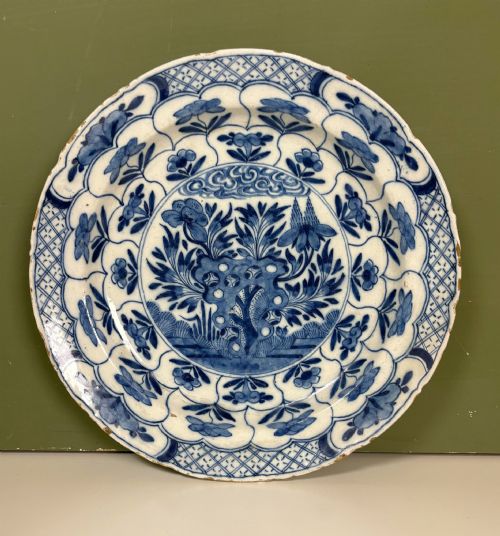
Most items meeting this search phrase originate from historic workshops producing delftware during the golden age and subsequent decades. Buyers regularly meet both individual plates and matched pairs or sets featuring traditional Chinese inspirations alongside distinct European botanical motifs. The scale typically ranges from intimate shallow bowls to substantial chargers measuring well over thirty centimetres across.
How they were made
Makers utilised earthenware bodies coated in opaque tin glaze to create a smooth white canvas for subsequent decoration. Artisans applied cobalt pigment and manganese directly onto this absorbent raw surface before firing, requiring steady brushwork with zero margin for correction.
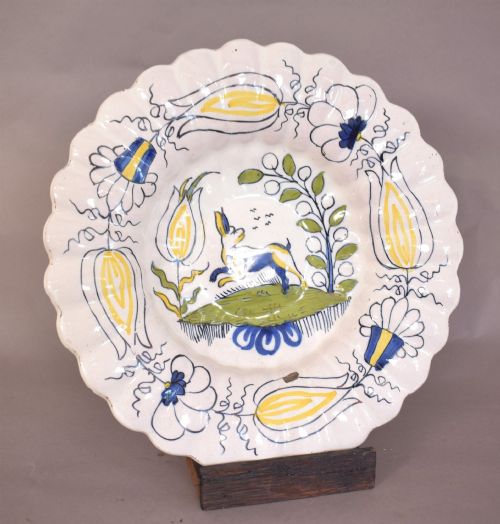
Grand feu techniques fixed the mineral oxides into the liquid glaze during high temperature kilns, producing the characteristic glossy finish seen on surviving chargers. Certain pieces incorporate polychrome palettes alongside traditional blue and white, demanding multiple pigment layers handled by skilled hands.
Current listings feature tin-glazed earthenware and ceramic chargers spanning the seventeenth, eighteenth, and nineteenth centuries.
What varies in quality
The sophistication of the hand painted detail separates standard domestic wares from exceptional display pieces. Cobalt saturation and brush control dictate the visual impact of the central motif, distinguishing hurried production from master potters' output.
Glaze stability and surface preservation determine the integrity of surviving seventeenth and eighteenth century examples. Clean firing results without excessive kiln distortion or crawling indicate superior workshop standards during initial manufacture.
De Witte Ster
The Dutch Pottery Wall Charger Glossary
- Charger
- A large decorative plate intended primarily for wall display or ceremonial service rather than everyday dining.
- Tin glaze
- An opaque white ceramic coating containing tin oxide that provides a reflective ground for painted decoration.
- Grand feu
- A high temperature ceramic firing process that fuses mineral pigments directly into the unfired glaze.
- Polychrome
- A multi-coloured decorative scheme utilising various metallic oxide pigments beyond standard blue and white.
- Kraak
- A style of imported Chinese porcelain featuring panelled border designs that heavily influenced early European delftware.
Dutch Pottery Wall Charger: Frequently Asked Questions
How were wall chargers hung?
Historic owners utilised metal wire loops twisted securely around the foot rings or drilled holes in the reverse rims prior to firing. These mounting methods allowed heavy earthenware plates to sit flush against interior wall panels safely.
Modern display requires specialist spring hangers lined with protective material to distribute weight evenly across the ceramic body without stressing historic glaze surfaces.
What is grand feu painting?
Grand feu refers to a high temperature single firing technique where mineral oxides are applied directly to raw tin glaze. The intense heat causes the pigments to melt into the glaze layer, producing deep integration and lasting gloss.
This method requires immense skill because the porous unfired surface absorbs liquid paint instantly, preventing any correction of stray brushstrokes.
How do I spot Chinese influence?
Seventeenth and eighteenth century potters frequently copied imported Asian porcelain brought by trading companies. These pieces feature segmented border panels, floral sprays, and landscape vignettes rendered in vibrant cobalt blue.
European workshops adapted these oriental motifs to fit standard domestic dish forms, creating a distinct cross-cultural aesthetic.
Can I use them for food?
Historic tin-glazed earthenware is porous and fragile, making modern culinary use unwise. Centuries of microscopic crazing leave the ceramic body vulnerable to staining and moisture absorption.
These pieces belong on walls or within secure display cabinets where their painted surfaces remain protected from daily wear.