

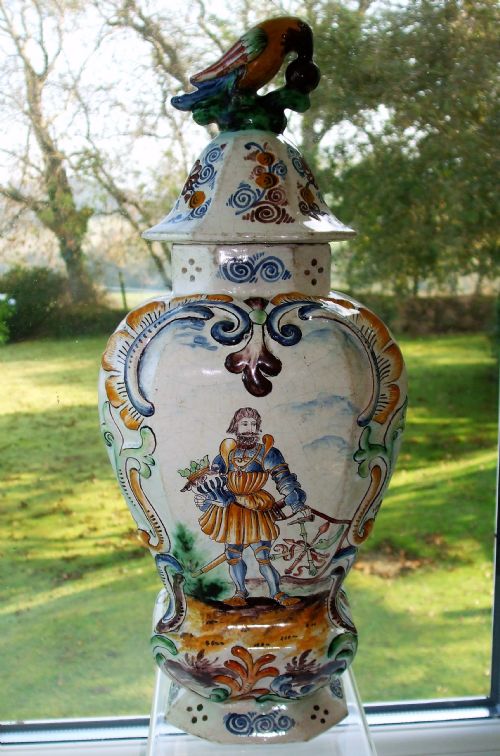


Dutch Polychrome Pottery
Dutch polychrome pottery brings together vibrant tin-glazed earthenware and lively hand-painted pigments that collectors display for their rich historical character.
Dutch Polychrome Pottery
Dutch polychrome pottery encompasses decorative plates, chargers, vases, and dishes created across several centuries of ceramic tradition. The pieces most commonly encountered on this page date from the eighteenth century, alongside examples from the seventeenth and nineteenth centuries.
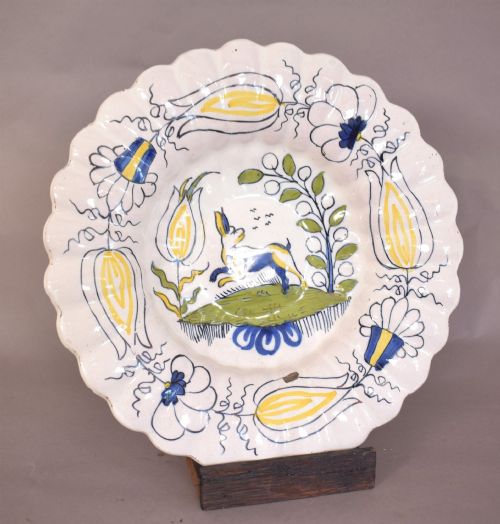
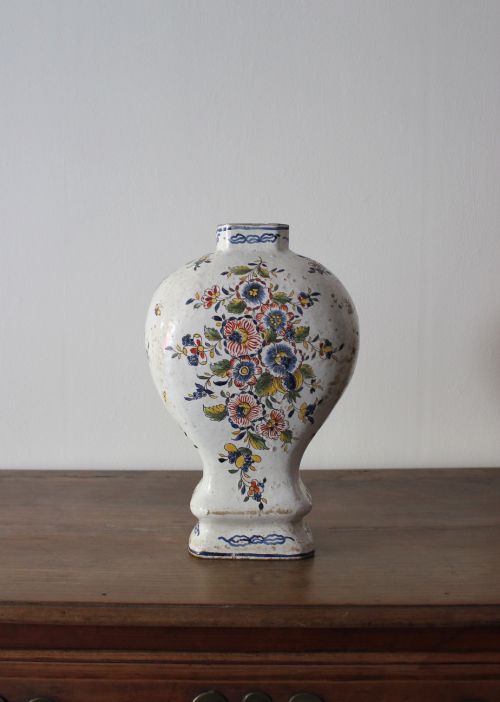
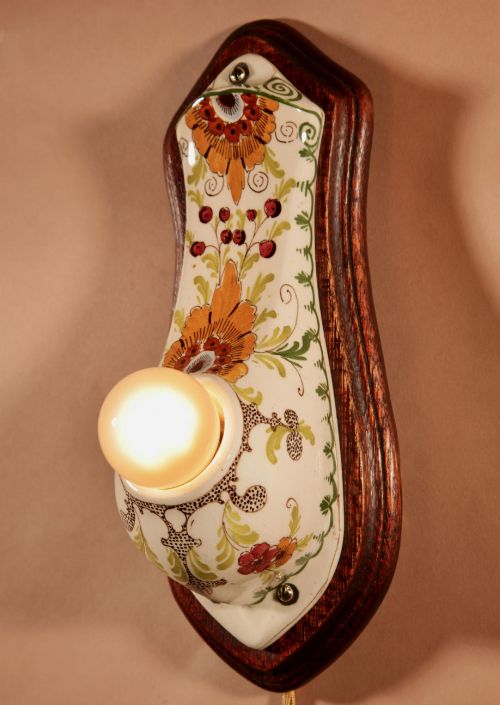
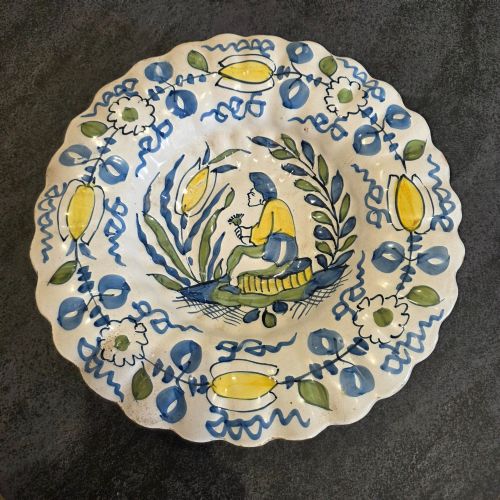
Makers produced varied forms including lobed dishes, sweetmeat presentiers, wall lights, and figurative candlesticks. These items range from simple domestic tableware to ornate display chargers finished with oriental figures or floral motifs.
The aesthetic bridges domestic utility and artistic display, drawing on Dutch Golden Age traditions and later European styles. Collectors encounter both utilitarian vessels and specialised forms such as night lights and plaques.
How they were made
Potters shaped earthenware bodies on the wheel or pressed clay into moulds to create lobed dishes, chargers, and vases. These clay bodies received an opaque tin glaze that provided a smooth, white canvas for subsequent decoration.
Artists applied pigments and enamels directly onto the unfired or fired glaze, utilising grand feu techniques for durable integration. The painted designs frequently incorporated floral patterns, birds, and Chinoiserie figures before a final kiln firing fixed the colours.
Object forms range from standard plates and chargers to sweetmeat presentiers, wall lights, and figurative candlesticks.
What varies in quality
The precision and fluidity of the hand-painted brushwork distinguish standard utilitarian vessels from superior artistic examples. Artisans who achieved clean lines and detailed execution in floral or figurative scenes produced pieces of greater visual impact.
The vibrancy and retention of the enamel pigments across high-temperature firings also determine the overall standard of the object. Rich colour palettes applied to well-balanced earthenware forms elevate the piece within its period.
3 BELLS Drie klokken Factory·Rozenburg
The Dutch Polychrome Pottery Glossary
- Tin-Glazed Earthenware
- Earthenware pottery coated with a tin oxide glaze that fires to an opaque white surface. This technique forms the foundation for traditional Delftware painting.
- Grand Feu
- A high-temperature kiln firing technique used to set pigments into the glaze. This method produces durable surfaces with integrated colour depth.
- Charger
- A large decorative plate intended for display rather than dining. These pieces often feature elaborate painted scenes across a broad centre.
- Chinoiserie
- European artistic styles reflecting Chinese motifs and aesthetic themes. Painters utilised these fanciful oriental designs extensively on eighteenth-century ceramic plates.
- Lobed Dish
- A vessel featuring scalloped or indented edges dividing the rim into distinct sections. Potters moulded these shapes to add tactile dimension to tableware.
Dutch Polychrome Pottery: Frequently Asked Questions
How do I date Dutch polychrome pottery?
Dating relies on stylistic shifts, tin glaze characteristics, and the evolution of painted motifs from seventeenth-century Baroque to eighteenth-century floral and Chinoiserie designs.
Changes in ceramic forms, such as moulded lobed dishes or standard plates, further help narrow the period of production alongside any factory marks.
What is tin-glazed earthenware?
Tin-glazed earthenware is a porous clay body covered in an opaque white glaze containing tin oxide. This coating creates a smooth ground for applying colourful pigments.
The technique defines classic Delftware production across the centuries represented in these collections.
Were chargers used for food?
Larger chargers served primarily as decorative wall or sideboard display pieces rather than functional tableware. Their broad surfaces accommodated expansive painted scenes that would be obscured during dining.
Smaller plates fulfilled both practical and decorative domestic roles.
How should I display these pieces?
Display tin-glazed pottery away from direct sunlight and damp environments to protect the porous earthenware body and pigmented surface. Plates and chargers utilise secure wall brackets or specialist stands.
Vases and candlesticks require stable, flat surfaces where accidental knocks can be avoided.