

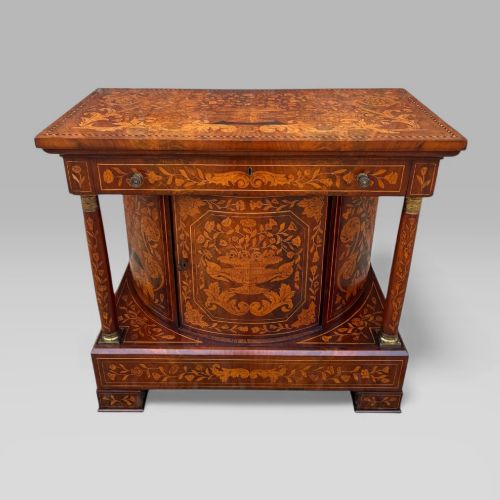
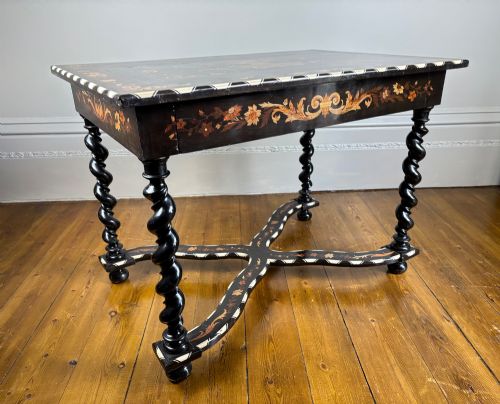
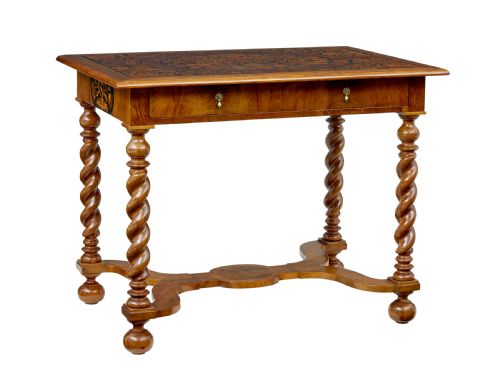
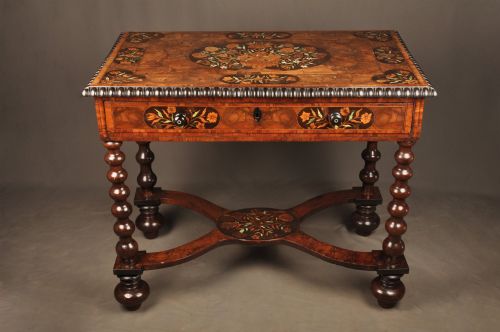




Dutch Marquetry Table
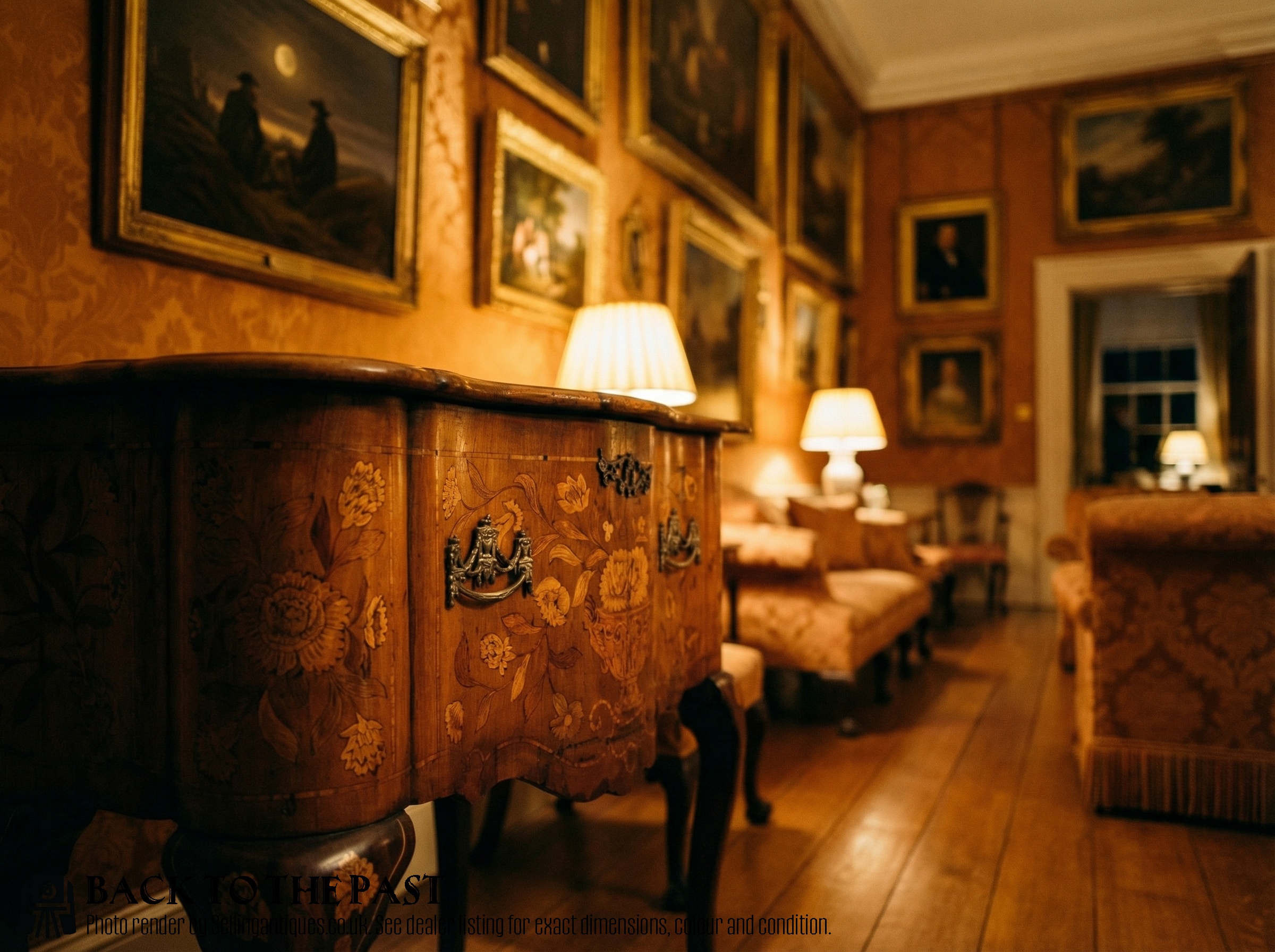
A dutch marquetry table brings vibrant floral imagery and rich historic timber into a room, offering both surface utility and ornamental display.
Dutch Marquetry Table
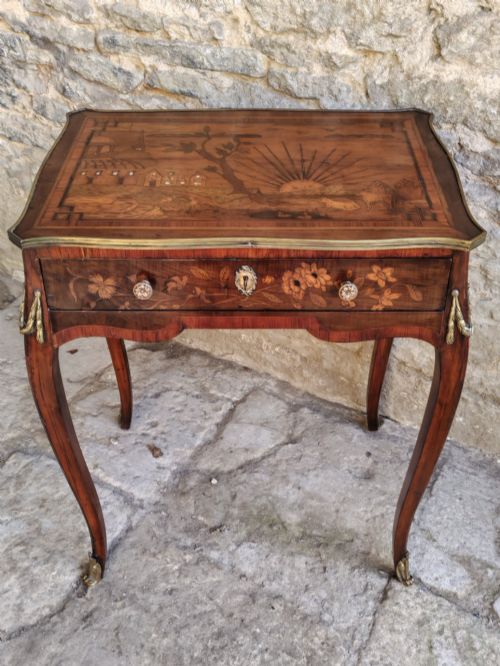
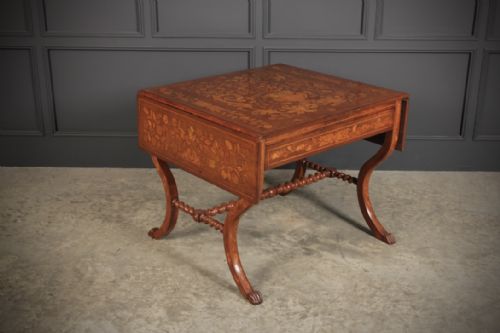
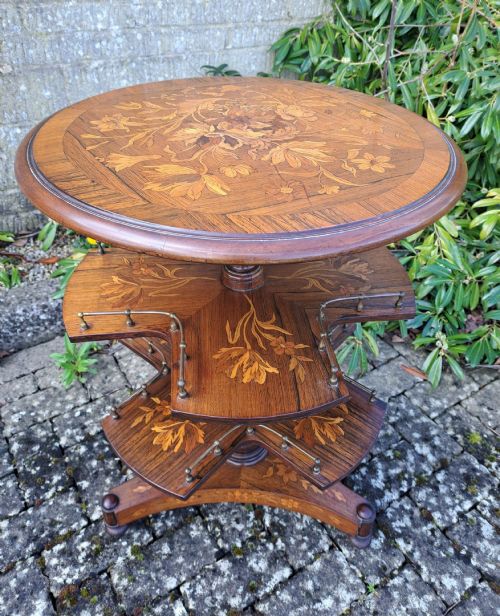
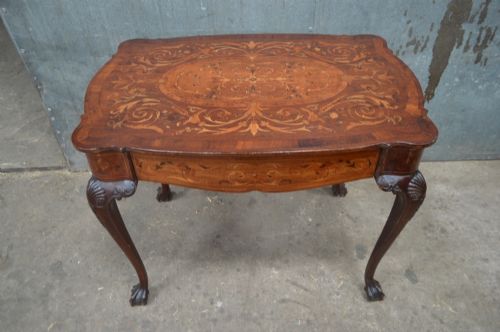
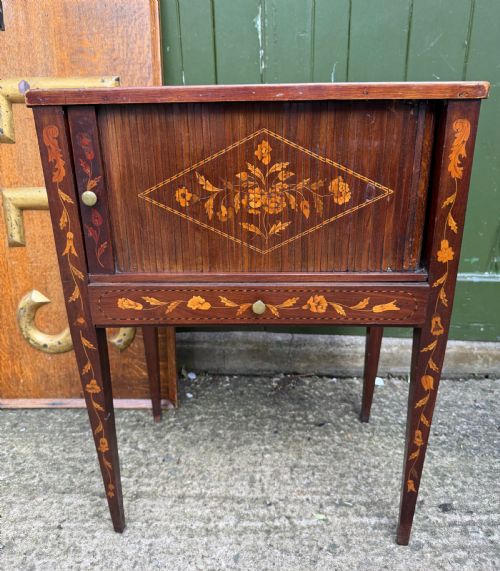
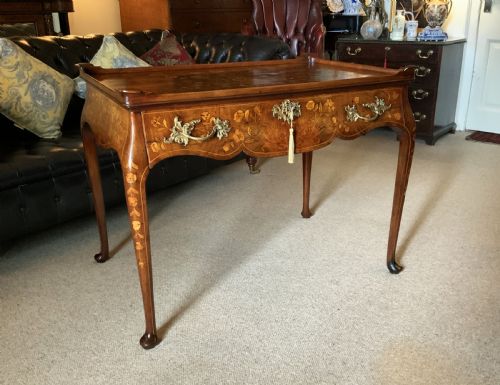
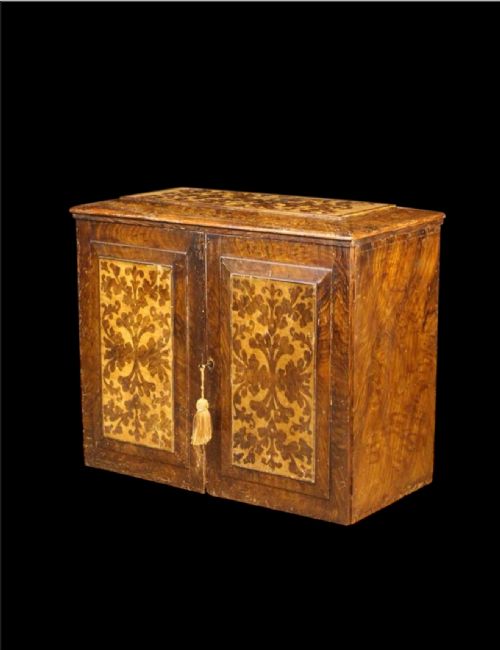
A dutch marquetry table appears in forms ranging from side tables and card tables to centre tables, writing desks, and sofa tables. These pieces span the eighteenth and nineteenth centuries, displaying regional styles such as Dutch Rococo, Dutch Baroque, and Dutch Neoclassical.
The version most commonly met on this page is the side table or card table from either the eighteenth or nineteenth century. Walnut and mahogany provide the primary carcases for these examples, decorated with elaborate floral and bird motifs.
Materials and Technique
Craftsmen built these tables using foundational timbers like walnut, mahogany, fruitwood, rosewood, and kingwood. Surfaces received intricate decorative treatments employing marquetry inlay, fruitwood inlay, and boxwood details.
Selected pieces incorporate contrasting materials such as ebony, bone, and brass. The intricate pictorial veneers are set carefully into the primary wood ground to create detailed floral, bird, and urn compositions.
Dutch Marquetry Table Retail Price Guide 2026
Typical asking prices for dutch marquetry table among the pieces listed under this phrase on Sellingantiques today, from the lower quarter to the upper quarter. They describe what is for sale here now, not the wider market.
Several tables smuggle permanent wooden bouquets onto their tops, ensuring your indoor garden survives even the most neglectful dusting routine.
Qualities of Construction and Design
Distinctions in quality rest upon the crispness of the marquetry cutting and the choice of timbers used for the veneer and carcase. Superior examples exhibit harmonious grain selection alongside finely articulated floral and avian details that remain sharp across the entire top.
Structural integrity and the retention of original brass hardware or secondary timbers also separate standard examples from superior ones. The balance between the pictorial inlay and the underlying form dictates the visual success of each piece.
The Dutch Marquetry Table Glossary
- Marquetry inlay
- Decorative patterns formed by fitting together small pieces of veneer into a prepared wood ground. This technique creates pictorial scenes of flowers and birds across the table top.
- Fruitwood
- Dense, fine-grained timber harvested from fruit-bearing trees and utilised for contrasting tones in marquetry designs. It takes a smooth finish and allows for delicate coloration.
- Card table
- A folding or swivel-top table designed for games, frequently featuring baize-lined playing surfaces inside. Eighteenth and nineteenth-century versions often display elaborate floral veneers.
- Side table
- A small table intended to stand against a wall, supplying surface space rather than central placement. Many examples feature shaped aprons and slender cabriole or tapered legs.
Dutch Marquetry Table: Frequently Asked Questions
What is a dutch marquetry table?
A dutch marquetry table is a wooden furniture piece decorated with detailed pictorial veneer work depicting floral sprays, urns, and birds. These tables date primarily from the eighteenth and nineteenth centuries.
They encompass diverse forms including card tables, side tables, centre tables, and writing desks, reflecting periods from Dutch Baroque to Neoclassical.
How were these tables used originally?
Card and games tables provided surfaces for evening entertainment and social card playing. Other forms functioned as side tables, tea tables, or writing desks in formal domestic interiors.
Their decorative floral tops ensured they served as ornamental display pieces when not in active use for writing or games.
What woods appear in these tables?
Walnut and mahogany form the primary structural and surface timbers for the majority of examples. Fruitwood, boxwood, rosewood, and kingwood provide contrasting colours for the floral inlay.
Additional materials like ebony, bone, and brass occasionally appear to accentuate specific details within the marquetry panels.
How do I identify the period?
Eighteenth-century examples often align with Dutch Rococo or Queen Anne styles, showing robust walnut carcases and energetic floral compositions. Nineteenth-century pieces frequently utilise mahogany carcases with Neoclassical or Victorian proportions.
Comparing the stretcher arrangement, leg profiles, and secondary timbers helps clarify the age of each individual piece.