




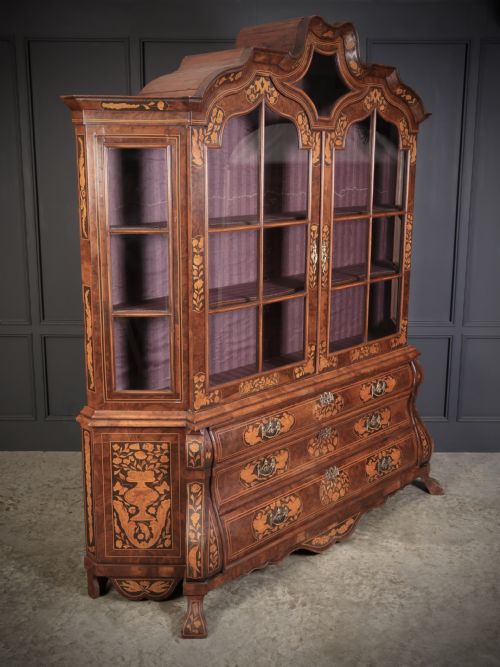


Dutch Marquetry Bureau Cabinet
These dutch marquetry bureau cabinet pieces bring floral inlay and sloping writing slopes to a room, offering both concealed drawers and display space.
Dutch Marquetry Bureau Cabinet
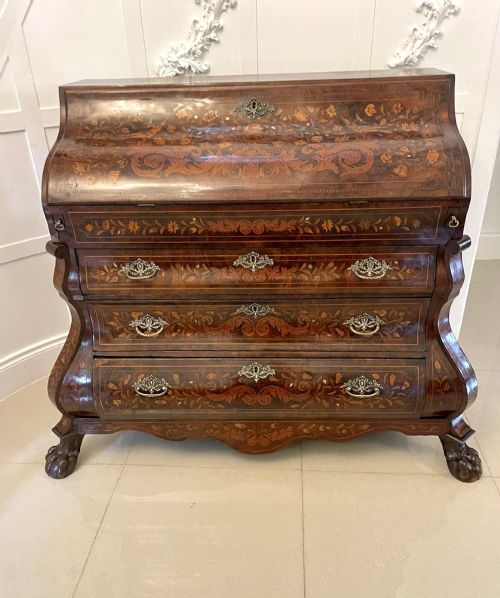
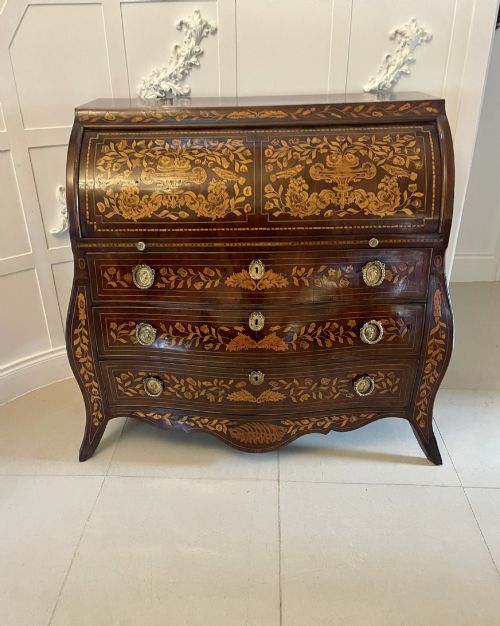
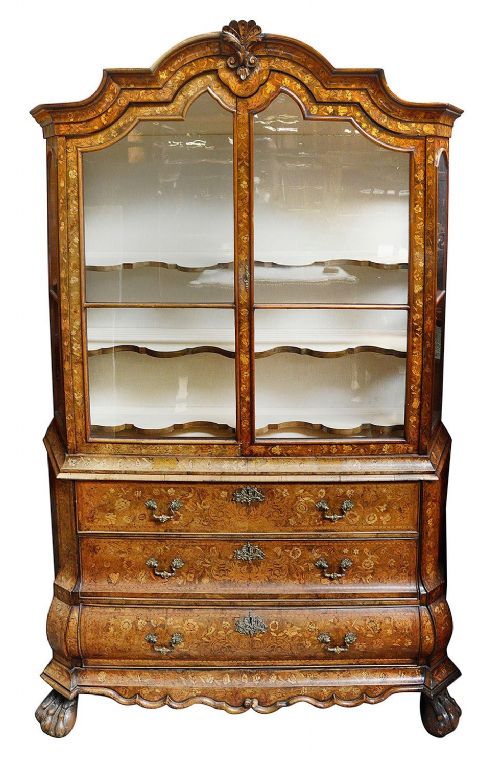
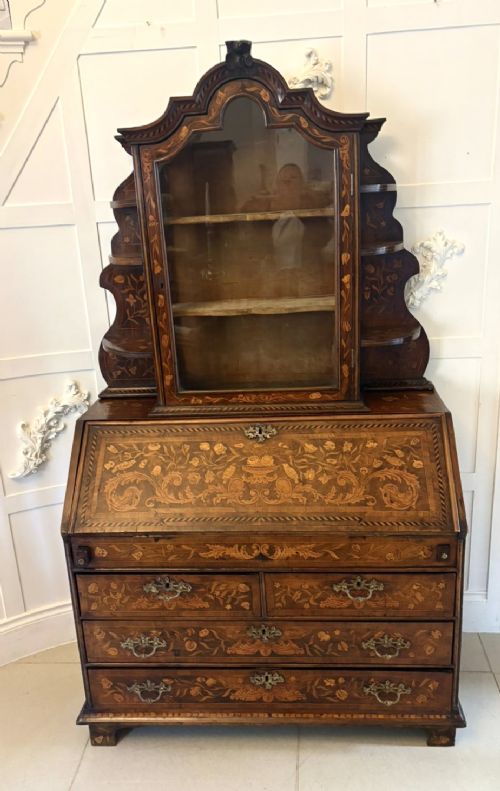
A dutch marquetry bureau cabinet combines a writing desk with upper shelving or display space, decorated with intricate floral patterns. Most examples on this page date from the eighteenth century, showing robust forms like bombe shaping or straight block fronts.
Makers utilised walnut, burr walnut, and mahogany as foundations for elaborate fruitwood marquetry. These dual-purpose items served domestic correspondence and display simultaneously in prosperous homes.
Materials and construction methods
Cabinet makers built carcasses from oak and walnut, applying richly grained burr walnut veneers to primary surfaces. Intricate floral and urn motifs were sawn from various fruitwoods and inlaid directly into the timber.
Brass hardware such as drop handles and escutcheons secured drawers and fall fronts. Glass panes were fitted into upper cabinet doors to protect books or porcelain collections.
Dutch Marquetry Bureau Cabinet Retail Price Guide 2026
Typical asking prices for dutch marquetry bureau cabinet among the pieces listed under this phrase on Sellingantiques today, from the lower quarter to the upper quarter. They describe what is for sale here now, not the wider market.
Listings feature walnut, burr walnut, mahogany, oak, and fruitwood marquetry across eighteenth and nineteenth-century forms.
Judging execution and detail
Quality rests on the crispness and complexity of the floral marquetry and the choice of burl veneers. Finer cabinets display balanced, dense floral layouts across every visible surface, including sides and drawer interiors.
Structural harmony also dictates value, particularly in bombe-shaped forms where curved timber requires precise joinery. The integration of the upper bookcase section with the lower bureau must appear proportional and deliberate.
The Dutch Marquetry Bureau Cabinet Glossary
- Marquetry
- Decorative veneer work forming pictures or patterns by fitting together small pieces of wood. This technique relies on contrasting timbers like fruitwood and walnut to create floral designs.
- Bombe
- A bulging, outward-curving contour found on the lower sections of case furniture. This swelling shape requires skilled carpentry to maintain structural integrity.
- Escritoire
- A writing cabinet featuring a fall-front writing surface that conceals smaller pigeonholes and drawers. It functions as a compact station for letters and documents.
- Vitrine
- A glass-fronted cabinet designed for displaying porcelain, books, or curiosities. Upper bookcase sections often double as vitrines with glazed doors.
- Cylinder bureau
- A writing desk with a curved, rotating roll-top cylinder that covers the writing slide and interior compartments. This mechanism slides back into the body of the desk.
Dutch Marquetry Bureau Cabinet: Frequently Asked Questions
How do I care for marquetry surfaces?
Keep these cabinets away from direct sunlight and excessive heat to prevent the fruitwood veneer from lifting or fading.
Apply a traditional beeswax polish occasionally to nourish the walnut timber and maintain a soft sheen.
Are these cabinets difficult to move?
Most bureau bookcases separate into two distinct sections, with the upper cabinet lifting off the lower bureau base for easier transport.
Enlist help when moving them due to the solid hardwood construction and heavy glass doors.
How do I identify eighteenth-century examples?
Look for hand-cut dovetails on the drawer linings and traditional construction methods using oak secondary woods.
Floral marquetry designs from this period tend to feature naturalistic floral sprays and urns executed in stained fruitwoods.