






Dutch Floral Marquetry Bookcase
A dutch floral marquetry bookcase brings extraordinary floral inlay and figured walnut into a room, offering both display space and a fitted desk.
Dutch Floral Marquetry Bookcase
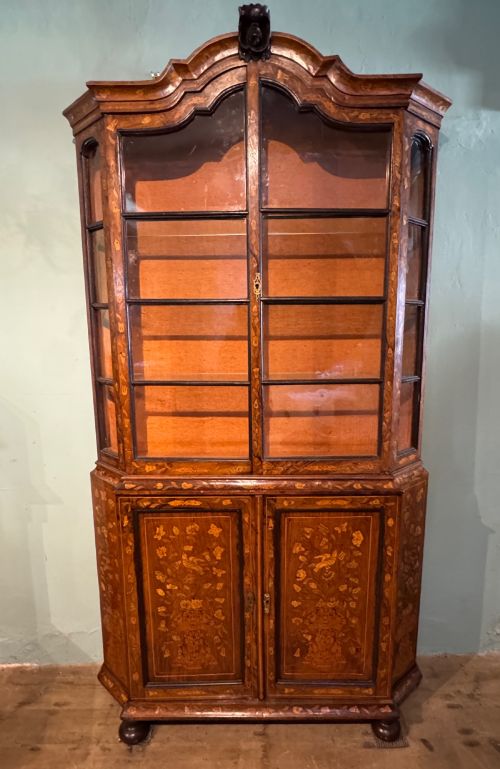
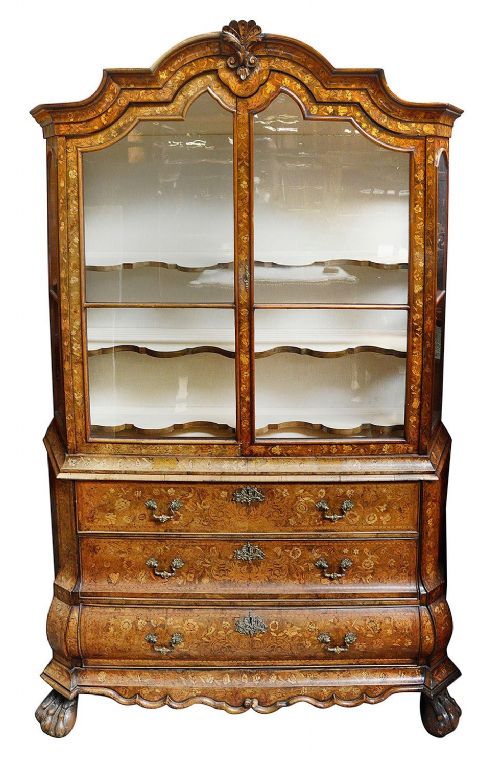
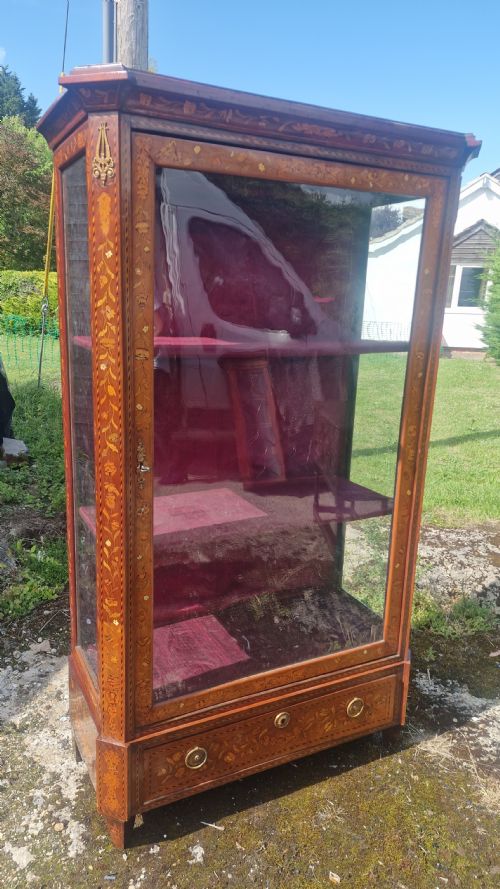
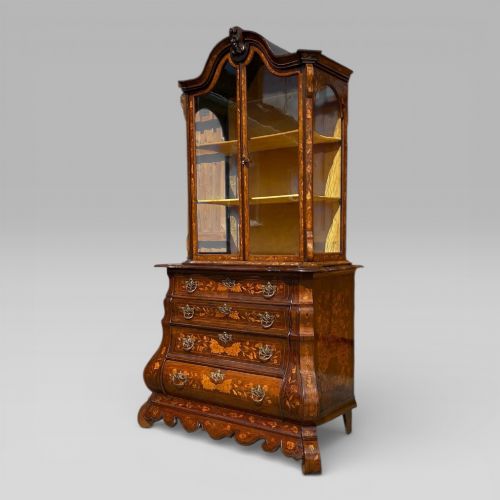
A dutch floral marquetry bookcase combines cabinetwork with intricate floral and botanical wood inlay across walnut or burr walnut surfaces. These pieces appear in forms such as bureau bookcases, vitrines, and display cabinets on chests, spanning the eighteenth century through to later revival periods.
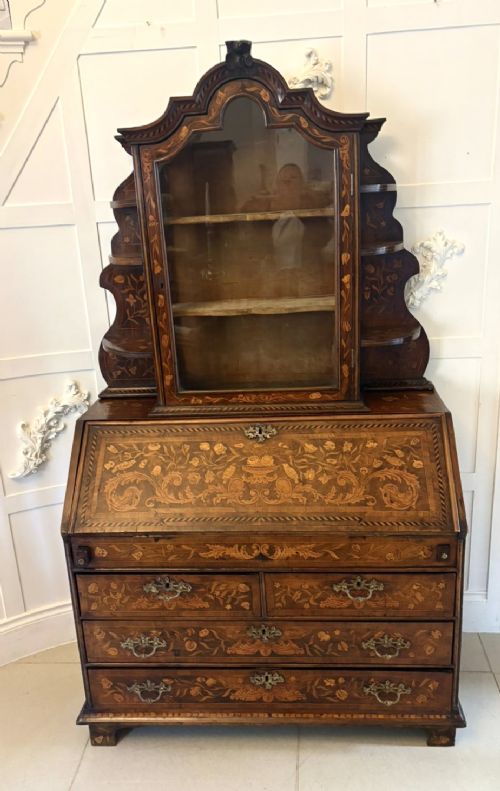
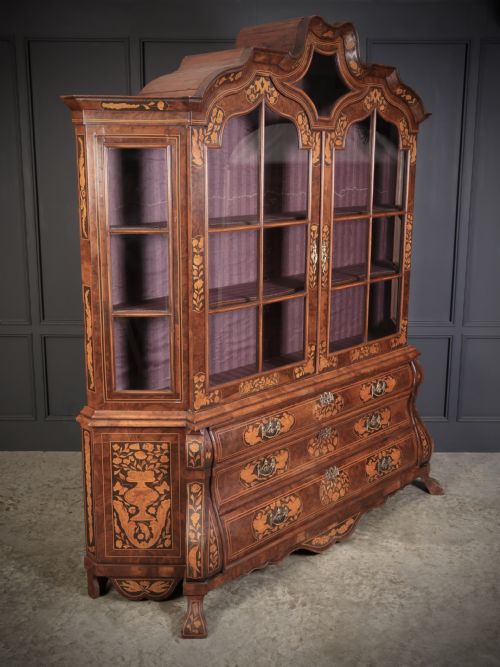
Bureau bookcases provide a sloping fall-front desk compartment below upper shelving, while display cabinets and vitrines focus on glazed storage for books or collections. Many examples incorporate bombé shaping to the lower chest section, creating undulating curves beneath the marquetry decoration.
The objects seen here originate primarily from eighteenth and nineteenth century production, alongside early twentieth century interpretations. Walnut and fruitwood form the structural and decorative foundation for these cabinets, often enhanced by brass hardware and glazed doors.
Assessing quality and craftsmanship
Quality rests upon the precision and complexity of the floral marquetry and the choice of Burr walnut veneers on the carcase. Superior cabinets display sharply defined fruitwood inlays with varied tonal shading, whereas simpler pieces rely on more repetitive or sparse patterns.
The architectural proportions of the cabinet and the sweep of any bombé shaping dictate the visual success of the piece. Master makers balanced the dense surface decoration with robust construction in walnut and oak, ensuring the doors and desk flaps operate smoothly within heavy timber frames.
Listings feature walnut, fruitwood inlay, and brass across bureau bookcases, vitrines, and display cabinets spanning the eighteenth to twentieth centuries.
Edwards & Roberts
The Dutch Floral Marquetry Bookcase Glossary
- Marquetry
- A decorative technique where small pieces of veneer are assembled into pictorial or floral patterns and glued to a carcase. This forms the primary surface decoration on these bookcases.
- Bombé
- A swelling, convex curved profile found on the lower drawer section of certain cabinets. It adds significant visual movement and demands advanced woodworking skill.
- Vitrine
- A glass-fronted display cabinet designed to showcase books or porcelain. These pieces often feature glazed upper doors and elaborate inlay across the lower structure.
- Burr walnut
- Timber taken from a walnut tree growth that produces swirling, highly figured grain patterns. Cabinetmakers use it as a premium background veneer for floral inlay.
- Bureau bookcase
- A cabinet featuring an integrated sloping desk flap that opens to reveal interior compartments beneath upper bookshelves or display doors.
Dutch Floral Marquetry Bookcase: Frequently Asked Questions
What is a dutch floral marquetry bookcase?
A dutch floral marquetry bookcase is a large storage or display piece featuring detailed wood inlay of flowers and foliage on walnut. They combine glazed upper sections with lower drawers, cupboards, or fitted bureau desks.
These cabinets date from the eighteenth century onwards, encompassing both period originals and later revival pieces from the early twentieth century. Their defining feature is the extensive botanical veneer work covering the exterior surfaces.
How do I use a bureau bookcase?
The bureau section includes a sloping fall-front panel that folds down to create a writing surface. Inside, small drawers and pigeonholes provide space for stationery and small items.
The upper shelves hold books or display objects behind glass doors. This dual function provides both a workspace and an enclosed display area within a single piece of furniture.
What woods are used in these cabinets?
Walnut and burr walnut form the main structural and background timber for the majority of these pieces. Oak is frequently used internally for drawer linings and carcase construction.
Fruitwoods are selected for the marquetry inlays because they accept staining and cutting well to render petals and stems. Brass hardware appears on the drawers and doors as handles and escutcheons.
What does bombe mean on a cabinet?
Bombé refers to a distinct swelling or bulging shape on the front and sides of the lower cabinet section. This curved form requires complex carpentry and veneer work to follow the undulating lines.
Cabinets with bombé shaping create a dramatic silhouette beneath the upper bookcase or display portion. The floral marquetry flows across these curved surfaces without interruption.
How can I tell the age of the cabinet?
Dating relies on examining construction methods, timber choice, and the style of the marquetry and hardware. Eighteenth century examples exhibit hand-cut dovetails and older walnut veneers, while twentieth century revival pieces show different internal manufacturing traits.
Comparing the cabinet form and floral patterns against documented pieces helps establish the likely period of manufacture. Surviving labels or stamps can also identify specific makers.