






Dutch Baroque Walnut Cabinet
These substantial pieces of furniture bring the rich timber tones and intricate floral inlay of the seventeenth and eighteenth centuries directly into a room.
Dutch Baroque Walnut Cabinet
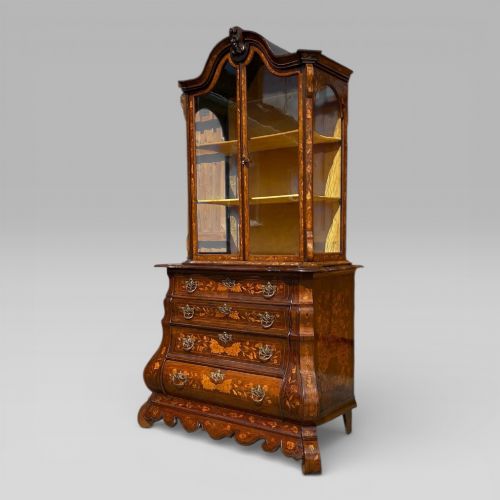
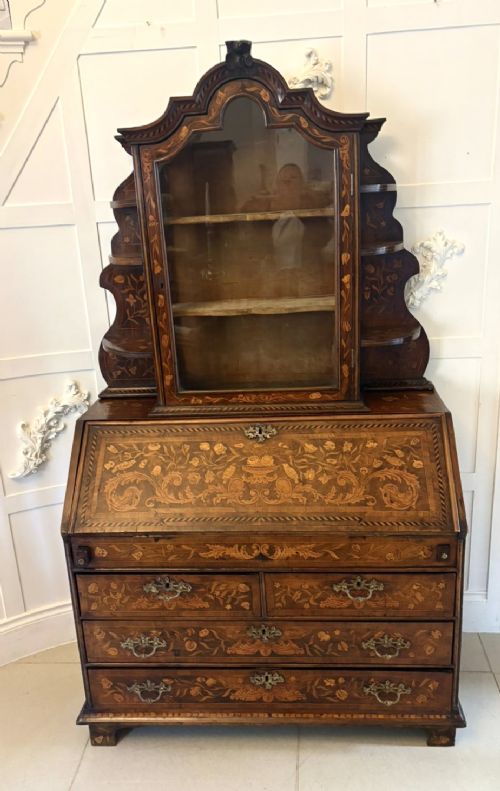
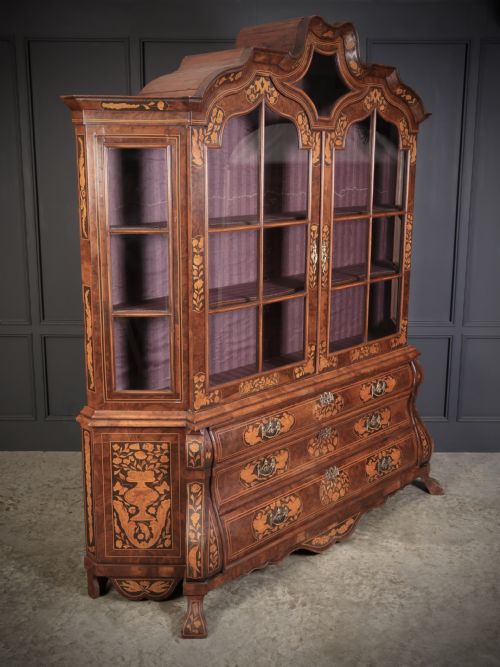
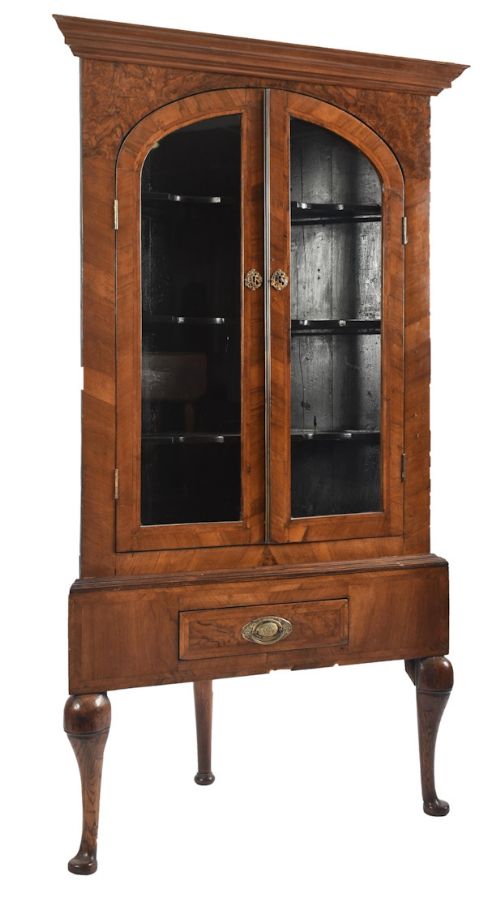
A dutch baroque walnut cabinet embodies a striking range of forms, from tall bureau bookcases and linen presses down to corner cupboards and delicate cabinets on stand. These items span periods from the seventeenth century through to the revival styles of the early twentieth century.
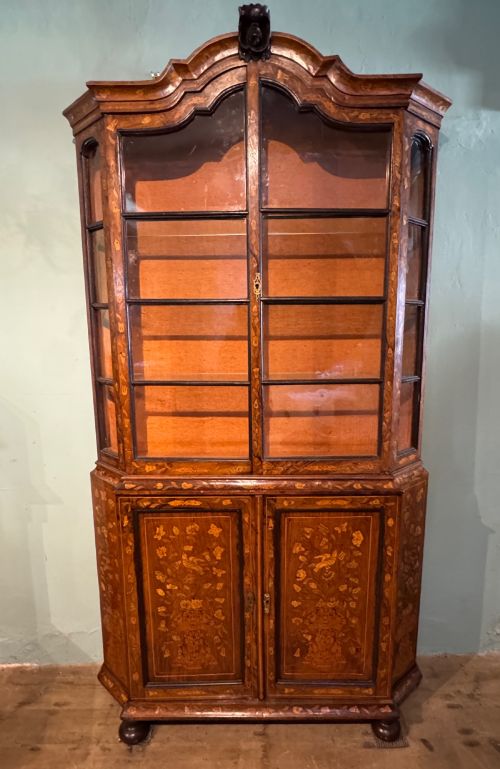
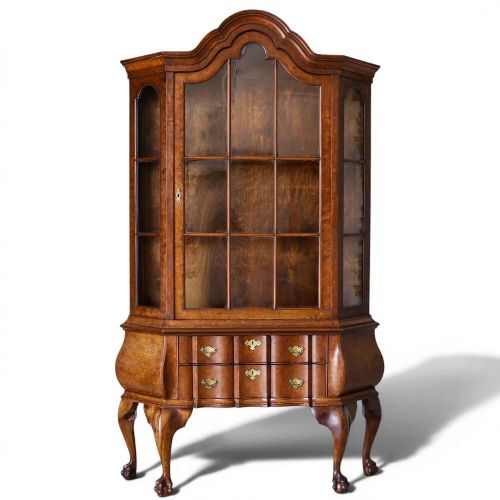
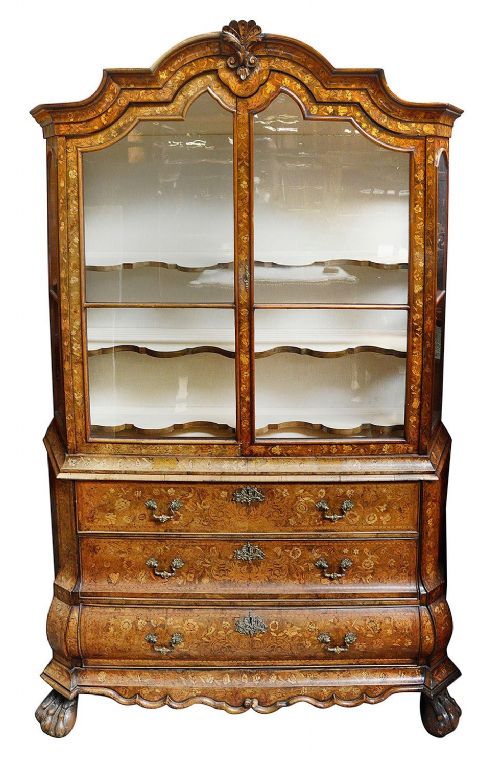
The most common examples encountered on this page feature elaborate floral marquetry, often executed in fruitwood over a walnut carcase. Alongside these floral inlays, buyers will find glazed display cabinets, serpentine shapes, and bombé forms that curve outwards with considerable presence.
Materials and construction methods
Cabinetmakers utilised solid walnut and walnut veneers laid over secondary timbers such as oak, often incorporating intricate fruitwood marquetry for floral and pictorial panels. Brass hardware, including drop handles and escutcheons, provides structural contrast to the dark timber grounds.
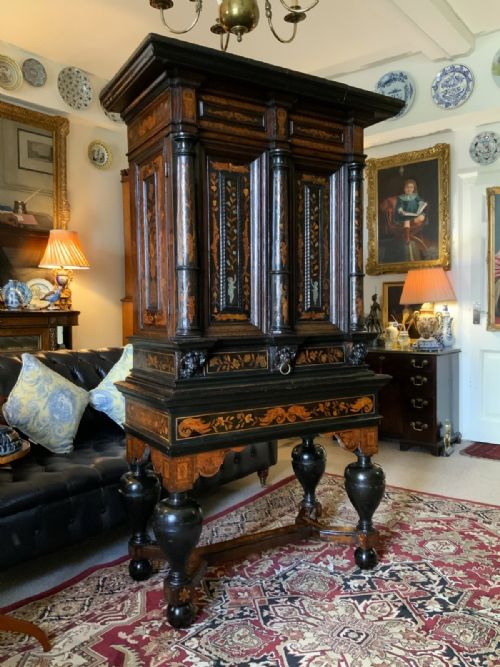
Advanced joinery techniques allowed for the creation of curved bombé fronts and complex bureau interiors fitted with numerous small drawers and pigeonholes. Ebonised wood and pewter inlay appear in select pieces to accent the primary walnut structure.
Listings feature burr walnut, fruitwood marquetry, and ebonised wood across periods spanning the seventeenth to the early twentieth century.
Judging the standard of execution
The sophistication of the marquetry dictates much of the visual distinction, with superior examples displaying finely shaded fruitwood petals and leaves that create a convincing sense of depth. Lesser pieces rely on repetitive, simpler geometric or floral motifs without the same degree of hand-cut nuance.
Structural harmony also marks out the superior examples, particularly where the burr walnut veneers are symmetrically matched across large drawer fronts and cabinet doors. The crispness of carved details and the integration of secondary woods like fruitwood and oak reveal the maker's hand.
Edwards & Roberts
The Dutch Baroque Walnut Cabinet Glossary
- Marquetry
- Decorative veneer work assembled in patterns or pictures using thin slices of wood such as fruitwood and walnut. This technique covers the entire surface of many pieces.
- Bombé
- A swelling, outward-curving profile found on the lower sections or sides of certain cabinets and chests. This bulging contour requires advanced woodworking skill to execute properly.
- Linen press
- A tall cupboard traditionally used for storing textiles, fitted with interior sliding trays or shelves. These pieces often stand on lower chest bases.
- Ebonised wood
- Timber treated with a dark stain or finish to imitate ebony. It provides stark contrast against lighter walnut and marquetry panels.
Dutch Baroque Walnut Cabinet: Frequently Asked Questions
What is a bureau bookcase?
A bureau bookcase combines a sloping writing flap with a shelved upper cabinet, usually enclosed by wooden or glazed doors. The interior houses smaller compartments for stationery.
These combination items served as working desks and storage units within larger domestic rooms.
How do I spot floral marquetry?
Floral marquetry consists of finely cut wood veneers arranged into flower and foliage motifs, often using lighter fruitwoods against a darker walnut background. Look closely at the grain direction to see how different species create shading.
Master craftsmen shaded these wooden elements by scorching them in hot sand to add three-dimensional depth.
Where should I place a corner cabinet?
Corner cabinets fit neatly into ninety-degree room angles, making efficient use of dead space while displaying collections behind glass doors. Floor-standing and hanging versions both exist within these listings.
Ensure the wall angles match the cabinet's ninety-degree geometry for a flush fit.