
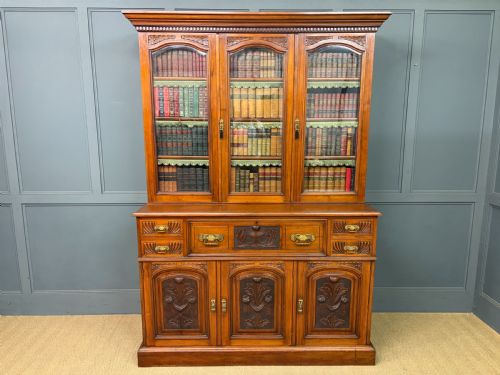

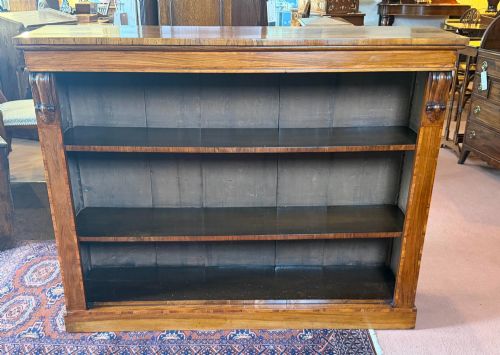
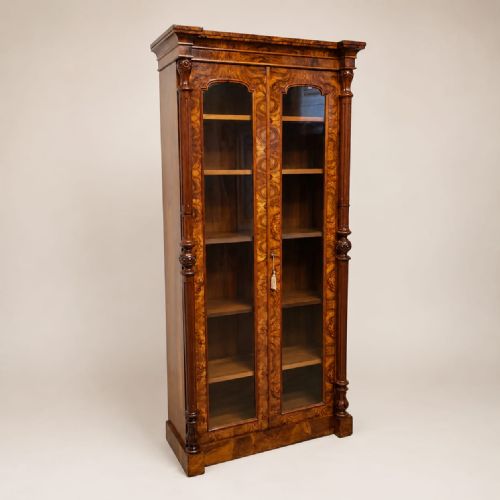
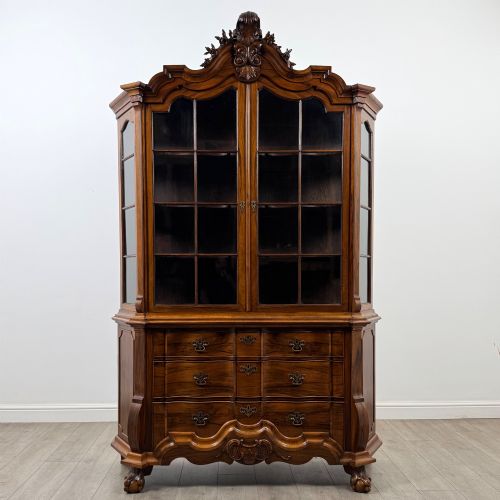
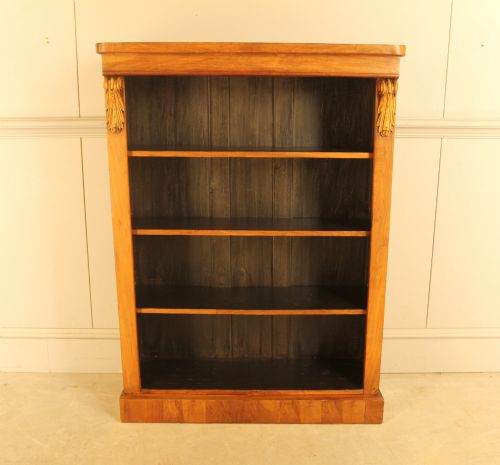
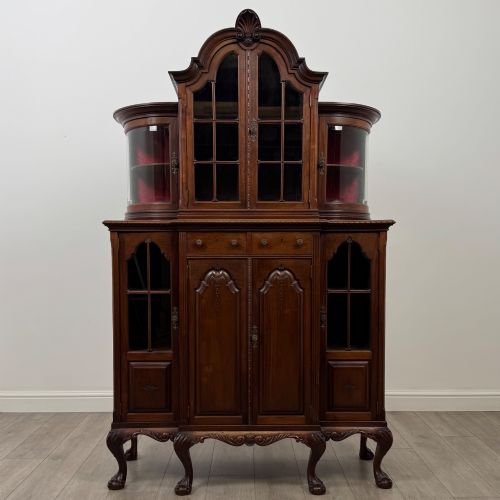
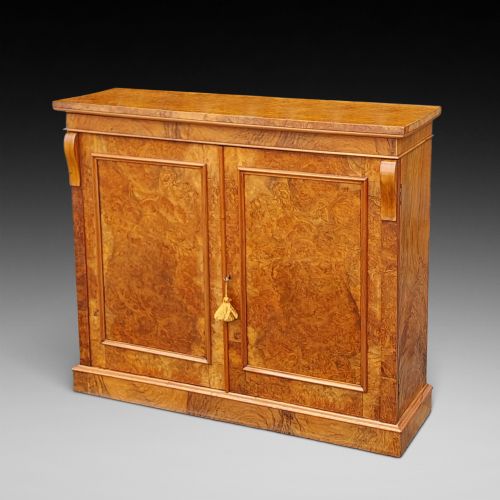
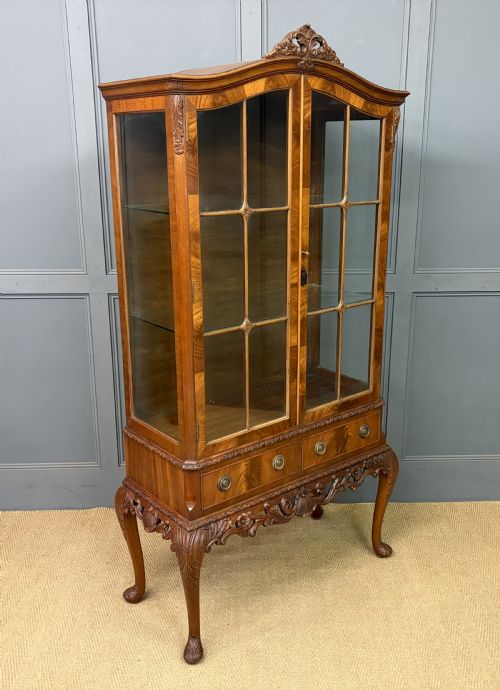
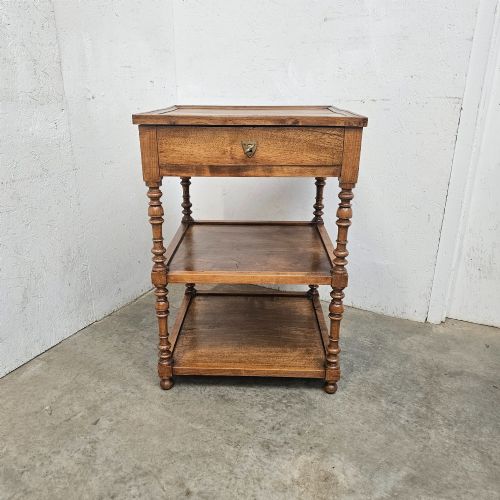
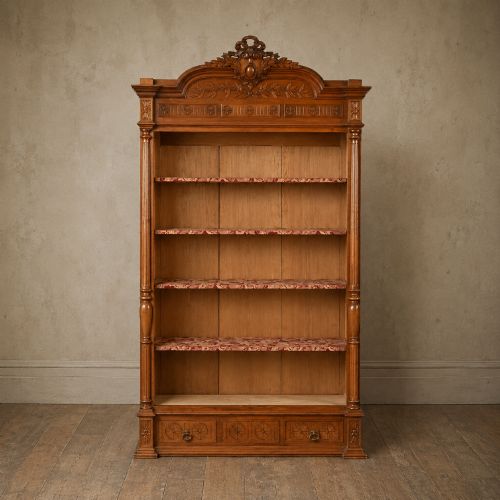
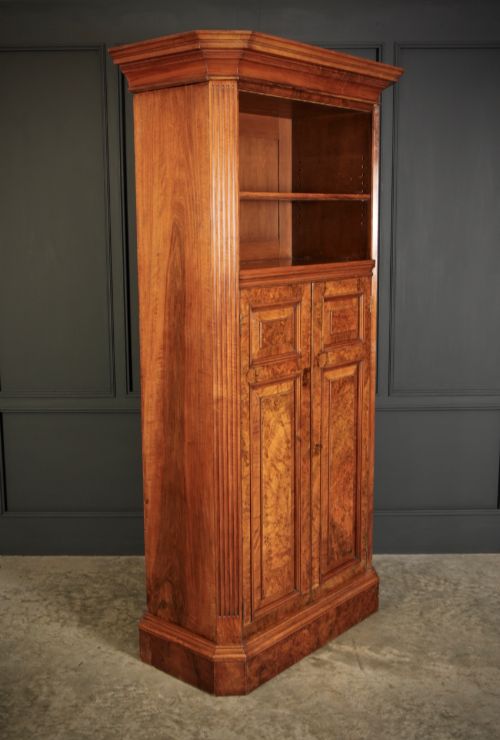
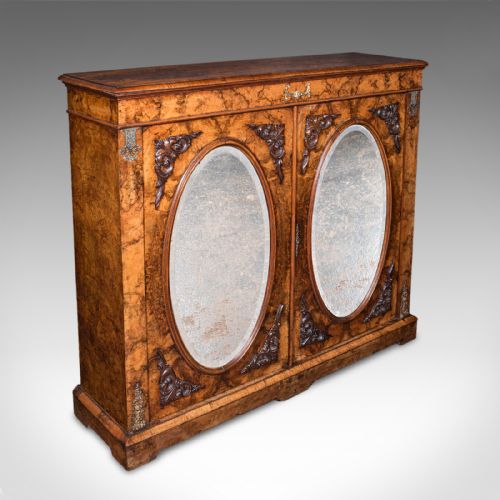
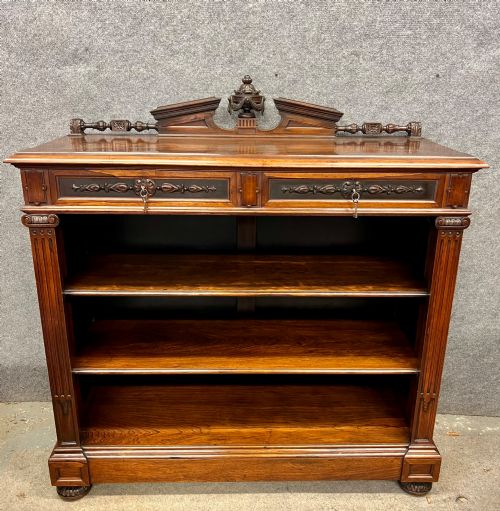
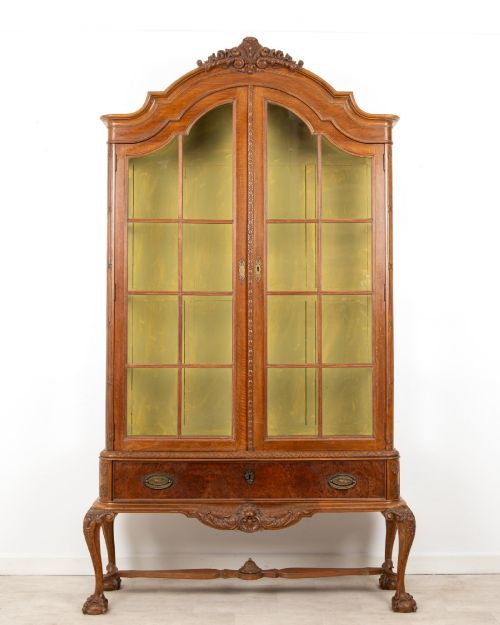
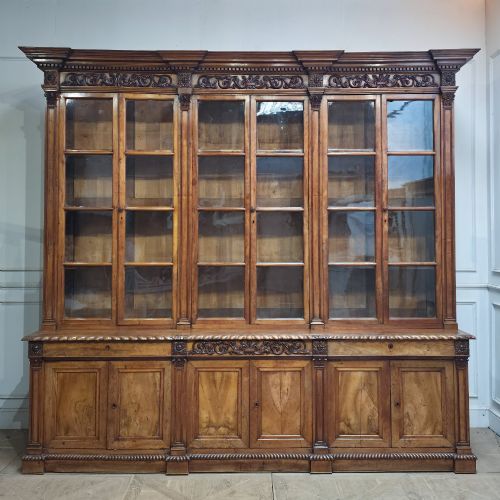
Carved Walnut Bookcase Cabinet
A carved walnut bookcase cabinet brings rich dark timber and generous display space into a room, offering both storage and architectural presence.
Carved Walnut Bookcase Cabinet
A carved walnut bookcase cabinet combines enclosed shelving behind glass or timber doors with substantial wooden construction, appearing frequently in Victorian and nineteenth-century designs. Pieces range from tall breakfront library units to compact glazed display cabinets and bureau bookcases.
Makers drew on historical vocabularies, producing items in Queen Anne Revival, Gothic Revival, and Dutch Baroque styles. Walnut veneer, burr walnut, and solid timber dominate the forms, often accented with brass hardware and glass door panels.
Continental workshops and English cabinet makers alike built these pieces for formal reception rooms, studies, and parlours. The selection spans open library shelving, mirrored front book cabinets, and multi-tier vitrines.
Materials and construction methods
Carpenters utilised solid walnut, pine, and oak as foundational timbers, frequently applying figured walnut veneer and burr walnut to visible exterior surfaces for dramatic grain patterns. Glass fitted into wooden door frames protected library contents while maintaining visibility.
Brass hardware, including hinges, locks, and adjustable shelf brackets, provided functional durability. Carved decorative details relied on skilled hand-tooling in solid wood elements, particularly on pediments, door frames, and base plinths.
Some music cabinets cleverly double as etageres, proving Victorians loved multitasking furniture as much as modern open-plan dwellers.
Distinctions in craftsmanship and finish
Quality rests primarily in the selection of the wood veneers and the crispness of the hand-carved ornamentation. Finer examples display symmetrical burr walnut figuring across large expanses of door and drawer fronts.
Structural integrity, smooth operation of glazed doors, and original brass fittings separate standard production pieces from exhibition-grade workshop commissions. The depth and clarity of the polished finish further distinguish superior cabinet work.
Gabriel Viardot·Maple & Co.·Holland & Sons
The Carved Walnut Bookcase Cabinet Glossary
- Burr walnut
- A specialised timber cut from tree growths, yielding intricate swirling grain patterns highly prized for cabinet veneers. It creates a decorative, highly textured surface.
- Breakfront
- A cabinet design where the central section projects forward from the flanking wings. This architectural layout adds depth and shadow lines to large bookcases.
- Marquetry
- Decorative inlay work using various woods and veneers to create pictorial or geometric patterns on the cabinet surface. Dutch examples frequently employ floral motifs.
- Secrétaire
- A desk unit integrated into a cabinet structure, typically featuring a drop-down writing flap concealing small drawers and pigeonholes.
Carved Walnut Bookcase Cabinet: Frequently Asked Questions
How do I date a walnut bookcase?
Dating relies on architectural style, construction techniques, and secondary timbers like pine or oak found inside the carcass. Nineteenth-century pieces often display machine-sawn elements alongside hand-cut joints.
Hardware styles, glass clarity, and the presence of makers' stamps or paper labels also help narrow the decade of manufacture.
Are the shelves adjustable?
Many Victorian and later bookcases feature adjustable wooden shelves supported by wooden ratchets, brass studs, or metal strip tracks. Earlier Georgian and provincial pieces often relied on fixed, stationary shelving.
Checking the interior side panels reveals whether the shelving system is original to the piece or a later adaptation.
How do I care for burr walnut veneer?
Burr walnut requires stable indoor humidity away from direct sunlight and heat sources to prevent veneer lifting or timber splitting. Regular dusting with a soft, dry cloth preserves the polished surface.
Application of traditional beeswax polish feeds the timber periodically, maintaining the natural lustre of the figured grain.