




Dutch Floral Inlaid Bureau
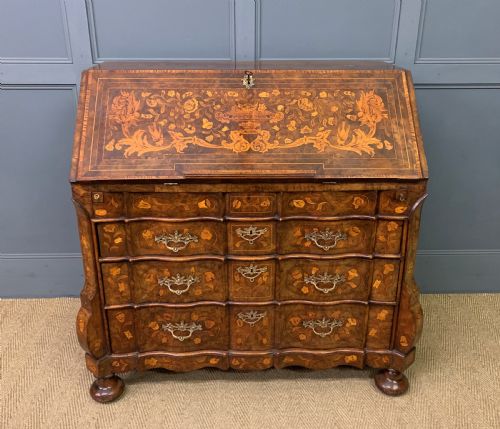
A dutch floral inlaid bureau is a fitted writing desk covered in elaborate wood inlay, offering concealed drawers and a sloping fall front.
Dutch Floral Inlaid Bureau
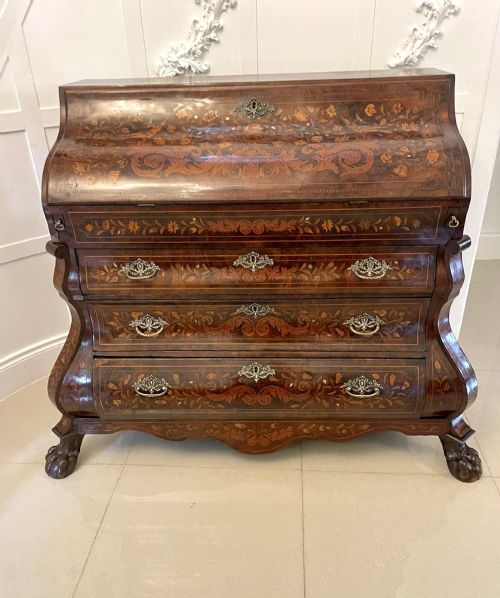
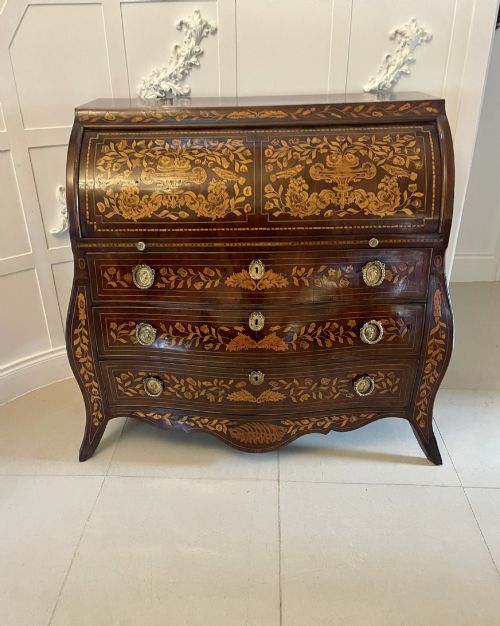
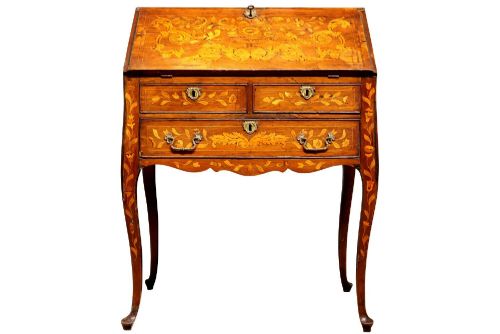
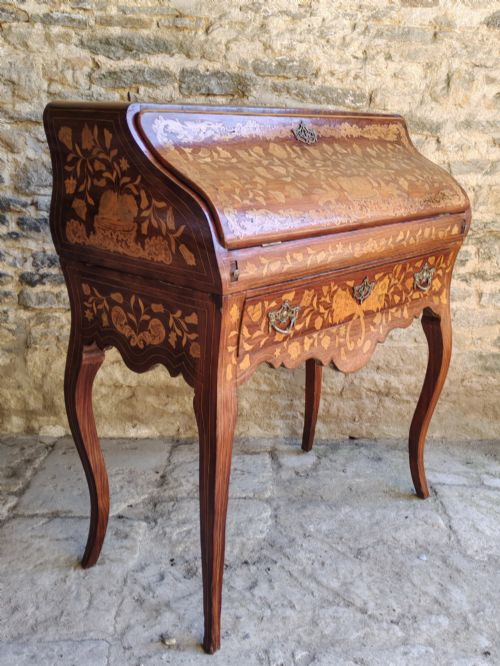
A dutch floral inlaid bureau brings together practical workspace and intricate decorative woodwork from periods spanning the eighteenth and nineteenth centuries. The listings show forms ranging from compact fall-front desks and cylinder bureaus to grand bureau bookcases with upper display sections.
Most examples rely on walnut, burr walnut, or mahogany carcasses embellished with detailed marquetry. Makers of these pieces deployed floral motifs across sloping lids, curved bombé fronts, and cabinet doors.
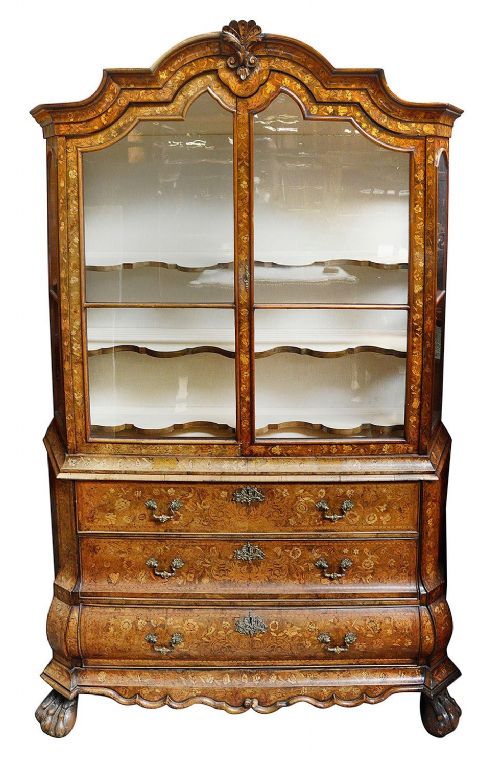
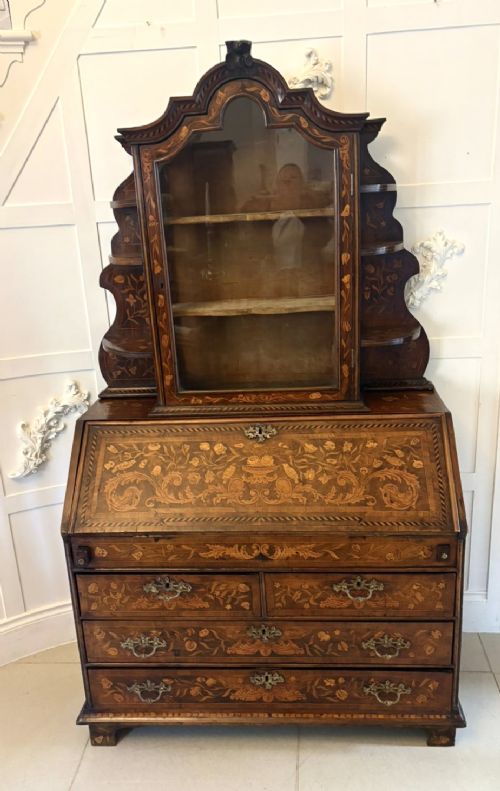
Beyond standard writing desks, the evidence includes related case furniture such as display cabinets, vitrines, dressing tables, and toilet mirrors sharing the same floral marquetry vocabulary. Buyers encounter variations from straightforward fall-front desks to architectural bureau bookcases fitted with multiple internal compartments.
How they were made
Carpenters constructed the primary carcass using solid timbers like walnut, mahogany, or fruitwood, frequently selecting burr walnut veneers for rich natural figuring. Brass hardware provides functional hinges, escutcheons, and drop handles across the drawers and fall fronts.
The characteristic surface decoration relies on fruitwood inlay and marquetry, where contrasting woods are precision-cut and assembled into floral sprays and scrolling foliage. Cabinetmakers then applied these pictorial panels directly onto the structural carcase timbers.
What varies in quality
The sophistication of the floral marquetry dictates much of the distinction between pieces, ranging from simple geometric floral arrangements to dense, multi-toned botanical scenes executed across curved bombé surfaces. The choice of underlying timber also plays a role, with highly figured burr walnut commanding particular visual depth compared to plain walnut or mahogany.
Structural complexity separates standard desks from monumental bureau bookcases and cylinder bureaus featuring fitted interior compartments and glazed upper cabinets. The fluidity of the cabinetmaker's line, especially around swelled bombé drawer fronts and moulded cornices, marks the upper tier of execution.
Morison of Edinburgh
The Dutch Floral Inlaid Bureau Glossary
- Marquetry
- Decorative veneer work assembled from pieces of various wood types to create pictorial patterns, typically showing flowers and foliage on these desks.
- Bombé
- A swollen or bulging convex contour characteristic of advanced case furniture fronts, requiring specialised shaping of both the wood and its inlay.
- Bureau bookcase
- A dual-purpose cabinet combining a sloping writing desk below with an enclosed upper shelving or display section behind glazed doors.
- Cylinder bureau
- A writing desk featuring a rotating quarter-circle wooden cylinder that conceals the internal pigeonholes and writing slide when closed.
- Escritoire
- A tall writing cabinet with a fall-front panel that lowers to provide a writing surface above lower drawers.
Dutch Floral Inlaid Bureau: Frequently Asked Questions
How do I use a cylinder bureau?
The curved wooden shutter rolls backward into the body of the desk, simultaneously drawing out the writing surface.
This mechanism conceals the interior compartments and papers while keeping the exterior floral inlay unbroken.
Where were these bureaus made?
These pieces originate primarily from Dutch workshops influenced by regional baroque and rococo cabinetmaking traditions.
The distinct floral marquetry reflects a long-standing continental mastery of decorative wood veneers.
How do I tell an 18th century bureau apart from later copies?
Eighteenth-century examples rely on timber construction methods, hand-cut dovetails, and period-specific secondary woods inside the drawer linings.
Later nineteenth-century and revival pieces often display different interior framing techniques and sharper mechanical precision in the marquetry cutting.