



Dutch Floral Desk
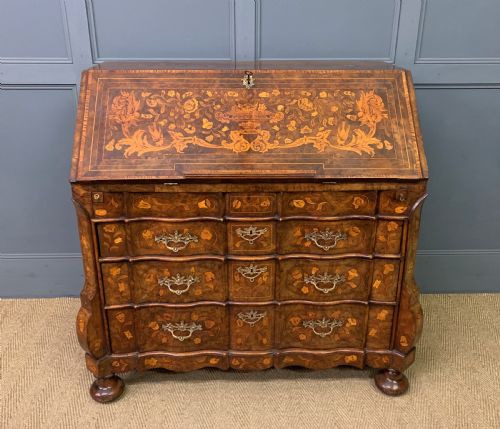
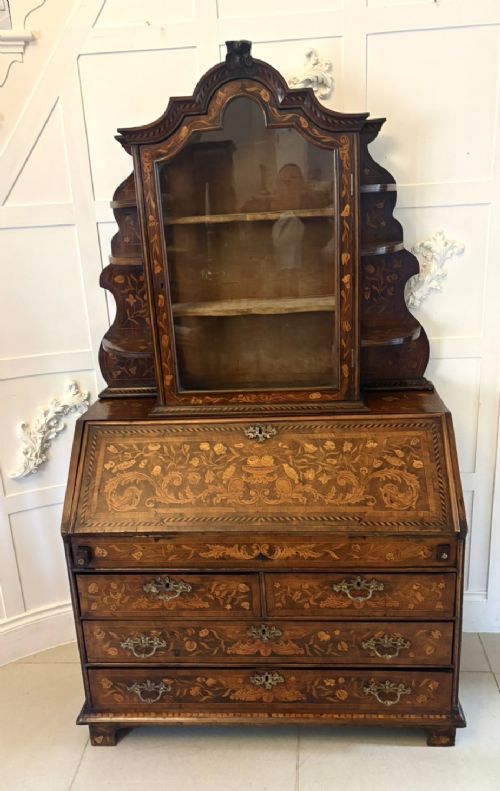
These pieces unite the practical utility of a dutch floral desk with intricate floral and botanical marquetry.
Dutch Floral Desk
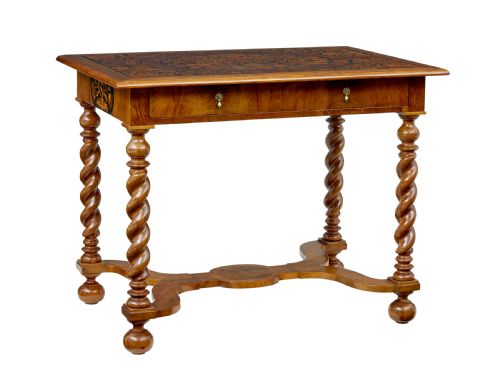
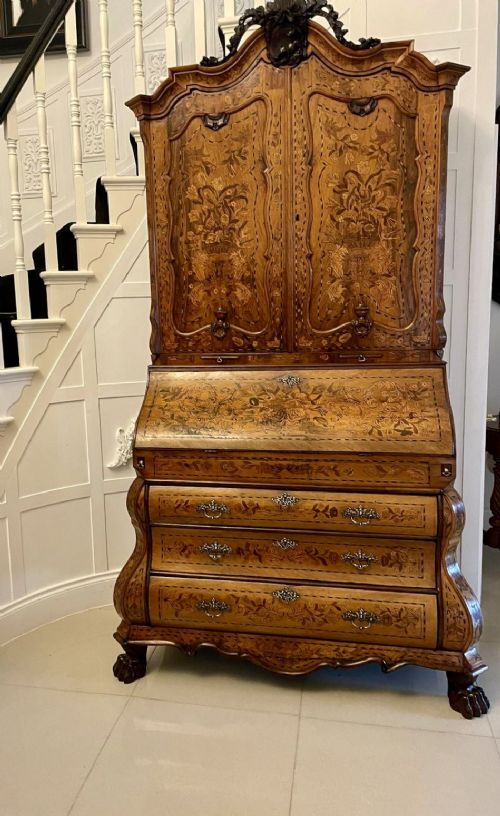
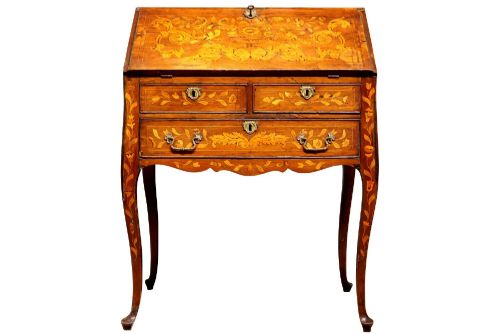
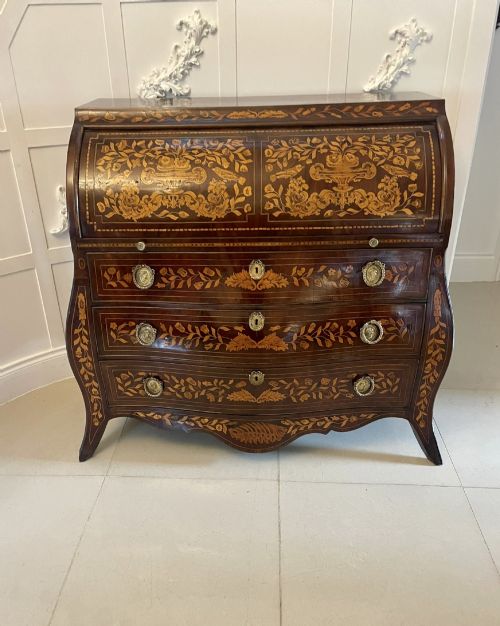
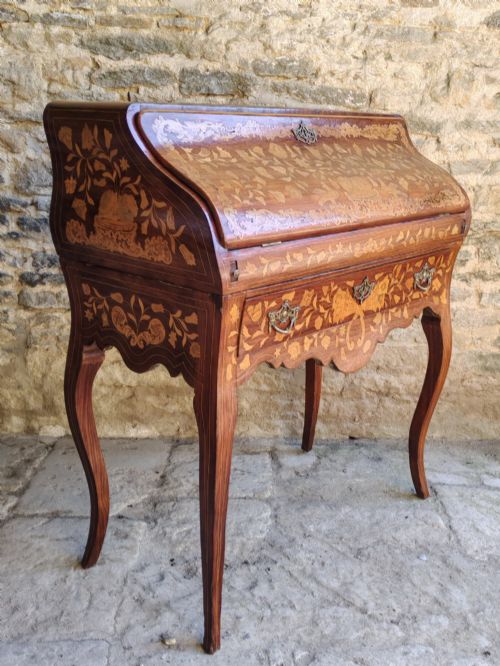
A dutch floral desk brings together writing furniture and elaborate botanical marquetry, predominantly taking the form of fall-front bureaux, bureau bookcases, and occasional tables. Buyers seeking this phrase encounter pieces spanning the seventeenth century through to the nineteenth century, with eighteenth-century examples appearing frequently.
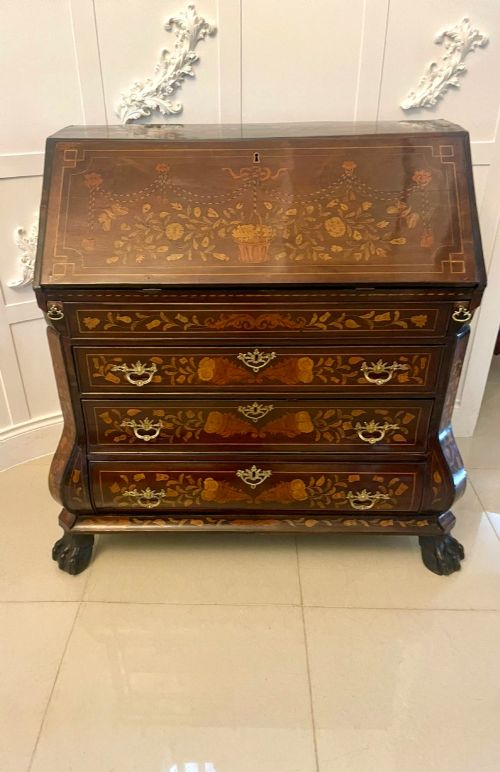
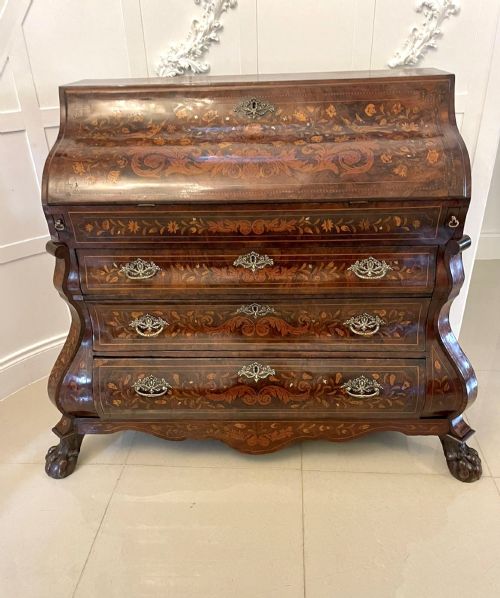
The dominant physical forms include bombé shaped fronts, cylinder bureaux, and upright cabinet combinations that integrate fitted interior compartments behind sloped writing lids. Walnut, burr walnut, and mahogany serve as the primary carcase timbers for these writing surfaces.
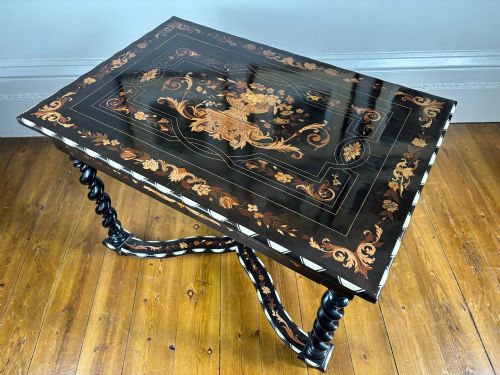
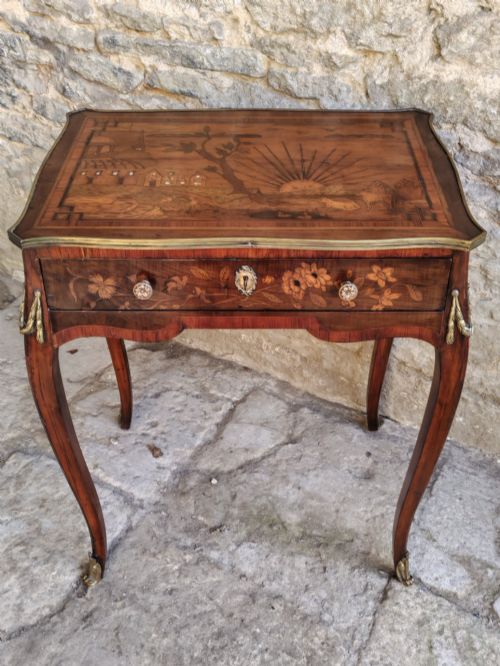
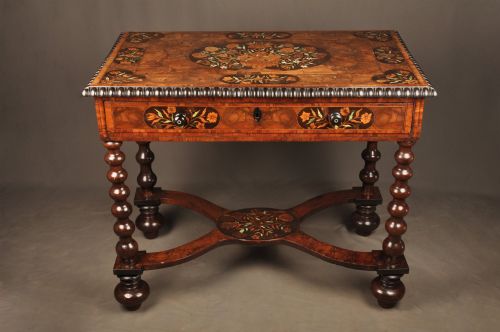
Beyond standard writing desks, the category encompasses related forms such as architects tables, centre tables, and partner desks sharing the same intensive floral veneer work. Regional variations incorporate baroque and rococo influences alongside later nineteenth-century revivals.
Materials and construction
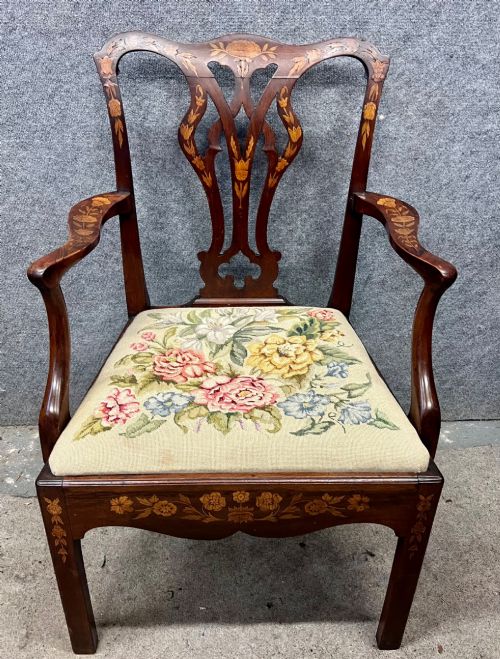
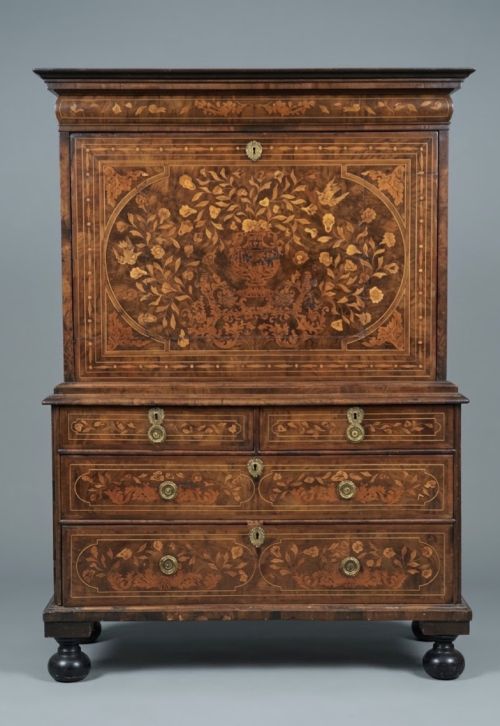
Cabinetmakers constructed the underlying carcases from solid woods like oak, walnut, and mahogany, applying fine veneers over structural frames. Fruitwood inlay and marquetry created the characteristic floral, foliage, and bird motifs across the drawer fronts and writing flaps.
Specialised techniques included heat-shaping timber to form the curved bombé profiles associated with continental cabinetry. Engraved bone inlay and brass hardware added contrasting details to the polished dark wood surfaces.
Dutch Floral Desk Retail Price Guide 2026
Typical asking prices for dutch floral desk among the pieces listed under this phrase on Sellingantiques today, from the lower quarter to the upper quarter. They describe what is for sale here now, not the wider market.
Current listings feature walnut, mahogany, and fruitwood surfaces across bureau bookcases, cylinder bureaux, and side tables dating from the seventeenth to the nineteenth century.
Assessing craftsmanship
The refinement of the floral marquetry dictates the visual success of the work, separating competent surface decoration from master-level botanical shading. Precision in the wood-to-wood fit without excessive filler indicates superior cabinetmaking.
Structural complexity, such as double-sided pedestal construction or complex bombé curves, requires advanced joinery to maintain stability over centuries. The preservation of original patination on walnut and fruitwood surfaces maintains historical integrity.
Morison of Edinburgh
The Dutch Floral Desk Glossary
- Marquetry
- Decorative veneer applied to a furniture structure in patterns and pictorial scenes. Artisans cut thin slices of different woods, fruitwoods, and bone to assemble floral and avian designs.
- Bombé
- An outward-swelling, bulging contour found on the front and sides of case furniture. This curved profile demands advanced woodworking skill to execute properly.
- Bureau
- A writing desk featuring a sloping hinged lid that opens to reveal a fitted interior of small drawers and pigeonholes. Eighteenth-century examples often sit above a bank of graduated drawers.
- Secretaire
- A cabinet or desk designed specifically for writing and storing correspondence. These pieces typically incorporate a drop-down writing flap or a pull-out drawer with a fitted writing surface.
Dutch Floral Desk: Frequently Asked Questions
How do I care for wood marquetry?
Keep wooden furniture away from direct sunlight and steady heat sources to prevent the delicate fruitwood veneers from drying and lifting. Regular dusting with a soft, dry cloth preserves the polished surface.
Apply microcrystalline wax sparingly when the timber appears dry, avoiding liquid polishes that penetrate old joints and lift historical finishes.
Were these desks used for writing?
Writing furniture of this type served correspondence, accounting, and record-keeping for prosperous households and merchant offices. The fitted interiors provided secure storage for documents, inkwells, and stationery.
Sloping lids doubled as writing slopes while concealing private compartments behind small interior doors and hidden drawers.
What defines floral marquetry?
Floral marquetry uses contrasting wood veneers to depict natural arrangements of flowers, leaves, ribbons, and birds across flat and curved surfaces. Shading was achieved by scorching veneer edges in hot sand.
Craftsmen assembled these botanical scenes piece by piece before gluing them onto the primary walnut or mahogany carcase.
How do I distinguish eighteenth-century pieces?
Eighteenth-century examples typically display hand-cut marquetry with natural fruitwood fading, pegged frame construction, and secondary woods such as oak visible inside drawer boxes. The proportions follow baroque and rococo design principles.
Later nineteenth-century revivals often feature machine-cut precision, heavier ebonised accents, and different interior secondary timbers.