



Rococo Bombe Desk
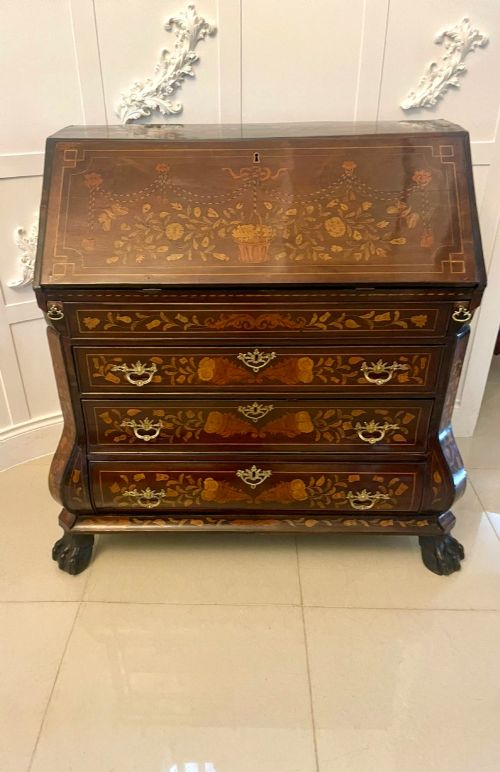
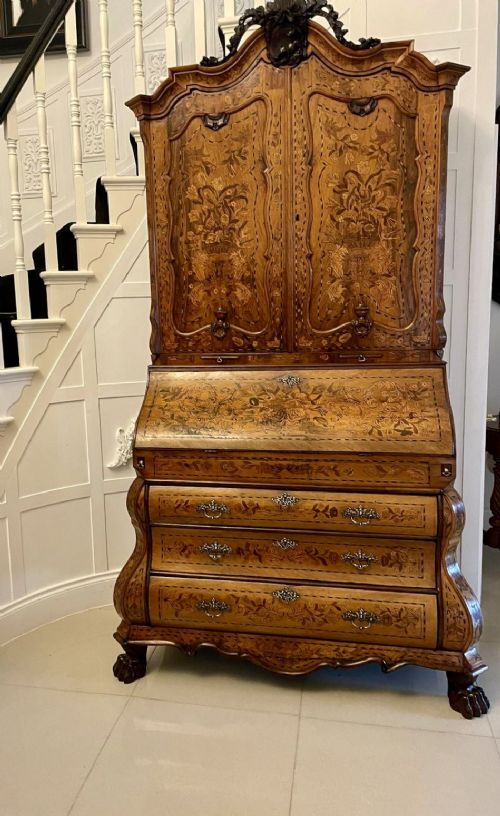
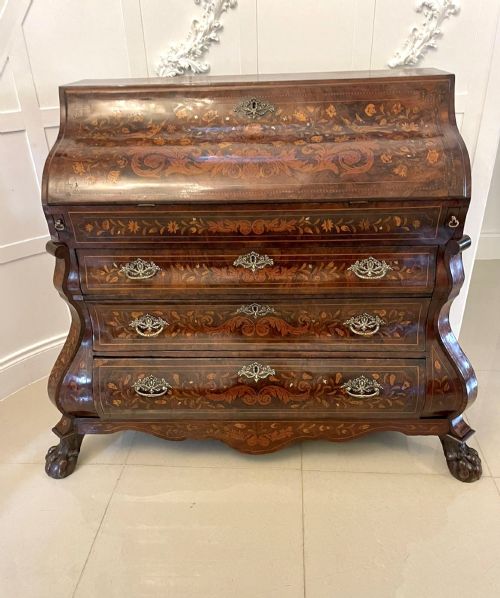
These rococo bombe desk pieces bring together swelling serpentine profiles and intricate floral marquetry, offering a dramatic statement for any period interior.
Rococo Bombe Desk
When you search for a rococo bombe desk, you are looking at substantial writing furniture defined by outward-curving sides and fronts. The pieces on this page span the eighteenth century and the nineteenth century, taking the form of bureaux, bureau bookcases, and secretaire a abattant cabinets.
You are most likely to meet Dutch examples fashioned from burr walnut with elaborate marquetry. These items combine a sloping fall-front desk space with generous drawer capacity beneath a bulging, swelling profile characteristic of the Dutch Rococo and Dutch Baroque styles.
The selection also includes mahogany, yew, elm, and fruitwood pieces reflecting Georgian and French Rococo Revival influences. Each variation demonstrates the distinct regional interpretations of continental furniture design from the seventeen-fifties onwards.
How they were made
Cabinet makers constructed the carcases of these desks using solid timbers such as oak, walnut, and fruitwood to provide a stable foundation. They then applied decorative veneers, including burr walnut and mahogany, to the curved exterior surfaces.
Floral marquetry and fruitwood inlay embellish the drawer fronts and fall-front panels, creating detailed botanical patterns across the wood grain. Brass handles and escutcheons complete the hardware, fitted securely to the working compartments and drawers.
Rococo Bombe Desk Retail Price Guide 2026
Typical asking prices for rococo bombe desk among the pieces listed under this phrase on Sellingantiques today, from the lower quarter to the upper quarter. They describe what is for sale here now, not the wider market.
What varies in quality
The distinction between standard examples and exceptional pieces lies in the fluidity of the bombe contour and the precision of the marquetry layout. Finer items exhibit a deeply swelling shape that flows harmoniously from the upper section down through the feet.
Marquetry execution separates the ordinary from the masterwork, with superior examples displaying tightly fitted contrasting woods and nuanced shading in the floral motifs. The integration of structural timbers like oak with choice burr veneers also dictates the enduring stability of the piece.
The Rococo Bombe Desk Glossary
- Bombe
- A bulging, outward-curving shape used on the fronts and sides of case furniture. This profile creates a swelling silhouette typical of eighteenth-century continental design.
- Marquetry
- Decorative patterns formed by fitting veneer pieces onto a structural carcase. Craftsmen utilise various woods and fruitwood inlay to picture flowers and foliage.
- Bureau
- A writing cabinet featuring a sloping lid that opens to reveal a fitted interior of pigeonholes and small drawers. It often sits above a chest of larger drawers.
- Bureau Bookcase
- A tall piece of furniture combining a lower writing bureau with an upper glazed or panelled cabinet for storing books. These taller constructions dominate a room.
- Fall-front
- A hinged writing flap that drops down to provide a horizontal desk surface. When closed, it conceals the inner writing compartments.
Rococo Bombe Desk: Frequently Asked Questions
What is a bombe desk?
A bombe desk is a writing cabinet characterised by its distinct outward-swelling sides and fronts. These pieces combine practical storage with curved, sculptural silhouettes.
Originating in continental workshops during the eighteenth century, they serve as both functional desks and prominent decorative statements within a room.
How do I identify Dutch rococo pieces?
Dutch rococo pieces are typically recognised by their exuberant burr walnut veneers and dense floral marquetry. They feature pronounced bombe curves and robust proportions.
Makers from this region favoured rich timber grains paired with elaborate inlay work depicting flowers and urns across the fall-front and drawer surfaces.
Where were these desks placed?
These desks were traditionally placed in private studies, libraries, or principal reception rooms of wealthy households. Their finished backs and sides allowed them to command attention within the space.
They provided a private, lockable area for managing correspondence while displaying the wealth and taste of the owner through fine cabinetmaking.
How do I care for burr walnut?
Care for burr walnut surfaces by keeping them away from direct sunlight and steady sources of heat. This prevents the delicate veneers from drying out or splitting.
Apply natural beeswax periodically to nourish the wood and maintain a soft, protective sheen across the marquetry details without using harsh chemical polishes.