
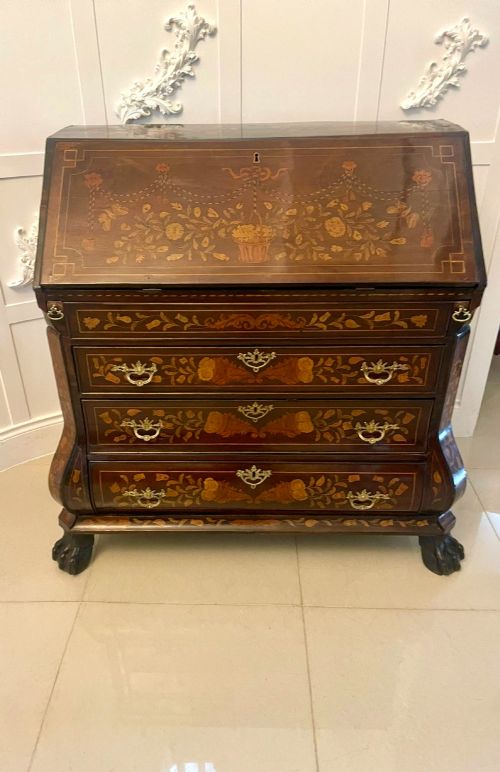
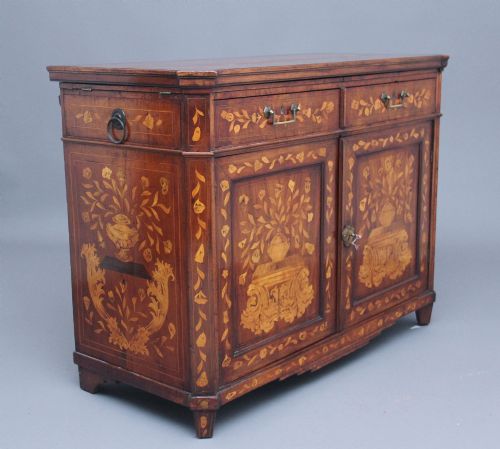
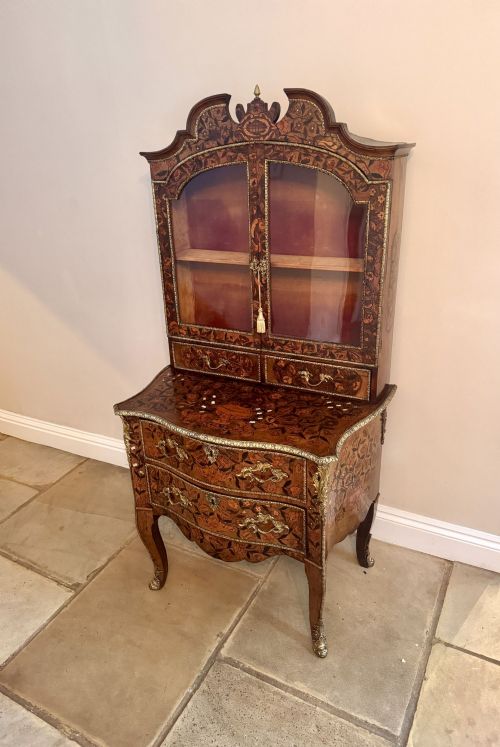
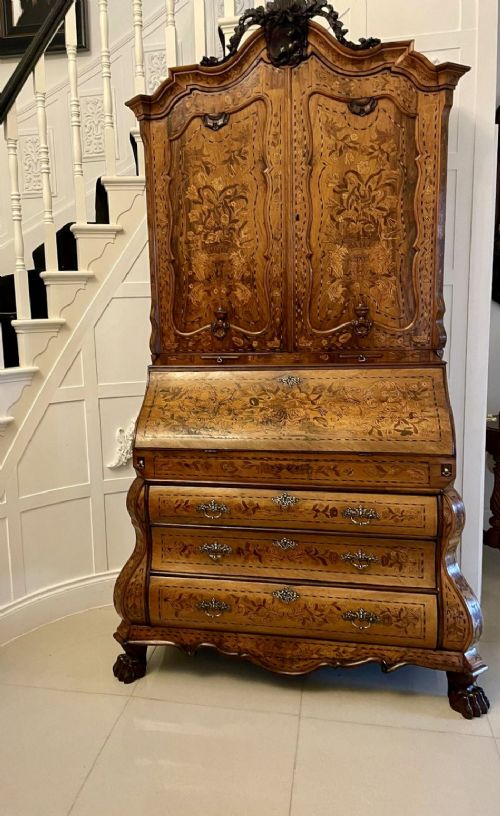


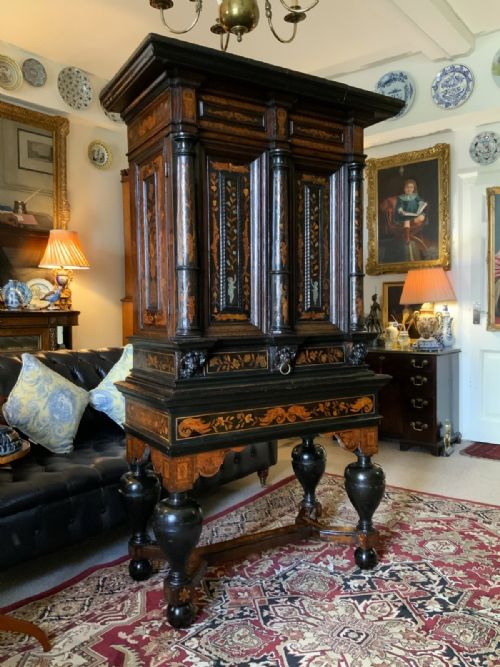
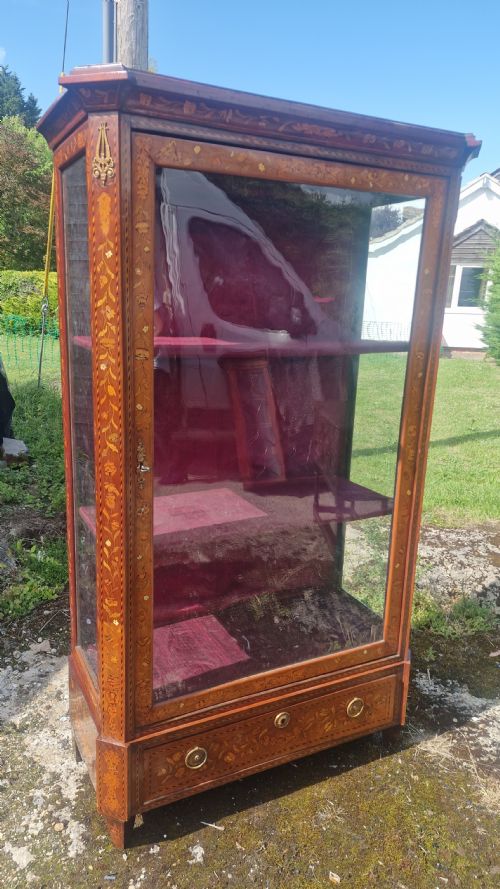
Dutch Floral Cabinet
These pieces bring a rich history of floral marquetry and cabinet-making into a room.
Dutch Floral Cabinet
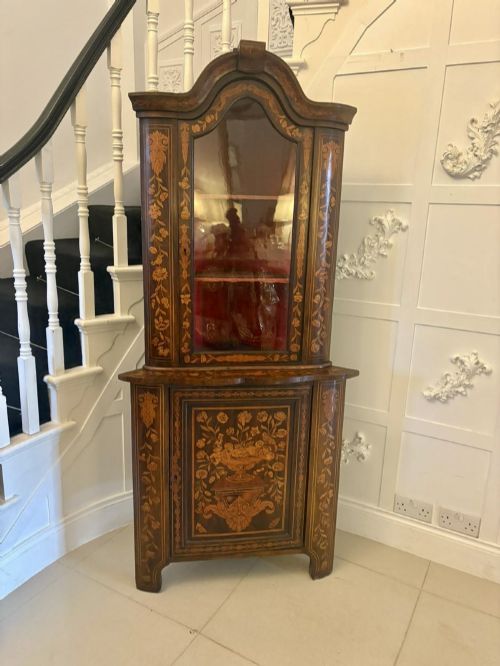
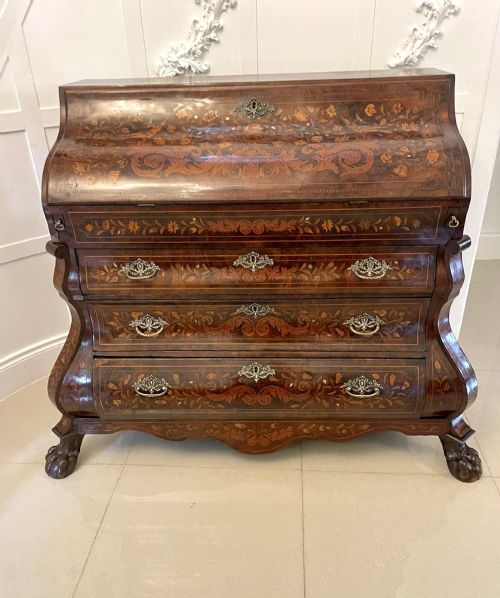
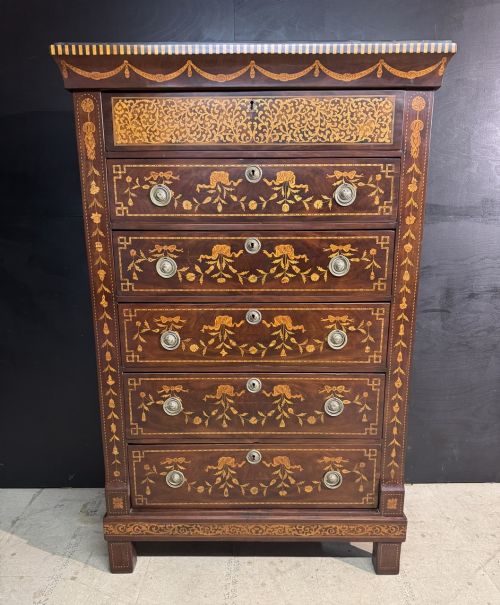
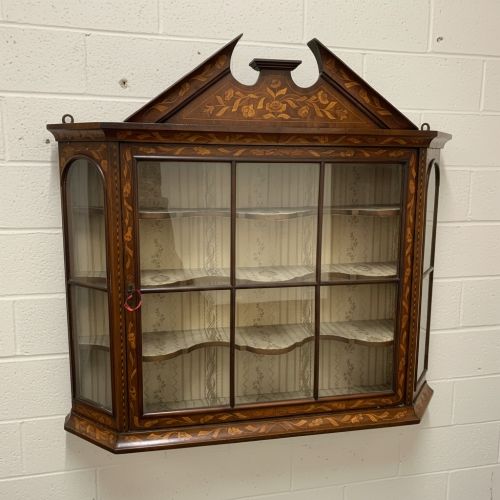
The dutch floral cabinet encompasses a variety of timber furniture forms decorated with elaborate inlaid flowers and foliage, spanning centuries of craftsmanship.
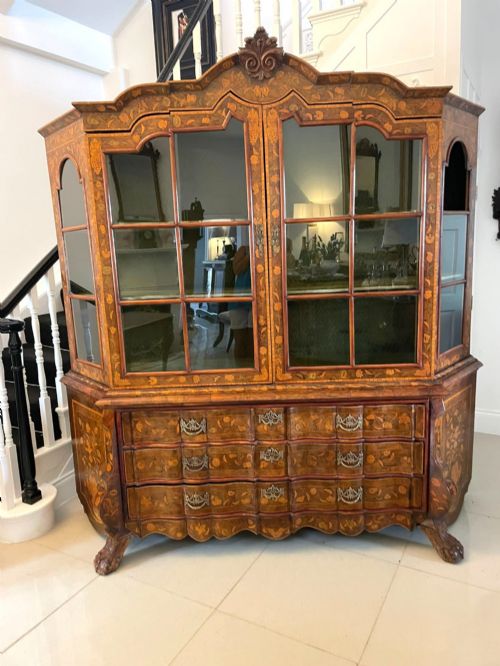
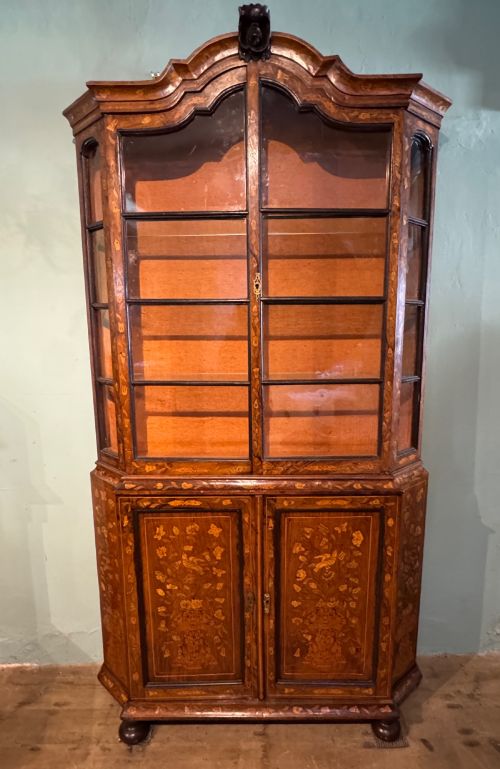
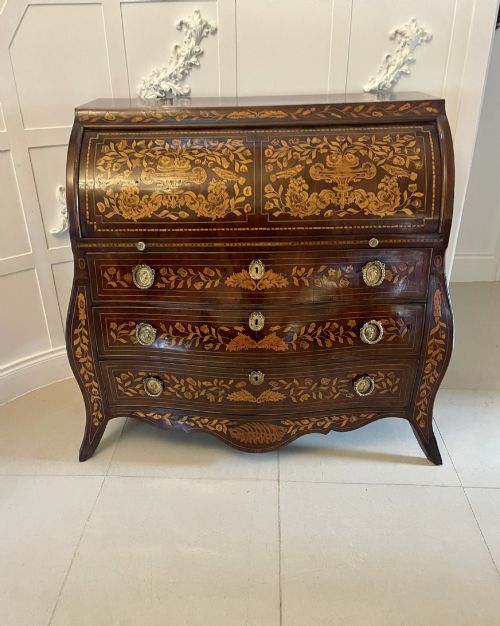
Buyers frequently encounter bureau bookcases, display cabinets, and bombé commodes originating from the seventeenth to the nineteenth centuries.
Pieces range from tall linen presses and corner cabinets to neat bedside cupboards and miniature apprentice items.
How they were made
Craftsmen built carcases using solid woods such as oak, mahogany, and walnut, frequently applying burr walnut or fruitwood veneers across the visible surfaces.
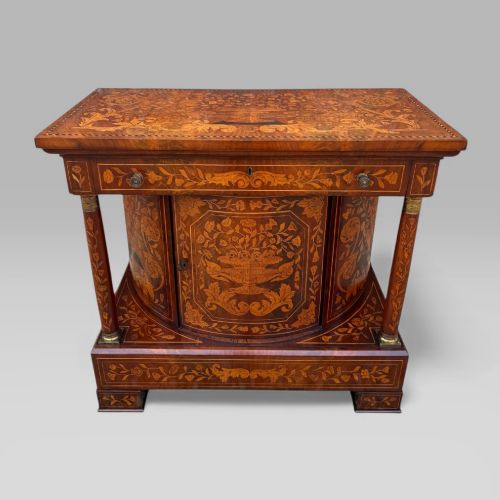
Intricate floral marquetry patterns were meticulously cut and inlaid using various contrasting timbers, sometimes incorporating pewter details.
Glass panels, brass hardware, and specialised mechanisms such as cylinder desks and fall-front secretaires completed the construction.
Listings feature walnut, mahogany, oak, and fruitwood combined with elaborate floral marquetry inlay.
What varies in quality
The precision and complexity of the floral marquetry dictate much of the visual distinction, with superior examples exhibiting intricate shading and diverse woods.
The architectural form of the piece, particularly challenging shapes like bombé curves or block fronts, reflects the maker's technical capability.
The selection of base timbers, such as richly figured burr walnut alongside well-preserved original brass mounts, separates standard production from exceptional works.
Edwards & Roberts
The Dutch Floral Cabinet Glossary
- Marquetry
- Decorative veneer work arranged in pictorial patterns. Craftsmen piece together thin slices of various woods to create floral designs.
- Bombé
- A swelling or outward curving shape found on the front and sides of furniture. This contour requires advanced woodworking skill to execute properly.
- Vitrine
- A glass-fronted cabinet designed for displaying objects. These pieces often feature glazed doors and sides to maximise visibility.
- Bureau bookcase
- A writing desk combined with shelving above. The lower section typically incorporates a sloping flap or cylinder front enclosing pigeonholes.
- Linen press
- A tall storage cabinet traditionally used for textiles. Interior sliding trays or shelves sit behind the main doors.
Dutch Floral Cabinet: Frequently Asked Questions
What periods do these cabinets come from?
Most surviving examples date from the eighteenth and early nineteenth centuries, though seventeenth-century pieces and later revival items also appear.
Craftsmanship evolved across these periods, moving from early baroque influences through rococo curves to later neoclassical restraint.
How were bombé cabinets constructed?
Makers shaped the solid timber framework outward before applying the decorative veneers.
This undulating form required considerable skill to ensure the floral marquetry followed the curved contours without distortion.
Where were these pieces used originally?
Affluent households placed these cabinets in reception rooms, parlours, and private studies to display valued possessions and store documents.
Display cabinets and vitrines showcased porcelain and curiosities, while bureau models served as functional writing spaces.
How do I care for inlaid wood?
Protect the timber and marquetry by keeping pieces away from direct sunlight and sudden temperature changes.
Regular polishing with appropriate wax maintains the lustre of the walnut and fruitwood surfaces without harming the delicate inlay.