




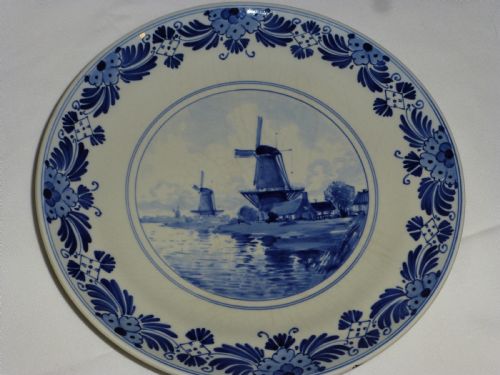

Dutch Delftware Platter
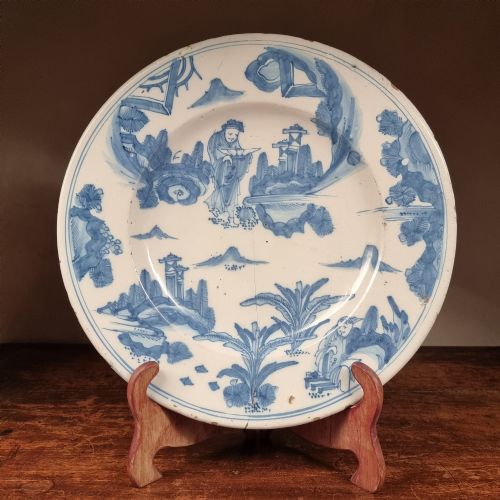
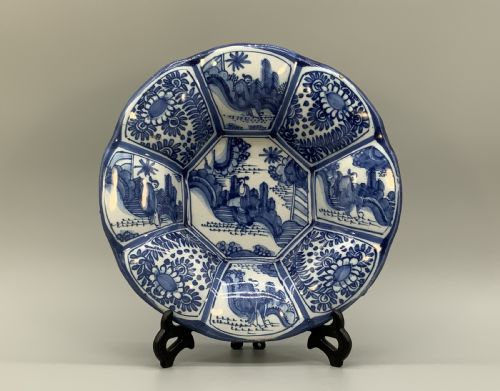
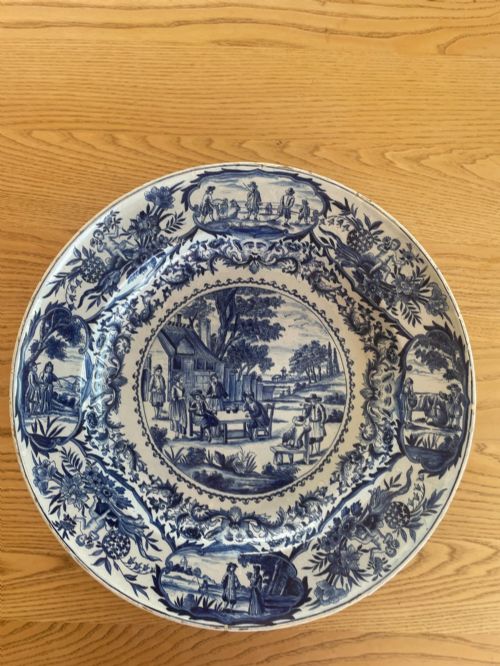
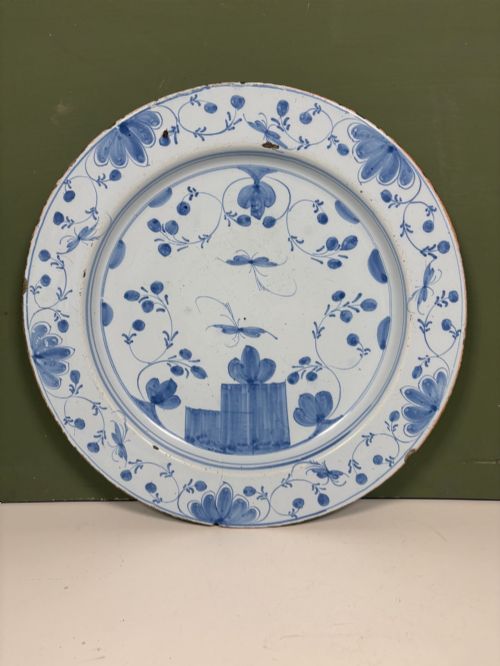
These dutch delftware platter examples are tin-glazed earthenware chargers bearing cobalt pigment, offering striking blue and white decoration for display.
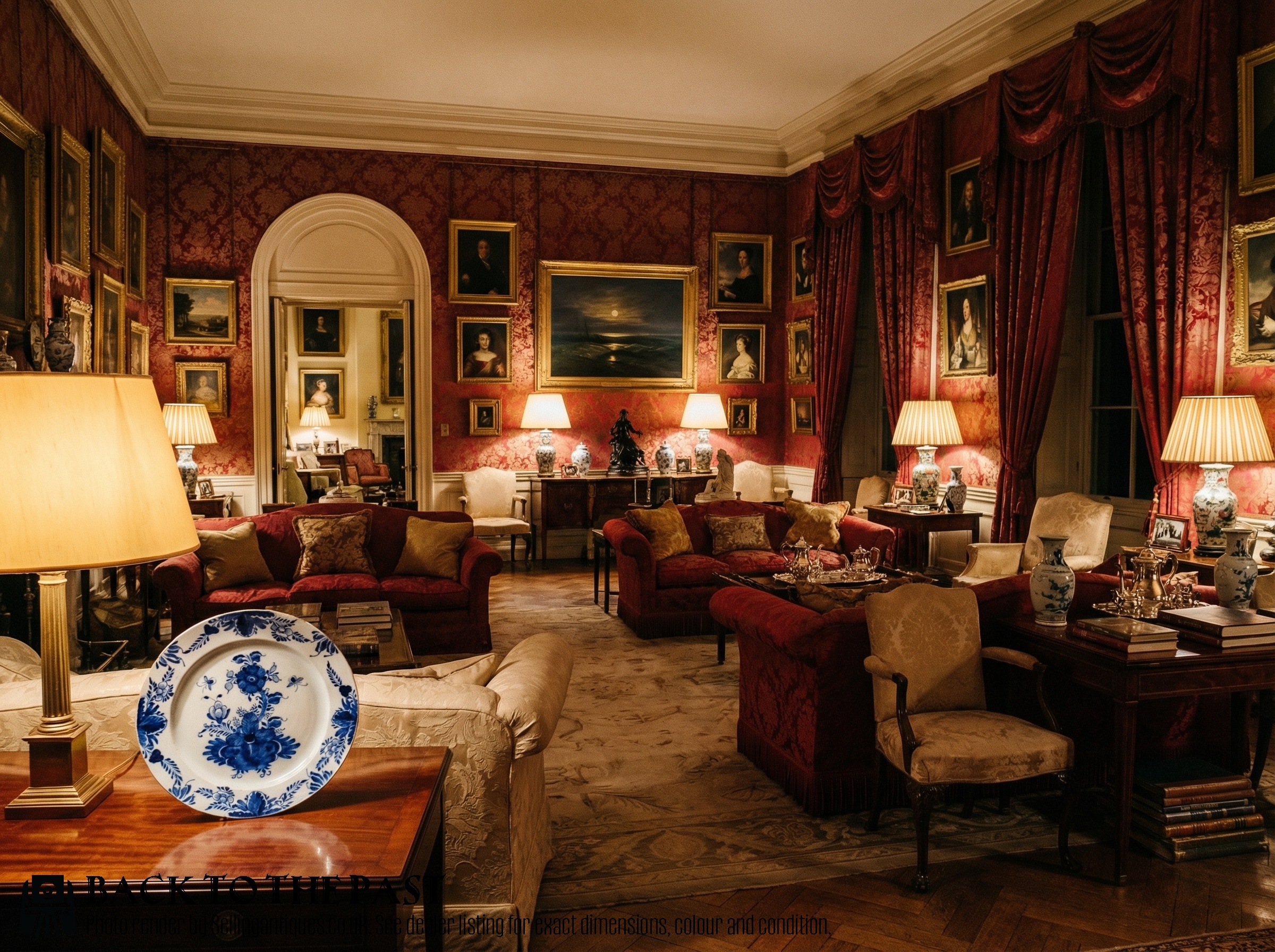
Dutch Delftware Platter
When searching for a dutch delftware platter, collectors encounter large decorative plates and chargers dating from the seventeenth, eighteenth, and nineteenth centuries. These pieces typically display traditional forms intended for wall hanging or display on sideboards rather than heavy dining use.
The selections on this page centre upon eighteenth-century examples alongside seventeenth-century and nineteenth-century interpretations. These items often showcase classic blue and white painting alongside polychrome and manganese palettes.
Materials and Construction
These items are constructed from earthenware coated in a white tin glaze that provides an opaque background for painted decoration. Artisans applied cobalt pigment directly onto the unfired glaze, a technique that required steady brushwork as the porous surface absorbed the colour instantly.
Grand feu firing methods and polychrome detailing appear alongside traditional blue and white motifs. The resulting pieces reflect the skilled handwork of potters working within established European ceramic traditions.
The inventory highlights wall chargers and decorative plates created in styles ranging from Dutch Baroque to nineteenth-century interpretations.
Judging Quality
The distinction between standard examples and finer pieces rests upon the crispness of the cobalt painting and the complexity of the design. Superior chargers exhibit fluid brushwork in chinoiserie or floral motifs, while simpler pieces rely on heavier geometric or repetitive borders.
Glaze consistency and the depth of the tin glaze also differentiate the range. Better examples display an even, luminous surface with minimal disruption from firing faults, whereas lesser pieces show more pooling or surface pitting.
De Witte Ster
The Dutch Delftware Platter Glossary
- Tin-Glazed Earthenware
- Pottery fired with a lead glaze made opaque by the addition of tin oxide. This surface provided the white ground characteristic of traditional delftware.
- Charger
- A large decorative plate intended primarily for display on walls or furniture rather than for serving food at the table.
- Cobalt Pigment
- The deep blue mineral colour used under the glaze to create the iconic painted decoration on these earthenware vessels.
- Grand Feu
- A high-temperature firing technique used for certain manganese and polychrome plates. It allowed the colours to fuse directly into the glaze.
- Chinoiserie
- European decorative motifs inspired by Chinese art and porcelain imports. These designs frequently feature in seventeenth and eighteenth-century blue and white patterns.
Dutch Delftware Platter: Frequently Asked Questions
How were dutch delftware platter pieces displayed?
These large chargers were primarily designed for visual impact rather than heavy domestic service. Many feature pierced footrings or were paired with wire hangers to show off their painted surfaces on dining room walls.
Displaying them on dressers or sideboards also protected the earthenware bodies from accidental chipping while highlighting the cobalt pigment against dark wood furniture.
What styles define early delftware chargers?
Early pieces frequently draw upon seventeenth-century Kraak styles and Dutch Baroque influences. These designs incorporate panelled borders and central motifs of botanical or oriental inspiration.
By the eighteenth century, decorators introduced broader polychrome palettes alongside manganese tones, shifting the visual character while retaining the tin-glazed earthenware base.
How do you distinguish seventeenth and eighteenth-century pieces?
Seventeenth-century chargers often show heavier potting and distinct Kraak style influences in their blue and white decoration. The forms can be deeper with pronounced lobed rims or subtle irregularities from early kiln stacking.
Eighteenth-century examples tend toward refined grand feu production and varied polychrome or manganese colourways. Examining the glaze thickness and the crispness of the cobalt pigment helps clarify the production period.
Can these plates be hung safely on walls?
Hanging these chargers requires properly fitted spring clips or custom display brackets that support the base evenly. One must ensure the weight rests securely on the footring without placing undue pressure on the tin glaze.
Routine checks of the hanging hardware ensure the earthenware remains secure against the wall surface over time.