
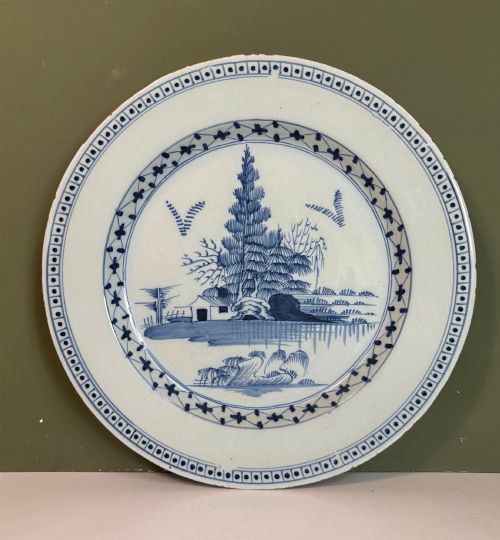


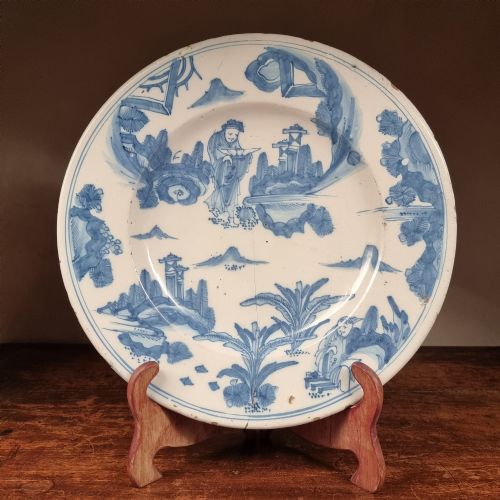
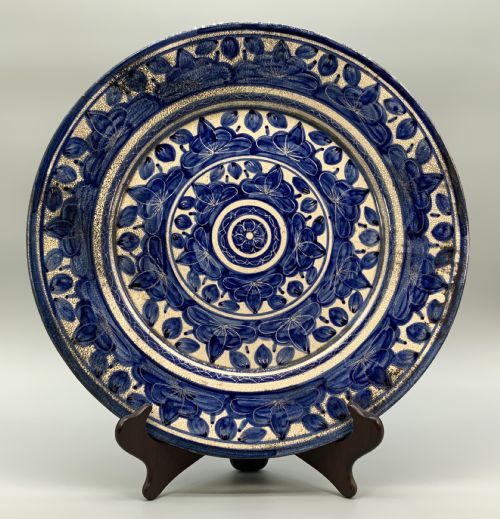
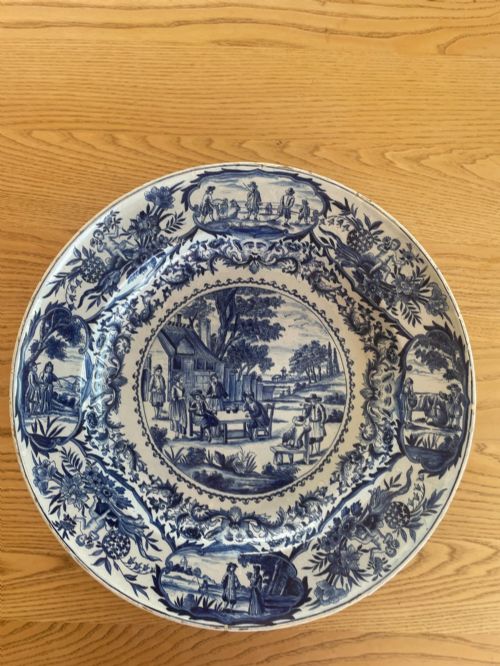


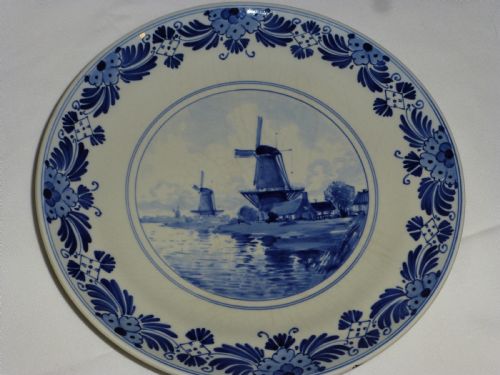
Cobalt Blue Delft Platter
A cobalt blue delft platter brings vibrant blue pigment and tin-glazed earthenware into a room, offering centuries of historic character.
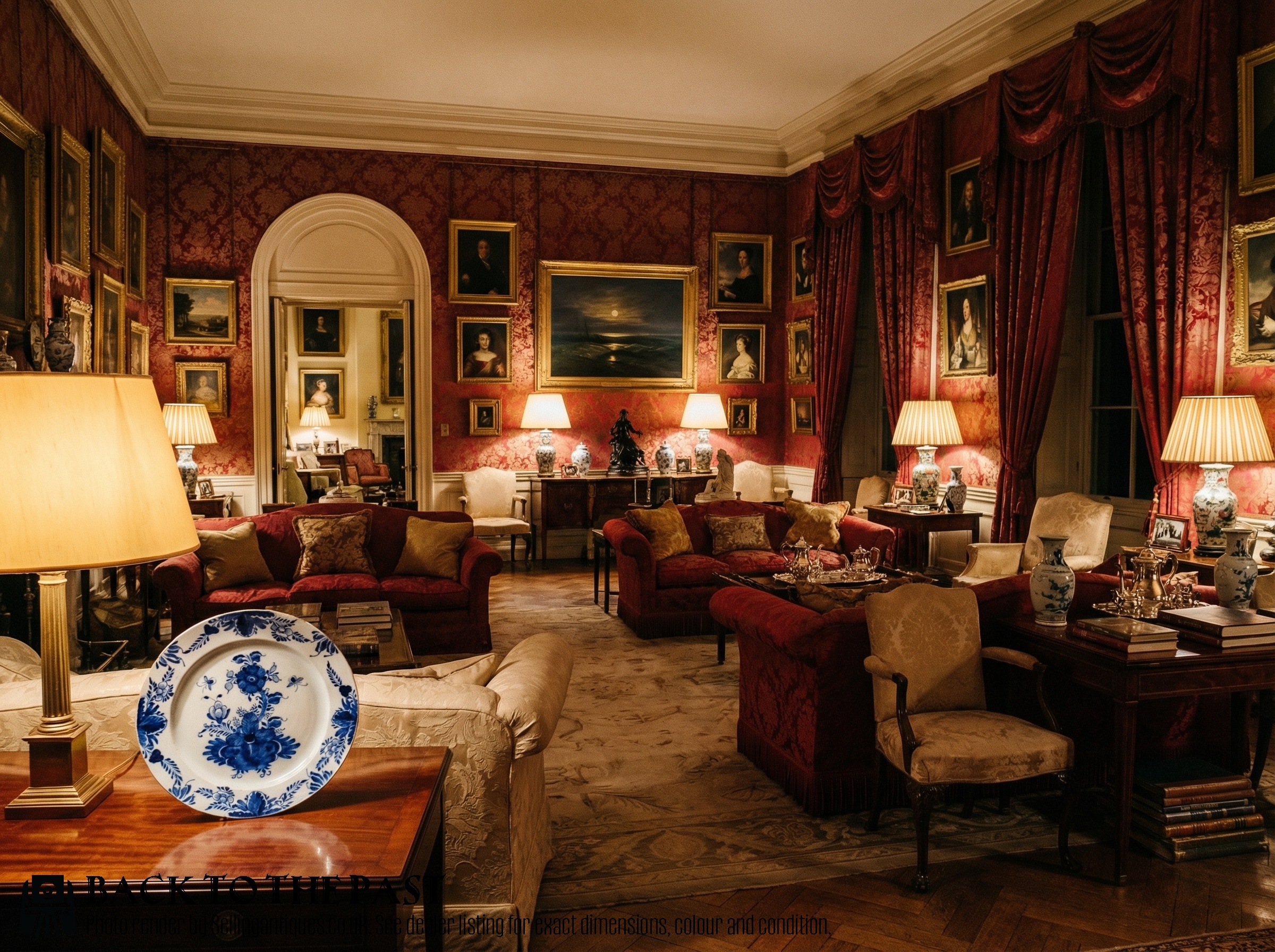
Cobalt Blue Delft Platter
A cobalt blue delft platter spans centuries of ceramic production, appearing primarily as large chargers and decorative plates shaped by diverse hands. Buyers encounter pieces stretching from the seventeenth century through to the nineteenth century, alongside later continental and Moorish style examples.
The form is dominated by wide circular chargers and decorative plates designed for display rather than heavy dining use. English workshops in places like Bristol joined Dutch makers in producing these tin-glazed earthenware surfaces.
Makers utilised cobalt pigment and cobalt glaze to create striking blue and white designs across earthenware bodies. The resulting platters reflect regional traditions ranging from Dutch Delftware to Victorian historicism.
How they were made
Potters formed the core structure using earthenware, applying a tin glaze that provided an opaque white background for painted decoration. Cobalt oxide and cobalt pigment were then painted directly onto the unfired or fired glaze.
The application of cobalt pigment demanded a steady hand, as the porous tin glaze absorbed the liquid colour instantly without permitting correction. Firing sealed the metallic oxide into the glossy surface, locking in the characteristic blue hues.
Current listings feature earthenware chargers spanning the seventeenth, eighteenth, and nineteenth centuries, including English and Dutch origins.
What varies in quality
The distinction between standard domestic wares and superior examples rests upon the crispness of the cobalt painting and the smoothness of the tin glaze. Early pieces often display a more fluid brushwork and deeper mineral tones across the earthenware body.
Provenance and period also divide the selection, with seventeenth and eighteenth century English and Dutch origins commanding distinct interest compared to later nineteenth century or continental interpretations.
De Witte Ster·Van Genden
The Cobalt Blue Delft Platter Glossary
- Tin Glaze
- A ceramic glaze made opaque by the addition of tin oxide, creating a white surface for painted decoration. It formed the foundational coating for historic earthenware platters.
- Charger
- A large decorative plate intended for display on walls or sideboards rather than everyday dining. These wide surfaces provided ample space for detailed cobalt painting.
- Cobalt Pigment
- A metallic colourant derived from cobalt ores used to achieve deep blue tones on ceramic wares. It remained stable at high kiln temperatures.
- Earthenware
- Porous pottery fired at lower temperatures than stoneware or porcelain, requiring a glaze to achieve impermeability. It served as the primary body for historic delftware.
- Delftware
- Tin-glazed earthenware produced in the Netherlands and England, famously decorated in blue and white. The style reflects a long European tradition of imitating imported blue and white ceramics.
Cobalt Blue Delft Platter: Frequently Asked Questions
What is a delft charger?
A delft charger is a large decorative ceramic plate featuring a tin-glazed earthenware body painted with cobalt blue motifs.
These wide plates were historically produced in English and Dutch workshops for display on walls or sideboards.
How do I date a delft platter?
Dating relies on examining the characteristics of the earthenware body, the tone of the tin glaze, and the style of the cobalt painting.
Pieces range from seventeenth century origins through to nineteenth century revivals, each bearing distinct stylistic markers.
Where were these platters made?
Production centred primarily on English workshops in locations such as Bristol, alongside traditional Dutch centres.
Later continental examples also emerged, reflecting broader European interpretations of the blue and white aesthetic.
How do I hang a heavy charger?
Displaying large plates requires a specialised wall fitting or a robust wire hanger designed to distribute weight safely across the rim.
Ensuring the support matches the size of the earthenware body protects the piece during long term display.