

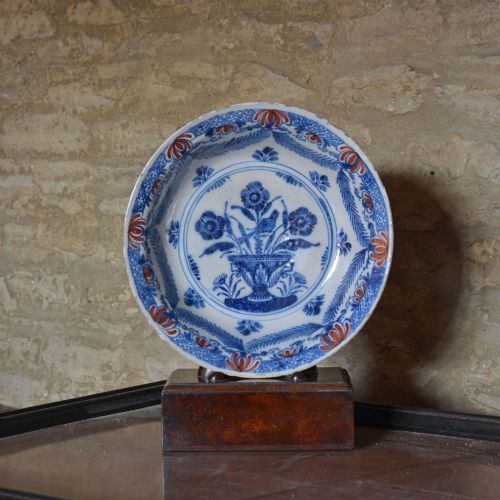


Dutch Delft Floral Plate
Dutch delft floral plate examples bring hand-painted tin-glazed earthenware into your home, offering centuries of historic character.
Dutch Delft Floral Plate
A dutch delft floral plate brings earthenware shaped by eighteenth-century makers into modern spaces, often appearing as large charger plates or smaller decorative dishes. You meet pieces spanning the eighteenth and nineteenth centuries, finished in styles ranging from dutch baroque to traditional floral designs.
The selection includes individual items, pairs, and groups of three, alongside related items such as a marquetry delft rack. Most examples date to the eighteenth century, showing blue painted decoration or polychrome pigments across tin-glazed surfaces.
How they were made
Potters shaped these objects from ceramic earthenware before applying a tin glaze that created an opaque white surface for painting. Artisans utilised cobalt pigment and manganese to brush floral patterns, geometric motifs, and pictorial scenes directly onto the unfired glaze.
Some associated pieces incorporate walnut and inlay work, particularly in display furniture designed to hold these ceramic items. High-temperature grand feu firings set the mineral colours into the glaze, producing durable finishes that survive from the seventeen hundreds.
Dutch Delft Floral Plate Retail Price Guide 2026
Typical asking prices for dutch delft floral plate among the pieces listed under this phrase on Sellingantiques today, from the lower quarter to the upper quarter. They describe what is for sale here now, not the wider market.
What varies in quality
The distinction between standard items and finer examples rests on the crispness of the cobalt pigment brushwork and the complexity of the floral compositions. Rich polychrome palettes and detailed manganese shading separate ambitious charger plates from simpler utilitarian plates.
Condition and scale influence the desirability of surviving earthenware, with larger chargers and matching pairs demanding closer attention to glaze preservation. The depth of the tin glaze and the control shown in hand-painted motifs determine the visual strength of each piece.
De Witte Ster
The Dutch Delft Floral Plate Glossary
- Tin Glaze
- An opaque white ceramic glaze containing tin oxide, providing a smooth background for painted decoration. This coating defines the traditional appearance of delftware.
- Charger
- A large decorative plate intended for display rather than dining use. These substantial pieces often feature elaborate floral or geometric schemes.
- Grand Feu
- A high-temperature firing technique used to fix mineral pigments directly into the raw glaze. This process creates lasting integration of cobalt and manganese colours.
- Polychrome
- Decoration employing multiple colours, typically combining blues, yellows, oranges, and greens on a white ground. Such palettes distinguish more elaborate floral plates.
- Marquetry
- The art of applying decorative veneer pieces to a wooden structure, seen in related plate racks. Walnut foundations often support this intricate woodwork.
Dutch Delft Floral Plate: Frequently Asked Questions
How do I display a dutch delft floral plate?
These ceramic items hang securely on walls or rest in dedicated plate racks designed for display.
Their substantial tin-glazed surfaces catch the light, making them focal points in traditional or modern interiors.
Are these plates meant for daily dining?
Surviving eighteenth-century earthenware serves primarily as decorative art rather than functional tableware.
Gentle handling preserves the fragile tin glaze and hand-painted cobalt pigments from modern wear.
How can I tell the age of delftware?
Examination of the ceramic body, glaze consistency, and painting style reveals clues about the manufacturing period.
Eighteenth-century examples typically show softer clay bodies and hand-mixed mineral pigments compared to later iterations.
What is the difference between a plate and a charger?
Chargers measure significantly larger than standard dining plates and were made for ceremonial or decorative display.
Their expansive surfaces allowed potters to paint more elaborate floral and geometric compositions.