


Dutch Bombe Chest Drawers
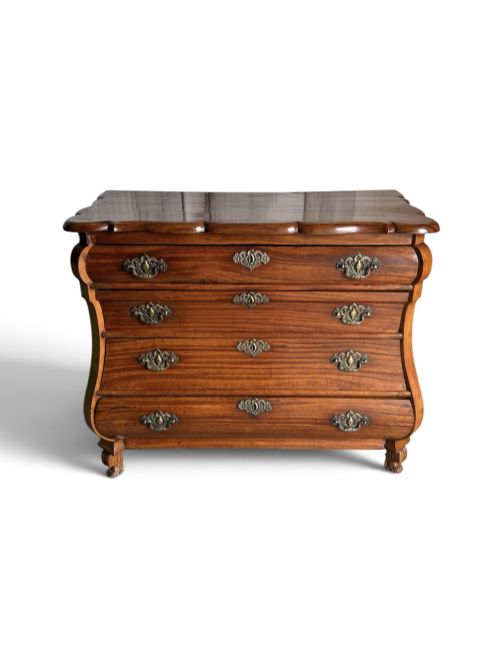
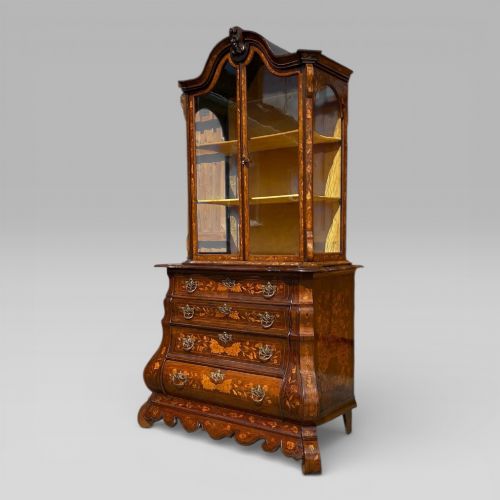
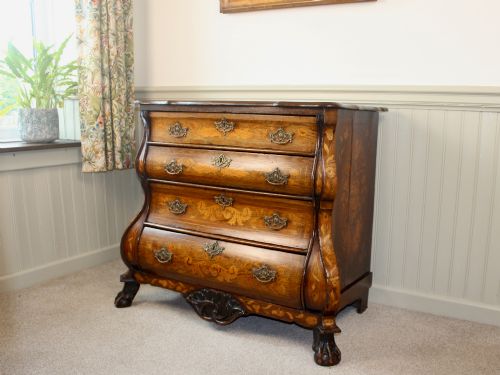
A Dutch bombe chest drawers brings together swelling serpentine curves and rich marquetry, offering generous storage with a striking profile.
Dutch Bombe Chest Drawers
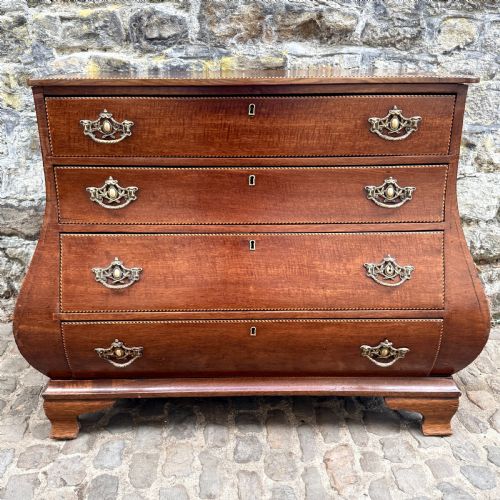
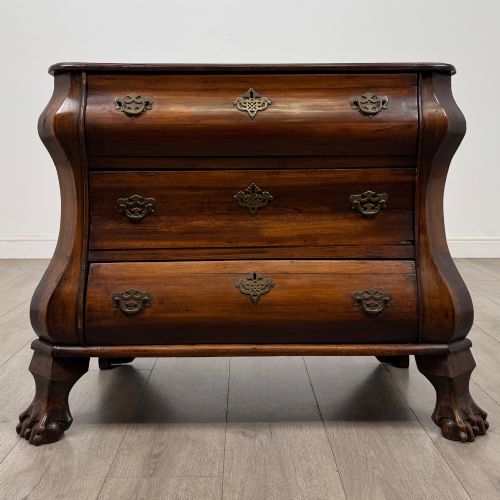
A Dutch bombe chest drawers presents a distinctive outward-swelling front and sides, moving away from flat architectural lines into fluid curves. These pieces emerge chiefly in eighteenth-century and nineteenth-century variants, spanning the Georgian era and later revivals.
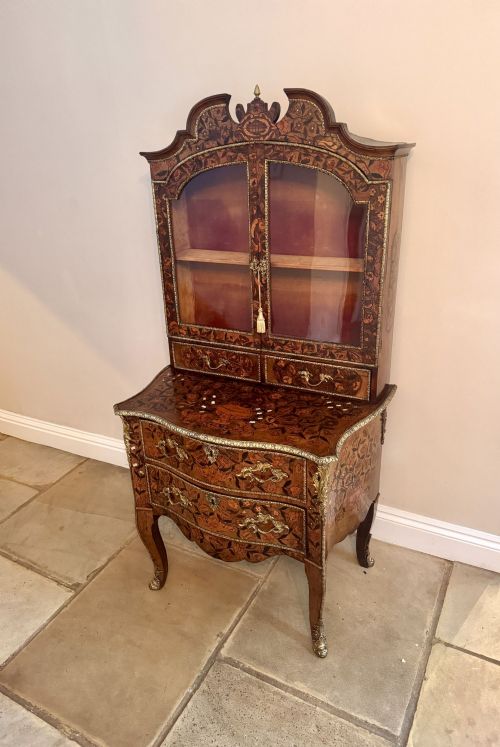
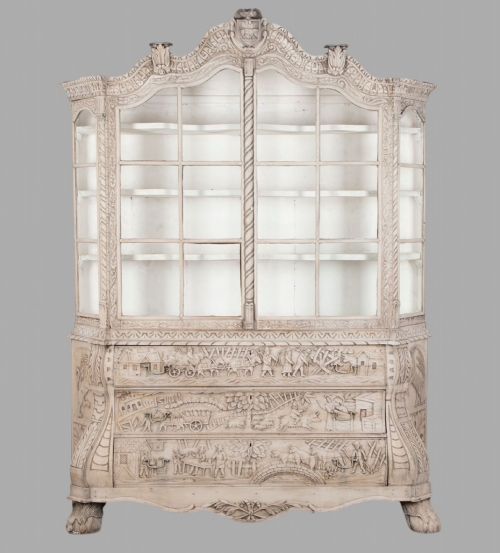
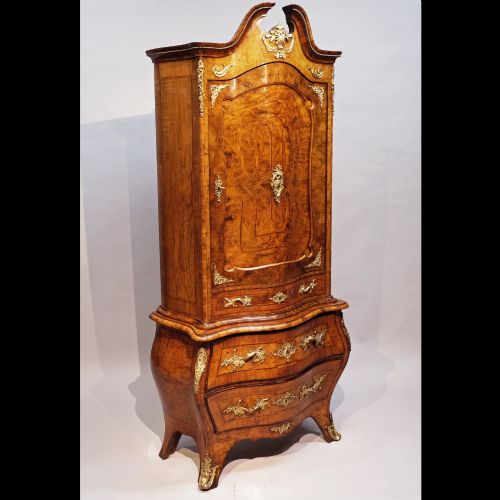
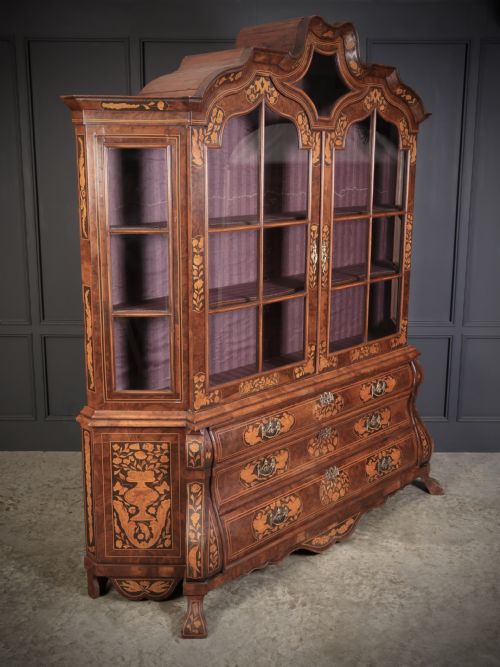
The form often manifests as a dedicated commode or chest of drawers, though the evidence also includes tall display cabinets on chests, writing desks, and bureaus. Walnut, burr walnut, and oak form the backbone of these survivals, frequently paired with intricate floral marquetry.
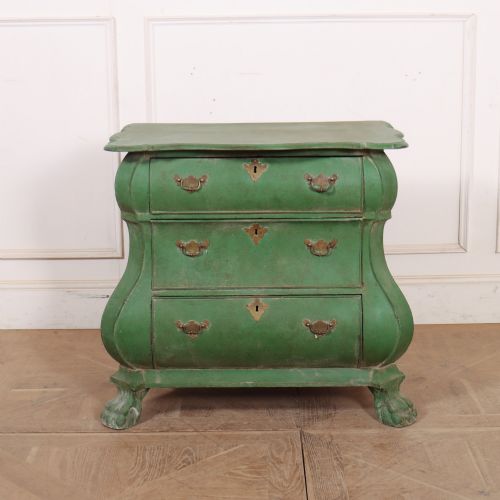
Buyers meet examples finished in painted wood or solid satinwood, alongside mahogany and rosewood interpretations. The overarching style draws heavily on Dutch Baroque and Rococo traditions, capturing a dramatic silhouette rooted in continental cabinet-making.
Materials and Construction
Cabinet-makers built these pieces using robust carcases of oak or fruitwood, layered with decorative veneers of walnut, burr walnut, mahogany, or rosewood. The complex swelling shape of a bombe chest required careful shaping of the frame to accommodate the outward curve before any surface decoration began.
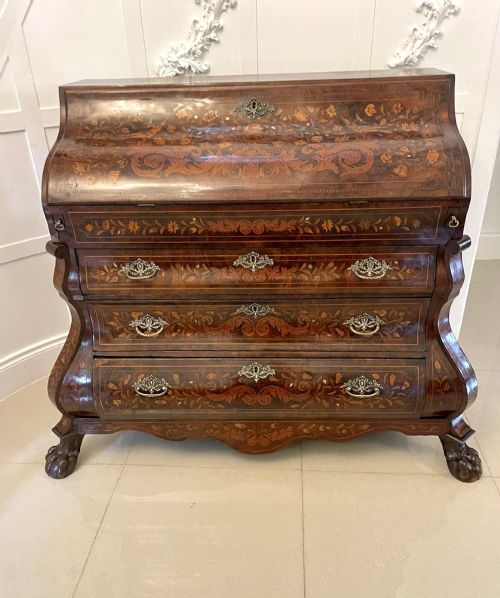
Marquetry plays a defining role in the construction, utilising contrasting woods to create detailed floral and foliage patterns across the drawer fronts and top surfaces. Brass handles and mounts frequently accent the timber, whilst glass appears in the upper doors of cabinet variants.
Some chests feature carved claw feet that seem to grip the floor beneath all that swelling timber.
Craftsmanship and Detail
Quality rests in the execution of the sweeping contour and the precision of the marquetry inlay. Finer examples display seamless alignment of floral motifs across multiple drawers, showing meticulous control of veneers over compound curves.
The choice of primary timber shifts the visual weight, with burr walnut and solid satinwood commanding particular attention for their grain depth. Carved elements, claw feet, and the integration of brass hardware further distinguish the standard of manufacture.
Edwards & Roberts
The Dutch Bombe Chest Drawers Glossary
- Bombe
- A swelling, convex shape characteristic of continental furniture fronts and sides. This bulging contour defines the silhouette of the chest.
- Marquetry
- The art of applying decorative pieces of veneer to a structure to form intricate patterns. Floral motifs are especially common on these surfaces.
- Commode
- A low chest of drawers, often used interchangeably with the bombe form in continental cabinet-making. It stands on short legs or feet.
- Bureau
- A desk featuring a sloping lid that opens to reveal a writing surface and small compartments. Many incorporate the same swelling bombe profile below.
- Burr walnut
- Timber taken from a growth on the walnut tree, prized for its swirling grain patterns. It forms the primary decorative veneer on several notable pieces.
Dutch Bombe Chest Drawers: Frequently Asked Questions
What is a bombe chest?
A bombe chest is a storage piece featuring an outward-swelling front and sides that create a rounded, convex silhouette. This shape demands advanced cabinet-making techniques to curve the wood successfully.
Originating in continental workshops, these pieces combine sculptural presence with practical drawer space.
How do I date a Dutch chest?
Dating relies on examining the primary timbers, construction methods, and stylistic details such as marquetry patterns and foot shapes. Eighteenth-century examples often feature walnut or burr walnut with floral inlay.
Later nineteenth-century pieces and revivals introduce variations in proportion and timber selection, including mahogany and painted finishes.
Where should I place it?
Because of their pronounced curves and decorative surfaces, these chests work best as freestanding focal points in a hallway, bedroom, or living space. Their finished sides allow them to sit away from flat walls if space permits.
Ensure the room maintains stable humidity to protect the delicate veneer and marquetry.
Are all these chests inlaid?
Not all pieces feature marquetry, though floral inlay appears frequently across the surviving examples. Some rely on the natural grain of figured walnut, mahogany, or rosewood instead.
Painted wood and solid satinwood variants also occur, offering alternative surface treatments within the same sweeping form.