


Drop Front Writing Bureau
A drop front writing bureau conceals a fitted writing surface behind a hinged panel, offering enclosed storage and a compact workspace.
Drop Front Writing Bureau
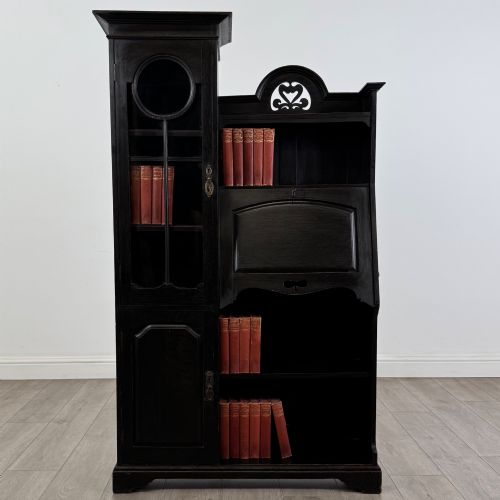
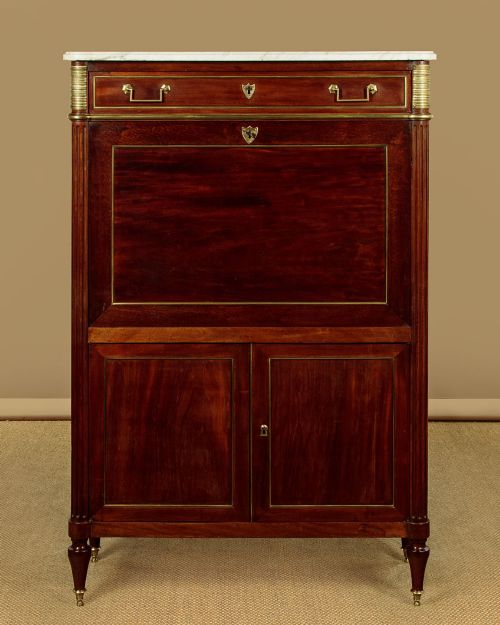
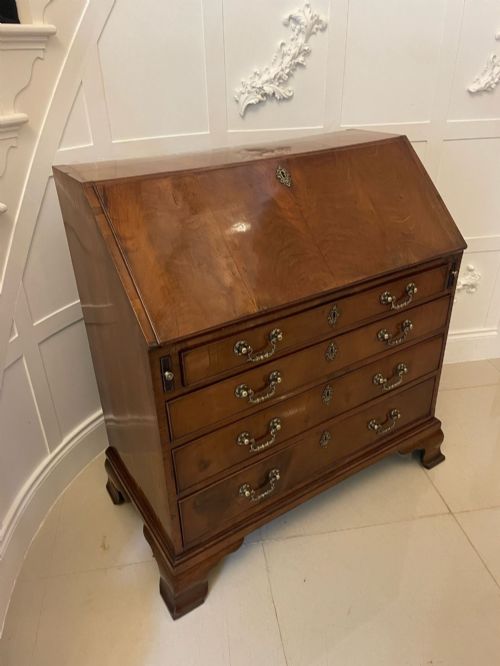
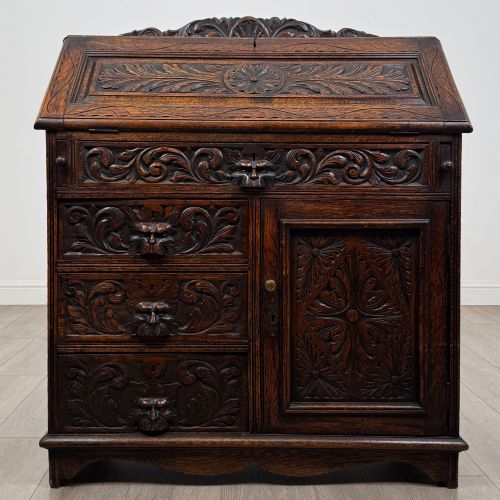
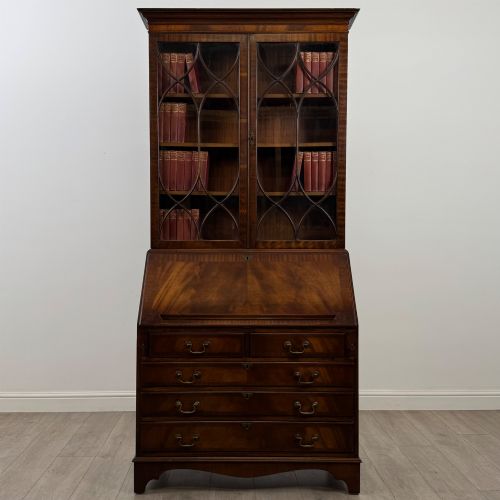
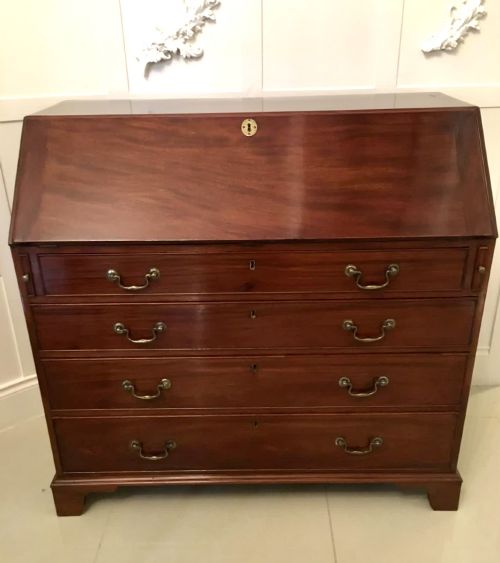
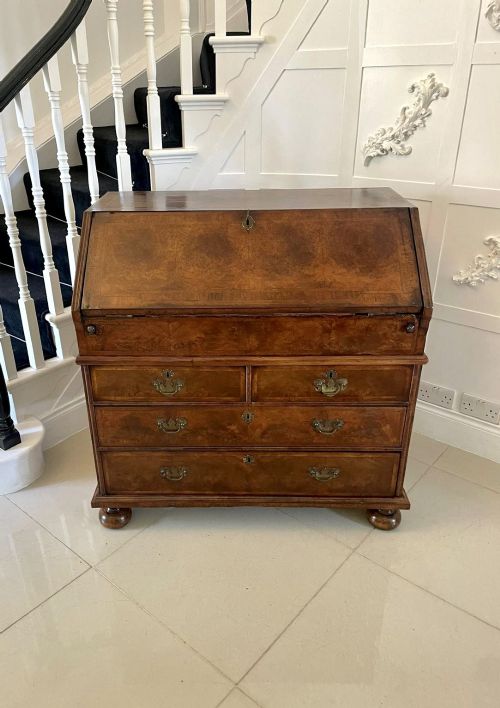
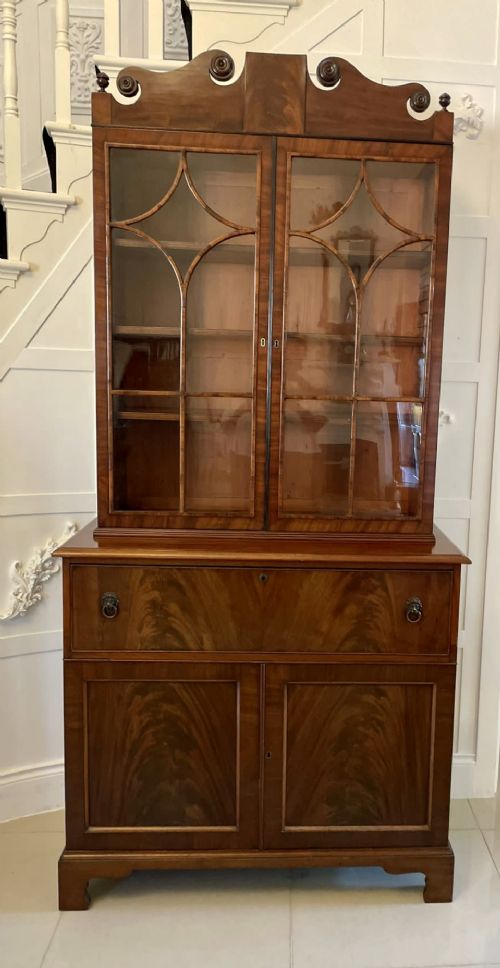
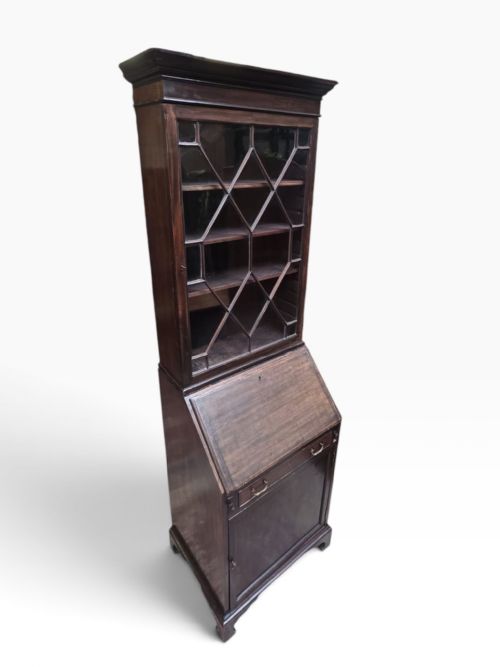
A drop front writing bureau provides a functional writing station that folds shut to hide compartments, drawers, and pigeonholes when not in use. These pieces span multiple centuries and stylistic revivals, ranging from early walnut examples to substantial Georgian mahogany models and later Edwardian oak interpretations.
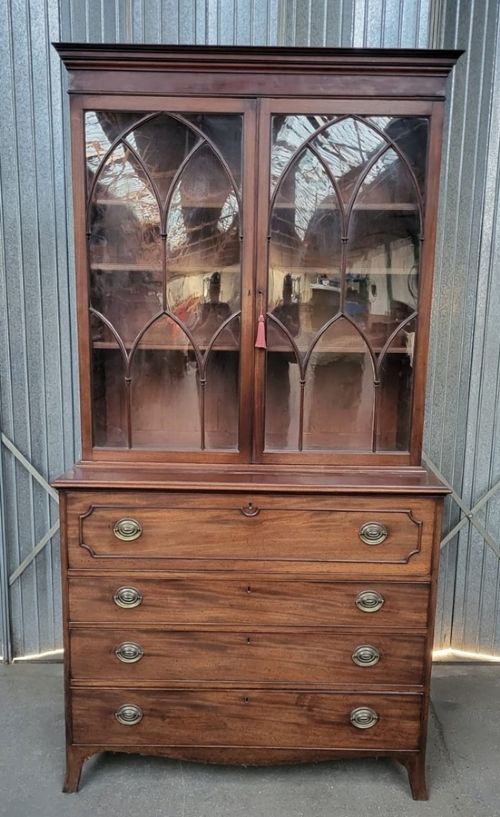
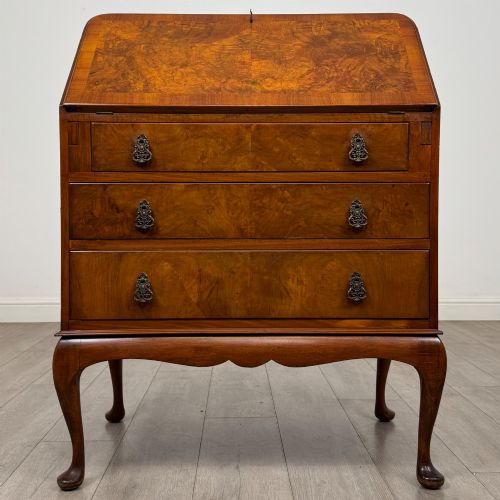
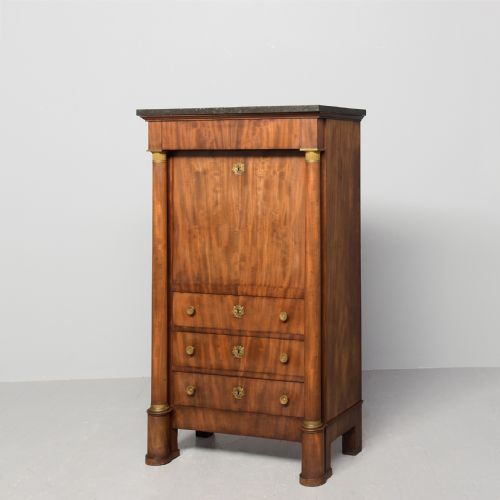
The selections on this page appear in various forms, including bureau bookcases topped with glazed shelving, compact fall front designs, and tall secretaire cabinets. Oak and mahogany dominate the structural timbers, often enhanced by burr walnut, rosewood, or marquetry details.
Materials and Construction
Cabinetmakers utilised solid timbers such as oak and mahogany for carcases, applying figured veneers like burr walnut or flame mahogany to principal exterior surfaces. Timber selection governed both the structural integrity and the visual grain pattern of the writing flap.
Interior compartments relied on precise joinery to house small drawers and pigeonholes, while brass hardware served for escutcheons, drop handles, and hinges. Glass panels appeared on upper bookcase sections, and marble occasionally topped continental secretaire abattant forms.
Listings feature oak, mahogany, walnut, and rosewood across periods from the 17th century through to the 1930s.
Assessing Quality
Quality rests upon the selection of timber and the precision of the veneer work, particularly across large surfaces like the fall front panel. Superior examples display continuous grain matching and meticulous inlay, whereas lesser pieces rely on simpler construction.
The complexity and execution of the interior fittings distinguish finer workshops from standard production. Well-executed secret compartments, finely dovetailed internal drawers, and original brasses elevate the standing of a piece.
ARTHUR BASIL REYNOLDS·LARKIN·GEORGE OAKLEY
The Drop Front Writing Bureau Glossary
- Drop front
- A hinged writing flap that opens outward to a horizontal position for writing. It conceals internal compartments when closed.
- Secretaire
- A piece of furniture incorporating a writing drawer or drop down writing compartment. The term frequently applies to tall cabinets and bookcases.
- Escritoire
- A writing cabinet or desk. This term often describes continental European variants with fall fronts and internal fittings.
- Marquetry
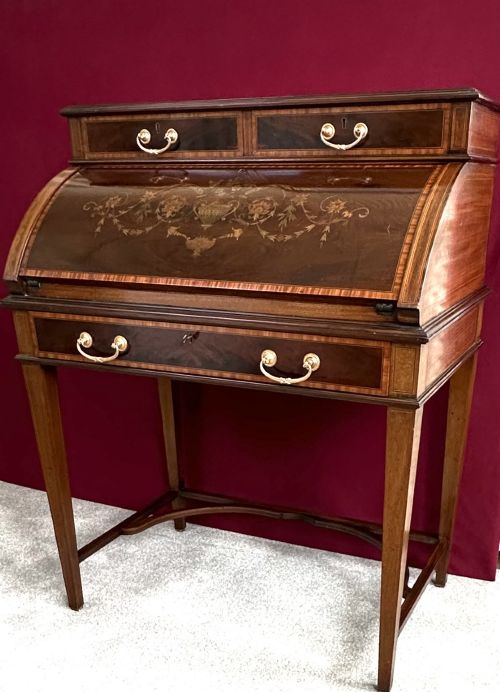
- Decorative veneer work formed by fitting together small pieces of wood, bone, or shell to create pictorial patterns. It appears on elite walnut and exotic hardwood surfaces.
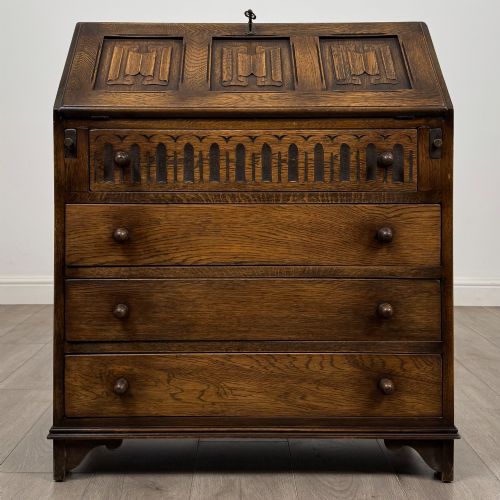
- Linenfold
- A carved wood panel motif resembling folded cloth. This style is frequently found on oak pieces from revival periods.
Drop Front Writing Bureau: Frequently Asked Questions
What is a drop front writing bureau?
A drop front writing bureau is a desk featuring a hinged writing surface that folds down for use and closes vertically to conceal internal storage.
These pieces combine a chest of drawers or cabinet base with a compact writing compartment designed for correspondence and document storage.
How were these bureaus used historically?
Historically, these desks served as private spaces for letter writing, record keeping, and storing valuable documents.
The enclosed fall front allowed owners to lock away confidential papers and writing implements when the workspace was unattended.
How do I fit a bureau into a modern room?
A bureau works well in living areas or studies because the enclosed front hides paperwork and clutter when closed.
Ensure sufficient clearance in front of the piece for the fall flap to lower completely into the horizontal writing position.
How can I tell different periods apart?
Period identification relies on structural timbers, hardware styles, and decorative techniques such as marquetry, inlay, or carving.
Early pieces often feature walnut or oak with herringbone banding, while Georgian items favour mahogany and Edwardian versions use lighter oak or figured walnut.