


French Empire Tall Cabinet
A french empire tall cabinet brings architectural presence and concealed utility to a room through classical design.
French Empire Tall Cabinet
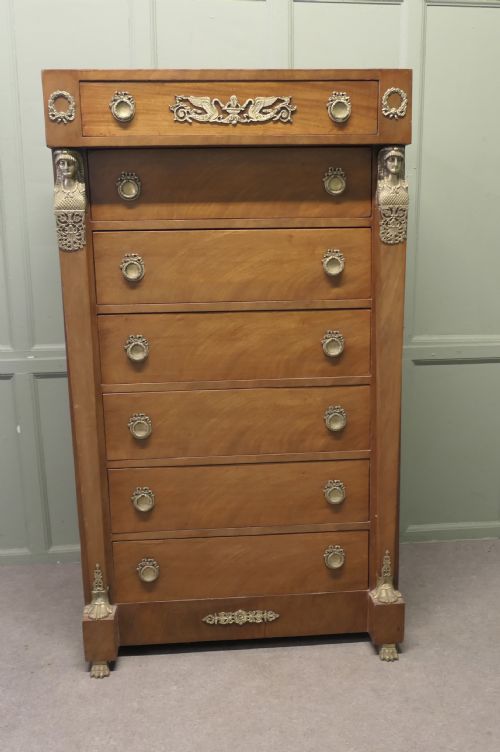
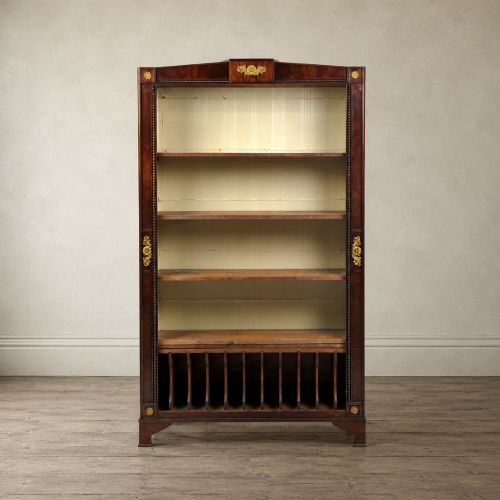
A french empire tall cabinet encompasses tall bookcases, secretaire cabinets, and upright chests of drawers originating from the nineteenth century. These vertical pieces command attention with their imposing height and disciplined classical lines.
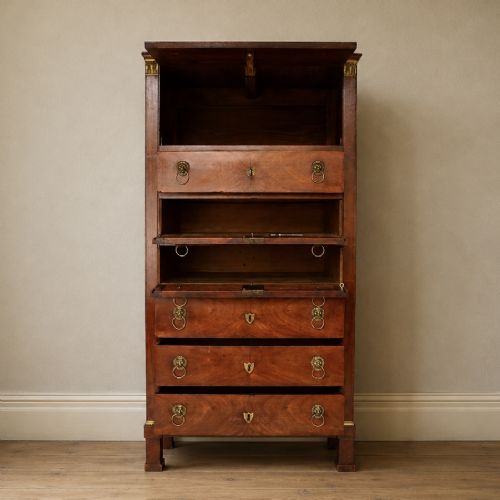
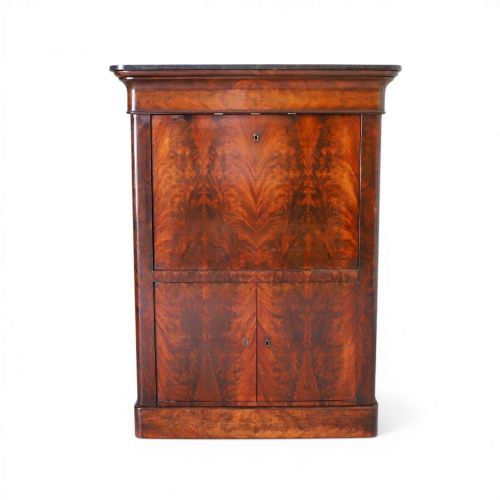
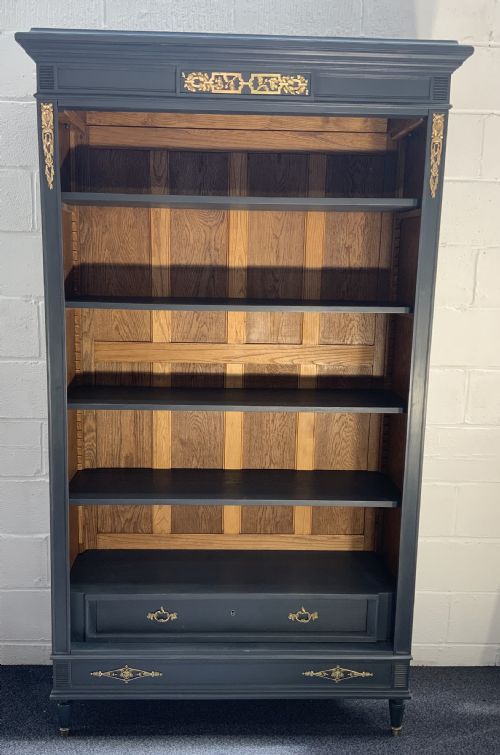
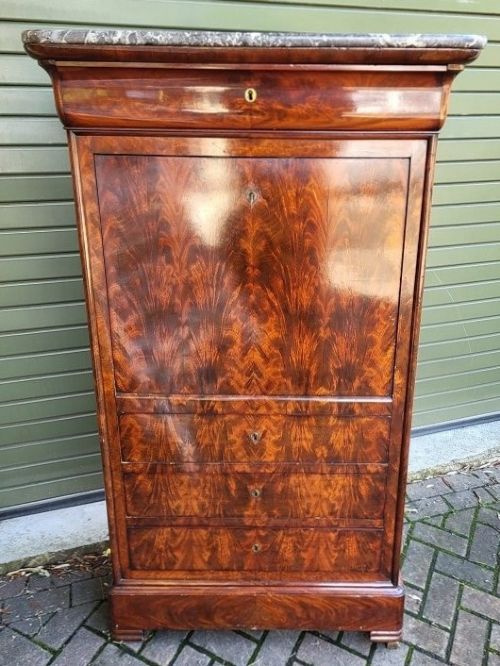
The version most commonly encountered on this page is the secretaire à abattant, featuring a drop-down writing surface above lower drawers or doors. Tall bookcases and multidrawer chests also appear frequently, often scaled for grand interiors.
Origins span the early nineteenth century through later revival periods up to nineteen twenty, reflecting shifting tastes for neoclassical grandeur. Walnut and mahogany dominate the forms, frequently paired with contrasting marble tops.
Materials and Construction
Cabinetmakers utilised dense timbers such as mahogany, flame mahogany, walnut, and rosewood over sturdy oak carcases. These woods were selected for their rich grain patterns, which were often arranged symmetrically across large vertical surfaces.
Surface adornment relied on cast brass and gilt bronze ormolu mounts applied to key areas like corners and pilasters. Marble slabs provided durable, cooling tops for secretaires and bedside cabinets alike.
Interior engineering focused on utility, incorporating secret drawers, fitted pigeonholes, and adjustable shelving behind locking doors. Joinery remained robust to support the heavy stone tops and dense hardwood structures.
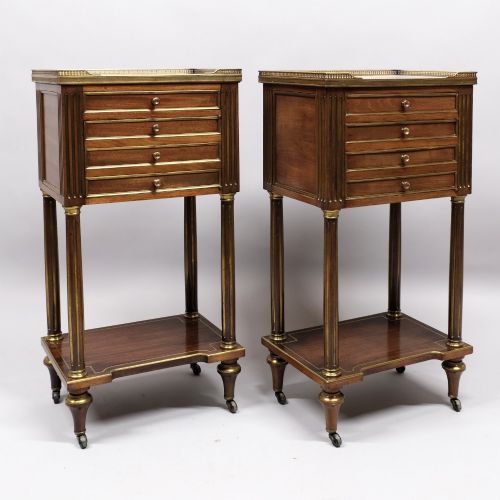
Available forms include bookcases, secretaires, cartonnier chests, and bedside cabinets.
Judging Quality and Execution
The refinement of the cast bronze or gilder's mounts distinguishes superior examples from standard production. Crisp detailing and heavy weight in the metalwork indicate skilled foundry work rather than mass-produced replacement elements.
Timber selection and veneer matching dictate the visual impact of the facade. Cabinets utilising plum pudding mahogany or highly figured flame veneers display a deliberate control over grain direction that lesser pieces lack.
The integrity of internal mechanisms, such as smooth drop-front hinges and functioning secret compartments, demonstrates the original carpenter's skill. Complete, matching hardware and undamaged marble tops preserve the intended balance of the piece.
The French Empire Tall Cabinet Glossary
- Secrétaire à abattant
- A tall upright cabinet with a hinged writing flap that folds down to reveal a fitted interior of small drawers and pigeonholes. This form conceals functional workspace behind grand architectural doors.
- Ormolu
- Gilded bronze mounts applied to furniture for decorative contrast and edge protection. These metallic ornaments define the neoclassical aesthetic of the period.
- Flame mahogany
- Timber sliced to produce a fiery, flickering grain pattern resembling flames. Cabinetmakers reserved this decorative veneer for primary visual panels.
- Cartonnier
- A tall chest or cabinet designed specifically to hold papers, documents, and files in horizontal compartments. These vertical filing units served administrative spaces.
- Neo Classical
- A style inspired by the classical architecture and art of ancient Greece and Rome. It prioritises symmetry, proportion, and restrained ornamentation.
French Empire Tall Cabinet: Frequently Asked Questions
What is a secretaire à abattant?
A secretaire à abattant is a tall upright cabinet with a hinged front panel that drops down to form a writing desk. Inside, small drawers and pigeonholes provide organised storage for correspondence.
When closed, the piece resembles a standard tall chest or cabinet, maintaining a clean architectural appearance in a room.
How do I use a tall cabinet in a modern room?
These tall pieces provide vertical storage without occupying excessive floor space, making them practical for books, glassware, or paperwork. A secretaire version adds a concealed desk surface that folds away when not in use.
Position them against large walls where their height can balance ceiling proportions and anchor the room's layout.
Are marble tops original to these cabinets?
Marble tops frequently accompany nineteenth-century French secretaires and bedside cabinets to provide a durable, heat-resistant surface. These stone slabs were fitted precisely to the timber carcase during initial construction.
Inspect the edges where the marble meets the wood to ensure proper alignment and consistent weight distribution.
How do I distinguish Empire style from later revivals?
Original Empire pieces date from the early nineteenth century and reflect the direct influence of Napoleonic design with military and classical motifs. Later revival pieces from the late nineteenth and early twentieth centuries adopt these vocabulary elements with slight variations in construction.
Timber density, joinery methods, and the crispness of brass mounts help indicate whether a cabinet is from the primary period or a later interpretation.