


Drop Front Bureau Desk
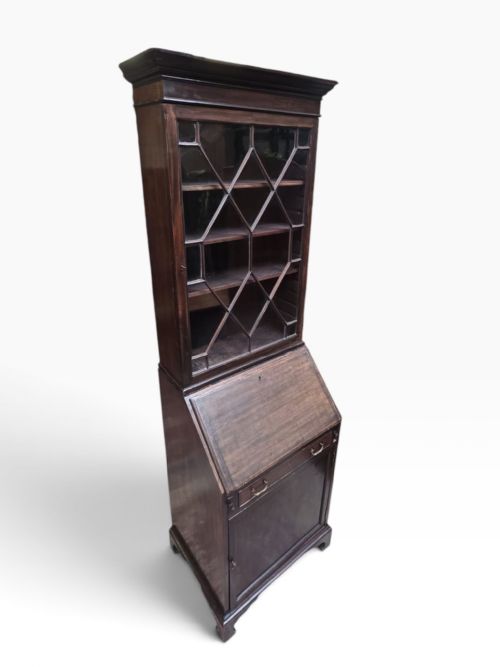
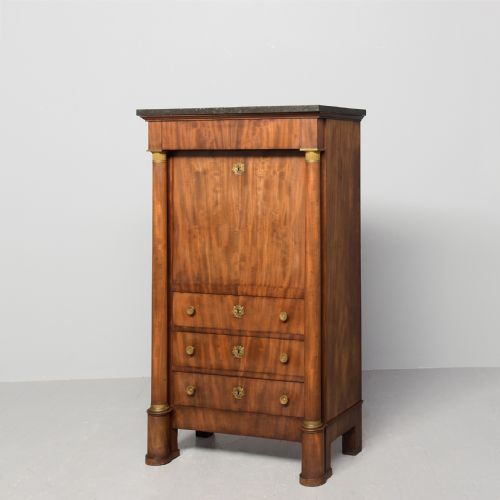
A drop front bureau desk is a writing cabinet with a hinged writing flap that opens to reveal internal compartments, offering both workspace and concealed storage.
Drop Front Bureau Desk
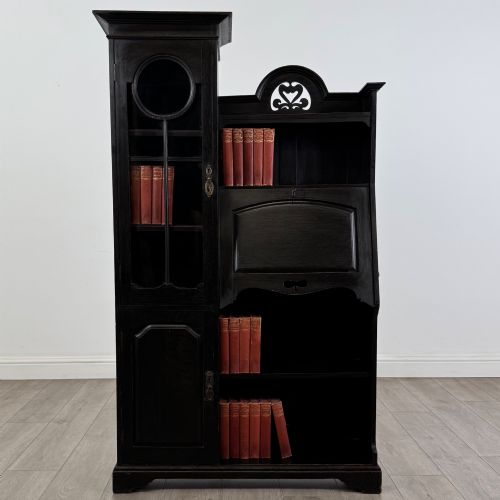
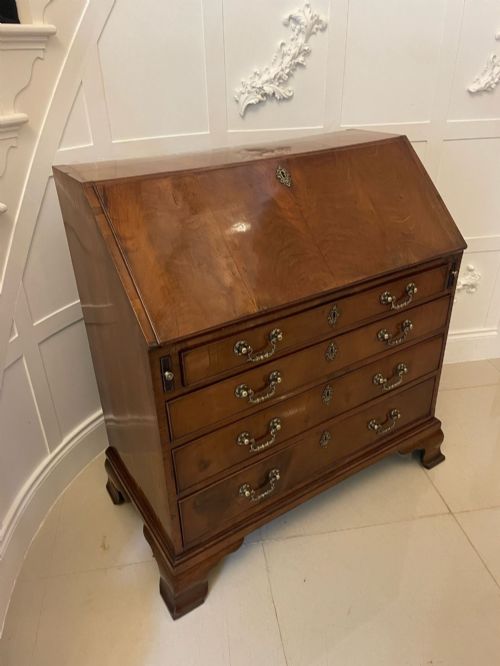
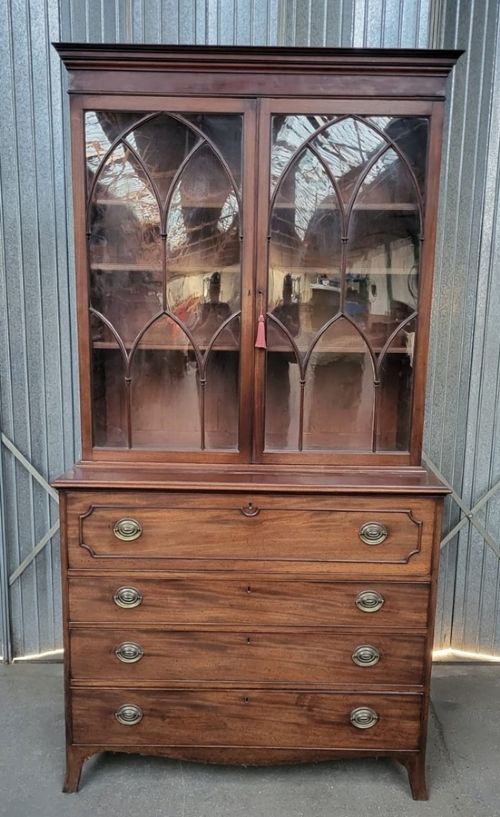
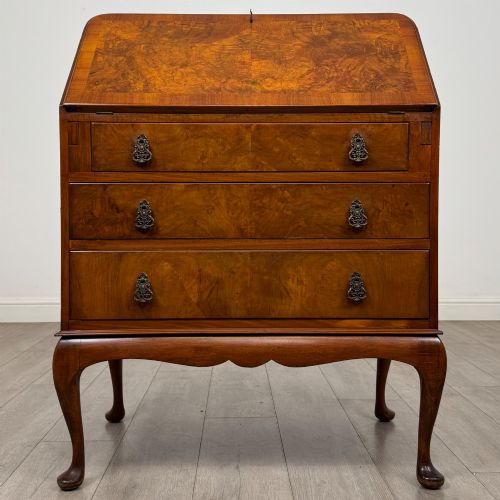
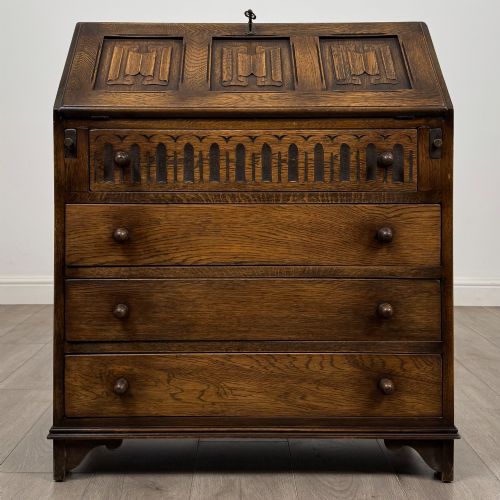
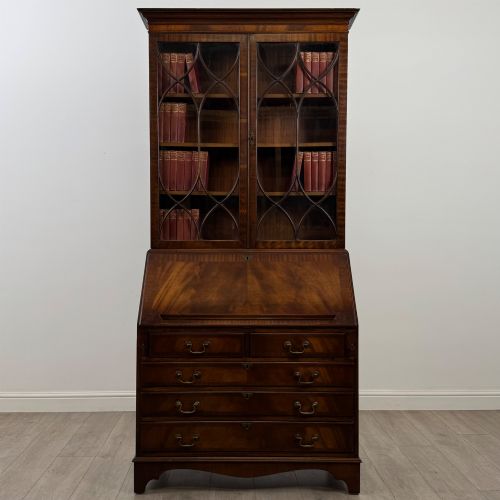
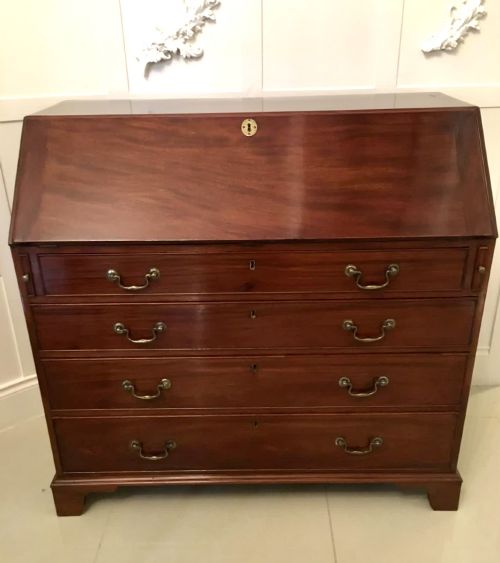
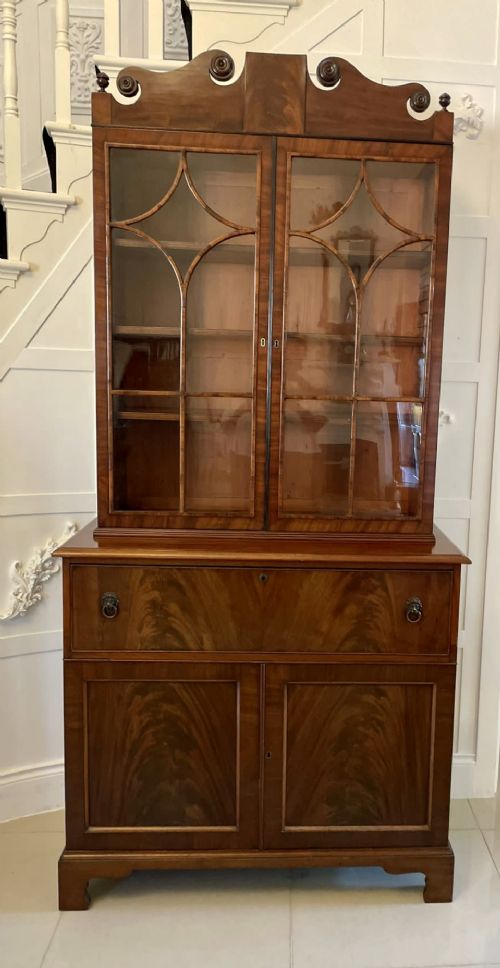
A drop front bureau desk combines a sloped or vertical writing flap with drawers, pigeonholes, and small compartments designed for correspondence and paperwork. Buyers encounter numerous variations ranging from compact Edwardian oak examples to substantial Georgian mahogany bookcases and secretaire cabinets.
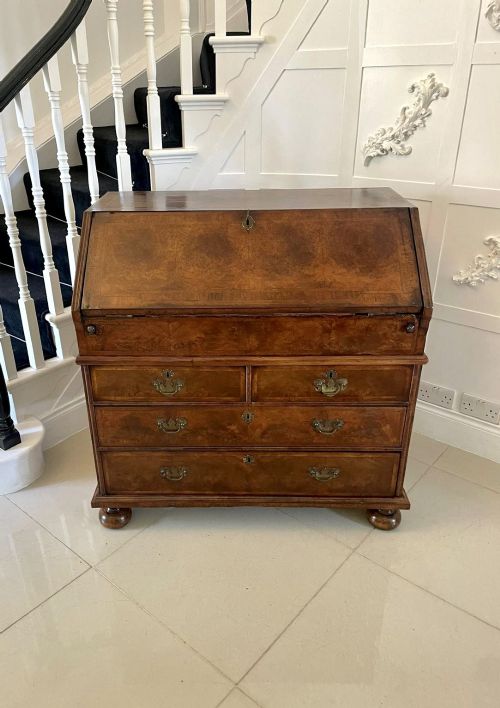
The form spans centuries of cabinetmaking, appearing in domestic interiors from the seventeenth century through the twentieth century. Earlier iterations often employ walnut and oak with fitted internal tiers, while later Edwardian and Arts and Crafts versions utilise simplified timbers and linear hardware.
Materials and construction methods
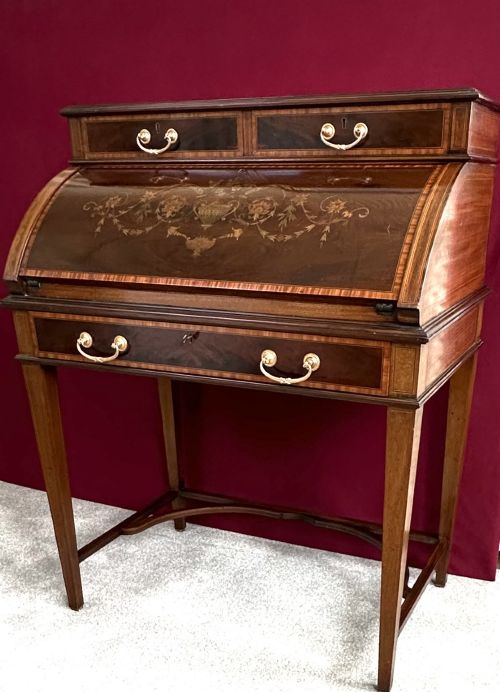
Cabinetmakers constructed these writing pieces primarily in mahogany, oak, and walnut, often applying burr veneers, rosewood, and marquetry to the exterior surfaces. Brass hinges, escutcheons, and drop handles secure the internal drawers and support the heavy writing flaps during daily use.
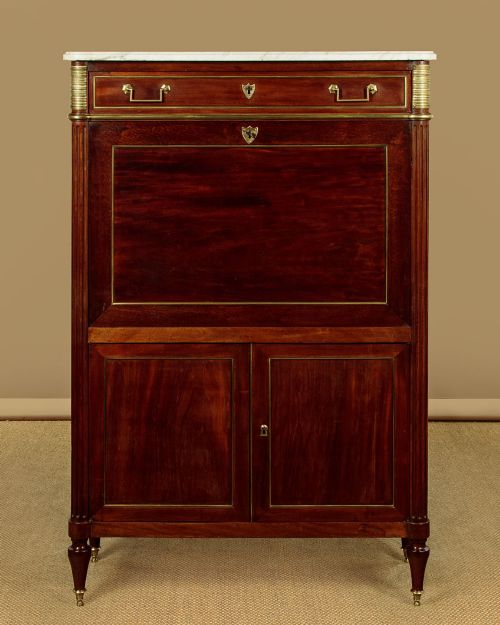
Joinery techniques include dovetail construction for internal drawers and panelled framing for the fall front flaps and bookcase sections. Selected examples incorporate glass doors, marble tops, and herringbone inlay to accent the primary timber.
Listings feature oak, mahogany, walnut, and rosewood across Georgian, Edwardian, Regency, and seventeenth-century periods.
Distinctions in construction and design
Quality rests in the selection of figured timber veneers and the precision of the internal pigeonholes, small drawers, and secret compartments. Superior examples maintain smooth articulation of the fall front flap and retain original brass hardware and working locks.
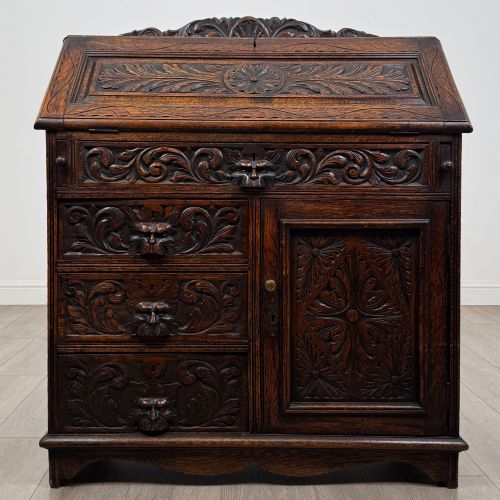
The refinement of carved details, such as green man motifs, linenfold panels, and floral marquetry, separates standard production furniture from exceptional workshop pieces. Structural integrity in the secondary timbers and the retention of original glass panes in bookcase variants elevate a piece's standing.
ARTHUR BASIL REYNOLDS·GEORGE OAKLEY·LARKIN
The Drop Front Bureau Desk Glossary
- Secretaire abattant
- A tall writing cabinet featuring a vertical drop front flap that conceals a fitted interior of small drawers and pigeonholes. This continental form often includes a marble top above or drawers below.
- Fall front
- A hinged writing flap that pulls down to a horizontal position for writing, supported by side arms or pulls built into the cabinet frame. It conceals the internal stationery compartments when closed.
- Marquetry
- Decorative patterns formed by fitting together thin slices of various coloured woods and veneers onto a primary surface. It appears on floral and geometric panels of 18th and 19th century desks.
- Herringbone inlay
- A distinctive banding pattern constructed from small diagonal veneer segments arranged in a zig-zag motif. This technique frames the primary burr walnut panels on early cabinetwork.
- Escritoire
- An alternative term for a writing desk or cabinet equipped with drawers and a folding writing surface. The form encompasses both slant-front bureaux and upright secretaire cabinets.
Drop Front Bureau Desk: Frequently Asked Questions
How do I maintain the leather or wood writing surface?
Dust the exterior regularly with a dry cloth and apply a quality beeswax periodically to nourish the timber. Avoid placing writing desks near direct heat sources to prevent the wood veneers from splitting.
Keep the hinged mechanisms clean and lightly lubricated if the drop front action stiffens over time. Protect polished surfaces from moisture by using coasters and desk blotters.
Were these desks used for writing or storage?
These pieces served primarily as compact household workstations for managing correspondence, household accounts, and personal documents. The internal compartments kept stationery and ink organised while the closed flap concealed pending paperwork.
Larger variants incorporating bookcase tops doubled as personal libraries and display cabinets for household volumes. The combination of surface workspace and lockable drawers made them central administrative fixtures in domestic rooms.
How do I distinguish 18th century pieces from later revivals?
Examine the secondary timbers inside the drawer linings, where older pieces often display hand-sawn oak or pine rather than uniform modern boards. Hand-cut dovetails and forged iron or brass fixings indicate earlier hand-tool methods.
Revival pieces from the Edwardian period often utilise machine-cut joints and lighter internal construction while imitating Georgian or Jacobean styles. Look for signs of timber shrinkage and patination that develop naturally over extended periods.