
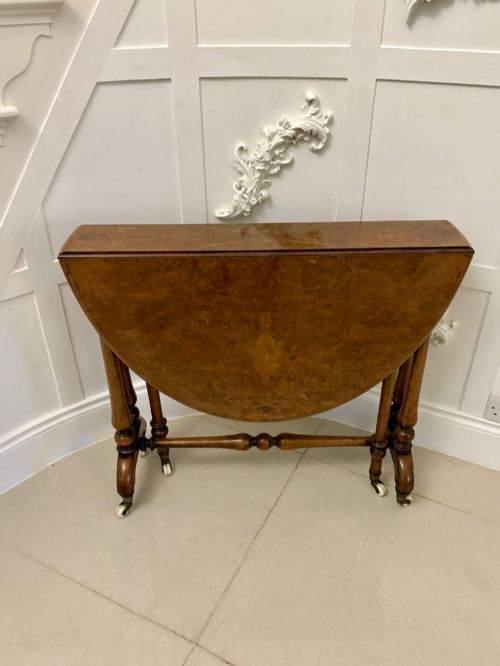
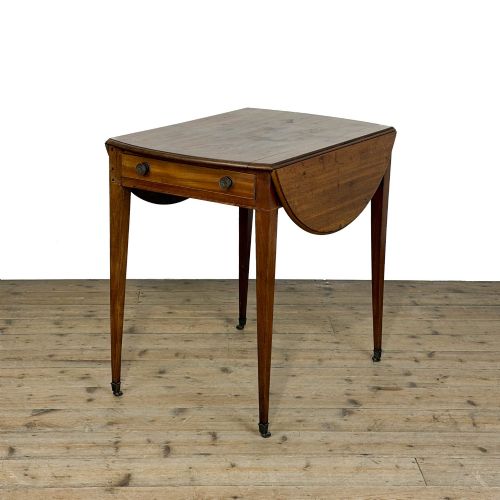
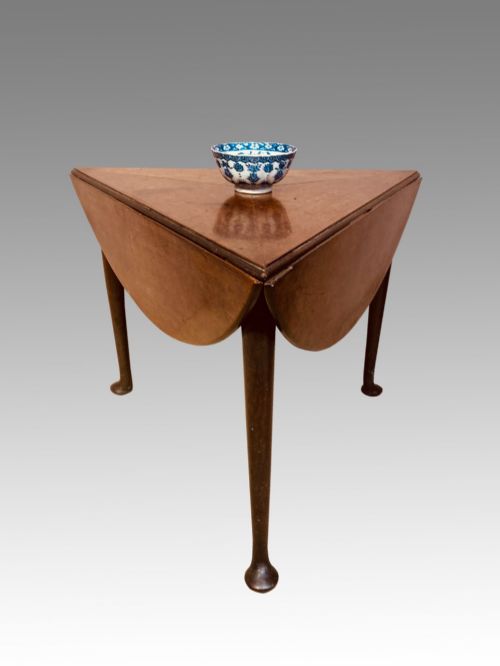
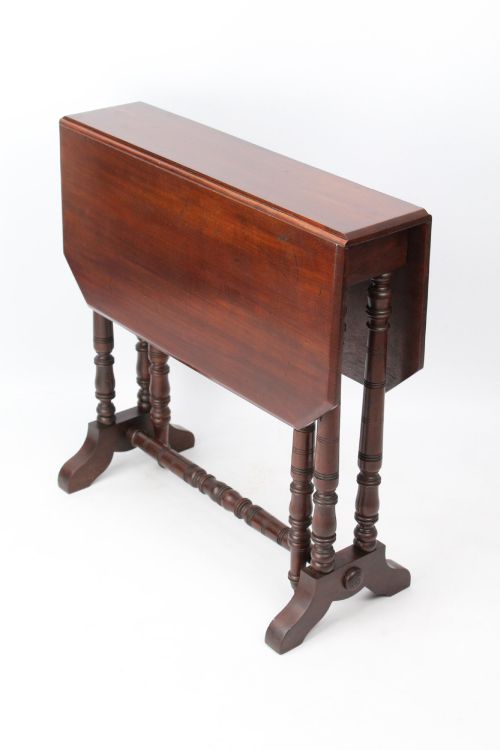
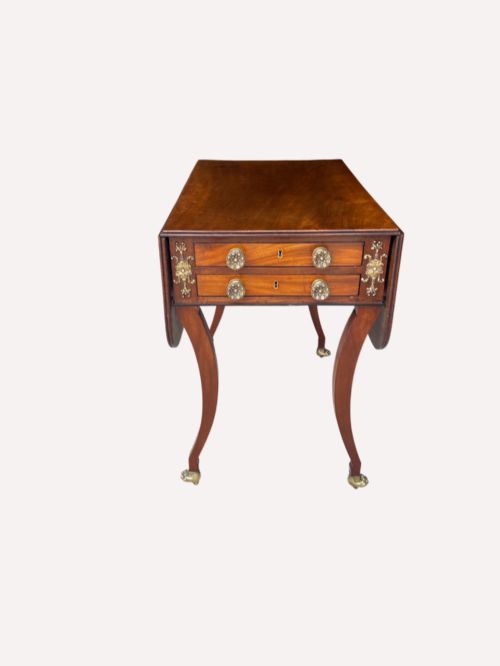
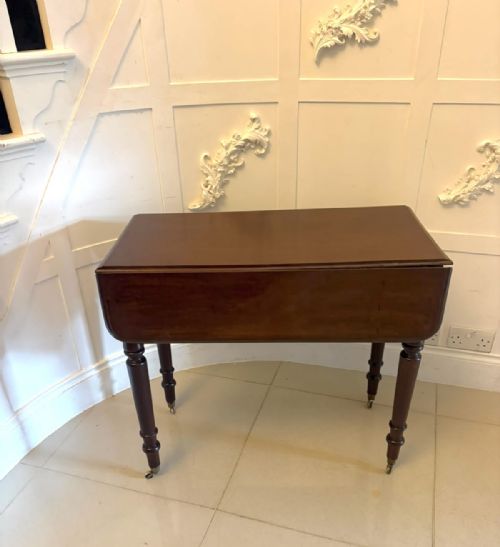
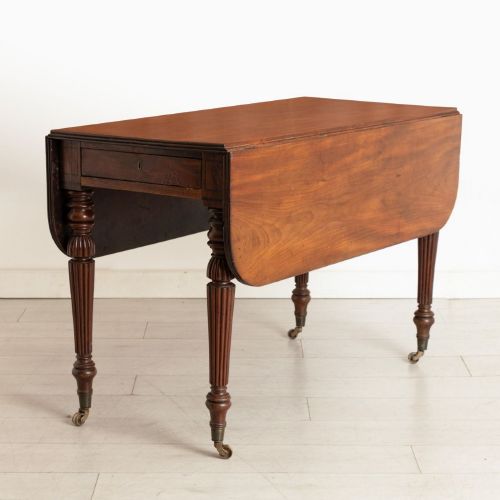
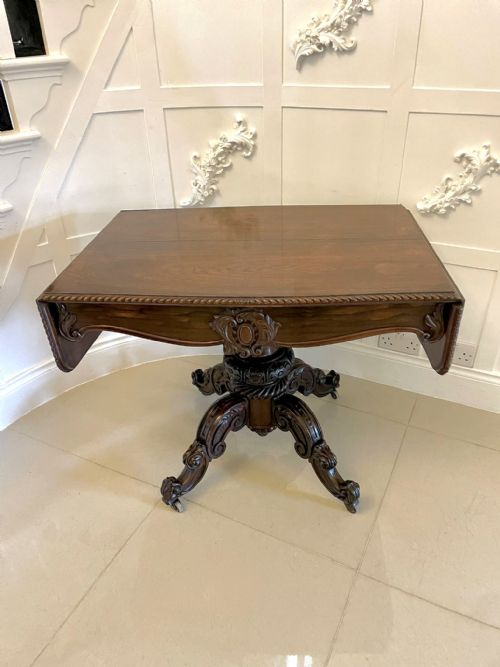
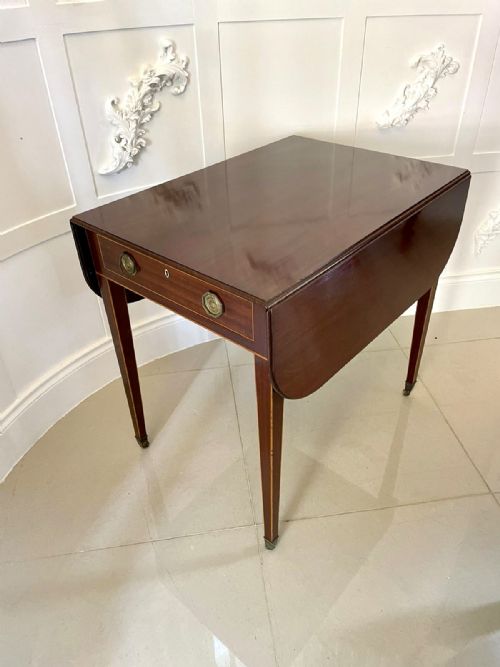
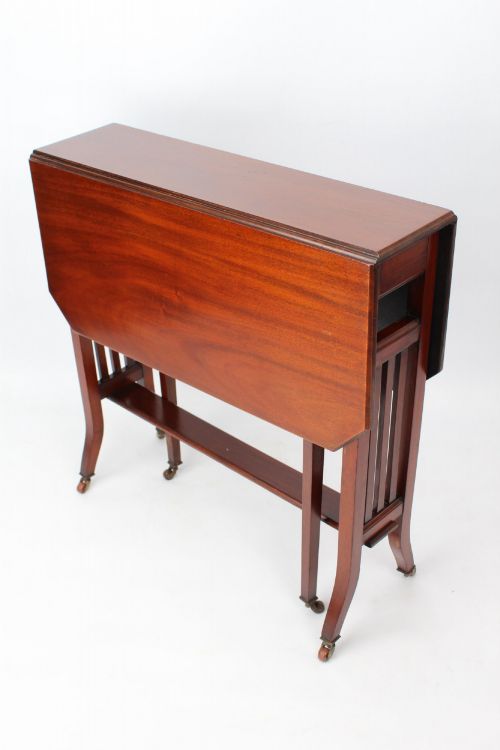
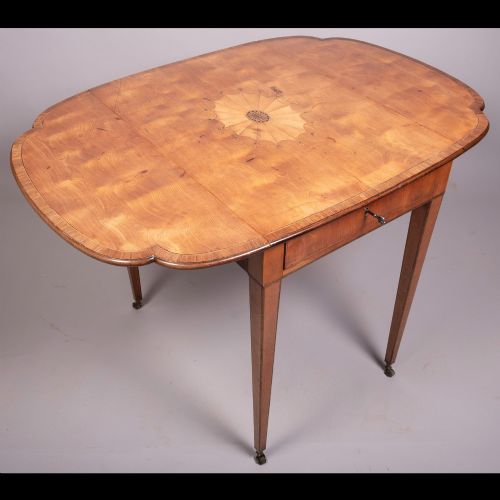
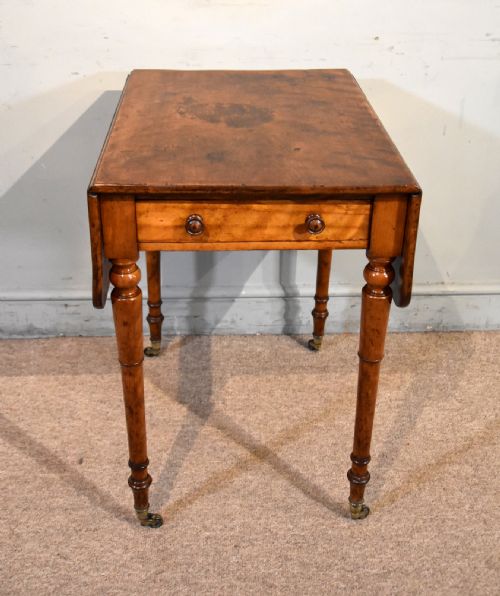
Drop Flap Occasional Table
A drop flap occasional table offers folding leaves to expand a small surface when needed, combining compact everyday placement with flexible room use.

Drop Flap Occasional Table
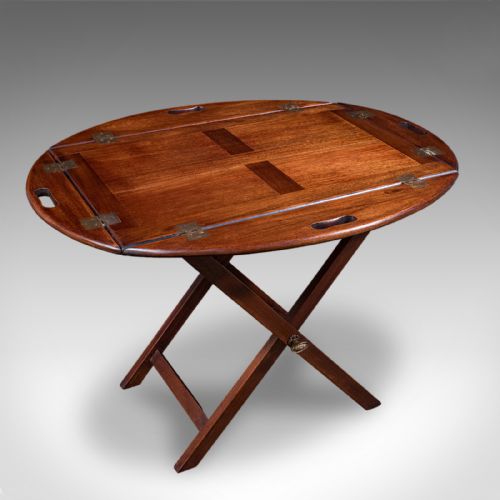
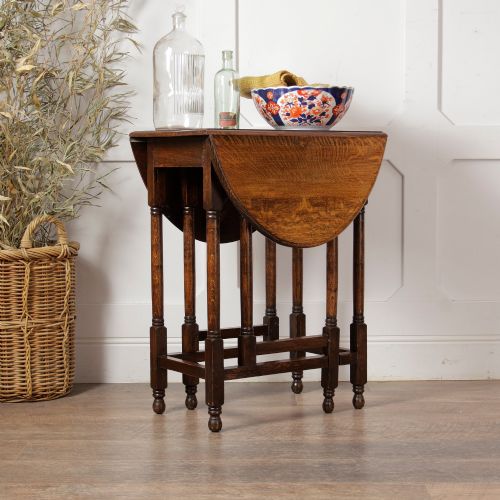
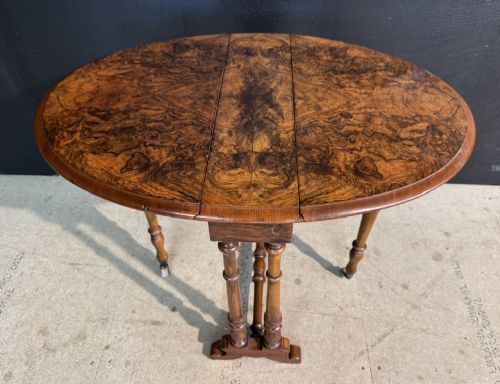
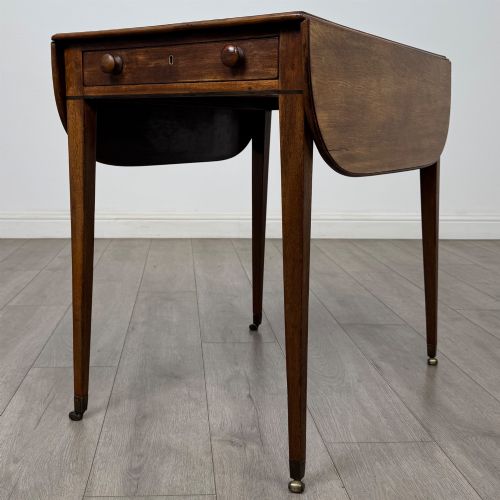
A drop flap occasional table provides a versatile surface designed for flexible use in compact spaces. You encounter forms ranging from Pembroke and Sutherland tables to gateleg and tea tables, spanning the eighteenth century through to the nineteen-twenties.
The pieces listed here appear primarily in mahogany, walnut, satinwood, and oak, reflecting periods from Georgian and Regency through to Edwardian and later twentieth-century styles. The folding leaves allow the furniture to sit flat against a wall or tuck neatly into a corner until extra tabletop area is required.
Materials and construction
Timbers such as mahogany, rosewood, burr walnut, and satinwood provide structural strength alongside fine grain patterns, often enhanced by crossbanding, marquetry inlay, or ebony stringing. Solid woods pair with figured veneers to create contrasting borders and decorative top surfaces.
Hinged leaves rely on drop-leaf brackets, swing-out legs, gateleg actions, or sliding supports to hold the extended flaps stable. Brass castors, ceramic fittings, and turned or pedestal pillar columns complete the support framework.
Mahogany and walnut appear most frequently across these tables, spanning Georgian, Regency, Victorian, and Edwardian periods.
Judging quality and execution
The refinement of the timber figure and the precision of any inlay set the standard for finer examples. Highly figured burr walnut, Cuban mahogany, and matched satinwood distinguish superior pieces from plain utilitarian items.
Joinery execution around the hinge mechanisms, drop flaps, and pedestal supports indicates the maker's skill. Smooth movement in the folding leaves and tight joints demonstrate the care taken during initial construction.
Johnstone and Jeanes·James Mein Kelso·Gillow
The Drop Flap Occasional Table Glossary
- Pembroke table
- A small rectangular table with two hinged drop flaps on opposing sides, often fitted with one or two drawers.
- Sutherland table
- A narrow table with exceptionally slender drop flaps that fold down almost vertically, supported by swinging gate legs.
- Gateleg table
- A table with hinged flaps supported by legs that swing outward like a gate to bear the weight of the open leaves.
- Crossbanding
- A narrow strip of veneer applied to the border of a tabletop with the grain running perpendicular to the central panel.
- Satinwood
- A pale, lustrous hardwood imported from the tropics, prized for its golden colour and smooth texture in finer cabinet work.
Drop Flap Occasional Table: Frequently Asked Questions
How were drop flap tables used historically?
These tables served multiple functions in domestic rooms, acting as tea tables, lamp stands, or Pembroke writing surfaces when space was limited.
Owners moved them easily around a room, raising the leaves only for dining, sewing, or serving refreshments before folding them down again.
Where should I place an occasional table?
An occasional table fits well beside a sofa, in a hallway, or tucked against an unused wall with both leaves dropped.
Raising one or both flaps accommodates a lamp, books, or visiting guests without permanently occupying floor space.
How do I distinguish Georgian from Edwardian examples?
Georgian pieces from the eighteenth century generally feature heavier solid timbers like Cuban mahogany with minimal, precise carving and subtle stringing.
Edwardian versions from the early twentieth century often display lighter satinwood inlays, painted decorations, or ebonised finishes on smaller, more delicate frames.
Are drop flap leaves sturdy enough for daily use?
The support mechanism determines the weight a leaf can bear, whether through swinging gatelegs, wooden brackets, or pivoting rule joints.
Properly adjusted rule joints distribute weight evenly across the hinges, making daily use for drinks or books entirely secure.