



Compact Mahogany Occasional Table
A compact mahogany occasional table brings versatile surface space and rich timber warmth to a room without crowding it.
Compact Mahogany Occasional Table
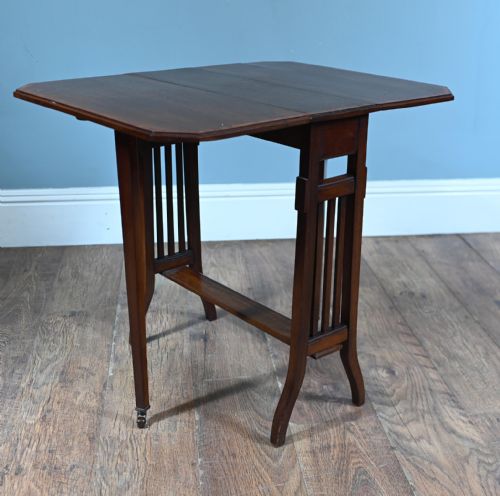
A compact mahogany occasional table provides a movable surface suited for sitting rooms, halls and libraries. When searching for a compact mahogany occasional table, buyers encounter various folding and stationary forms designed to save space.
The selection here draws primarily from Edwardian and Victorian periods, alongside earlier Georgian examples. Sutherland tables and drop-leaf designs dominate the offerings, alongside nest of tables and spider leg forms.
Makers utilised rich timbers and subtle inlays to create items that function as both writing desks, worktables and side surfaces. These smaller tables suit contemporary interiors precisely because their historical proportions remain modest.
What varies in quality
The crispness of timber turnings and the depth of the mahogany grain distinguish finer examples from standard production pieces. Superior items display meticulous attention to the hinges and folding action, ensuring smooth movement without looseness.
Inlaid decoration and banding executed in satinwood or boxwood indicate higher workshops, whereas plain mouldings represent utility pieces. The choice of solid timber rather than heavy secondary woods elevates the refinement of the finished piece.
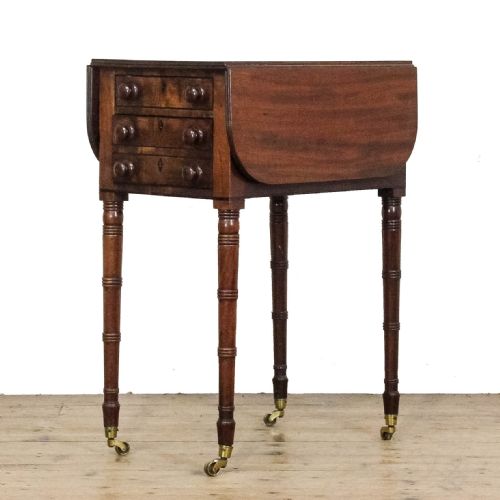
Forms range from Georgian library tables and Pembroke worktables to Edwardian nests of four coffee tables.
The Compact Mahogany Occasional Table Glossary
- Sutherland table
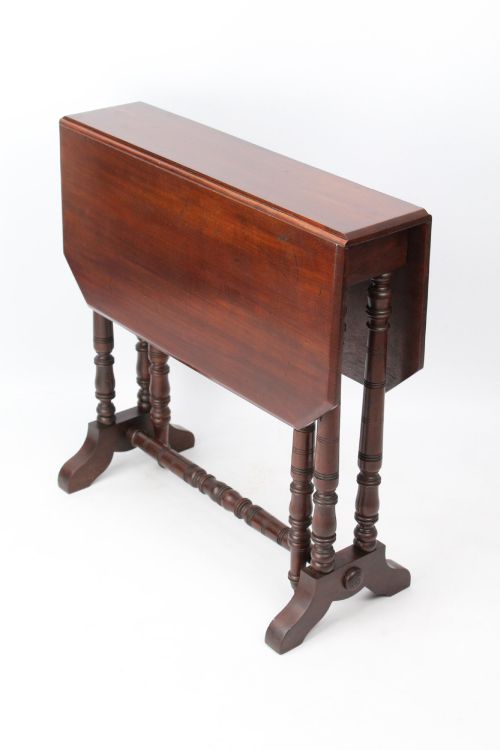
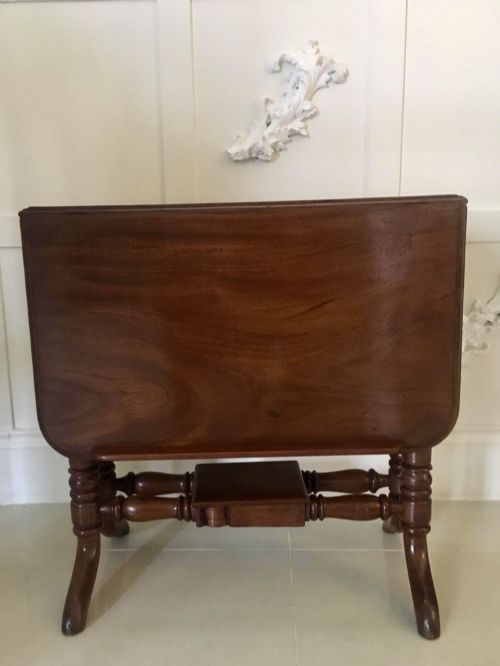
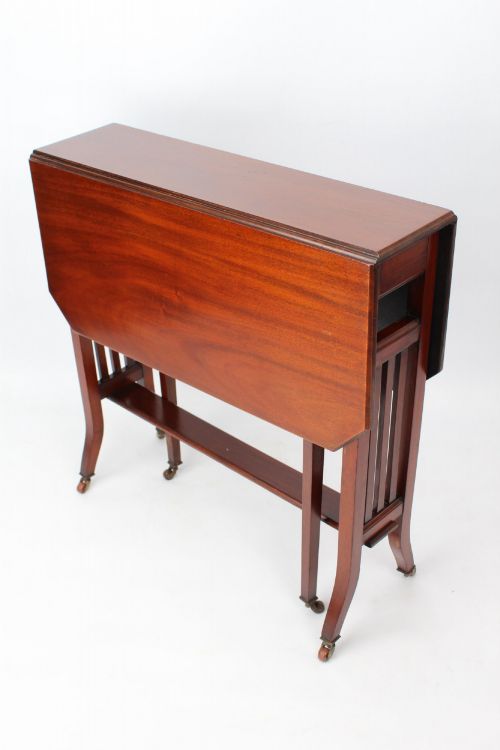
- A narrow drop-leaf table with hinged flaps that drop nearly vertically, supported by swinging gatelegs. This form became exceptionally popular during the Victorian and Edwardian eras for small sitting rooms.
- Spider table
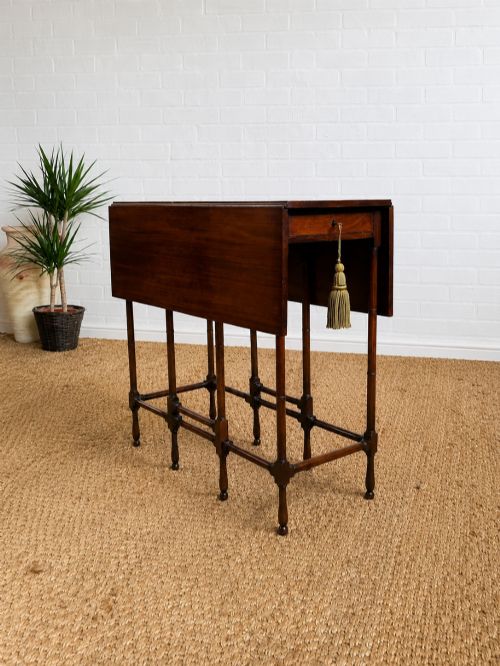
- A small occasional table supported by exceptionally slender turned legs linked by delicate stretchers. These pieces date from the eighteenth century onwards and emphasise lightness of form.
- Pembroke table
- A drop-leaf table featuring two hinged flaps on opposite sides and typically a single drawer. It originated in the eighteenth century as a breakfast or writing table.
- Quartetto nest
- A set of four graduating tables that fit neatly beneath one another. They appeared in the nineteenth century as a practical space-saving invention for entertaining.
- Satinwood inlay
- Ornamental woodwork using a contrasting pale tropical hardwood set into the darker mahogany surface. It defines Edwardian Sheraton Revival styles.
Compact Mahogany Occasional Table: Frequently Asked Questions
What is a Sutherland table?
A Sutherland table is a narrow drop-leaf table with deep flaps and swinging gatelegs designed to fold into a very slim profile.
Victorian and Edwardian homes utilised them as tea tables or occasional surfaces that could move easily out of the way.
How do I use a spider leg table?
Spider leg tables provide a light surface for lamps, books or drinks beside a chair or sofa.
Their slender legs require placement on stable flooring rather than thick carpets to prevent wobble.
Are these tables suitable for daily use?
Solid mahogany construction and sturdy gateleg mechanisms make these tables durable for everyday placement in modern rooms.
Care should be taken with hot cups or moisture, using coasters to protect the polished timber finish.
How do I date an Edwardian piece?
Edwardian tables often feature satinwood banding, lighter proportions and machine-assisted turning alongside traditional hand joinery.
Cabinetmakers working between eighteen ninety and nineteen ten frequently revived eighteenth-century Sheraton designs with simpler, brighter finishes.